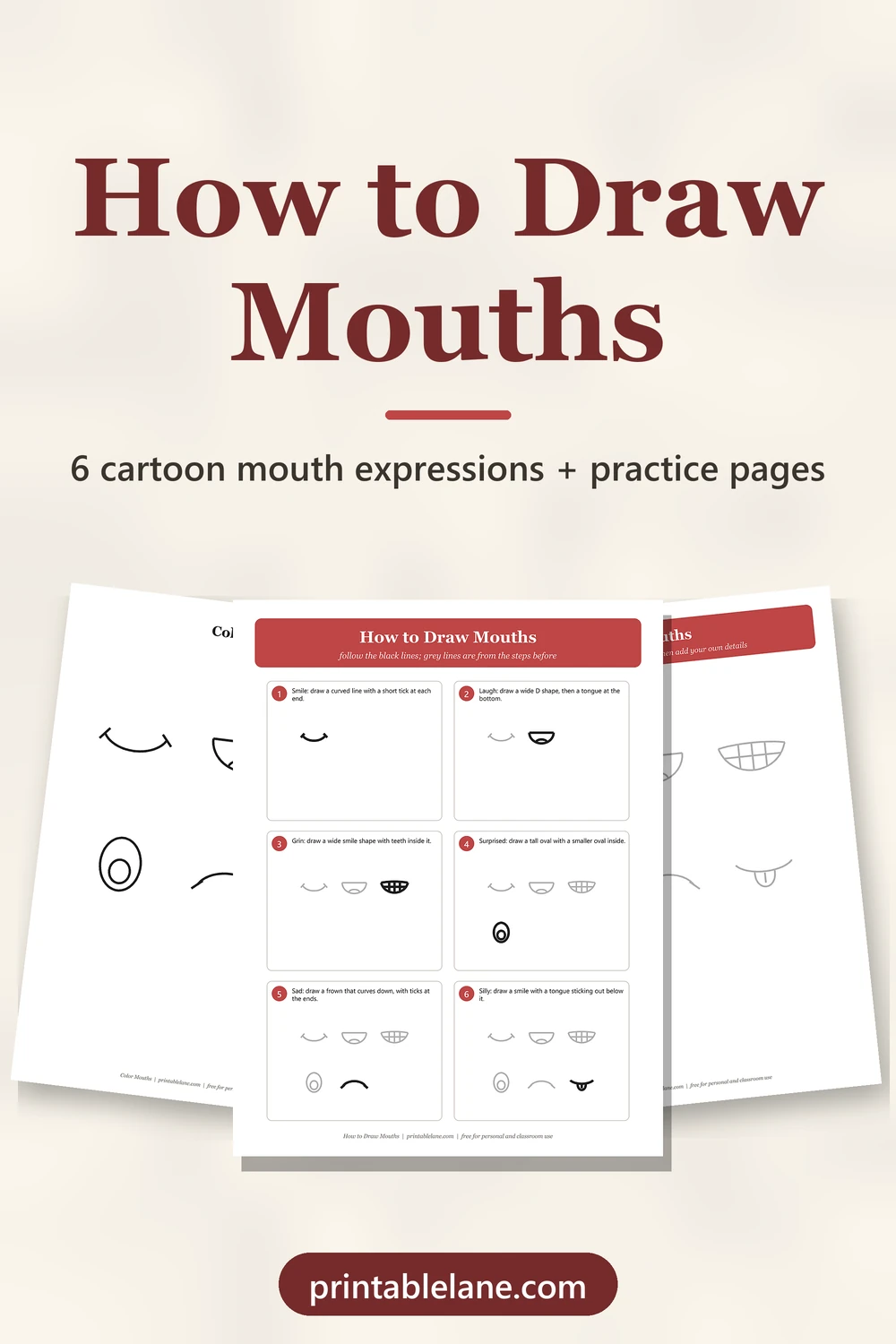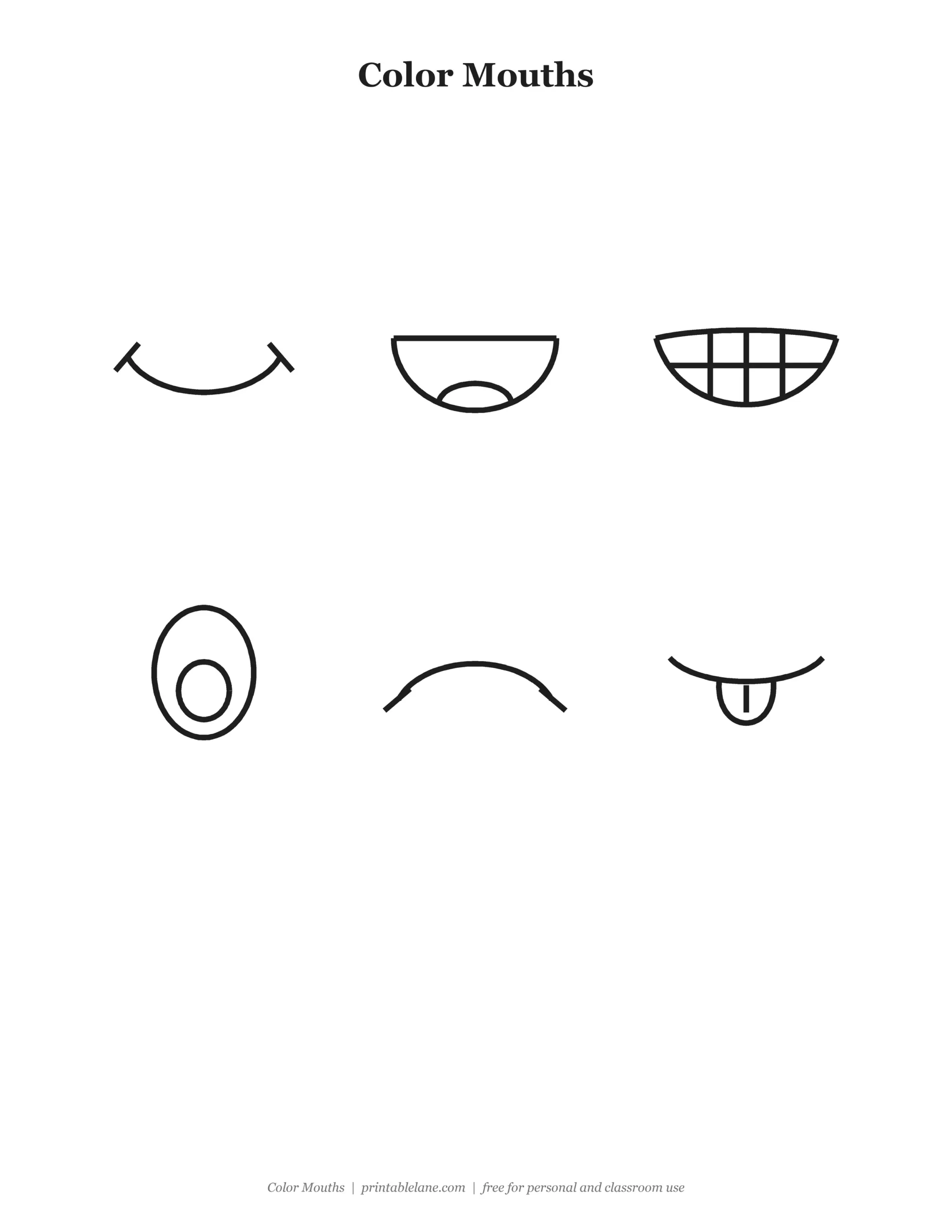
To learn how to draw mouths for cartoons, you only need a few shapes: a curve for a smile, a D shape for a laugh, a wide shape with teeth for a grin, an oval for surprise, an upside-down curve for sad and a smile with a tongue for silly.
The mouth changes a face more than anything else, so these six expressions let you give any character a mood. Each step on the sheet adds one new mouth. The free PDF also has a tracing page, a practice grid and a coloring page. For realistic lips, see our separate lips guide.
What’s in the free PDF
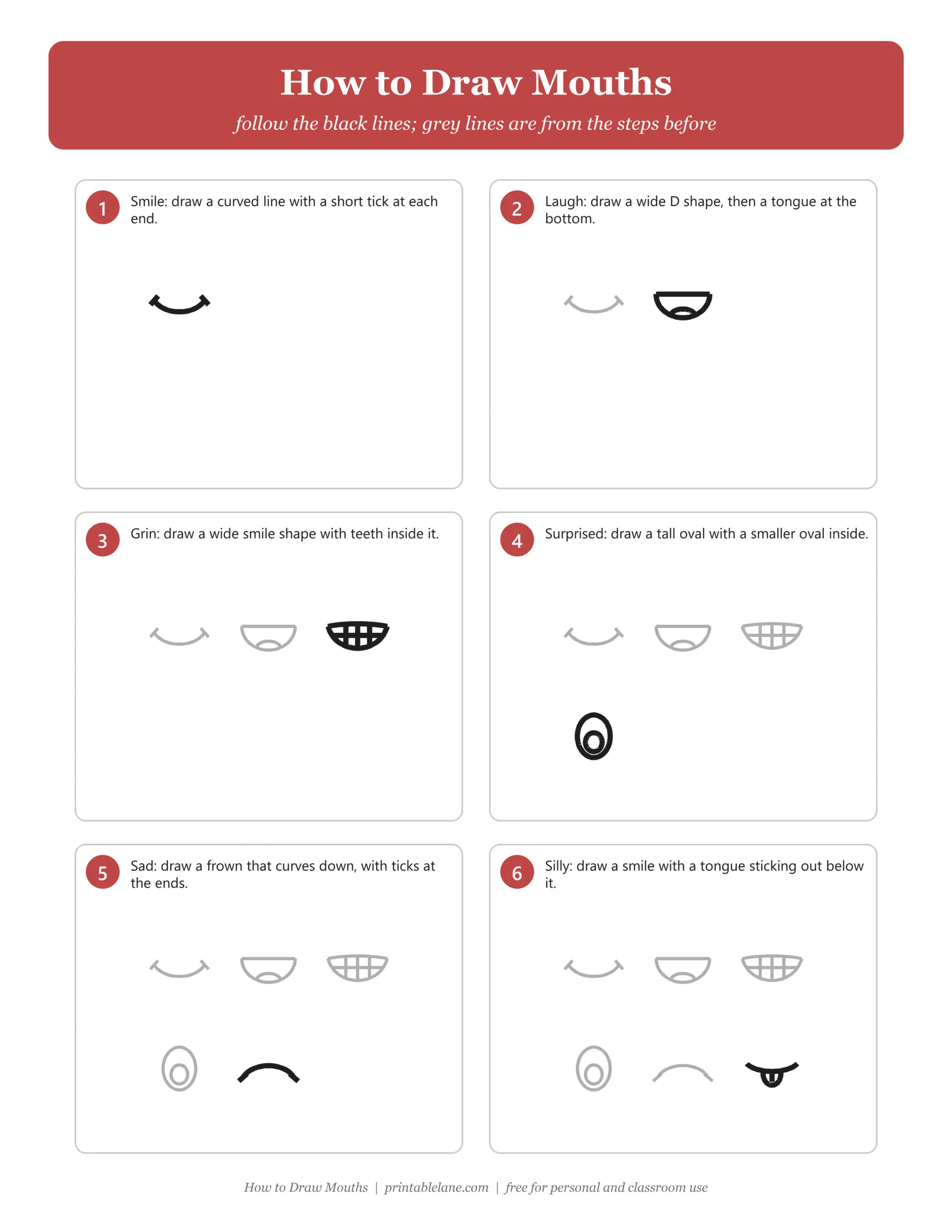
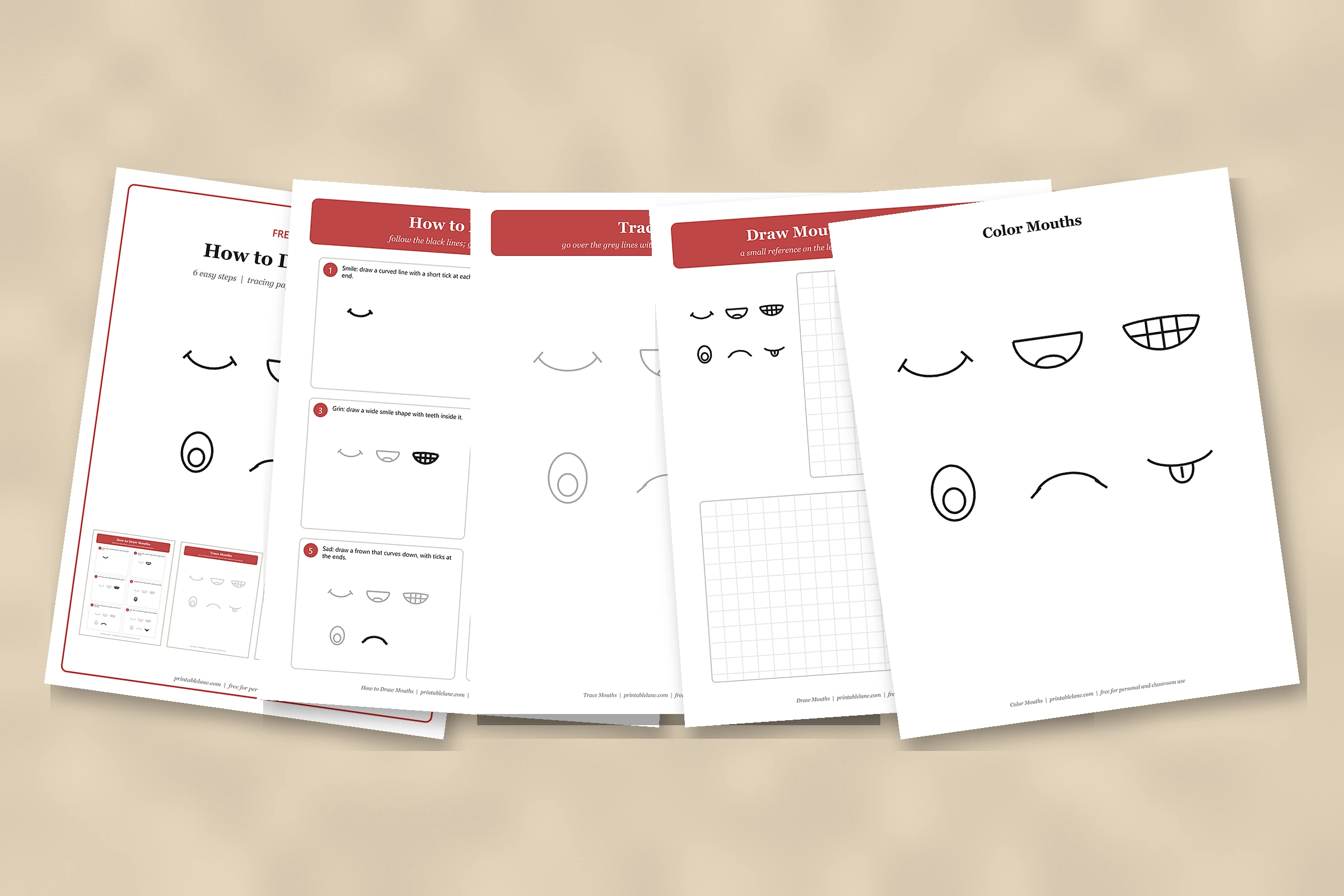
- Step-by-step sheet with 6 numbered steps; new lines are black, earlier lines are grey
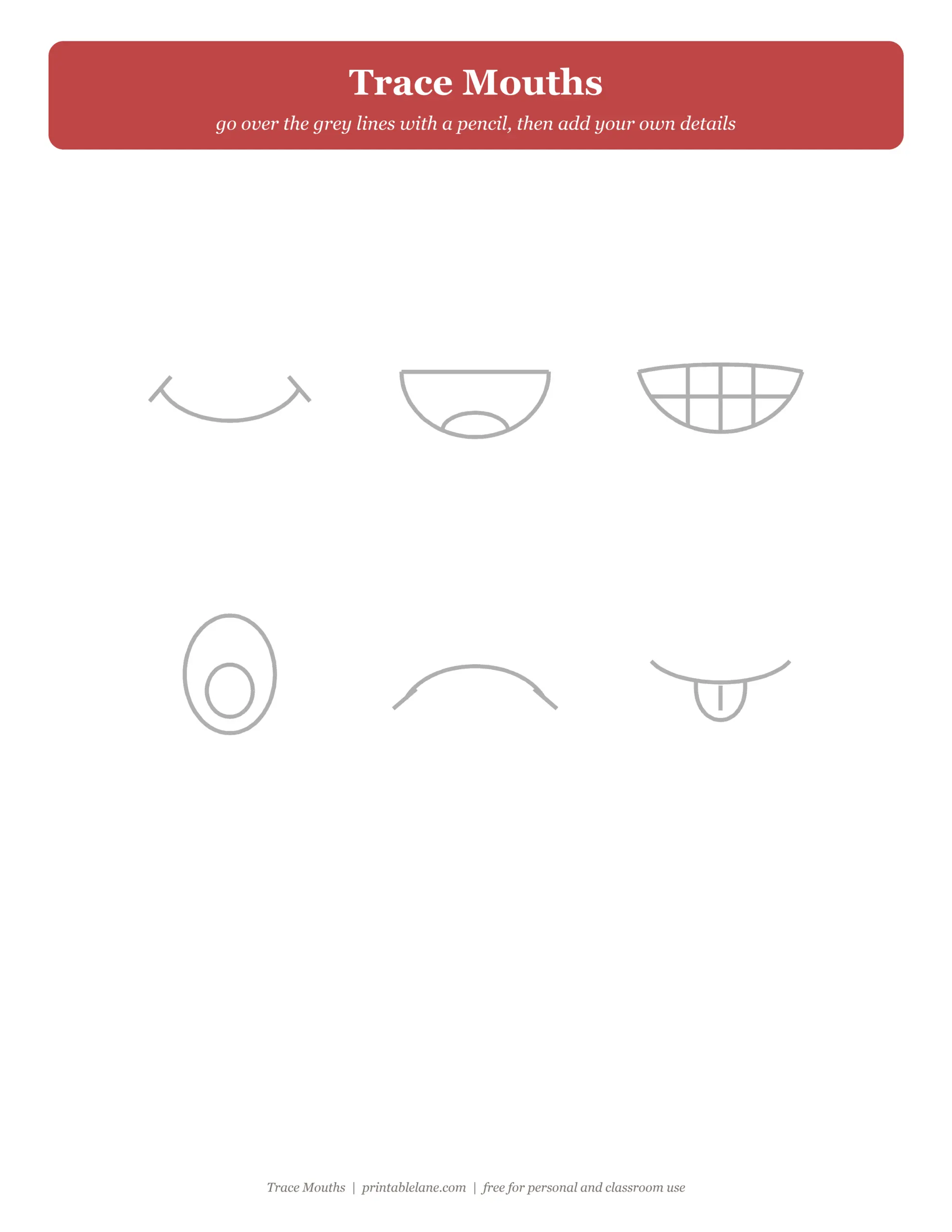
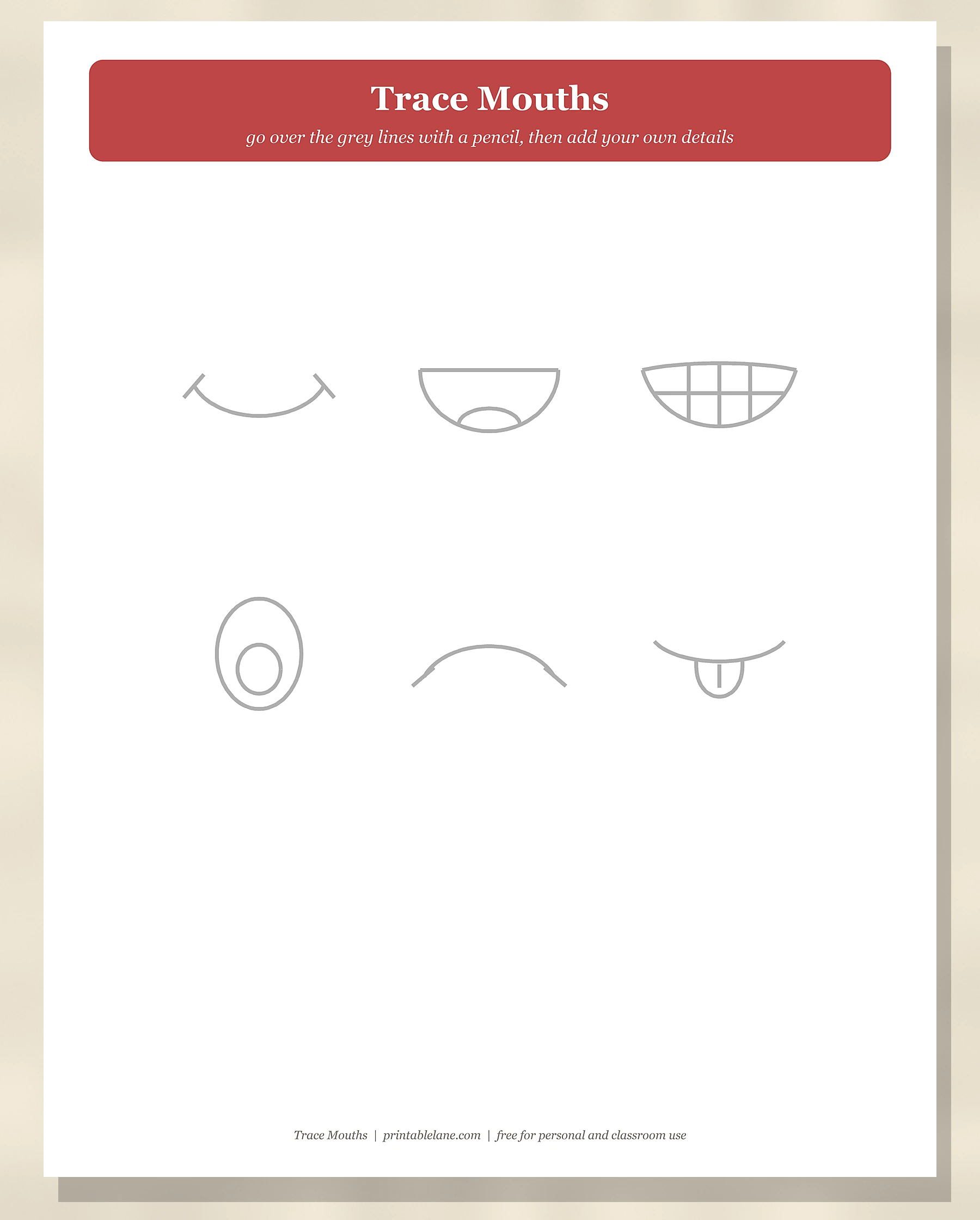
- Tracing page with a large set of mouths in light grey to trace over
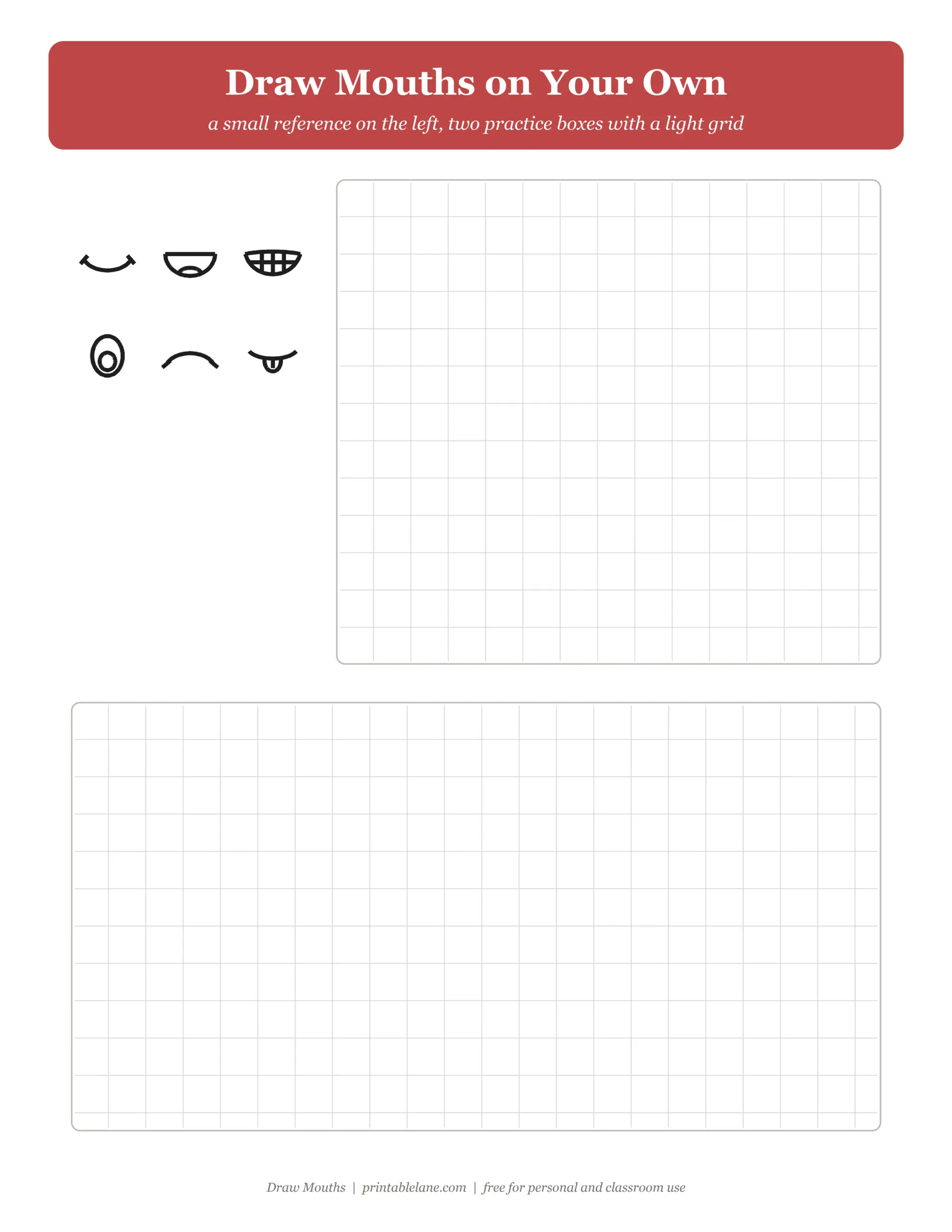
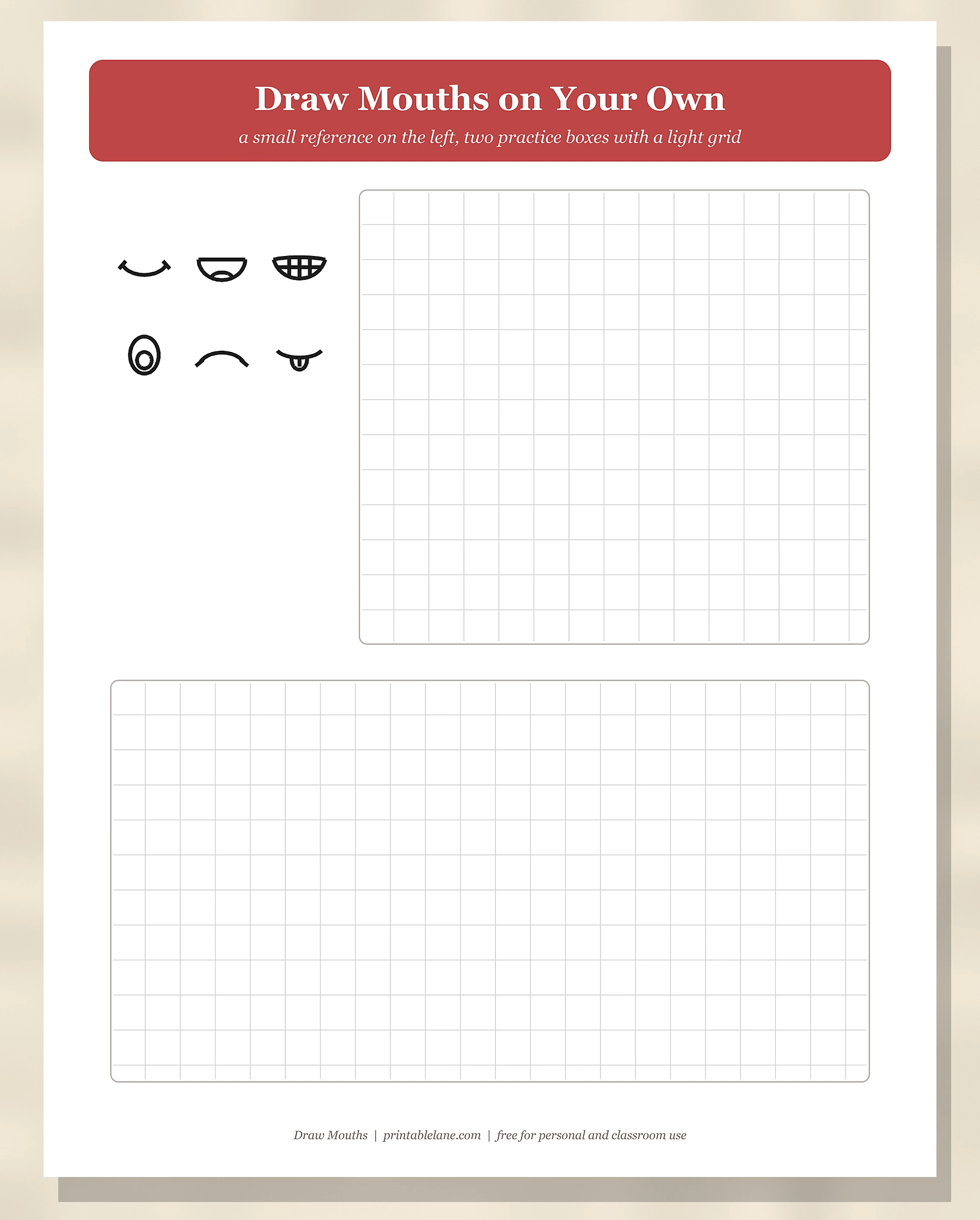
- Practice sheet with a small reference and two boxes with a light grid
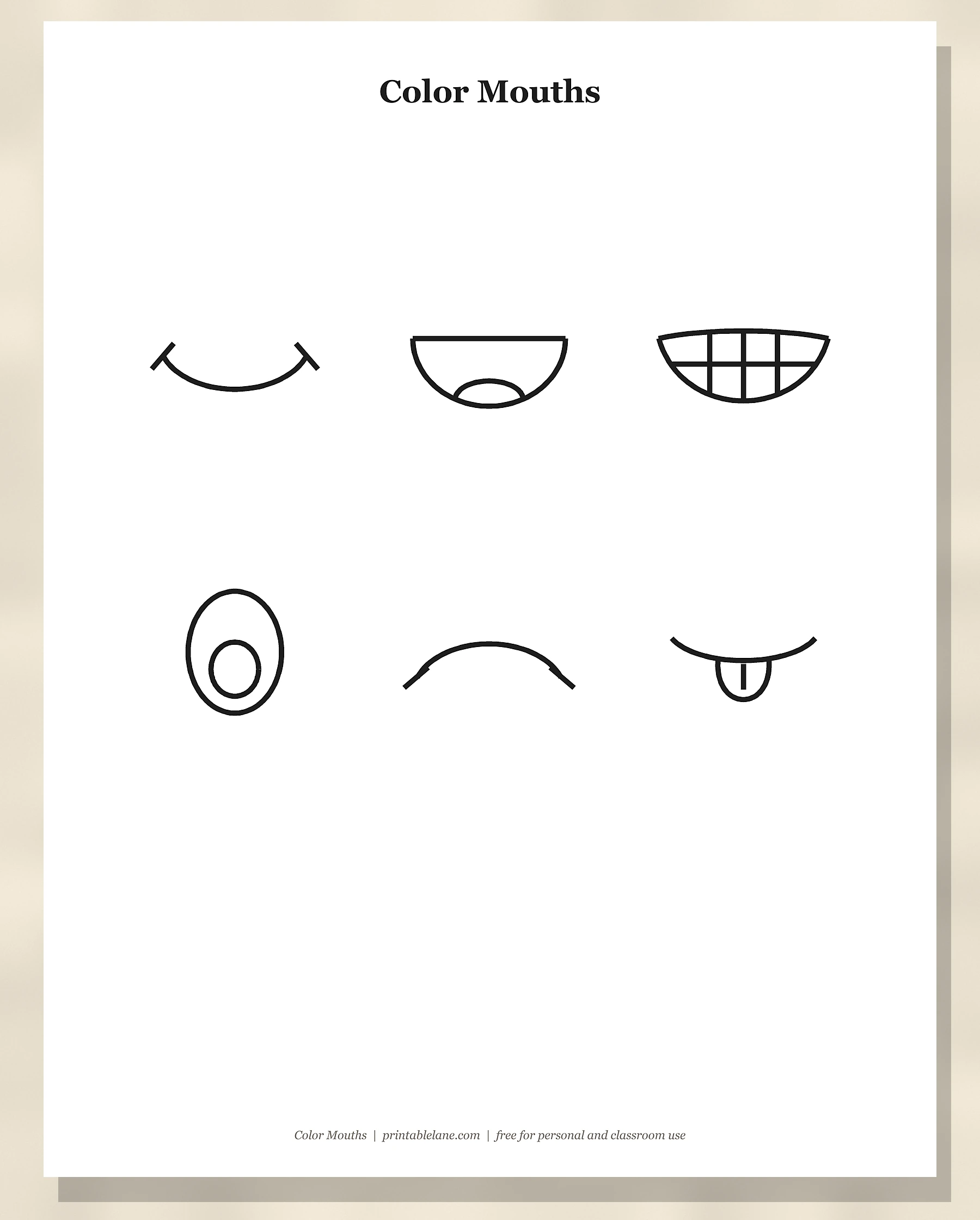
- Coloring page with the finished set of mouths in bold outlines
How to draw mouths step by step
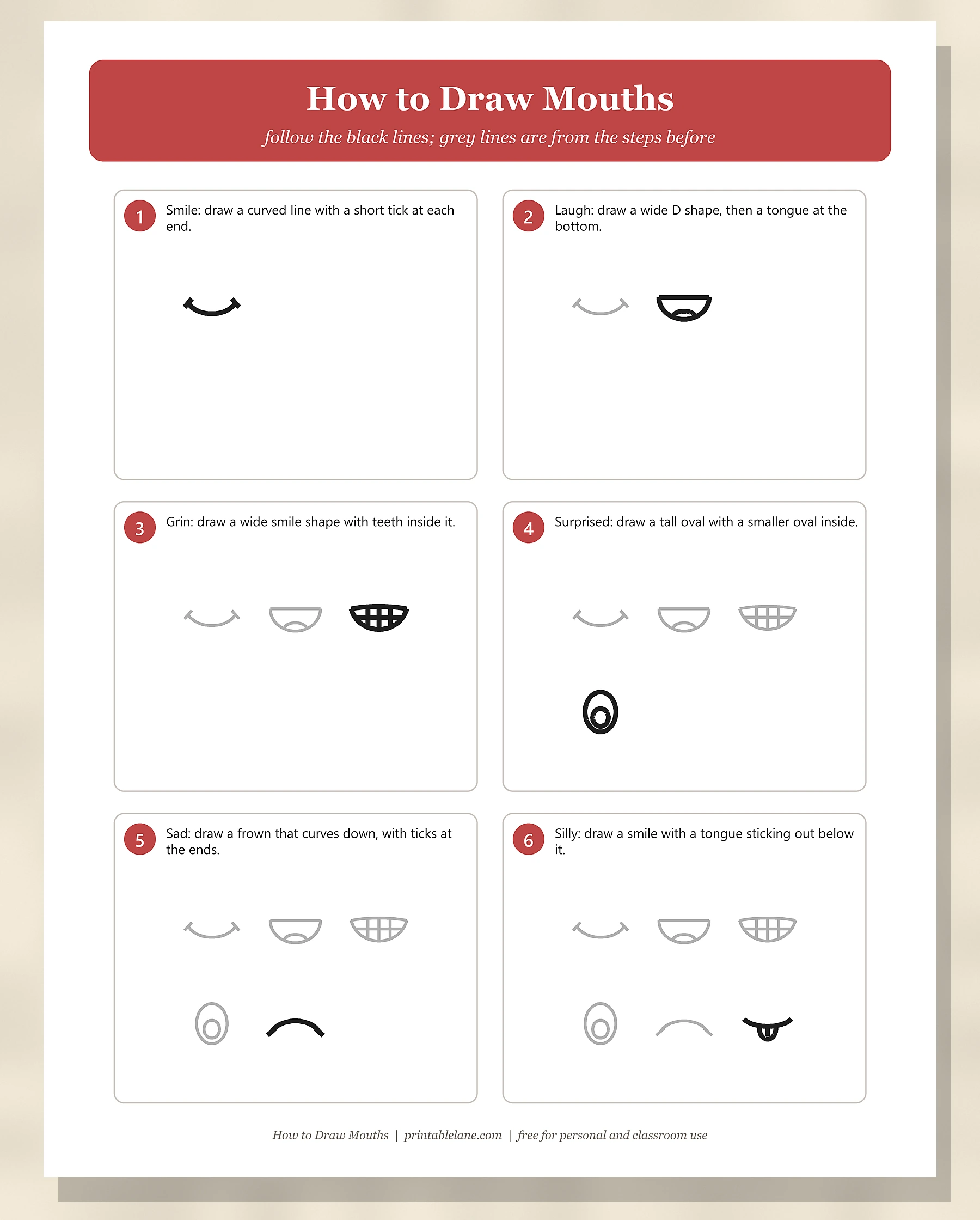
- Smile. Draw a curved line like a shallow U, then a short tick at each end. The ticks make the cheeks look pushed up.
- Laugh. Draw a straight line across the top, then a big curve below it to make a D shape lying on its side. Add a small curved tongue at the bottom inside.
- Grin. Draw a wide smile shape with a slightly curved top and a deep round bottom. Inside it, draw one line across and three short lines down for the teeth.
- Surprised. Draw a tall oval, then a smaller oval inside it, lower down, for the open throat.
- Sad. Draw a curve that bends down, like an upside-down U, and add a short tick at each end.
- Silly. Draw a wide, gentle smile. Under the middle of it, draw a U-shaped tongue sticking out and a short line down its center.
Try each mouth on the same simple face, with the same two dot eyes, and see how much the mood changes. Then combine them with different eyebrows for even more expressions.
Mouth drawing: common mistakes and fixes
- The smile is too wide. Keep it a little narrower than the space between the eyes for a cute look.
- The teeth are too detailed. One line across and a few lines down is enough for cartoons.
- The laugh looks flat. Make the bottom curve deep, almost as deep as it is wide.
- The frown looks angry. Keep the curve soft and round; a sharp, straight frown looks mad instead of sad.
Trace, practice, then color
Trace it first
If drawing freehand feels hard, start with the tracing page. Go over the grey lines with a pencil, pressing lightly, and you learn the shapes and their order without worrying about mistakes. Then try again on the practice sheet.
Practice on the grid
The practice sheet has a small finished set of mouths for reference and two boxes with a faint grid. Count how many squares wide and tall the reference is, then draw your set of mouths the same way. The grid keeps the parts the right size next to each other.
Color the finished drawing
Color the inside of open mouths dark red or brown, the tongues pink and the teeth white. Use a soft pink or red pencil for the lip lines if you like.
Mouth drawing tips for cartoons
- Move the mouth closer to the eyes for a cute, young character and farther away for an older one.
- Tilt a smile to one side to make a smirk.
- Add a drop of sweat or blush marks to make the expression stronger.
- Practice each mouth three times in a row on the grid before drawing it on a character.
Download the pages one by one
Prefer a single page? Click a link to open the full-size image, then print it or save it. The PDF with all pages and a cover is in the download box.
- How to draw mouths: step-by-step sheet (PNG)
- Mouths tracing page (PNG)
- Mouths practice sheet with grid (PNG)
- Mouths coloring page (PNG)
More face drawing: how to draw realistic lips, how to draw anime eyes, how to draw hair and kawaii drawings. For more ideas, see funny things to draw.
FAQ
How do you draw a cartoon mouth?
Start with a simple curve for a smile. Add ticks at the ends for cheeks, or open it into a D shape with a tongue for a laugh.
How do you draw a mouth with teeth?
Draw a wide smile shape with a curved top and bottom, then one line across the middle and a few short lines down for the teeth.
How do you draw different expressions?
Change the mouth first: a smile for happy, a frown for sad, a tall oval for surprised and a tongue out for silly. Eyebrows make each one stronger.
What is the difference between drawing mouths and lips?
Mouths are simple cartoon shapes that show expressions. Lips are the realistic shape with a Cupid’s bow and a full lower lip, which we cover in a separate guide.