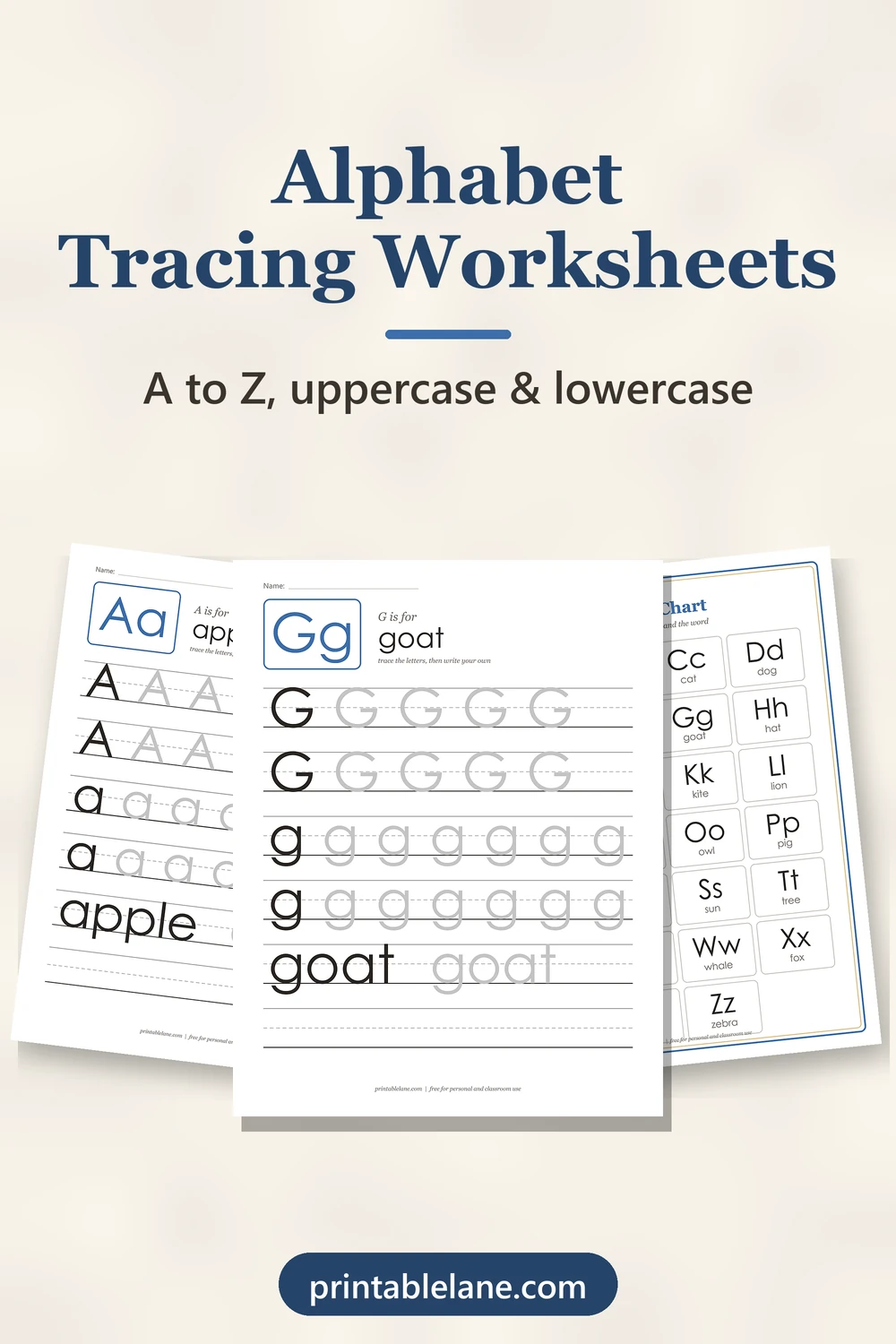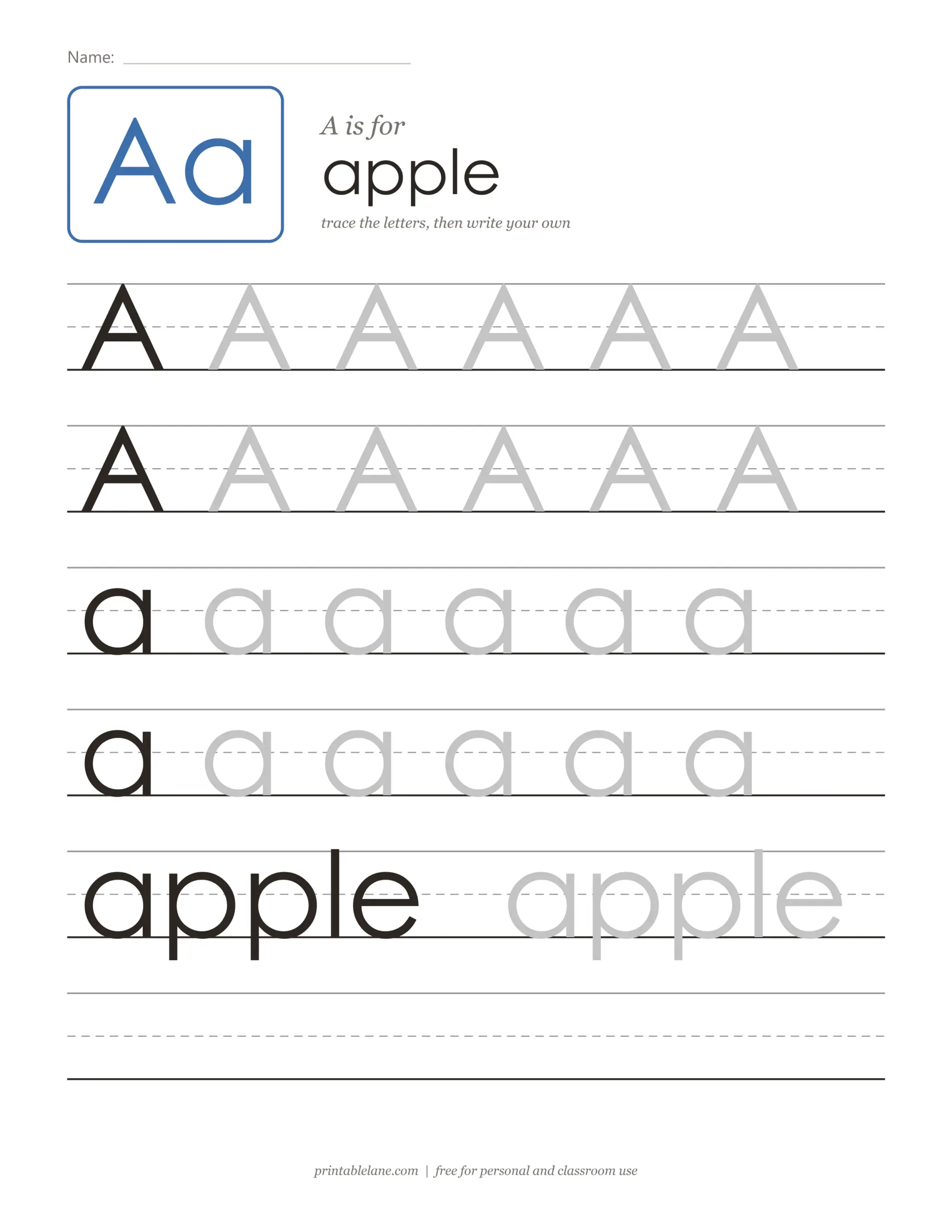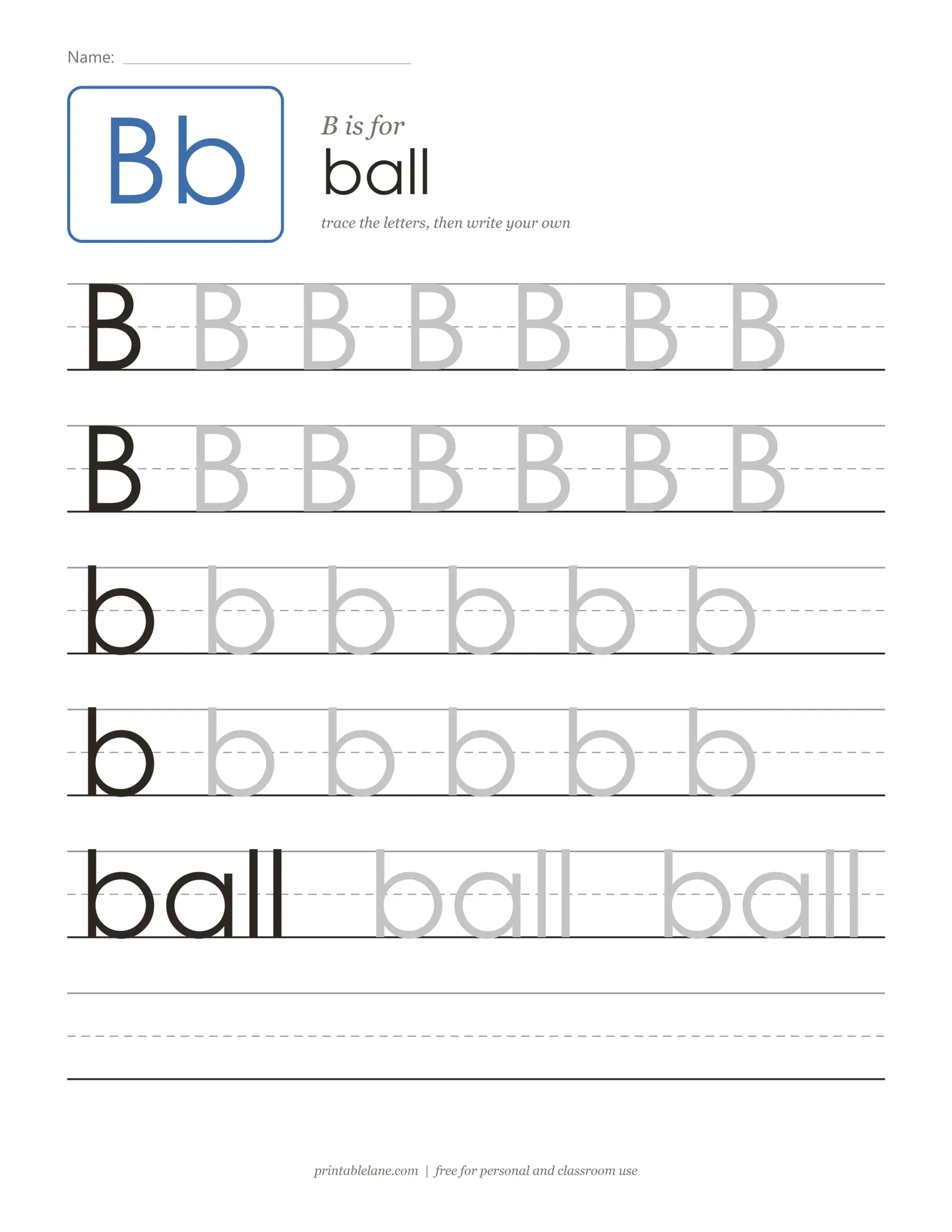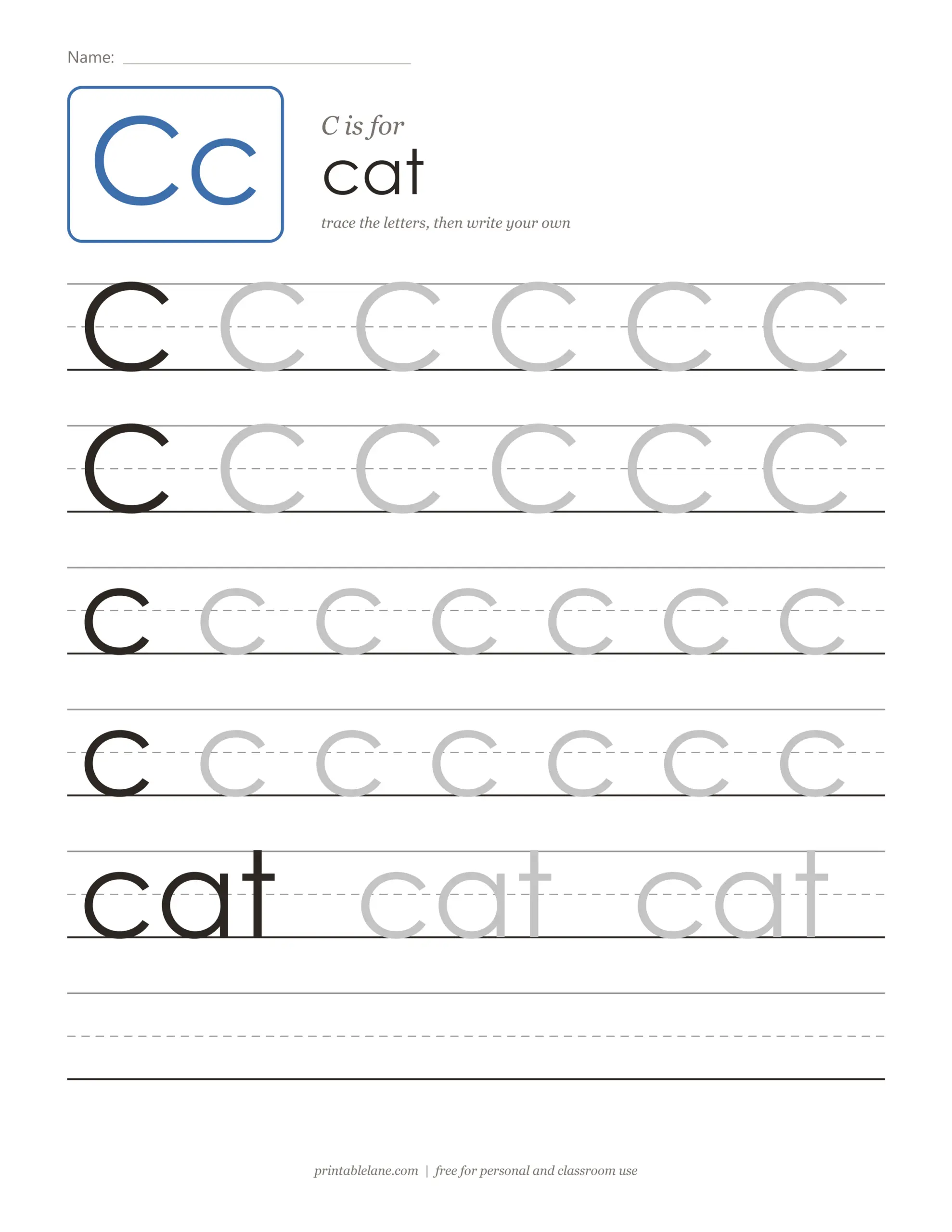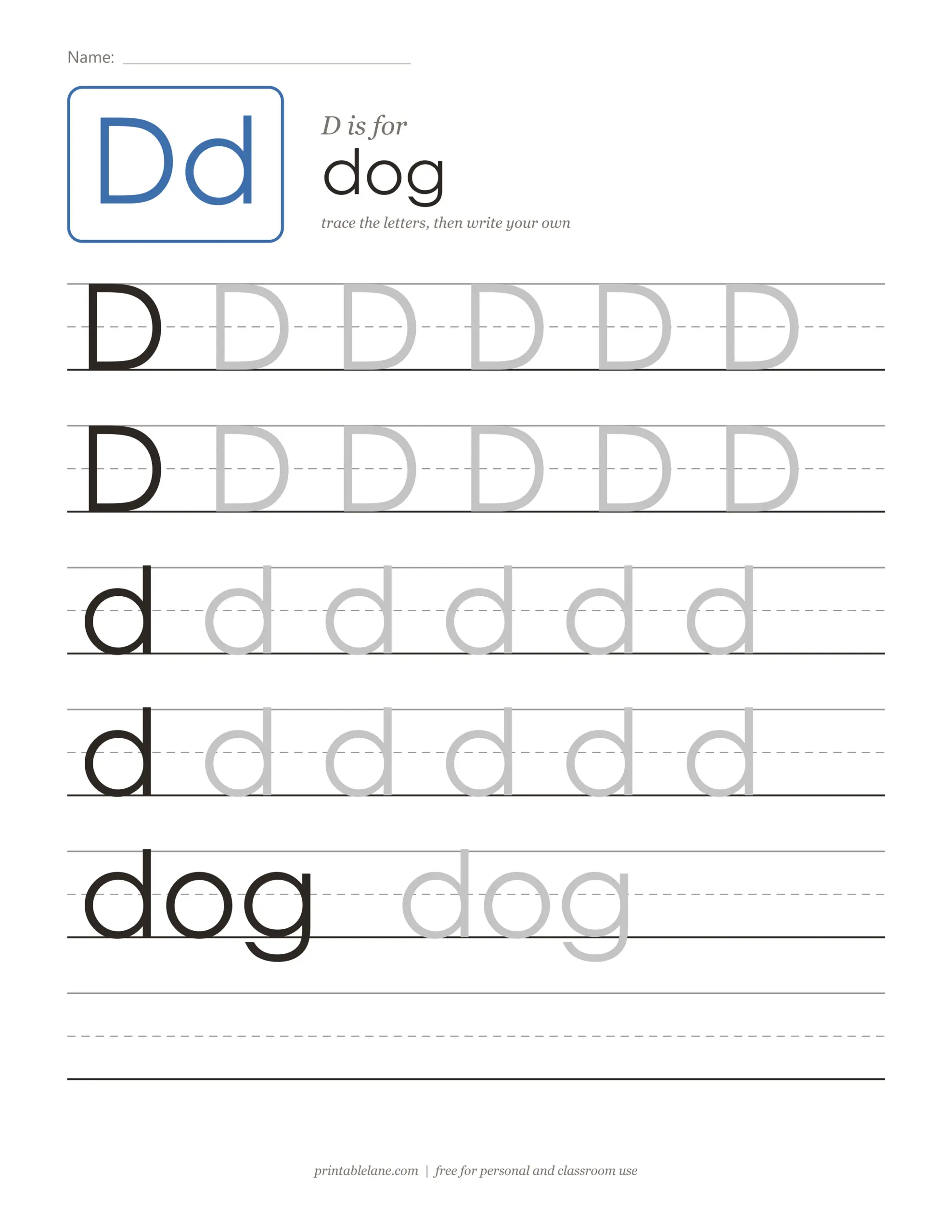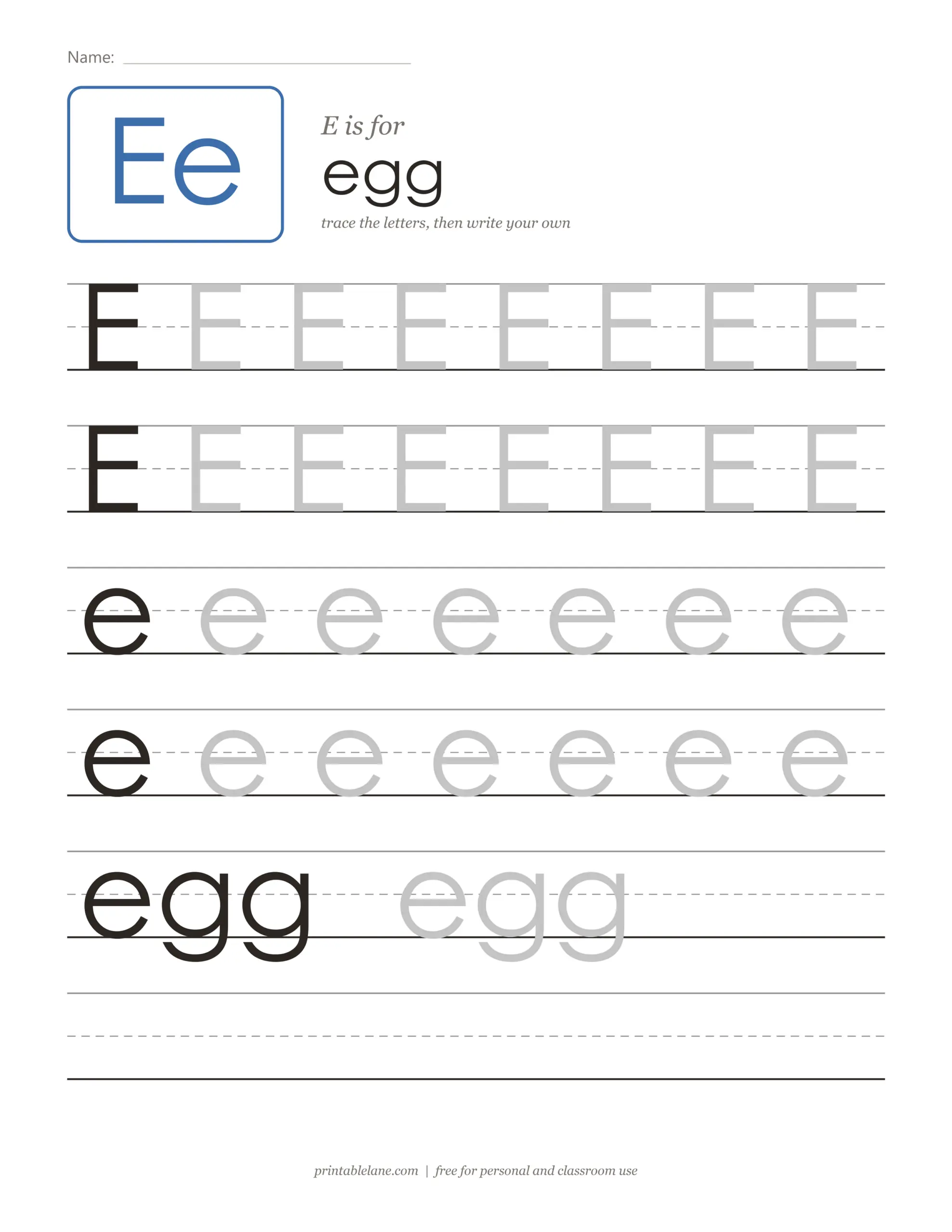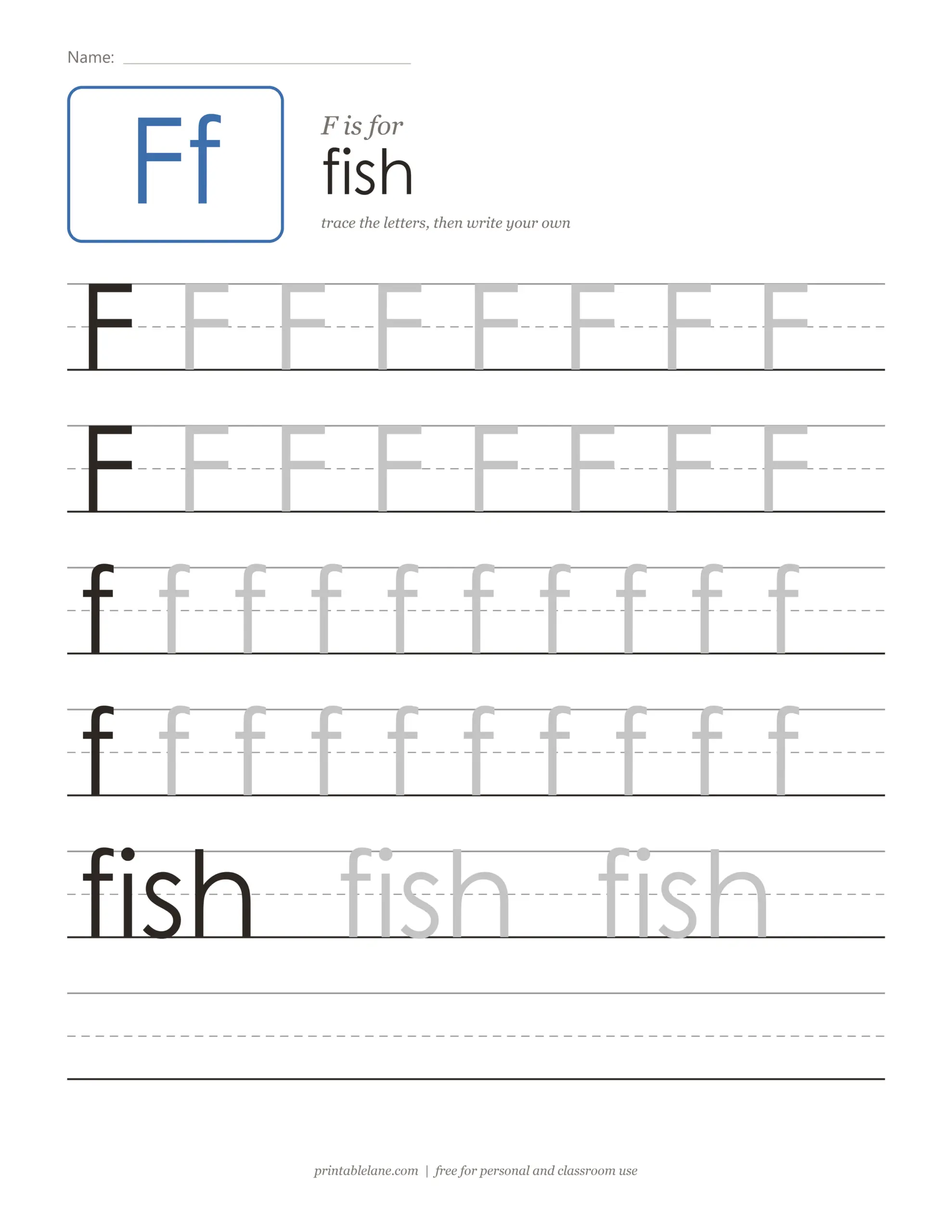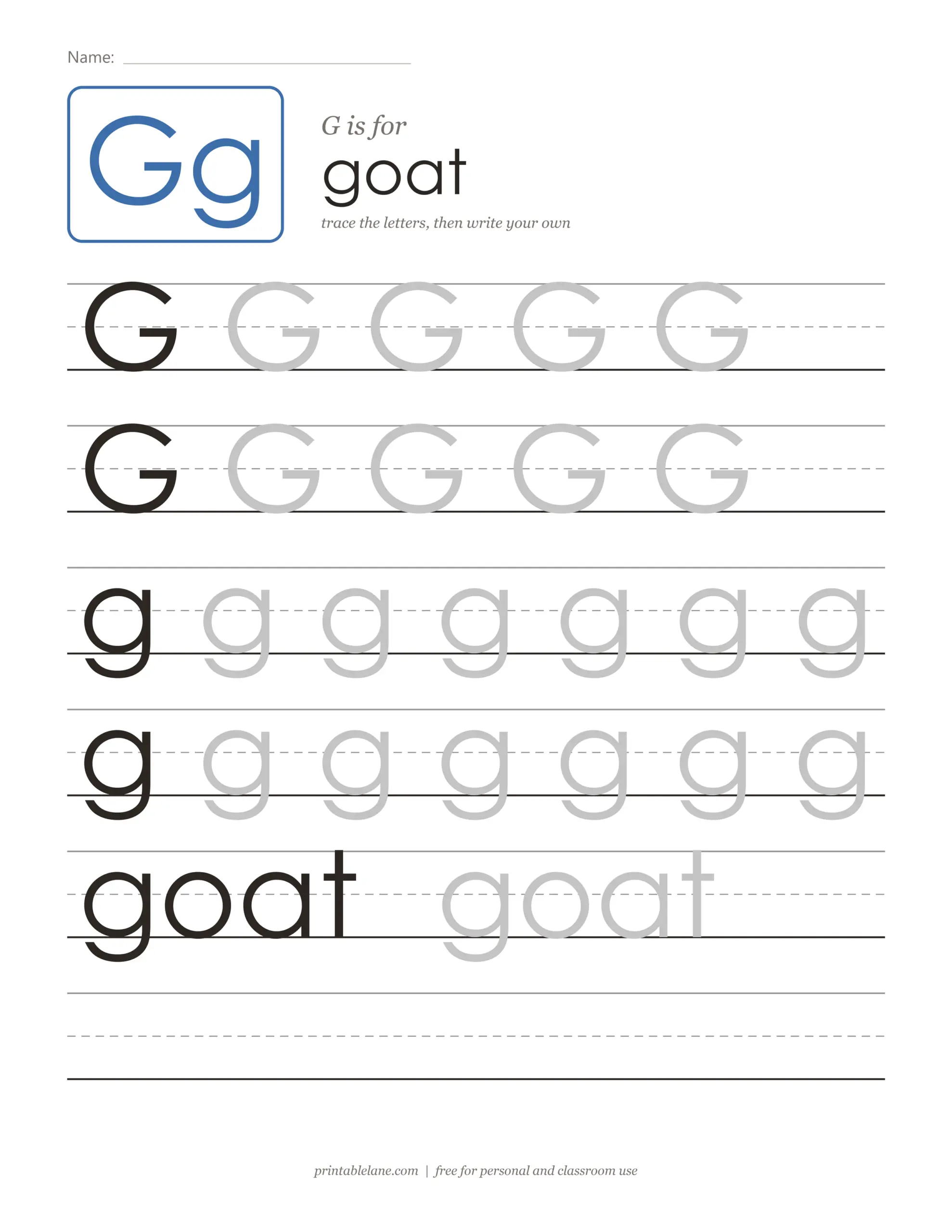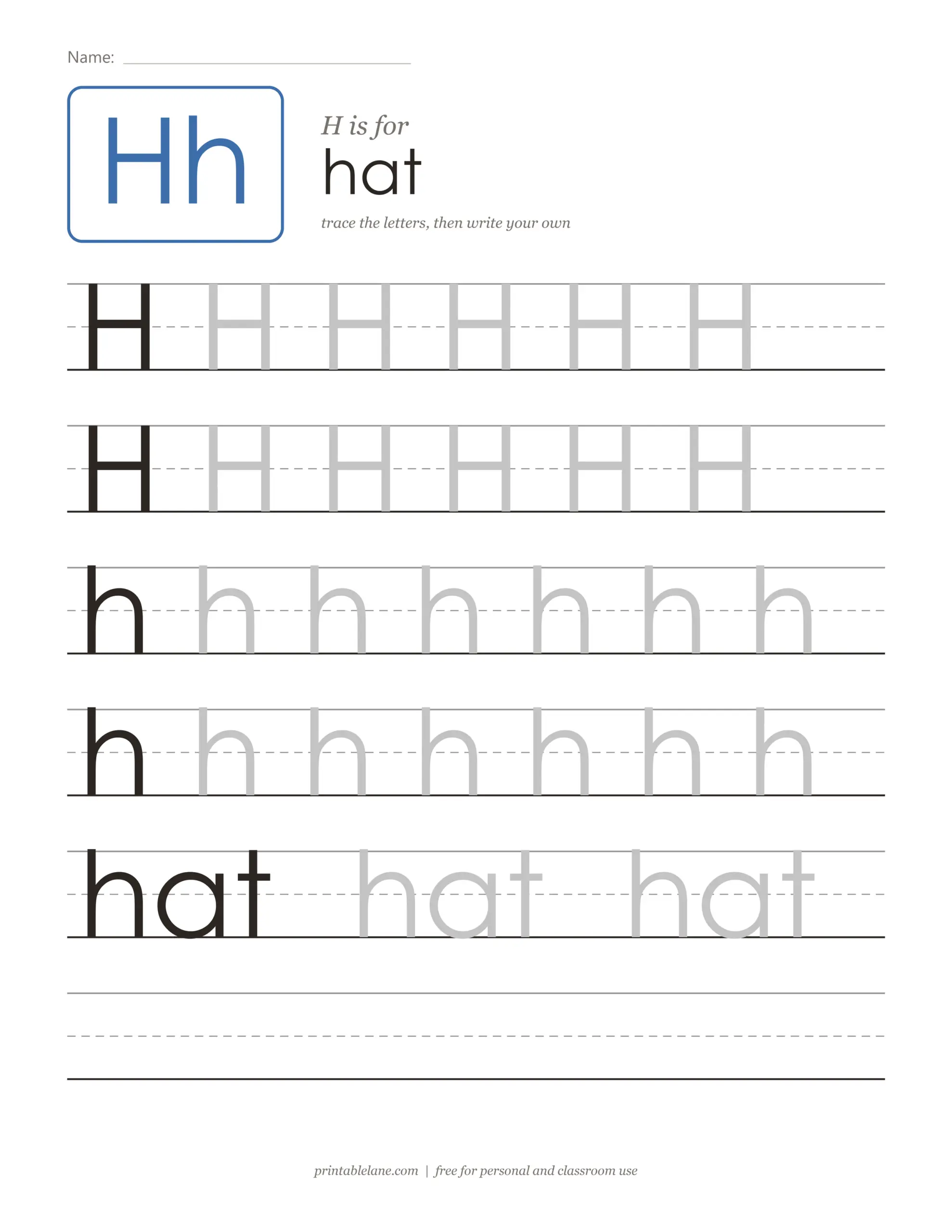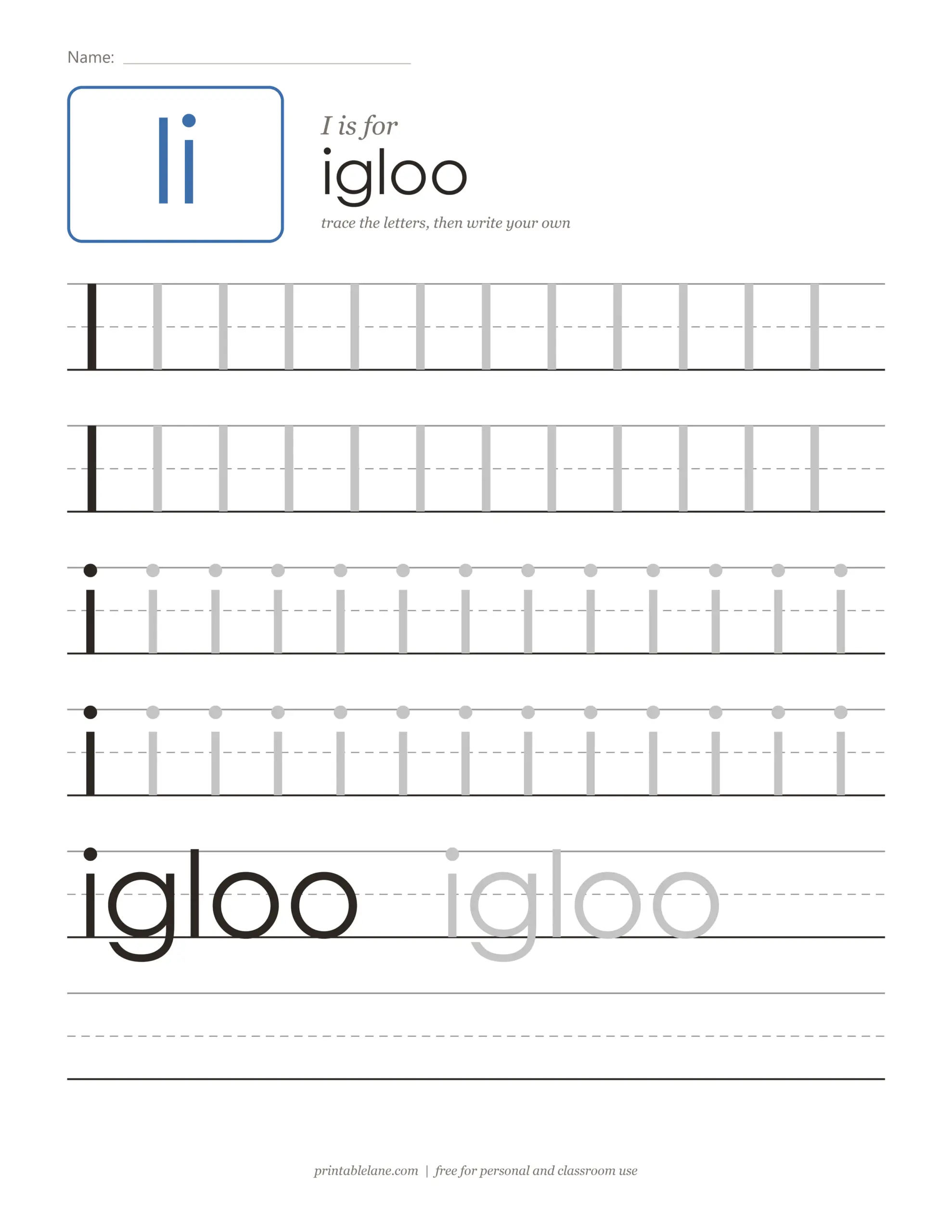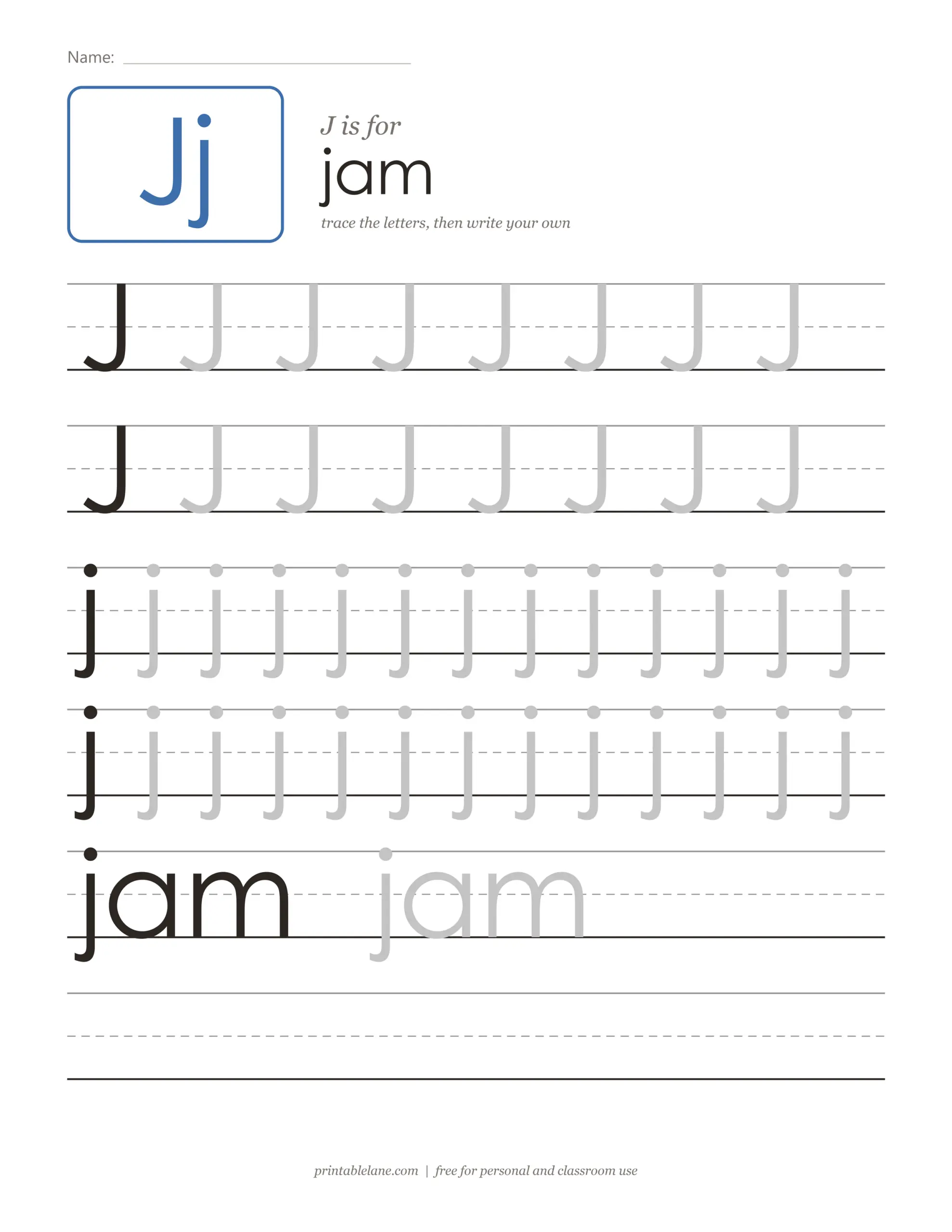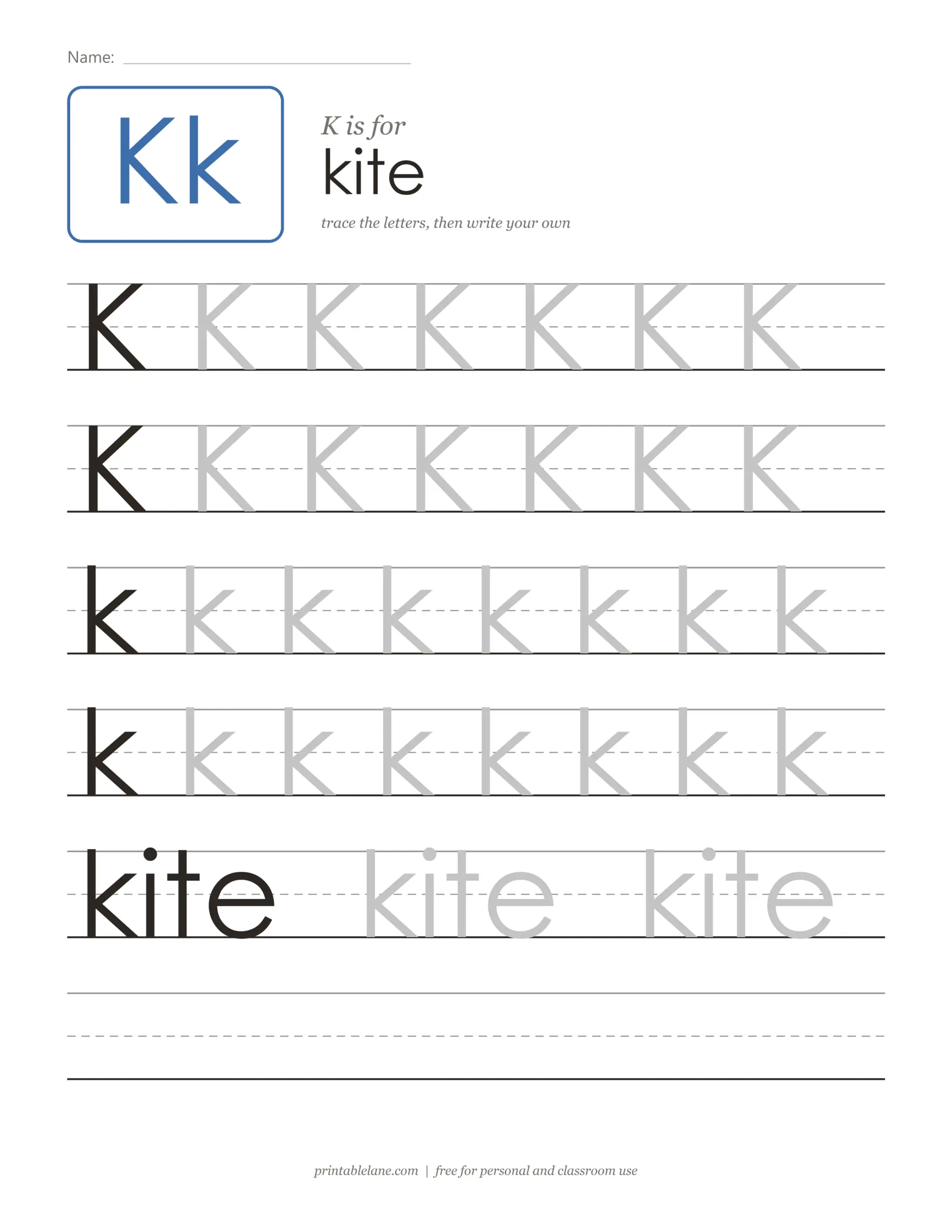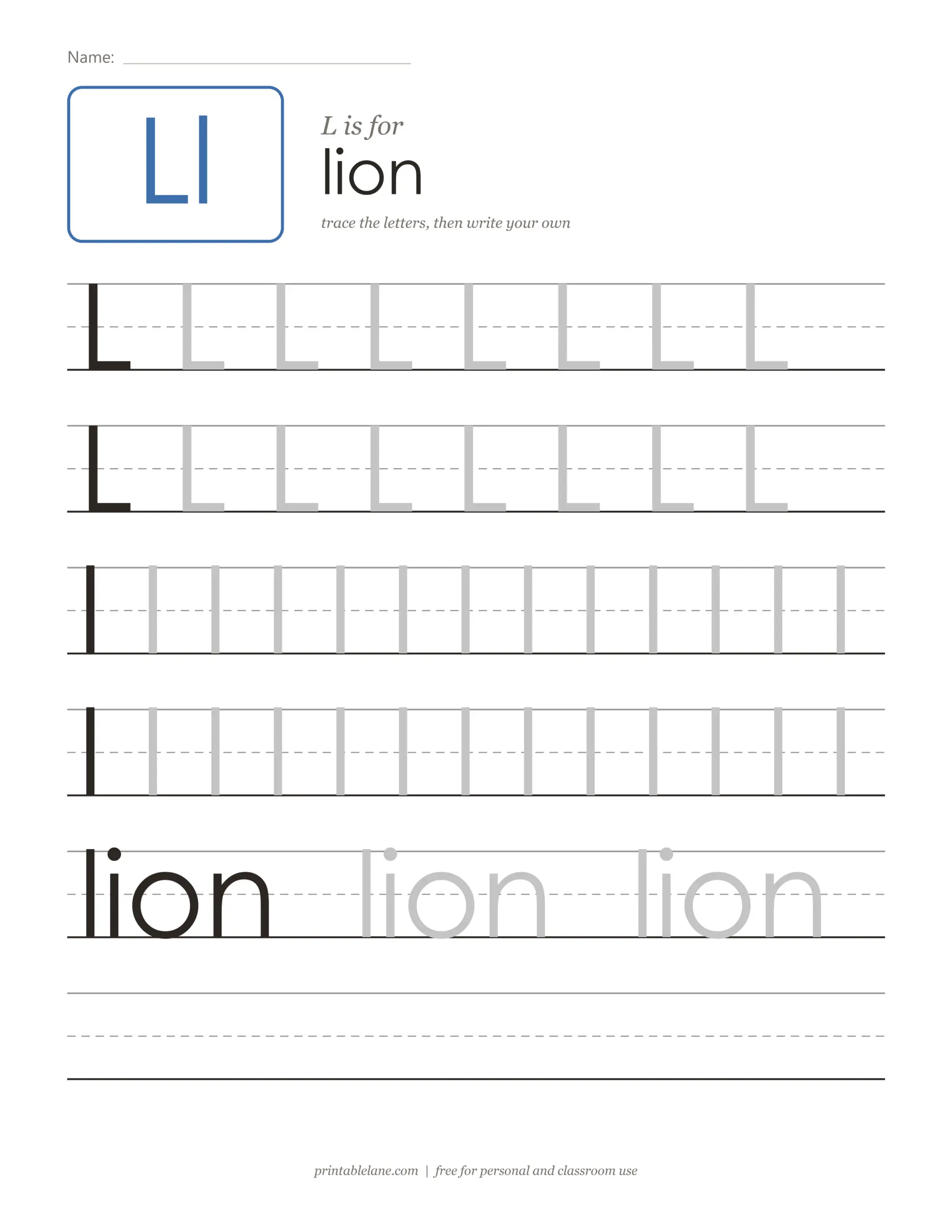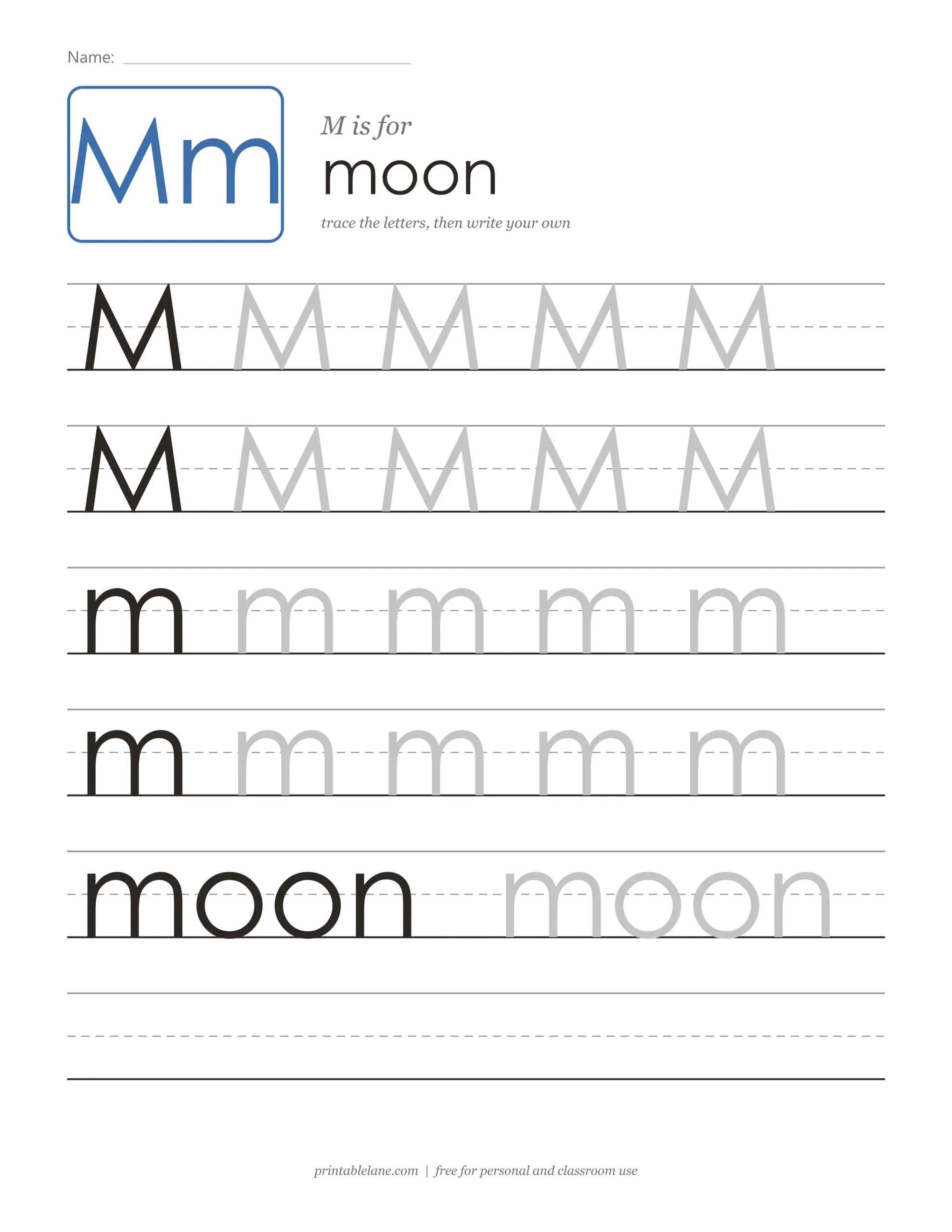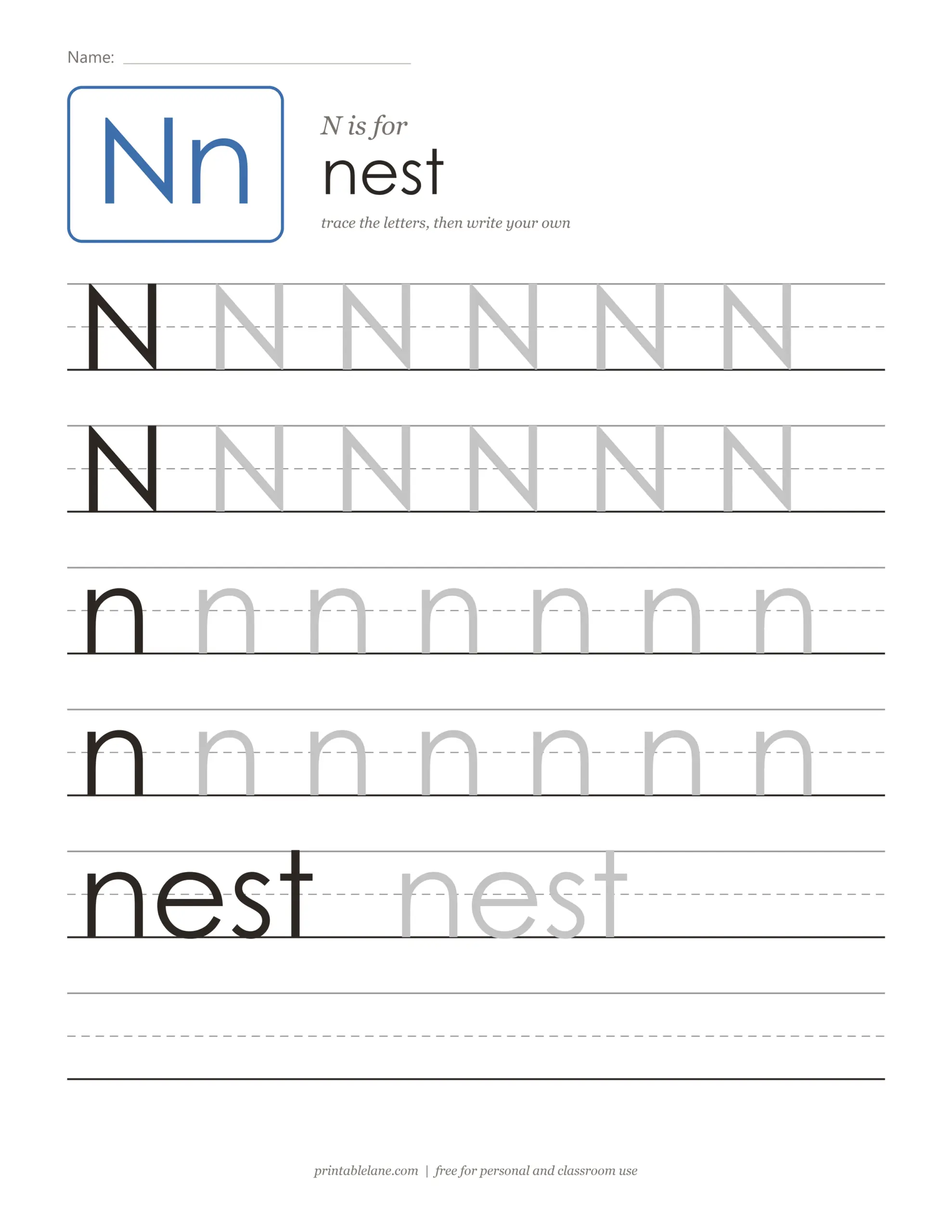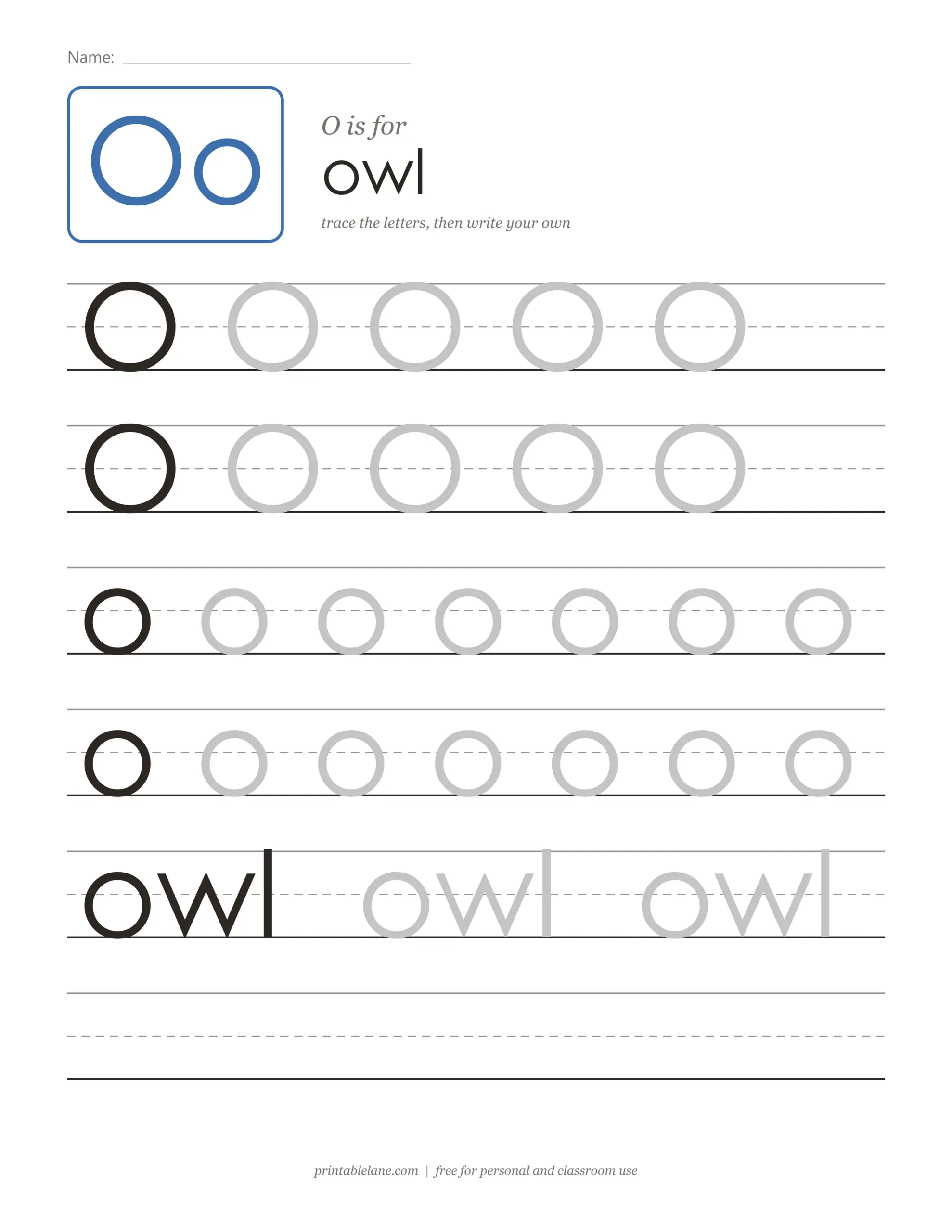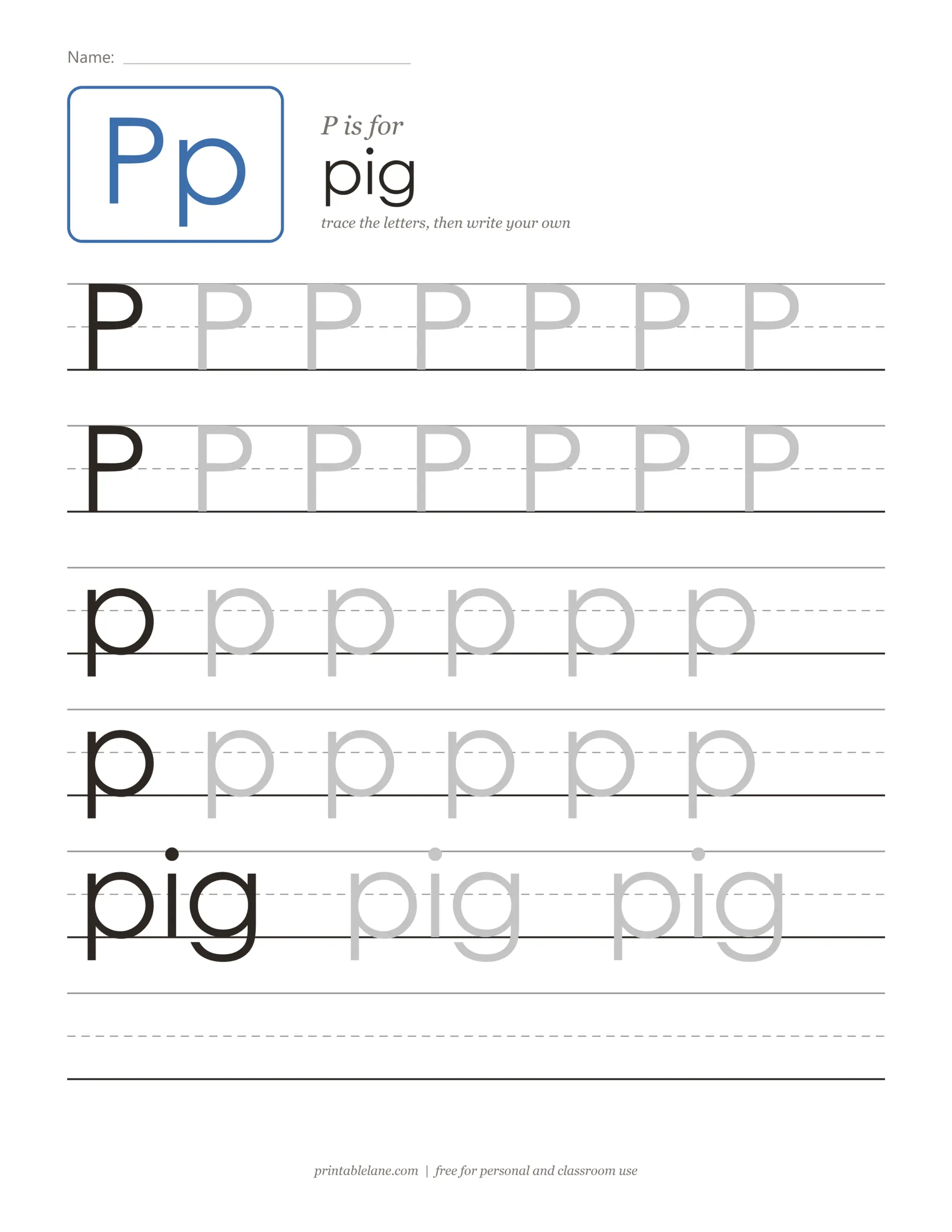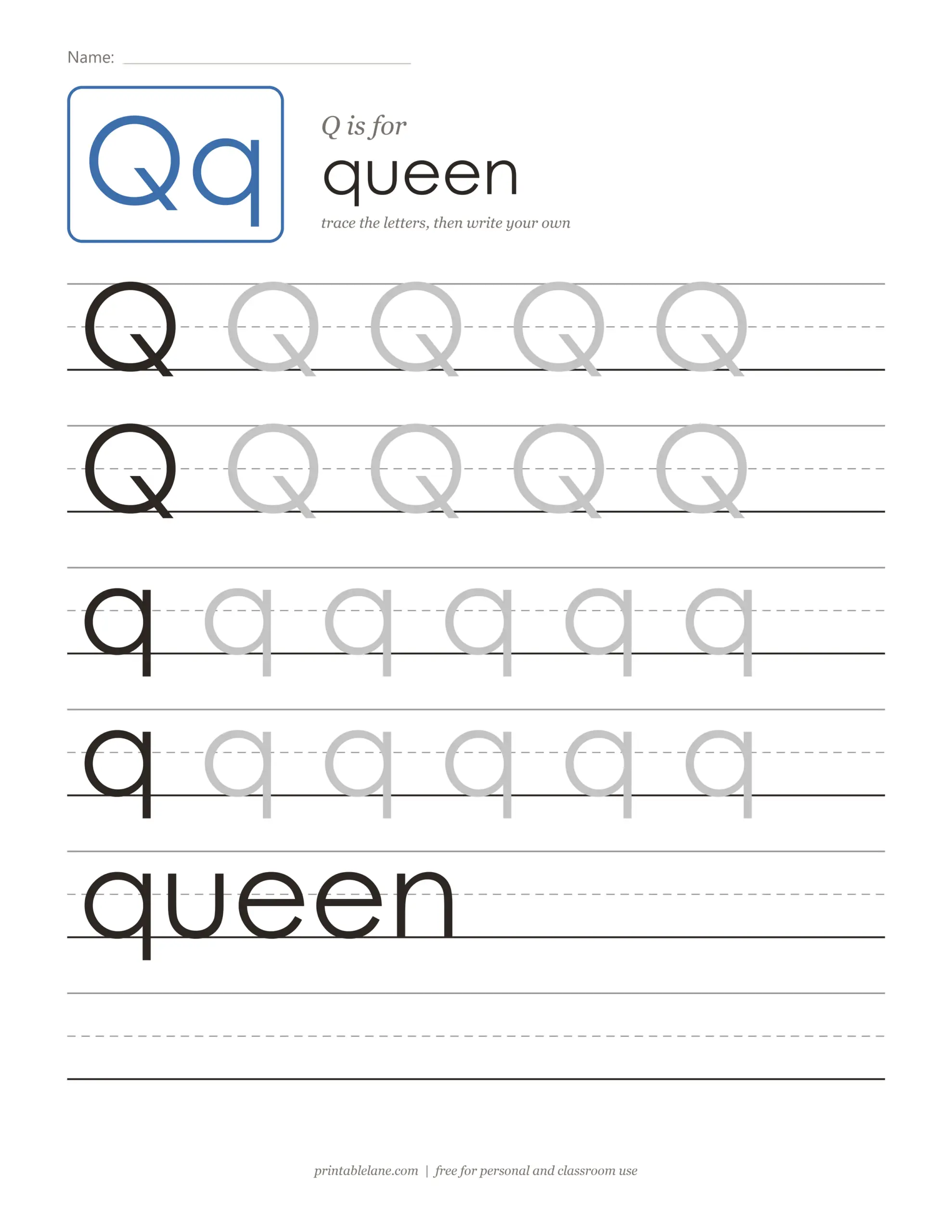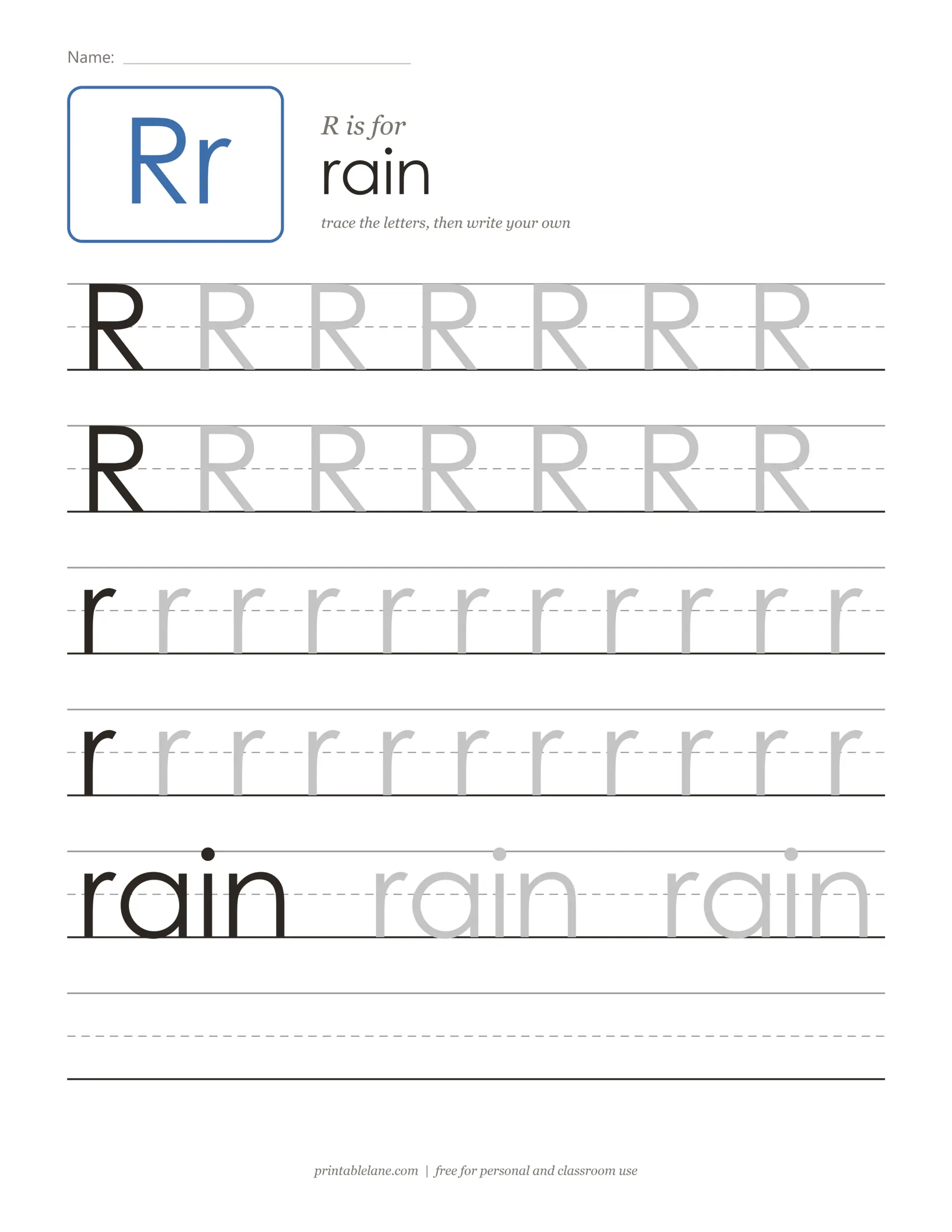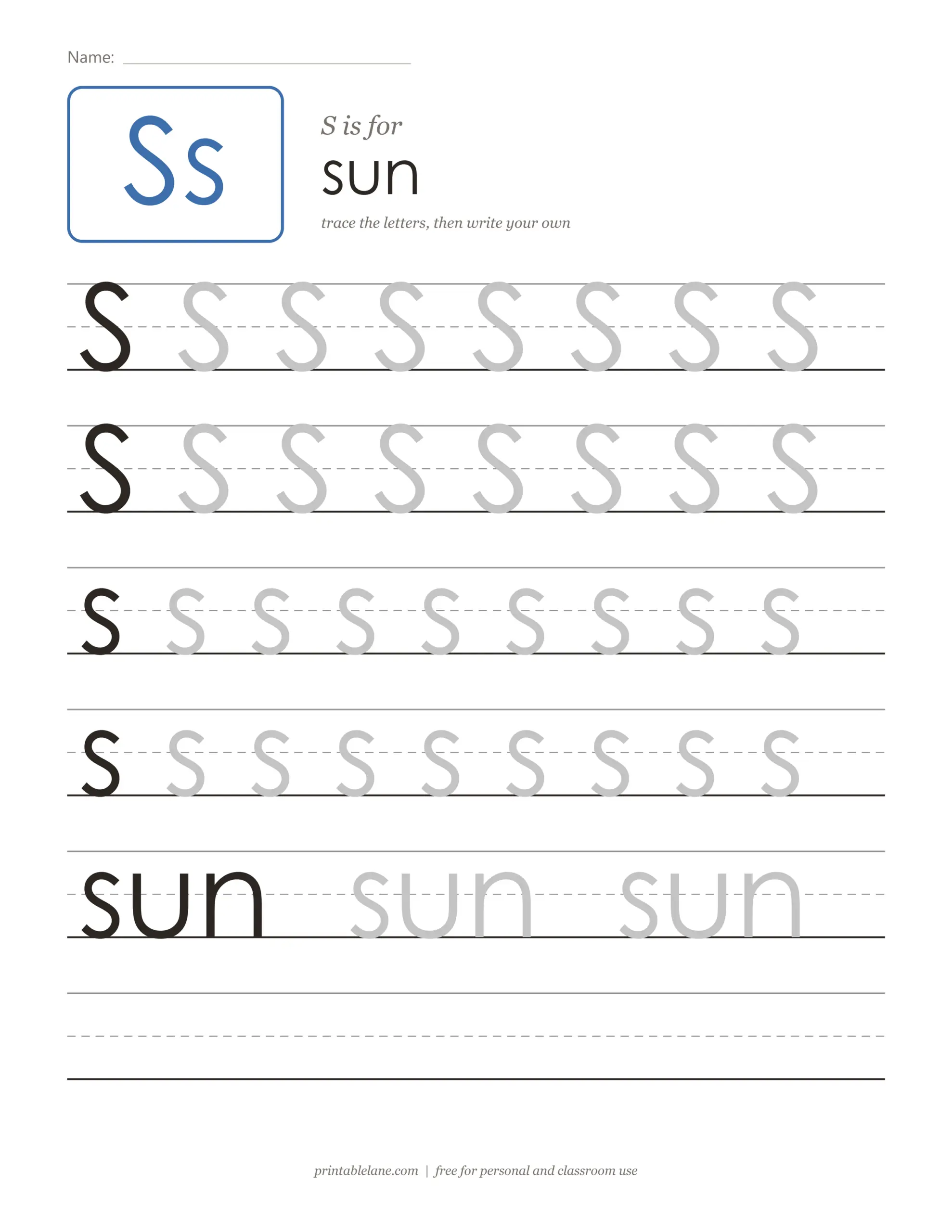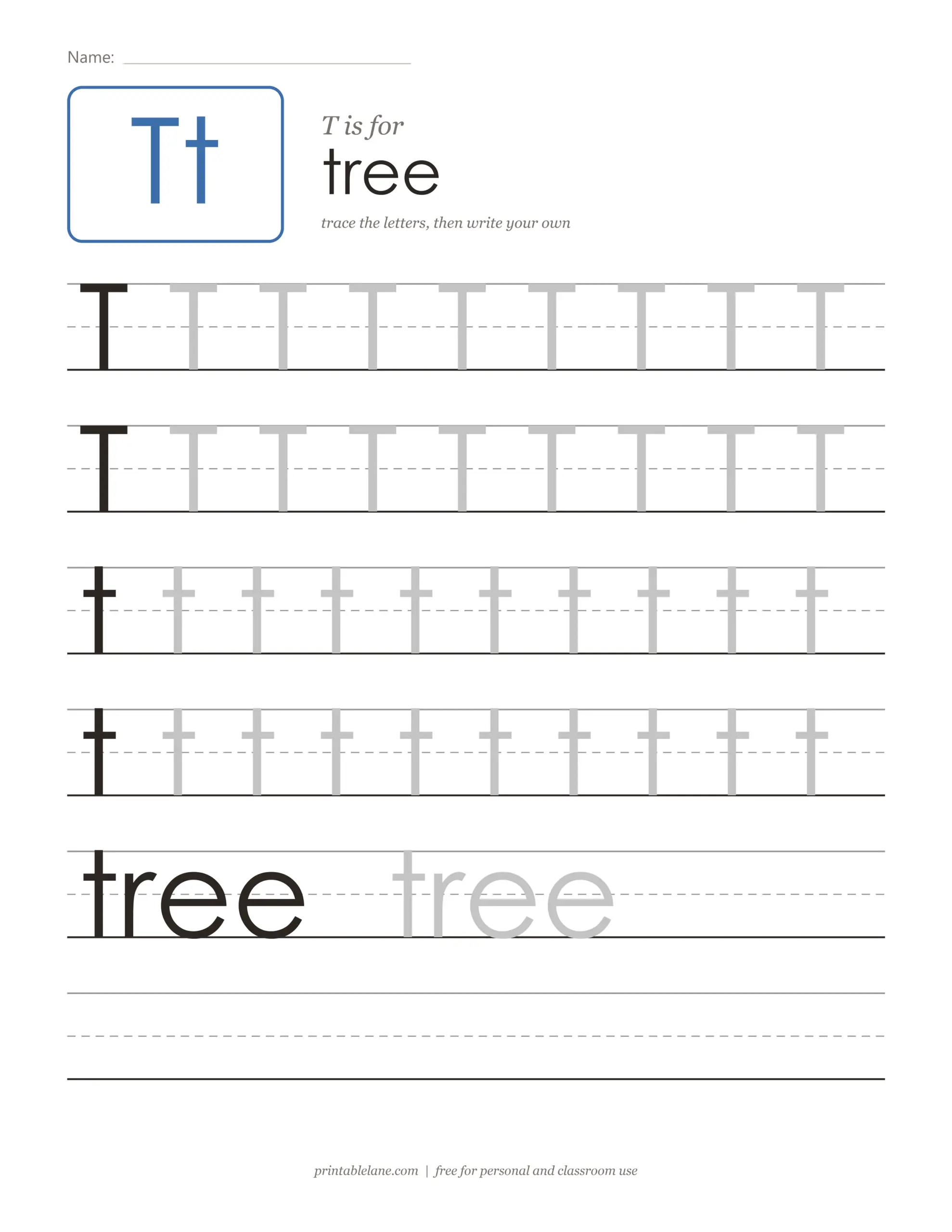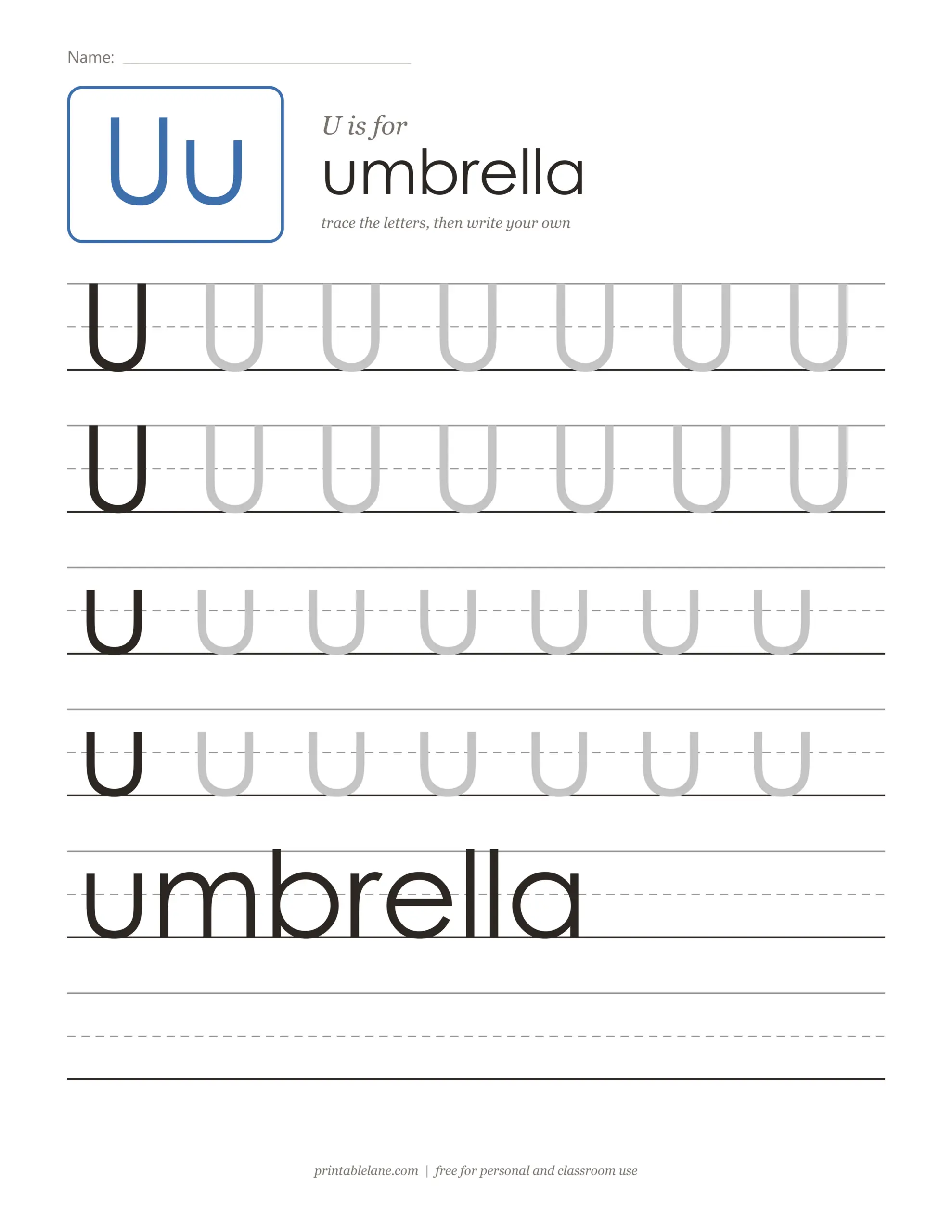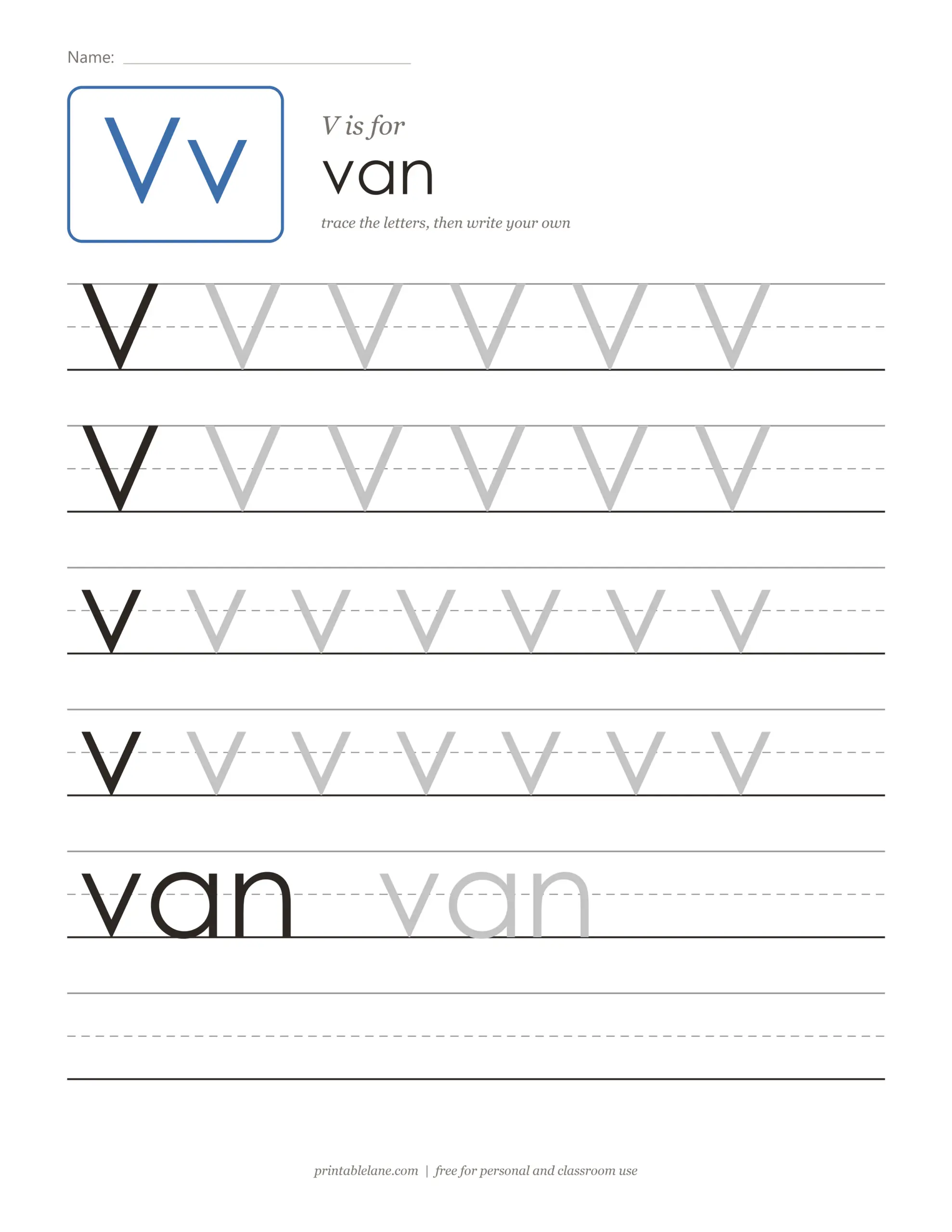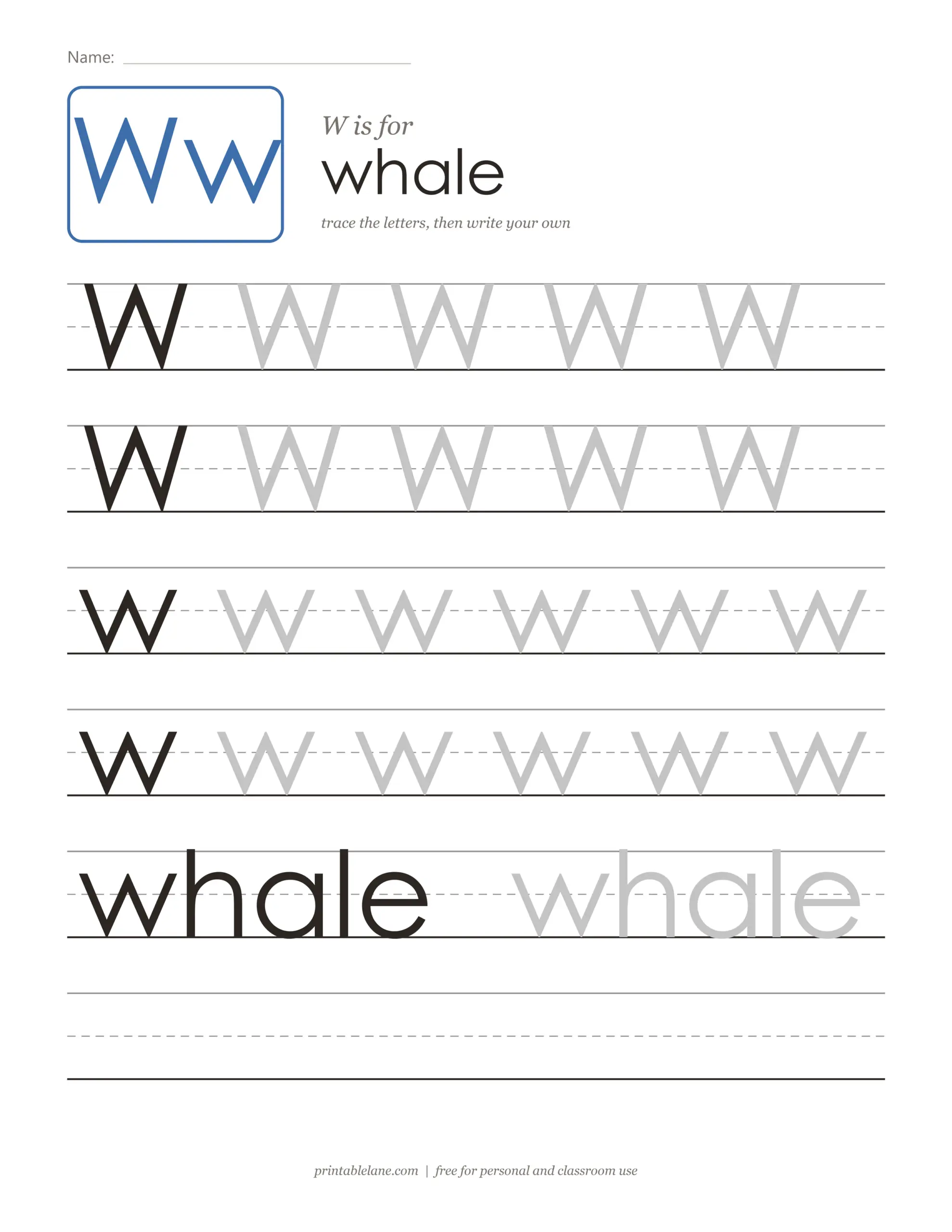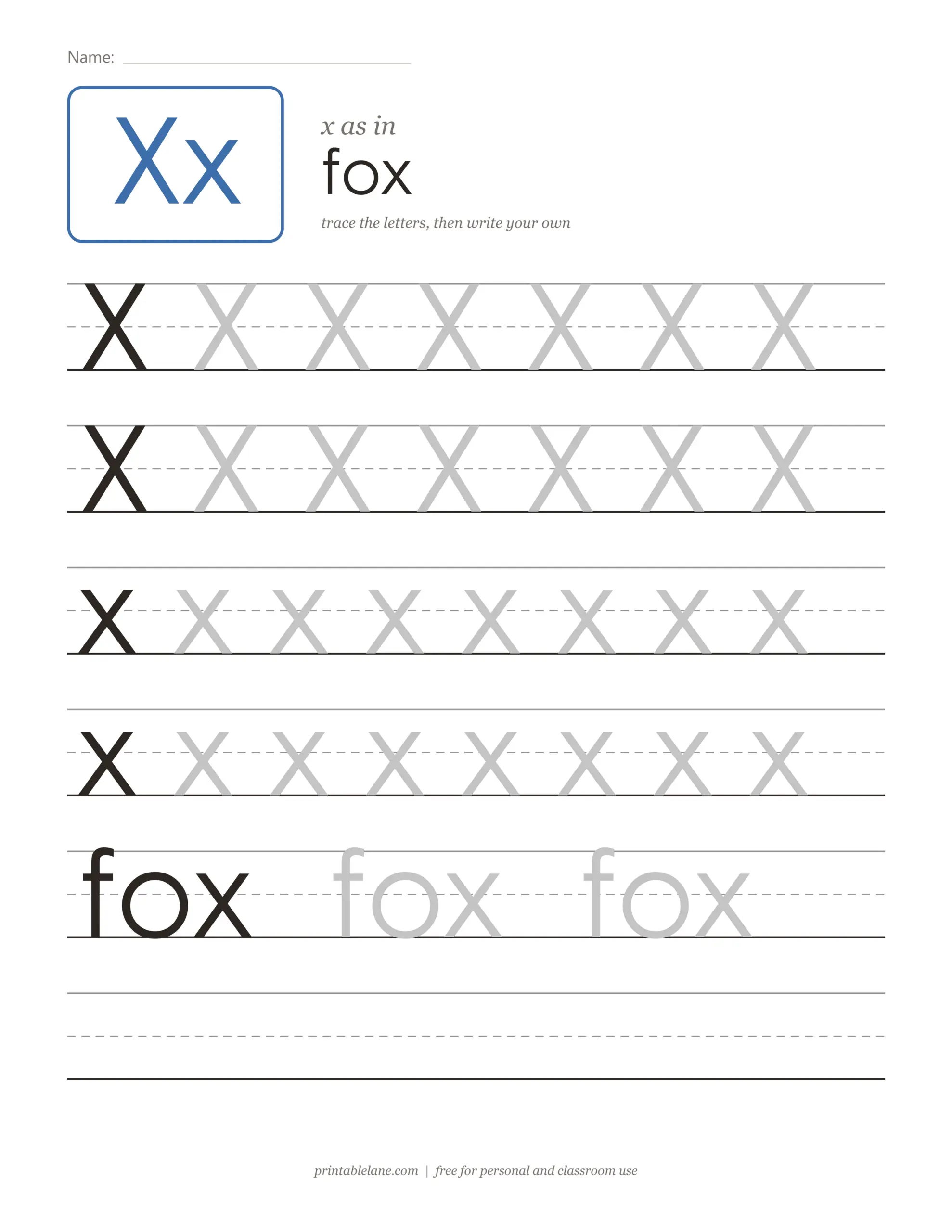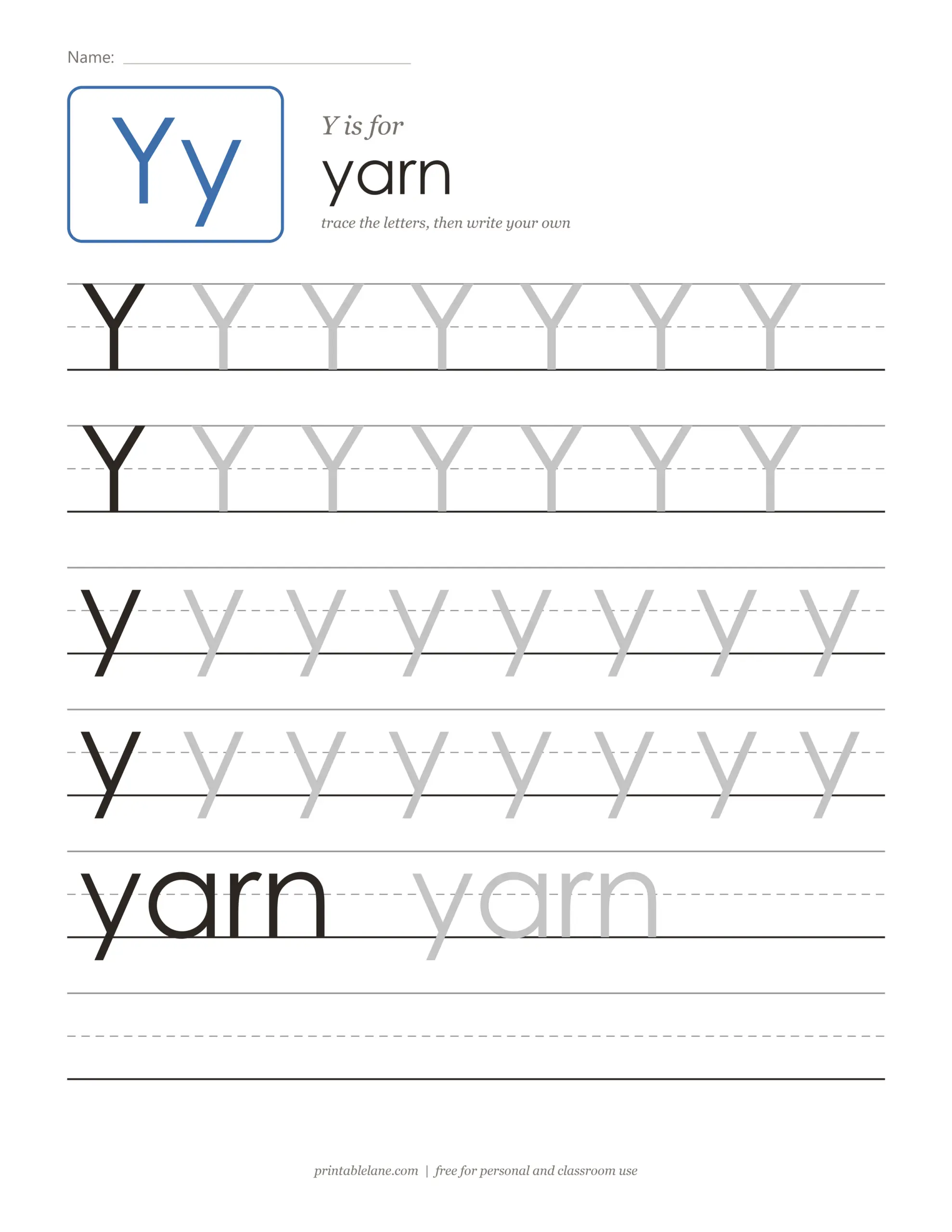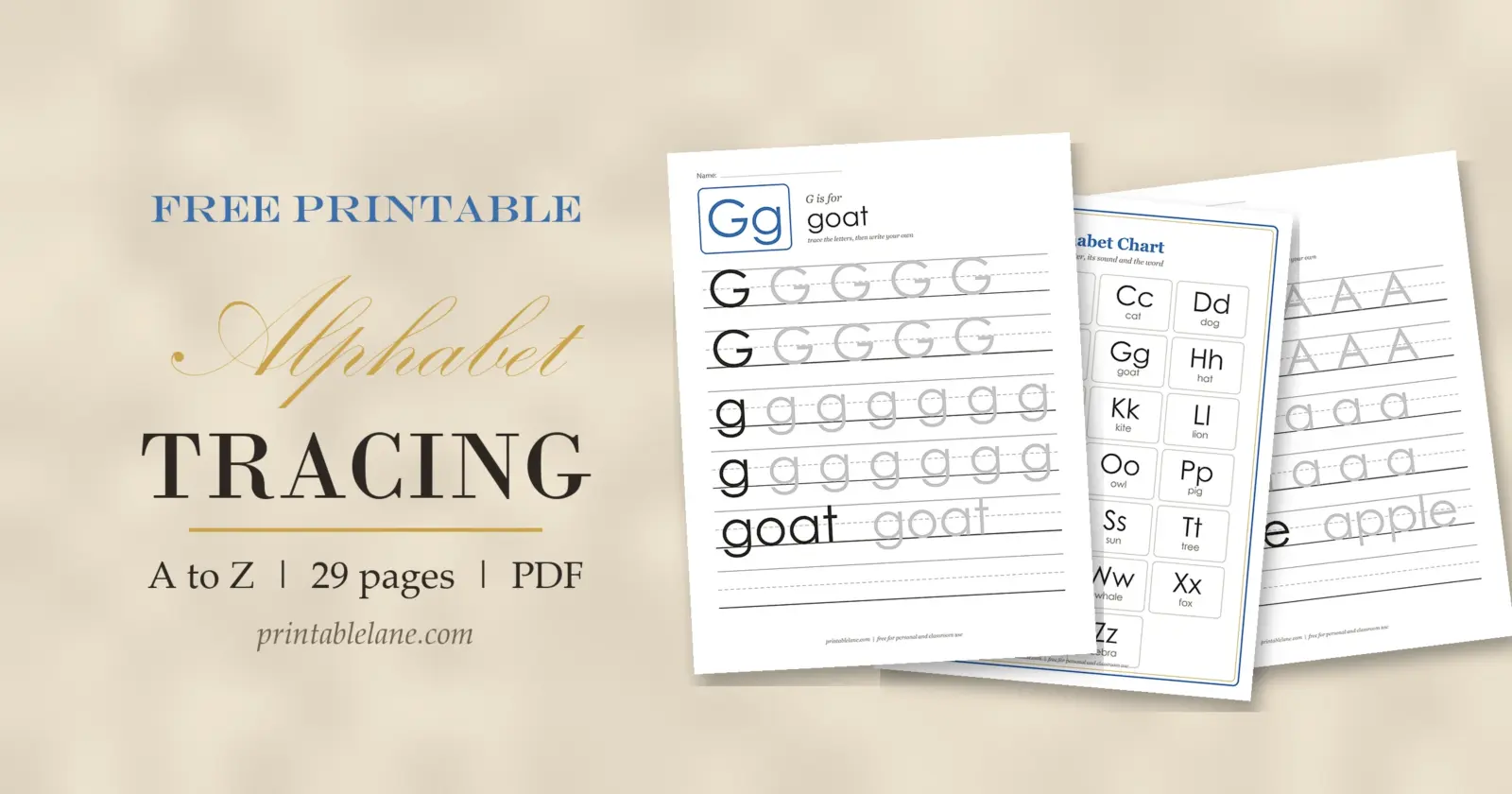
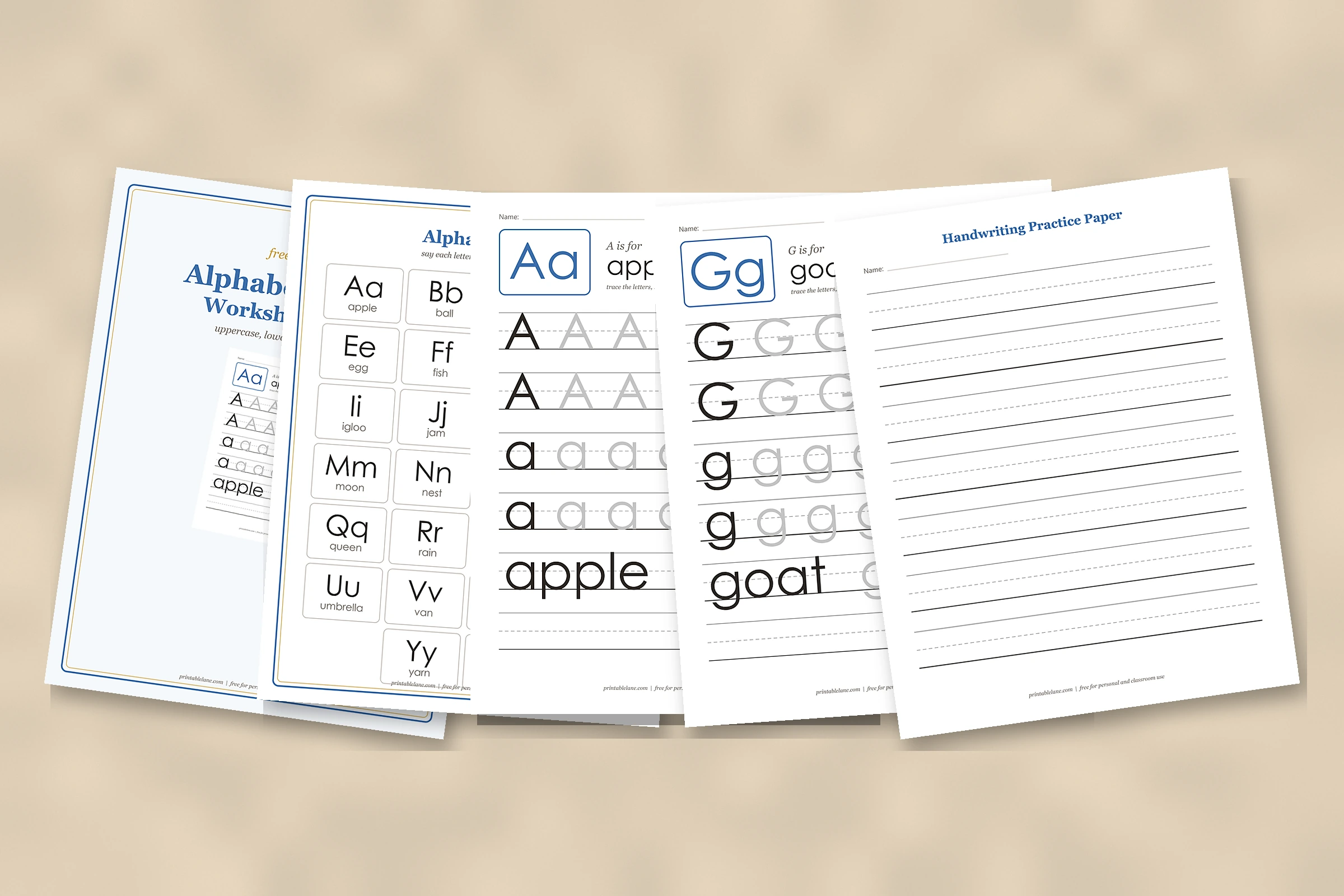
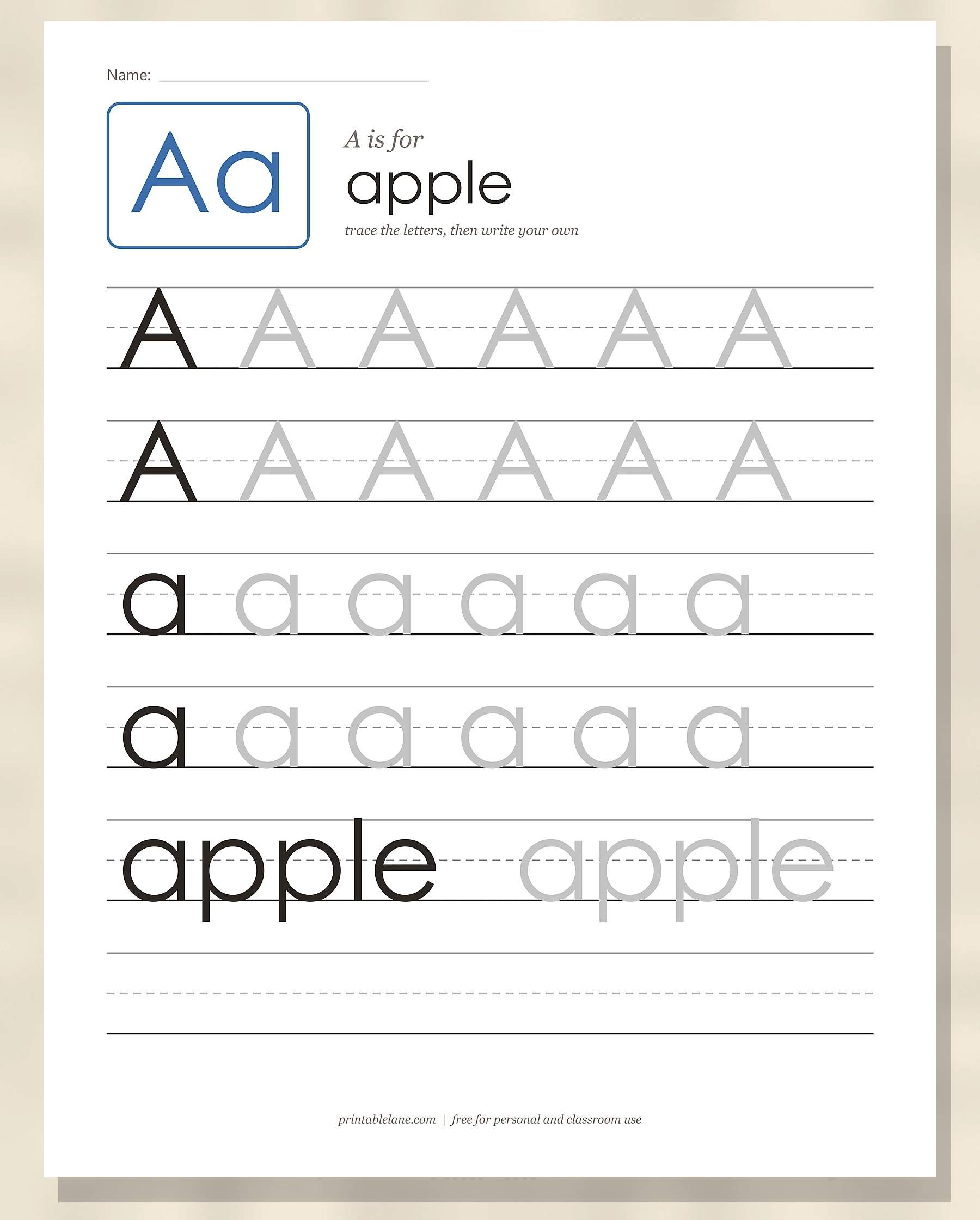
These alphabet tracing worksheets give every letter from A to Z its own page. Kids trace the uppercase letter, trace the lowercase letter, trace a simple word like “apple” and then write the letter on their own, all on three-line handwriting paper.
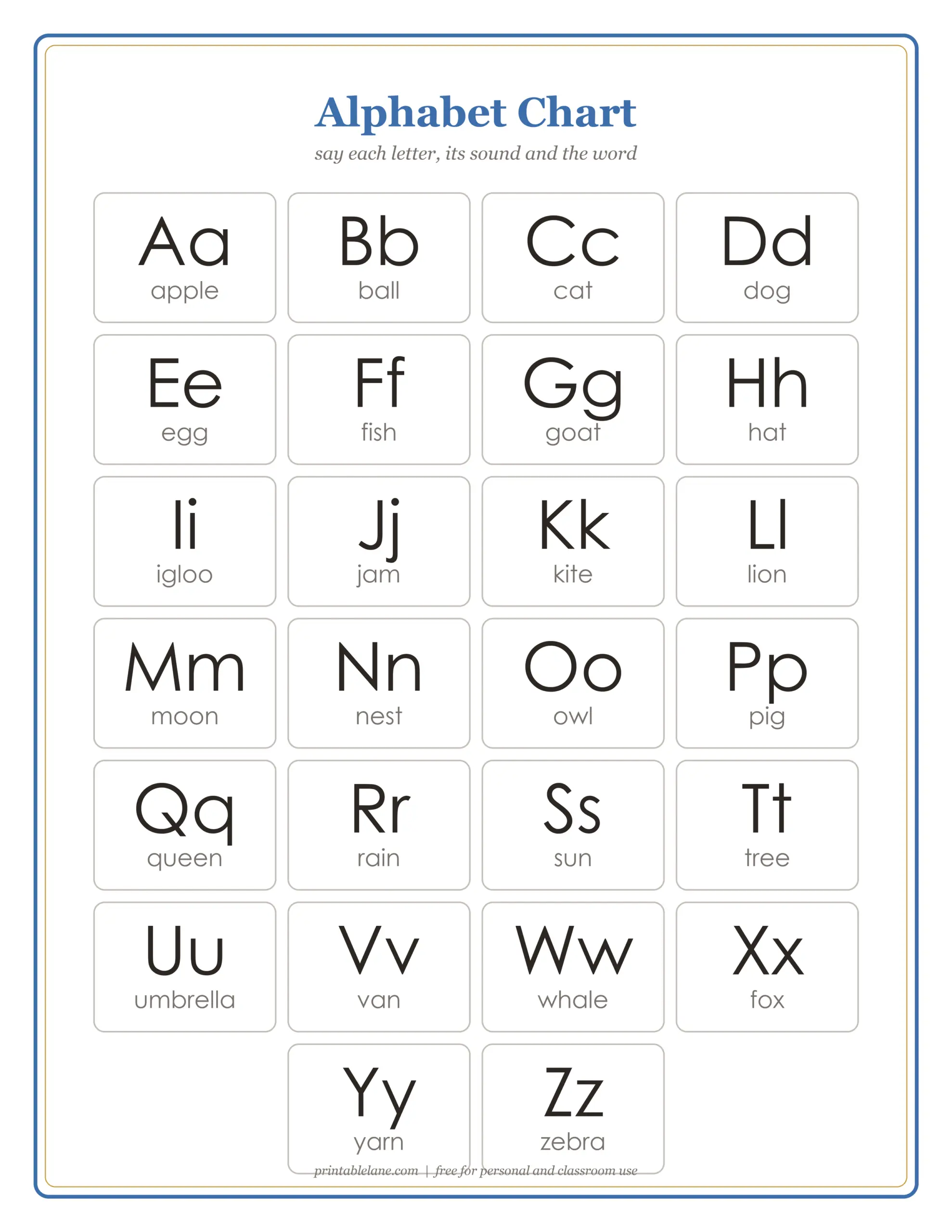
The pages are black and white, so they print quickly on any home printer, and they use a clear print style with a simple “a” and “g”, like the letters kids see in early readers. The PDF also has an alphabet chart and blank handwriting paper for extra practice.
What is on each alphabet tracing worksheet
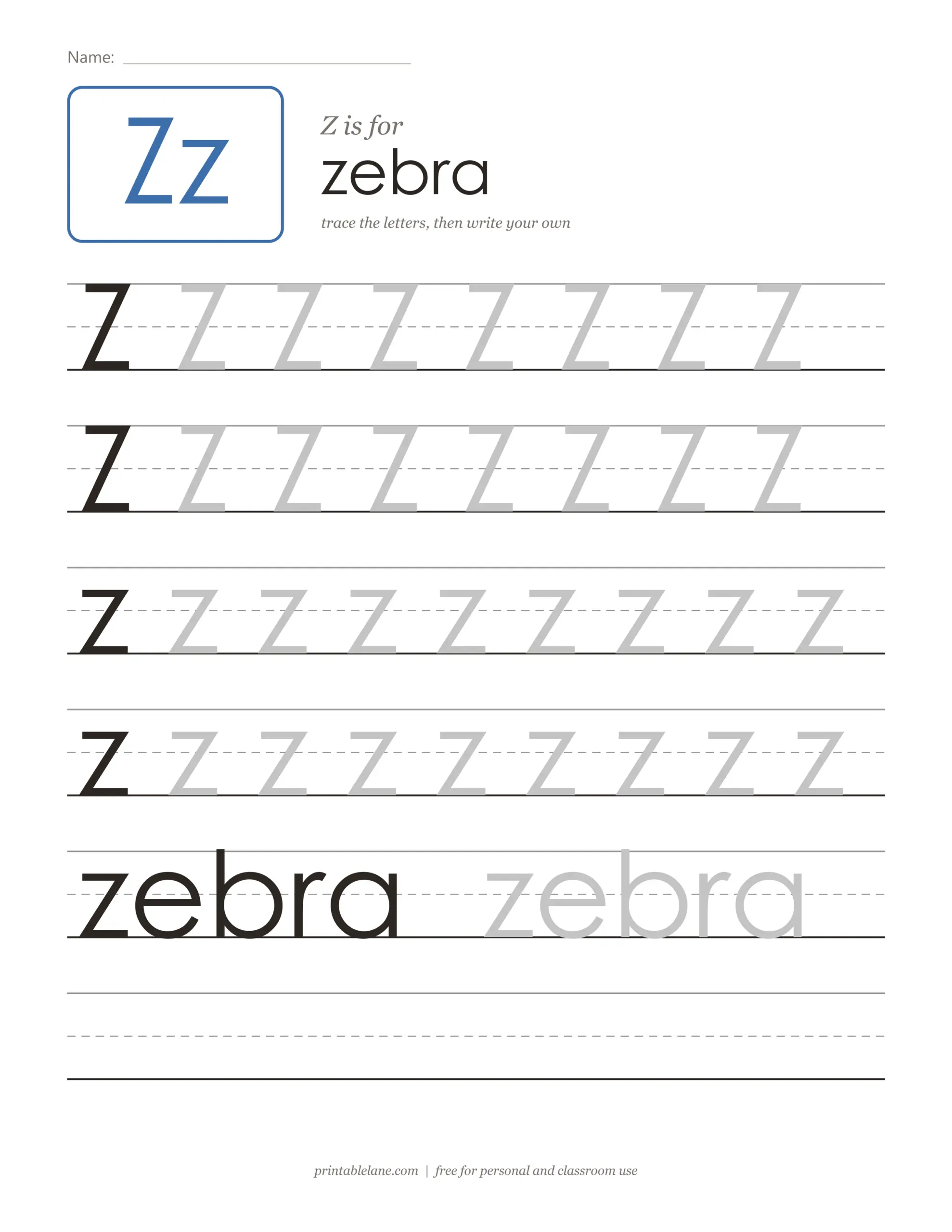
- Letter box: the uppercase and lowercase letter together, plus “A is for apple”.
- Two rows of uppercase tracing: the first letter is dark to show the shape, the rest are light grey to trace.
- Two rows of lowercase tracing in the same way.
- One row to trace the word.
- One empty row to write the letter without help.
- A line for the child’s name at the top.
The A to Z word list
Each letter has a short, easy word that starts with that letter. X is the exception: few simple words start with X, so we use “fox”, where the X sound is easy to hear.
- Aa: apple
- Bb: ball
- Cc: cat
- Dd: dog
- Ee: egg
- Ff: fish
- Gg: goat
- Hh: hat
- Ii: igloo
- Jj: jam
- Kk: kite
- Ll: lion
- Mm: moon
- Nn: nest
- Oo: owl
- Pp: pig
- Qq: queen
- Rr: rain
- Ss: sun
- Tt: tree
- Uu: umbrella
- Vv: van
- Ww: whale
- Xx: fox
- Yy: yarn
- Zz: zebra
How to use the worksheets
- Say the letter name and its sound together before tracing.
- Trace the dark model letter with a finger first, then with a pencil.
- Start each letter at the top line, which is how most letters are formed.
- Trace the grey letters slowly; neat beats fast.
- Finish with the empty row and circle the best letter on the page.
Teach letters in shape groups, not only A to Z
The pages are in alphabet order, but you do not have to use them that way. Many teachers group letters by the strokes they share, which makes each new letter feel easier:
- Straight lines: L, T, I, H, F, E, then l, t, i.
- Slanted lines: A, V, W, X, Y, Z, K, N, M, then v, w, x, y, z, k.
- Curves: C, O, Q, G, S, then c, o, a, d, g, q, e, s.
- Lines and curves together: D, P, B, R, J, U, then b, p, h, n, m, r, u, f, j.
Starting with straight-line letters gives kids quick wins. By the time they reach the curve group, they already know how to start at the top line and stop on the base line.
A simple 6-week plan
Doing a little every day works better than a long session once a week. One page takes about 10 minutes for a 4- or 5-year-old.
- Week 1: A to E, plus the alphabet chart on the wall.
- Week 2: F to J.
- Week 3: K to O.
- Week 4: P to T.
- Week 5: U to Z (six letters, so do two on Friday).
- Week 6: review the tricky ones (often b, d, p, q and s) and write names and short words on the blank paper.
Watch for these common mix-ups
Reversing b and d, or p and q, is completely normal at this age. A quick trick: make a “bed” with both fists, thumbs up. The left hand is a b, the right hand is a d. For letters that come out too big, point to the three lines: tall letters touch the top line, small letters stop at the dashed middle line, and only g, j, p, q and y hang below the base line.
Tips for little hands
- Use a thick pencil or a triangle pencil grip for a better hold.
- Slide the page into a sheet protector and use a dry-erase marker to reuse it.
- Do one letter a day, or one page in the morning and one in the afternoon.
- Pair each letter with something real: an apple for A, a ball for B.
- Praise effort, not perfection; tracing builds muscle memory over time.
Alphabet chart and blank practice paper
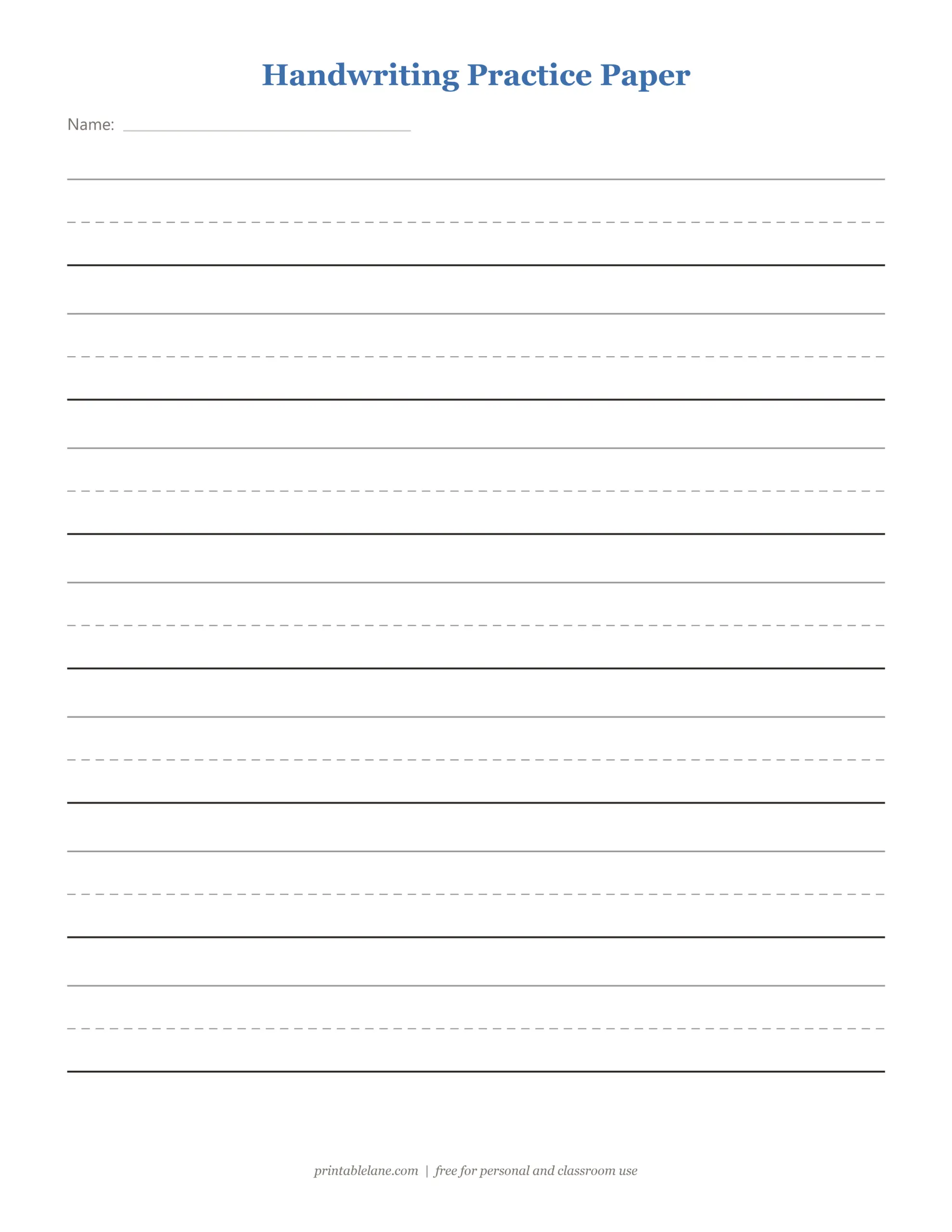
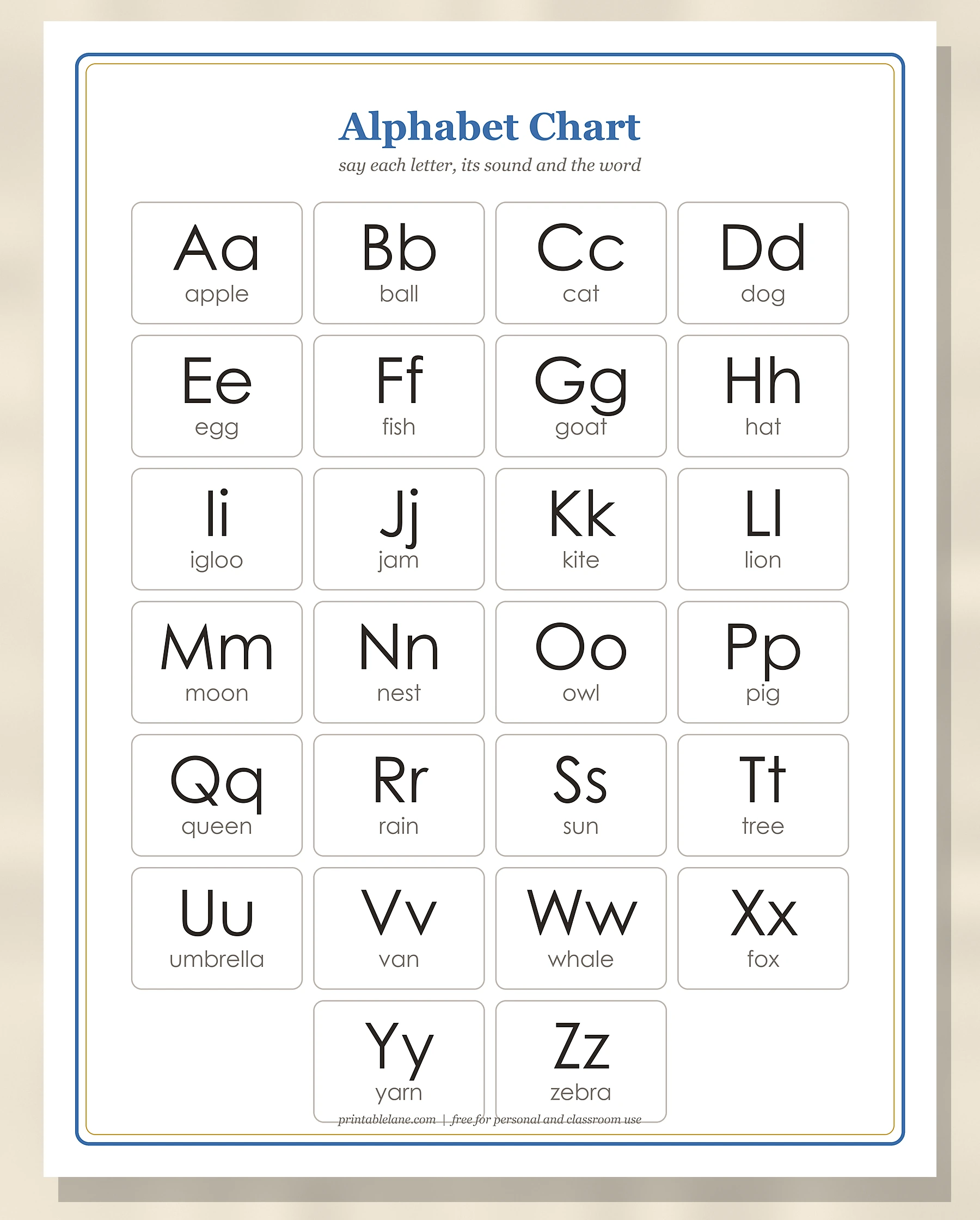
The alphabet chart shows all 26 letter pairs with their words, so you can hang it on the wall or keep it next to the worksheets. The blank handwriting paper uses the same three lines (top line, dashed middle line and base line) for writing names, words and short sentences.
Download single letters
Need just one letter? Click a link to open the full-size PNG. The PDF with all 29 pages is in the download box.
- Alphabet chart (PNG)
- Letter A tracing worksheet (PNG)
- Letter B tracing worksheet (PNG)
- Letter C tracing worksheet (PNG)
- Letter D tracing worksheet (PNG)
- Letter E tracing worksheet (PNG)
- Letter F tracing worksheet (PNG)
- Letter G tracing worksheet (PNG)
- Letter H tracing worksheet (PNG)
- Letter I tracing worksheet (PNG)
- Letter J tracing worksheet (PNG)
- Letter K tracing worksheet (PNG)
- Letter L tracing worksheet (PNG)
- Letter M tracing worksheet (PNG)
- Letter N tracing worksheet (PNG)
- Letter O tracing worksheet (PNG)
- Letter P tracing worksheet (PNG)
- Letter Q tracing worksheet (PNG)
- Letter R tracing worksheet (PNG)
- Letter S tracing worksheet (PNG)
- Letter T tracing worksheet (PNG)
- Letter U tracing worksheet (PNG)
- Letter V tracing worksheet (PNG)
- Letter W tracing worksheet (PNG)
- Letter X tracing worksheet (PNG)
- Letter Y tracing worksheet (PNG)
- Letter Z tracing worksheet (PNG)
- Blank handwriting paper (PNG)
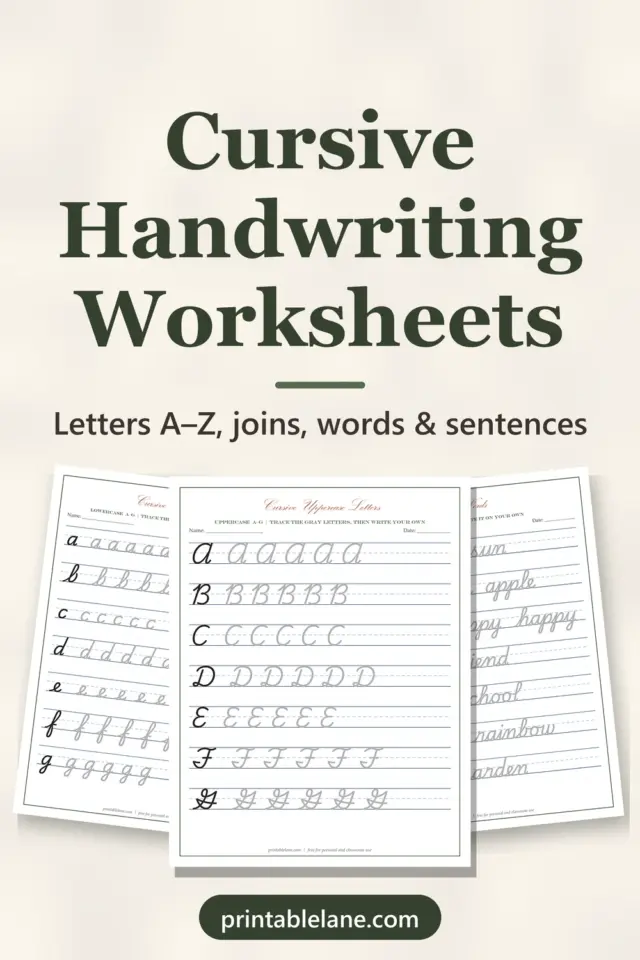
Ready for the next step? Try our cursive handwriting worksheets, the multiplication chart or journal prompts for kids. Or browse all our free printables.
Frequently asked questions
What age are alphabet tracing worksheets for?
They suit children from about 3 to 6, in preschool, pre-K and kindergarten, and older kids who need handwriting practice.
Should kids learn uppercase or lowercase letters first?
Many teachers start with uppercase because the shapes are simpler, then add lowercase. These pages practice both together, so you can focus on whichever your child needs.
How can I reuse the worksheets?
Put a page in a sheet protector or laminate it and use a dry-erase marker.
Are the worksheets free for teachers?
Yes. They are free for personal and classroom use. Please share a link to this page instead of the PDF file.