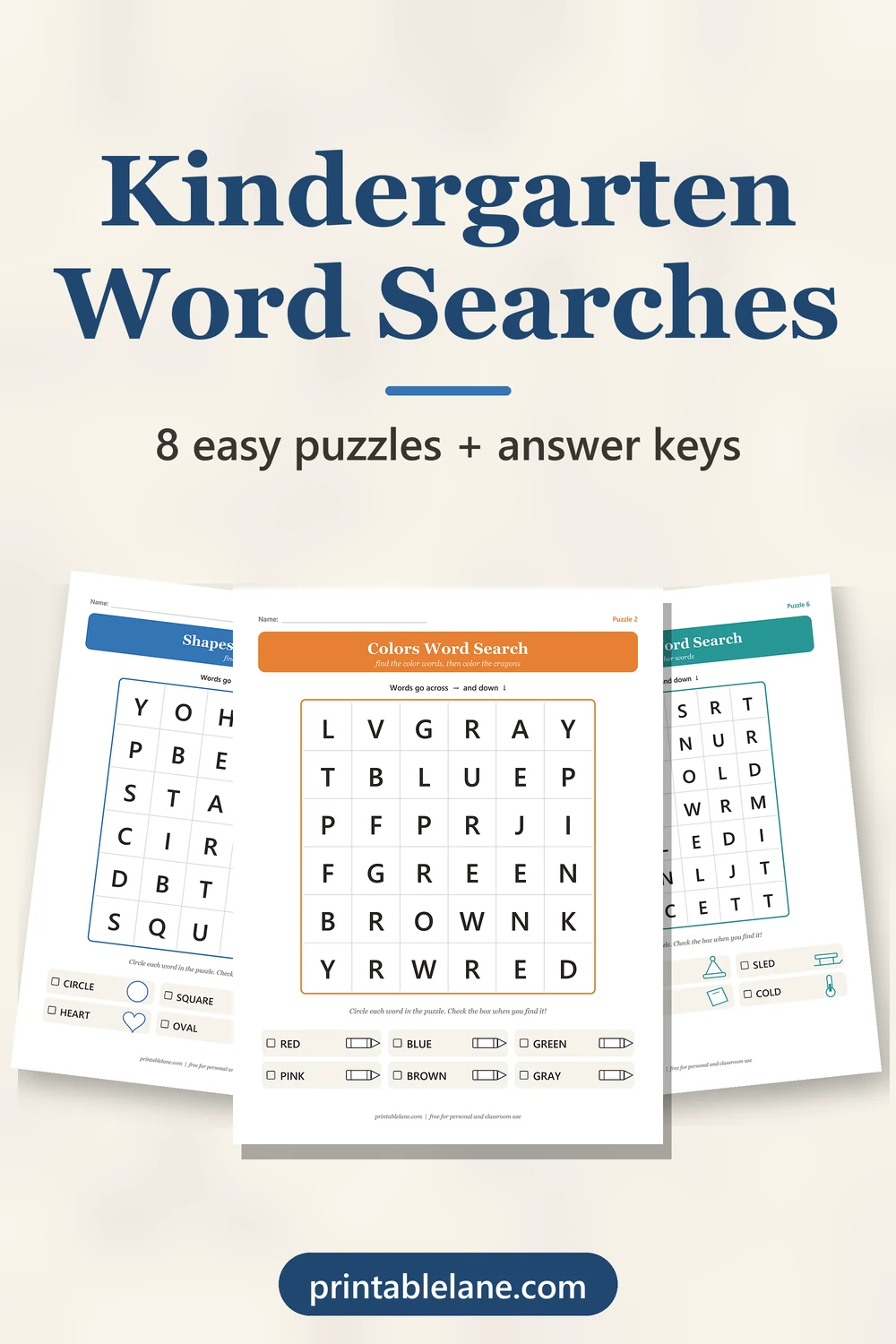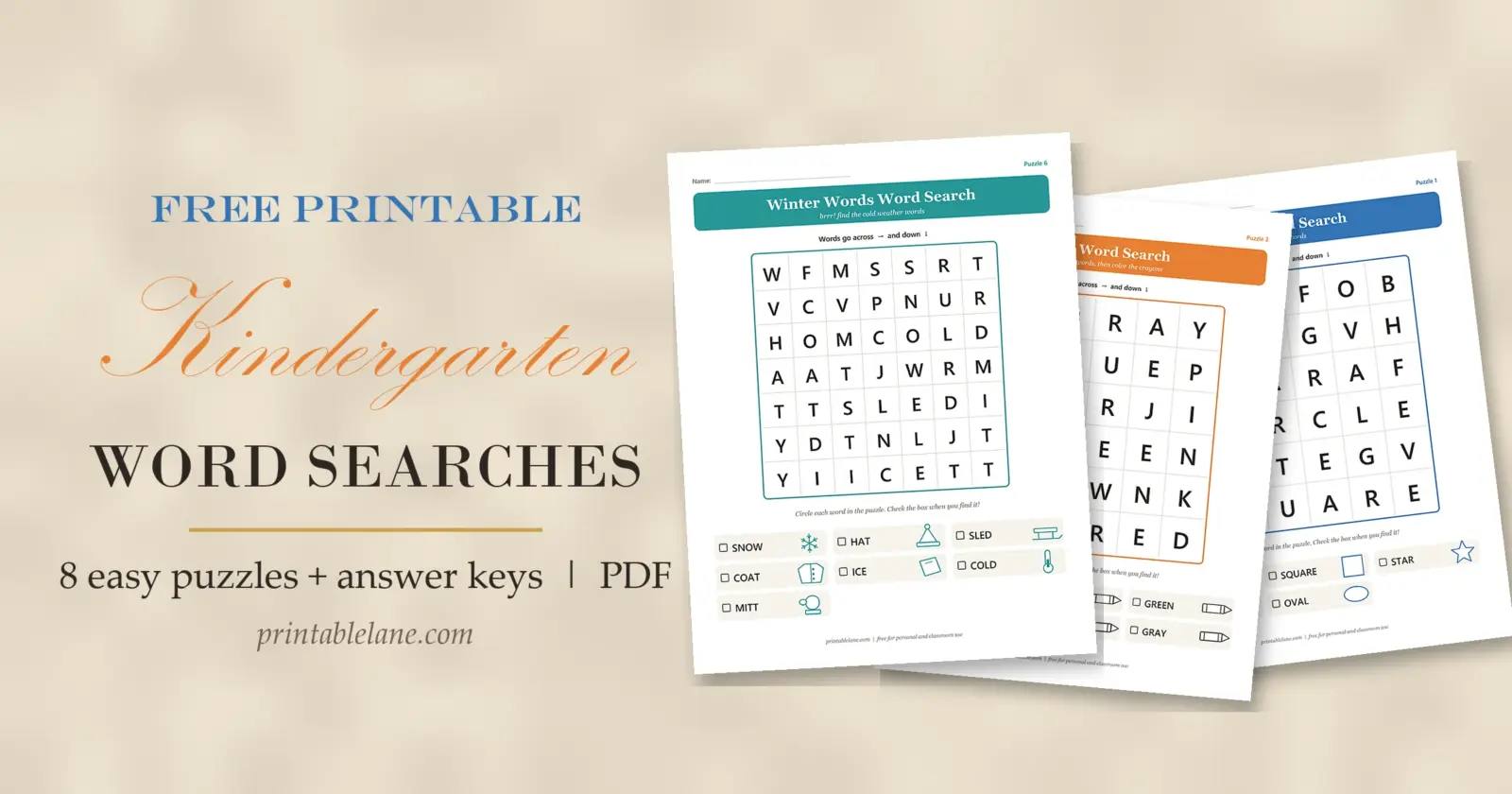
Most word searches are made for older kids. The grids are big, the letters are small and the words run diagonally and backwards. These kindergarten word searches are the opposite: small grids from 6×6 to 8×8, letters large enough for little fingers to point at, and every word reads either across or down, the way children are learning to read.
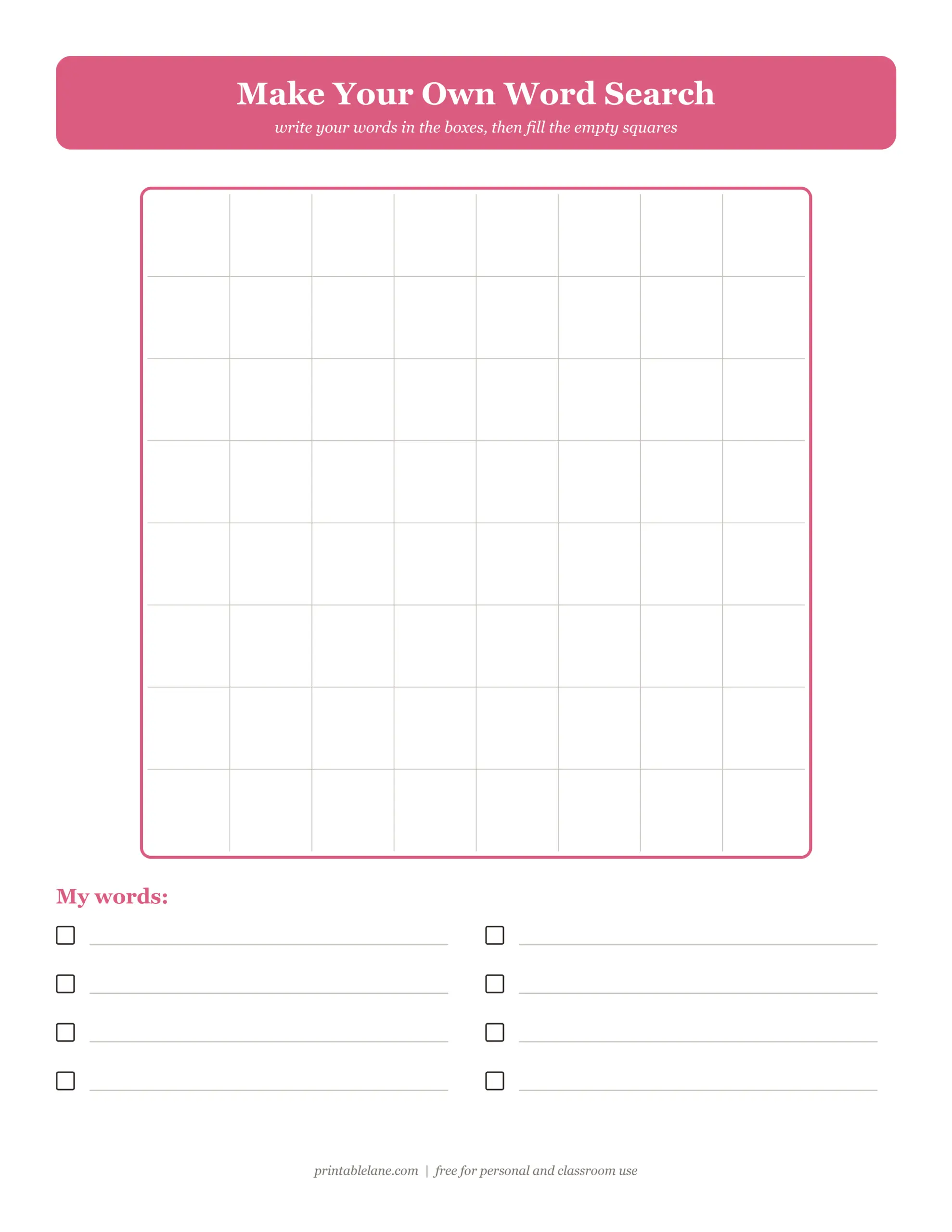
There are eight puzzles, two answer key pages and a blank grid so kids can make their own puzzle for a friend. Print them for morning work, literacy centers, a rainy afternoon or a quiet table at a holiday party.
The 8 puzzles
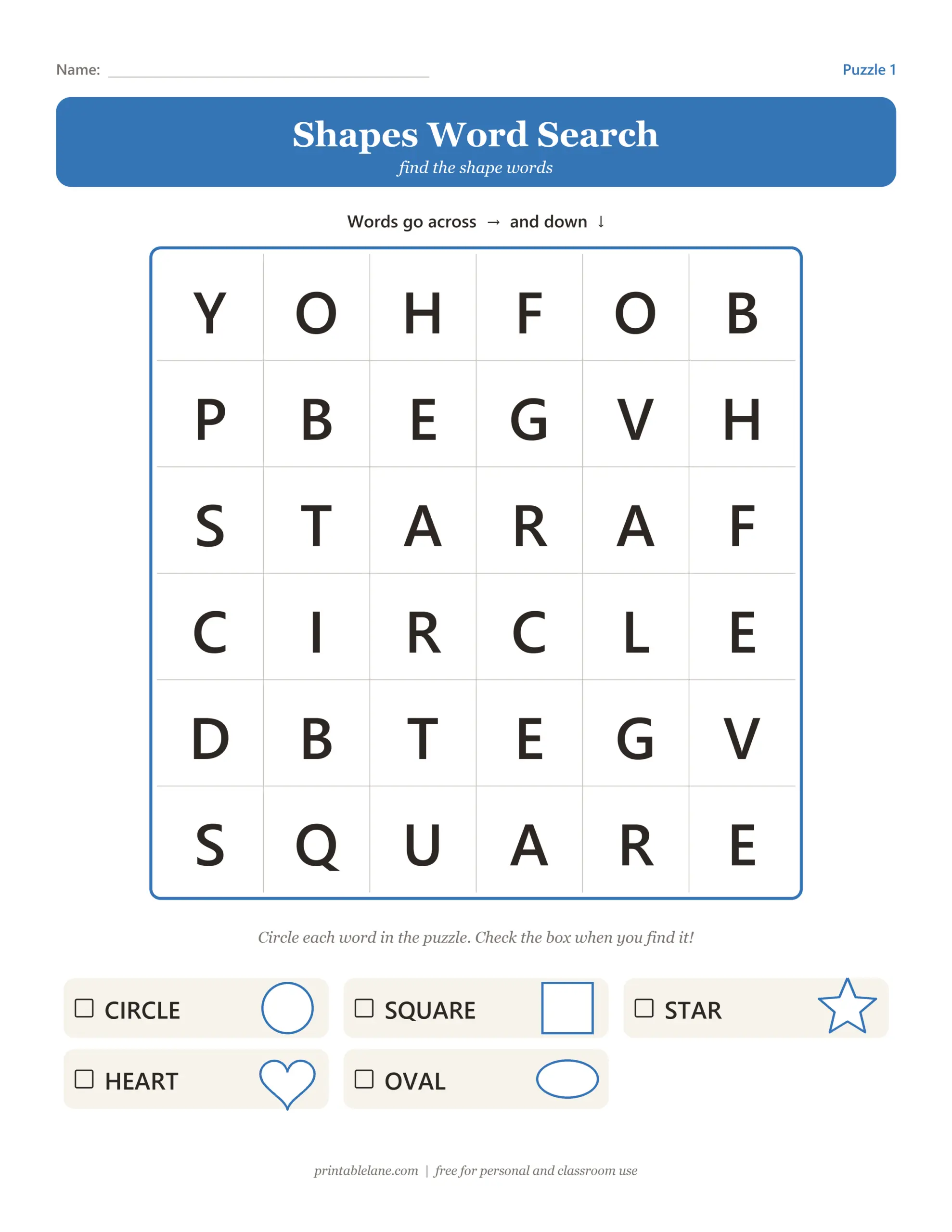
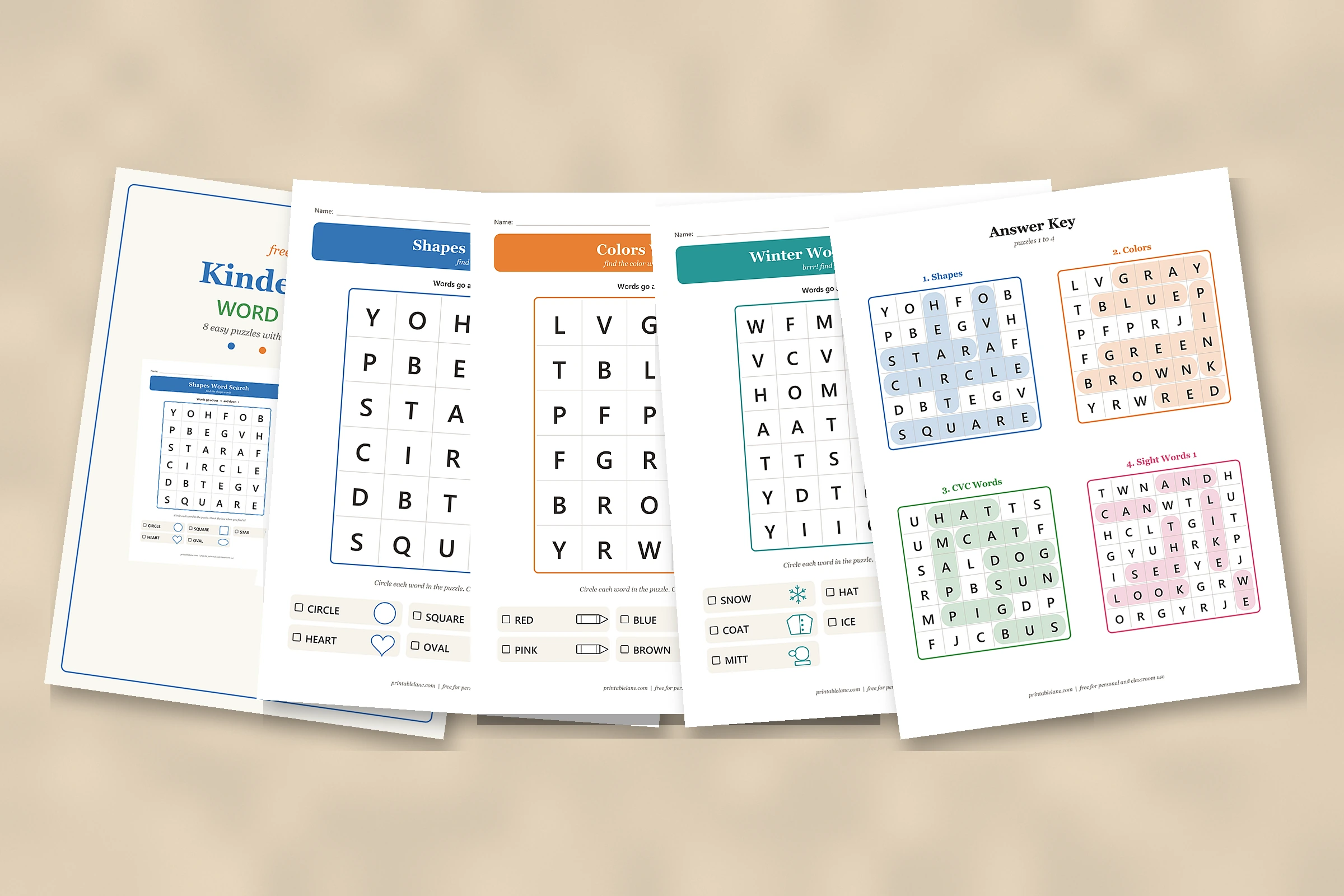
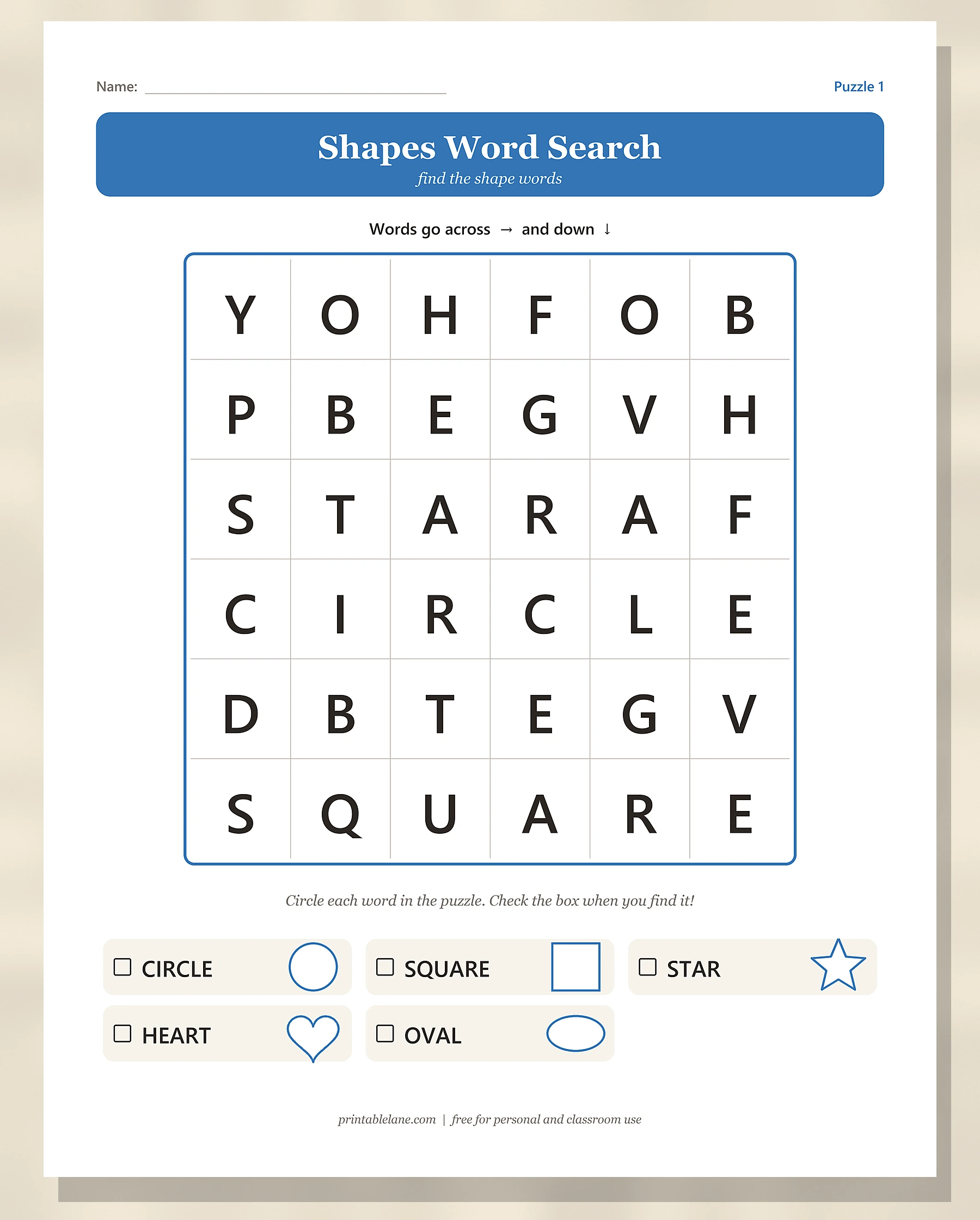
- Shapes (6×6): circle, square, star, heart, oval, each with a picture of the shape.
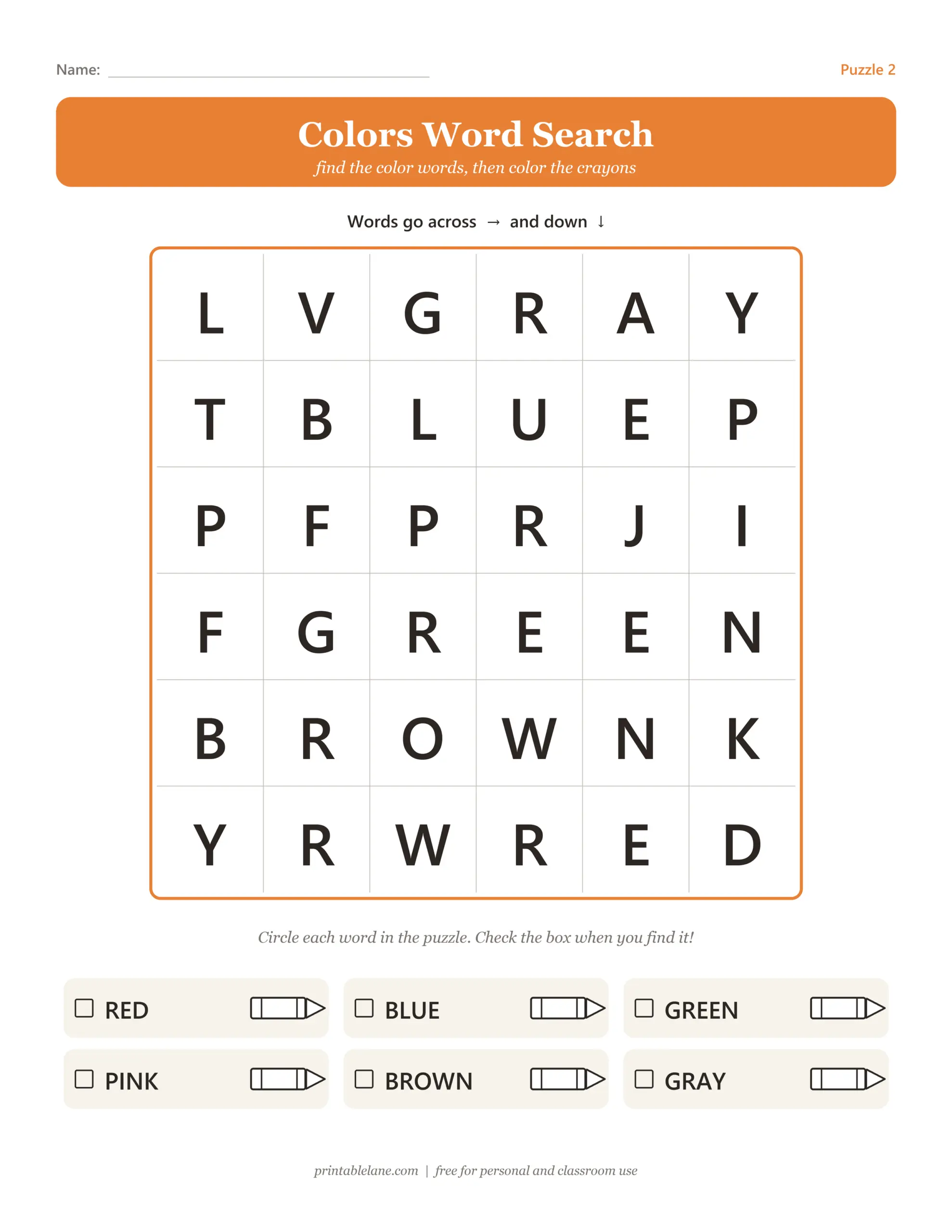
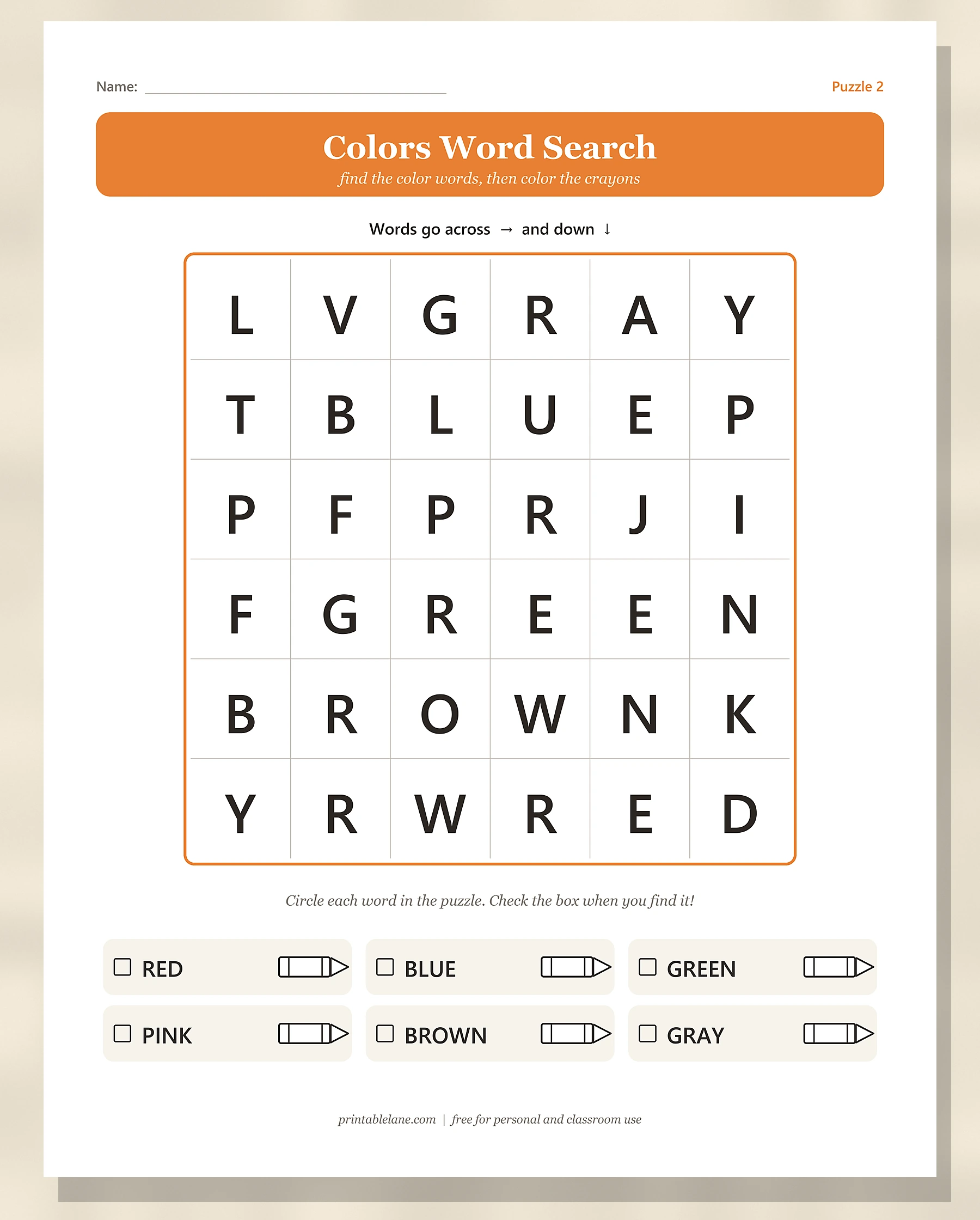
- Colors (6×6): red, blue, green, pink, brown, gray, with crayons to color in the matching color.
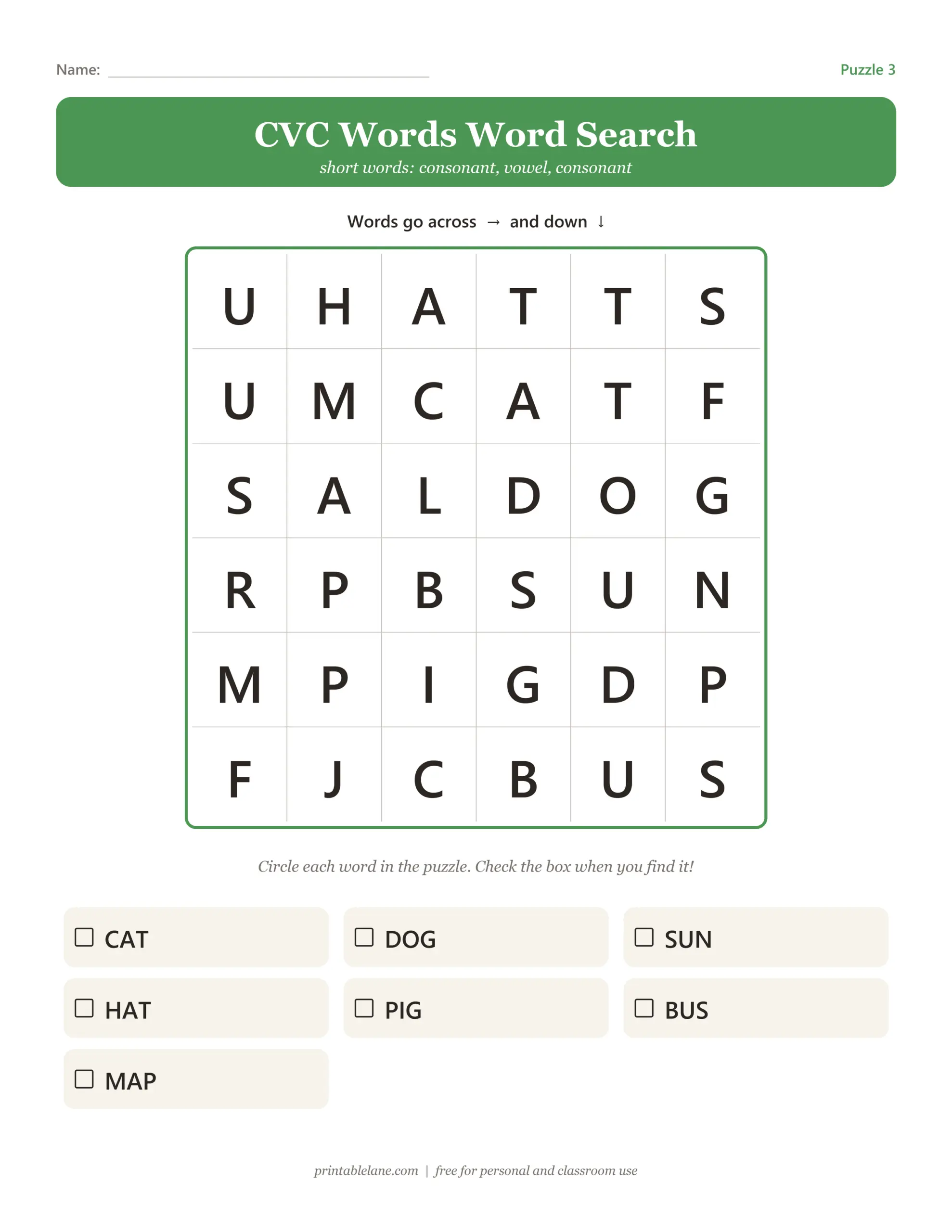
- CVC words (6×6): cat, dog, sun, hat, pig, bus, map.
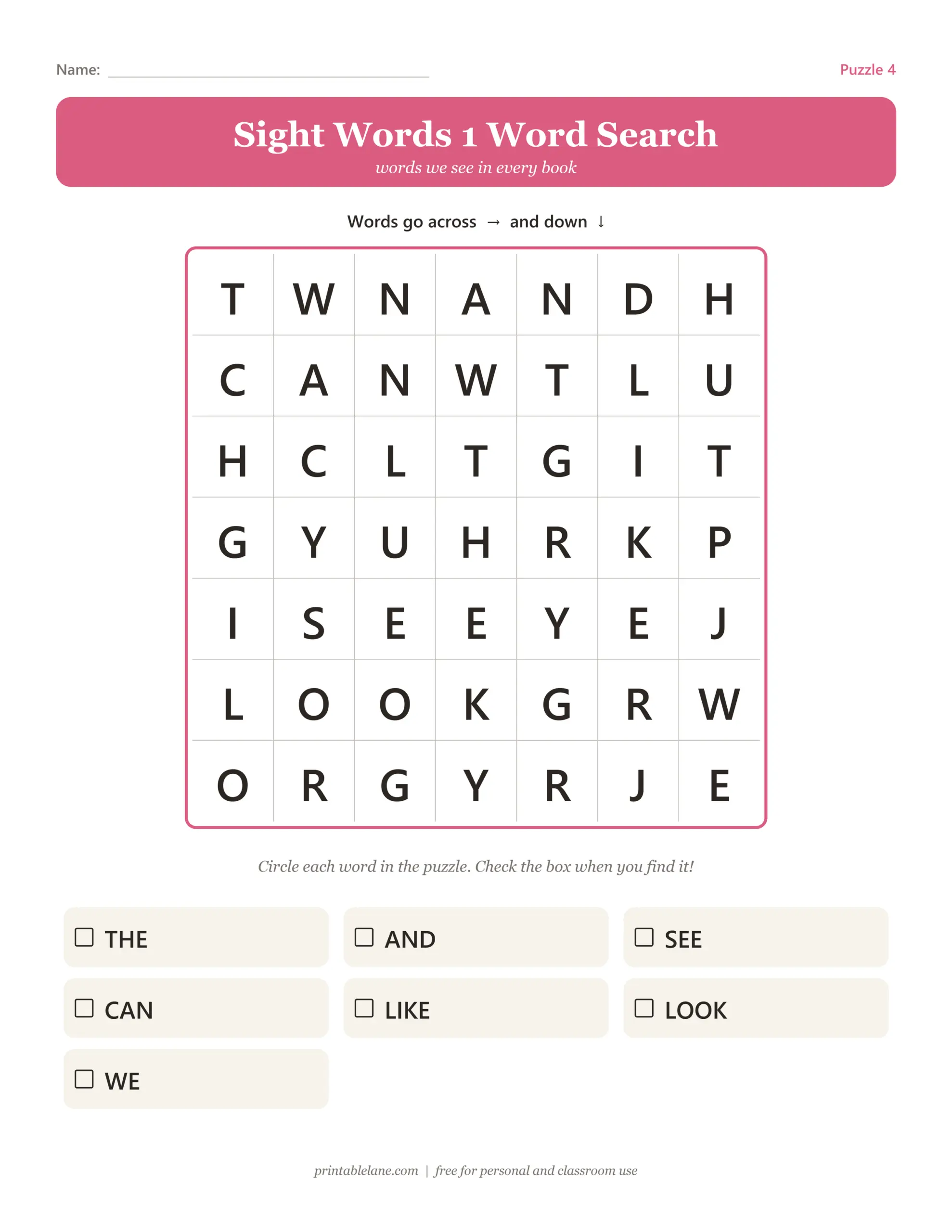
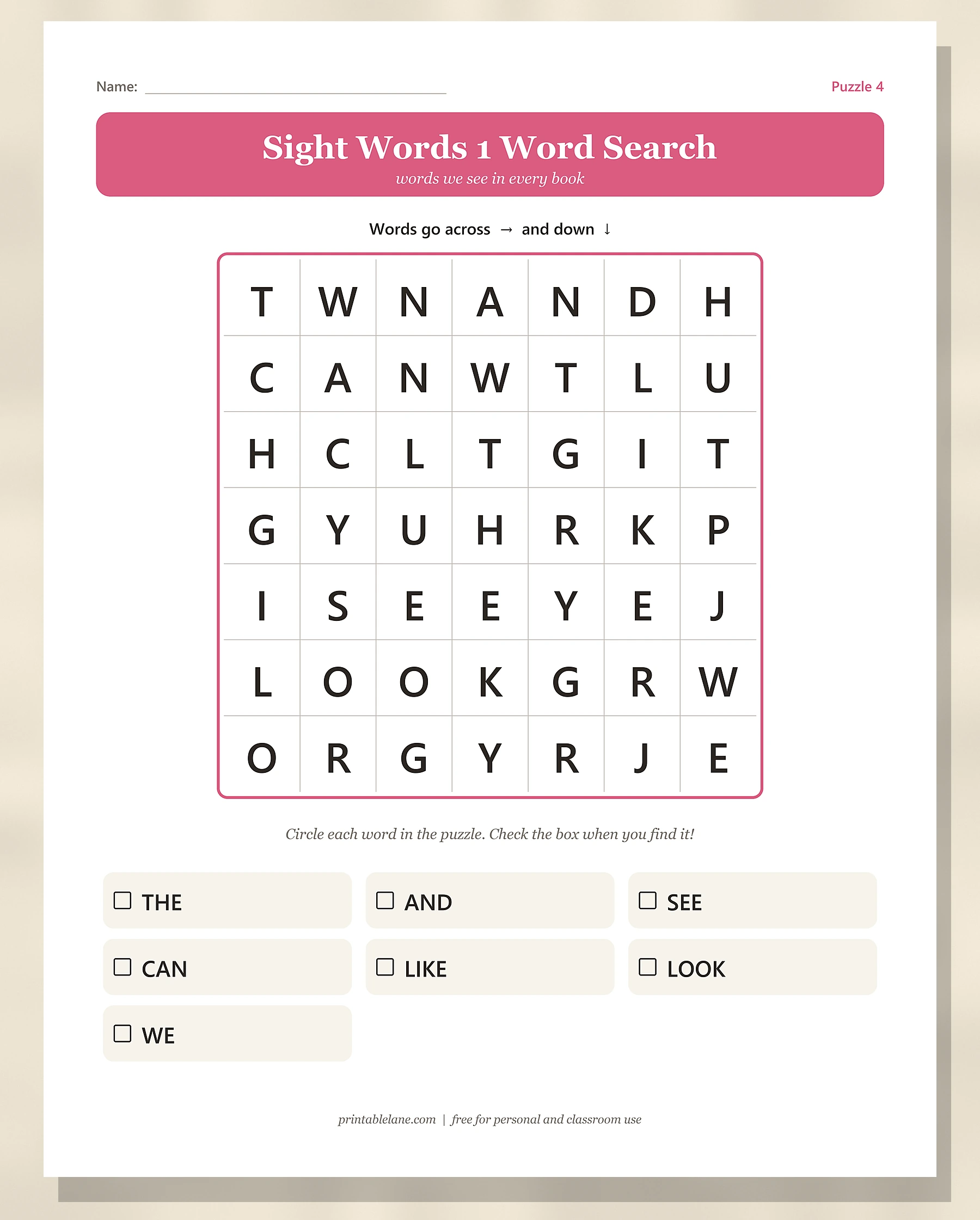
- Sight words 1 (7×7): the, and, see, can, like, look, we.
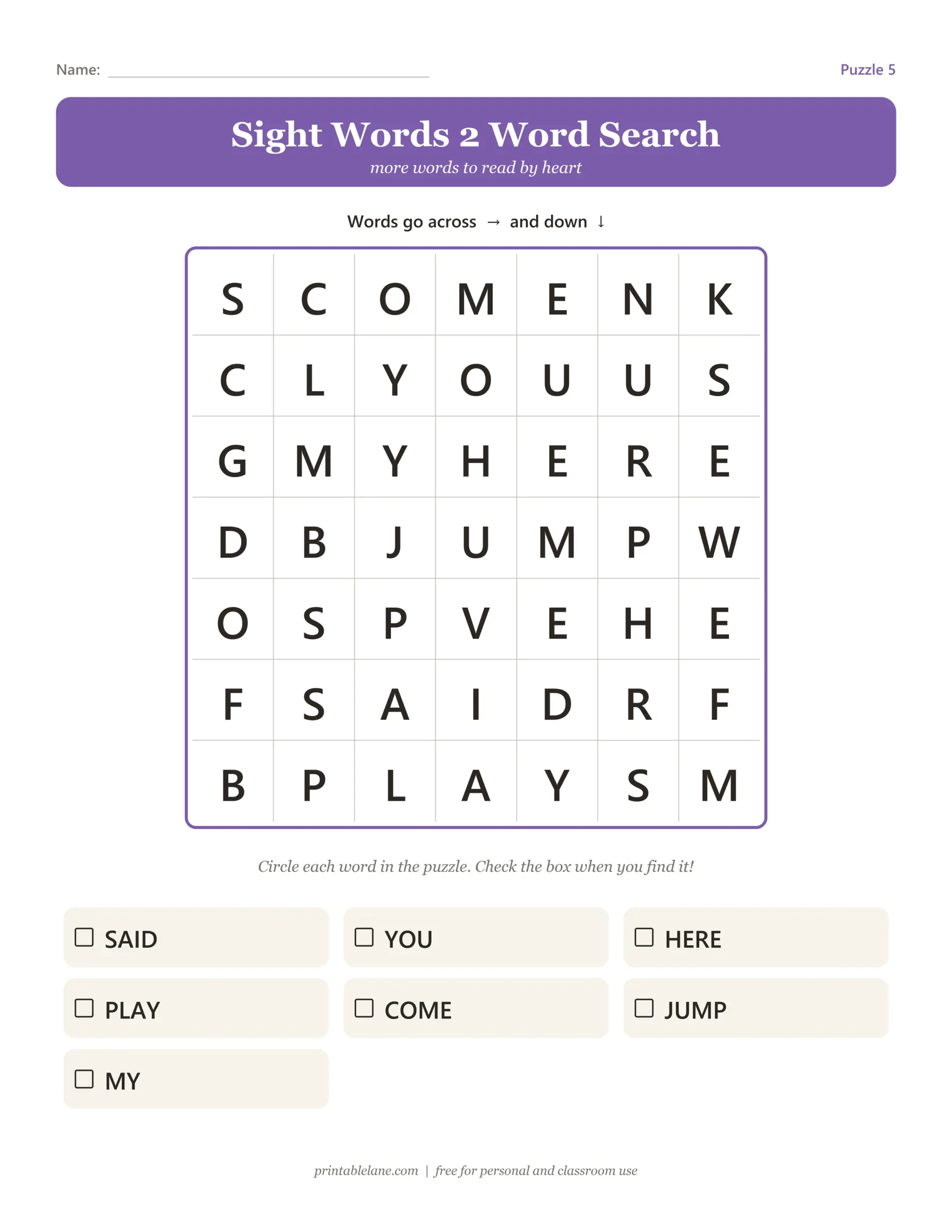
- Sight words 2 (7×7): said, you, here, play, come, jump, my.
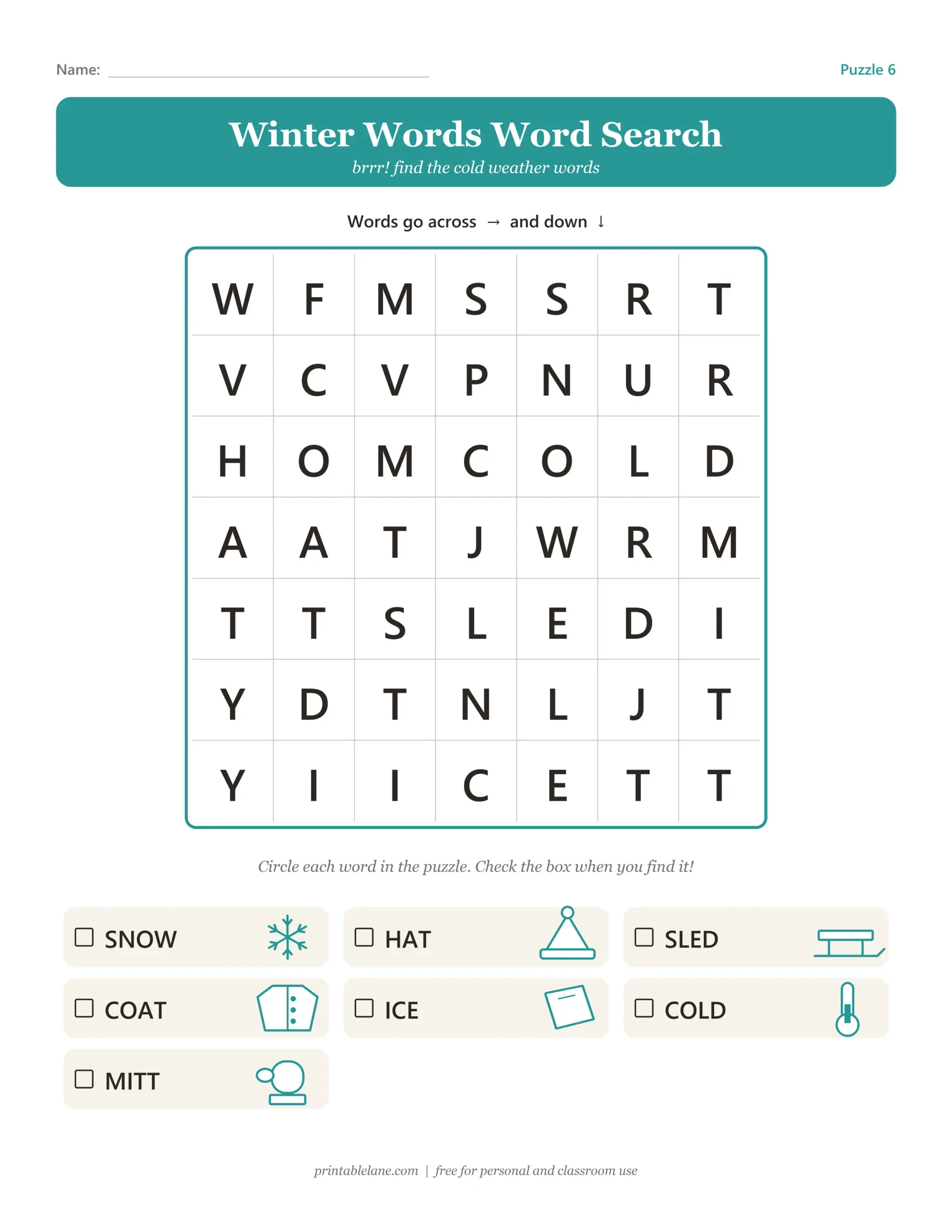
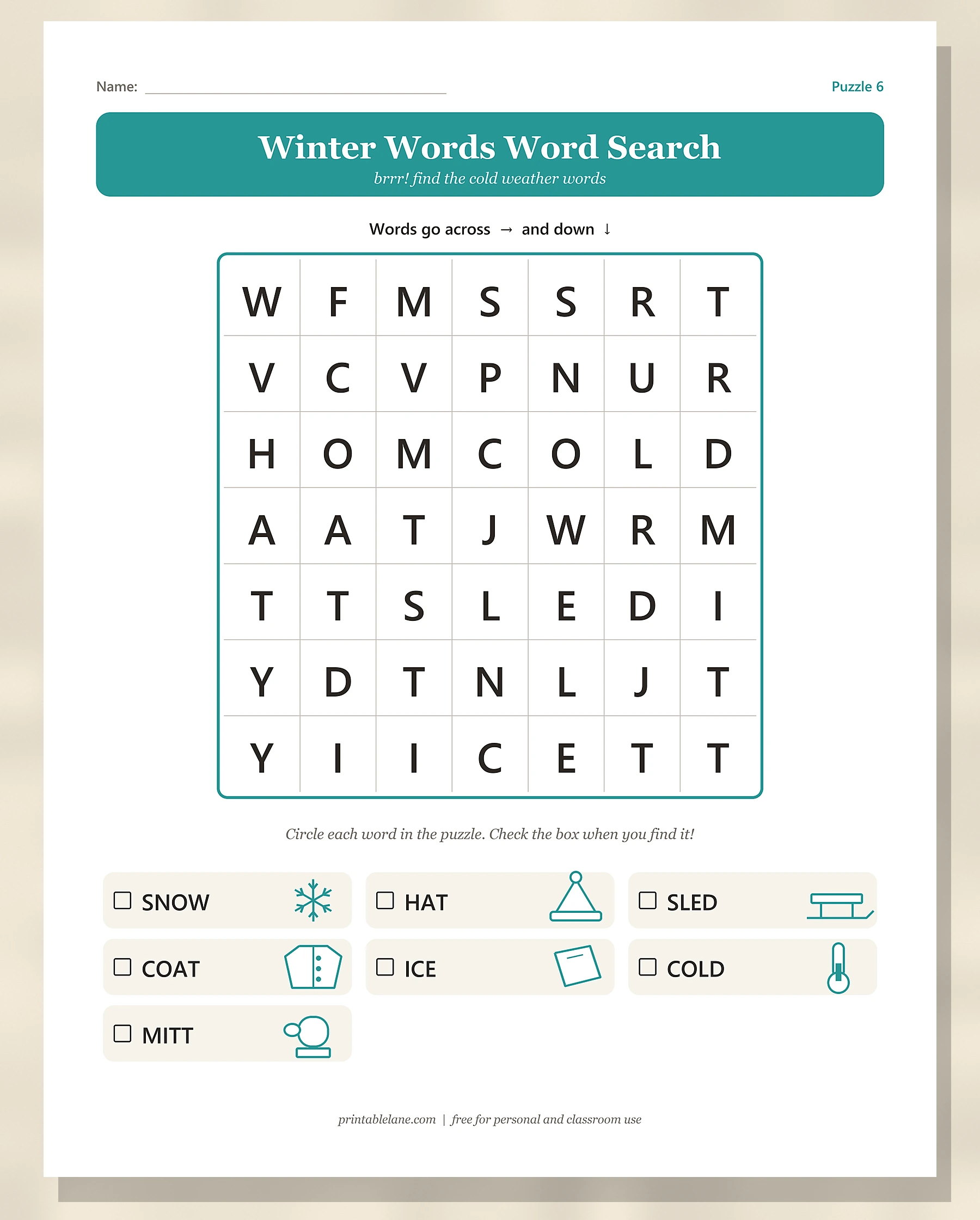
- Winter words (7×7): snow, hat, sled, coat, ice, cold, mitt, each with a small picture.
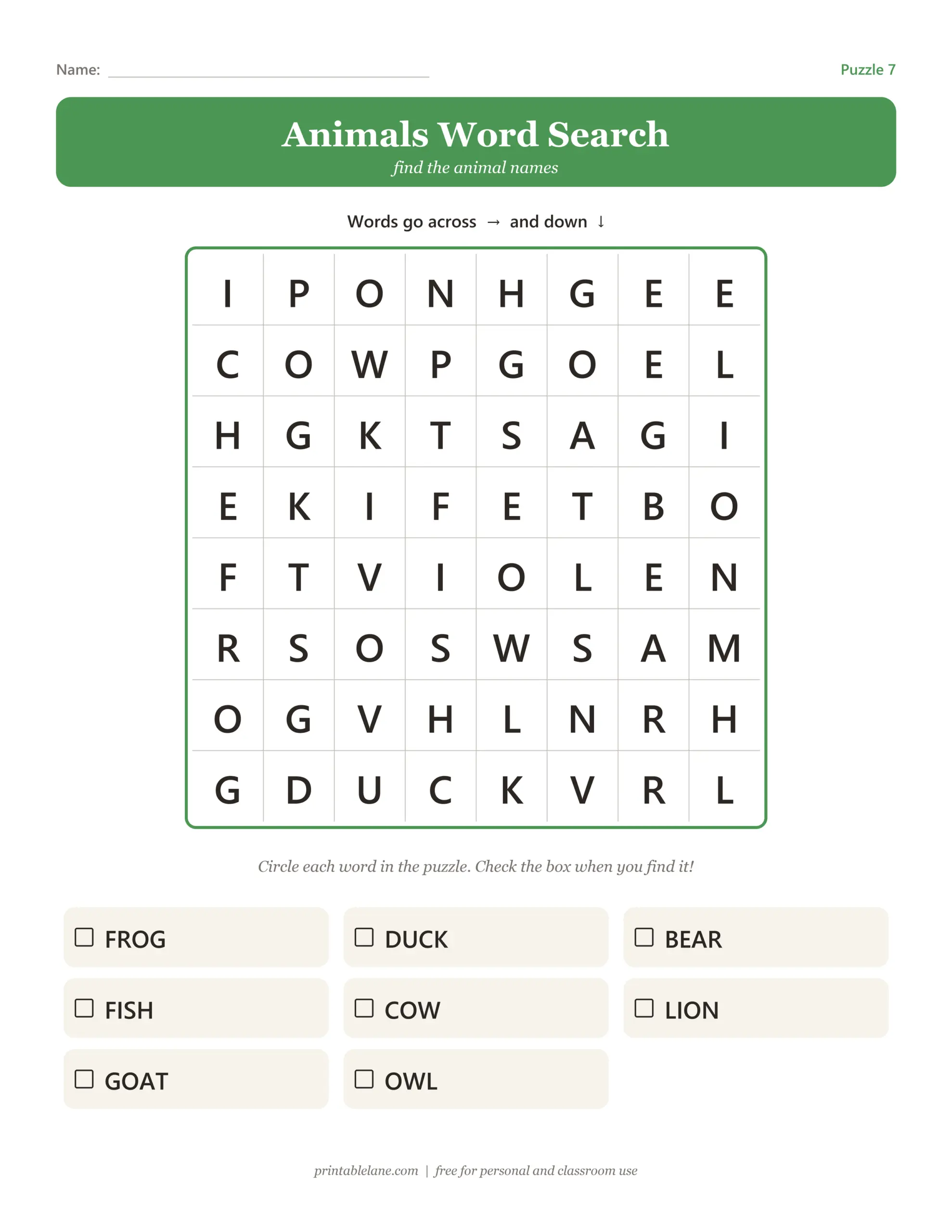
- Animals (8×8): frog, duck, bear, fish, cow, lion, goat, owl.
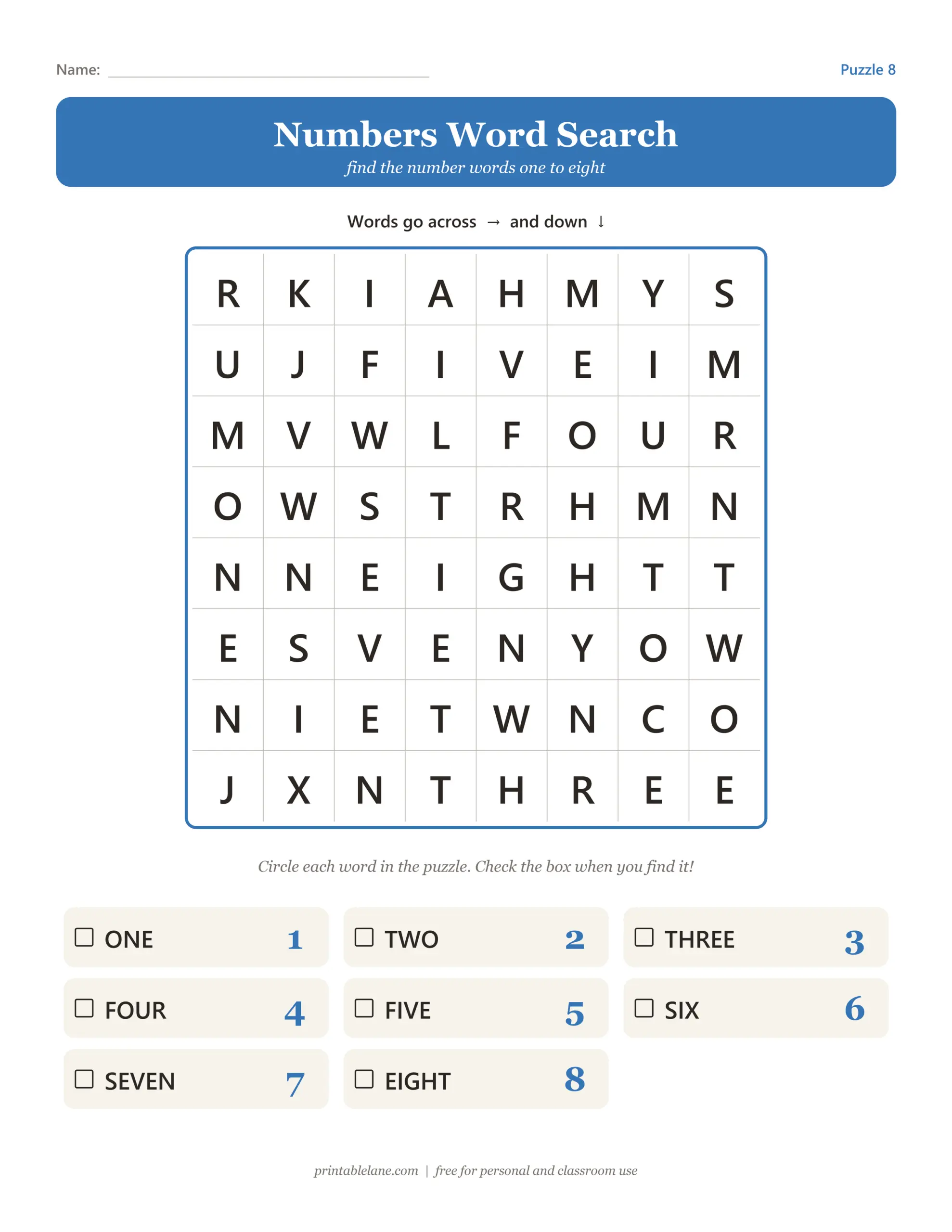
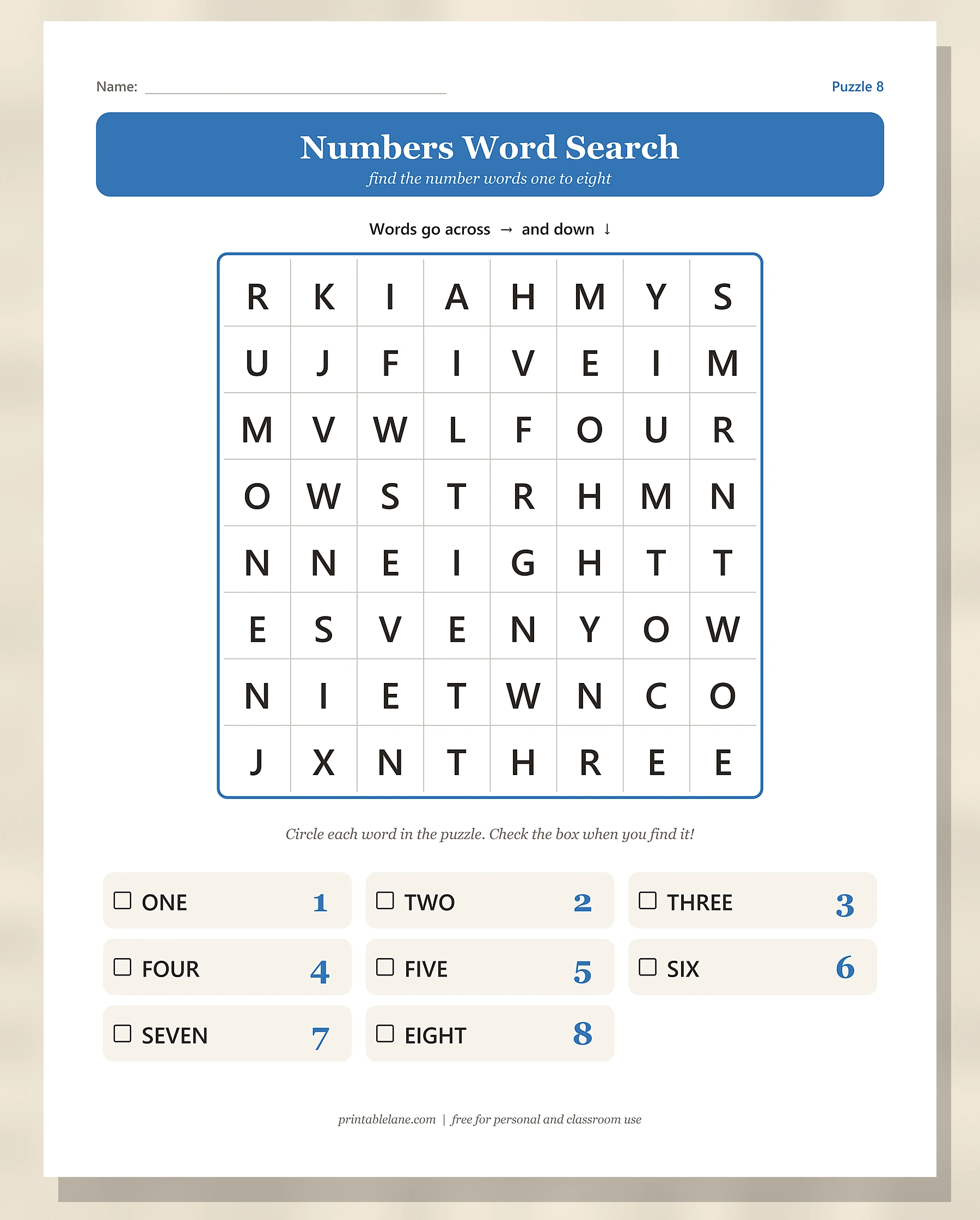
- Numbers (8×8): the number words one to eight, with the numeral next to each word.
Why these are easier than regular word searches
- Across and down only. No diagonals and no backwards words, so kids practice reading left to right and top to bottom.
- Big, clear letters in a simple sans serif font, with light grid lines to help them keep their place.
- Each word appears exactly once. We checked every grid so there are no accidental doubles that cause confusion.
- No Q, X or Z in the filler letters, which keeps the grids friendly for beginners.
- Picture cues on the shapes, colors and winter puzzles help children who are not reading yet.
How to introduce a word search to a five-year-old
- Read the word list together and point to each picture.
- Show them how to find the first letter in the grid, then check the next letter to the right or below.
- Let them use a highlighter or a crayon to circle the word.
- Tick the box in the word list. Kids love the little check mark more than you would think.
- Start with puzzle 1 or 2 and move to the 8×8 grids when they are ready.
Sight words and CVC words
Three of the puzzles are built around early reading. The CVC puzzle uses short consonant-vowel-consonant words that children can sound out, and the two sight word puzzles use high-frequency words from typical kindergarten lists. Finding a word in a grid means looking at it letter by letter, which is a great way to practice spelling it.
Answer keys and a make-your-own page
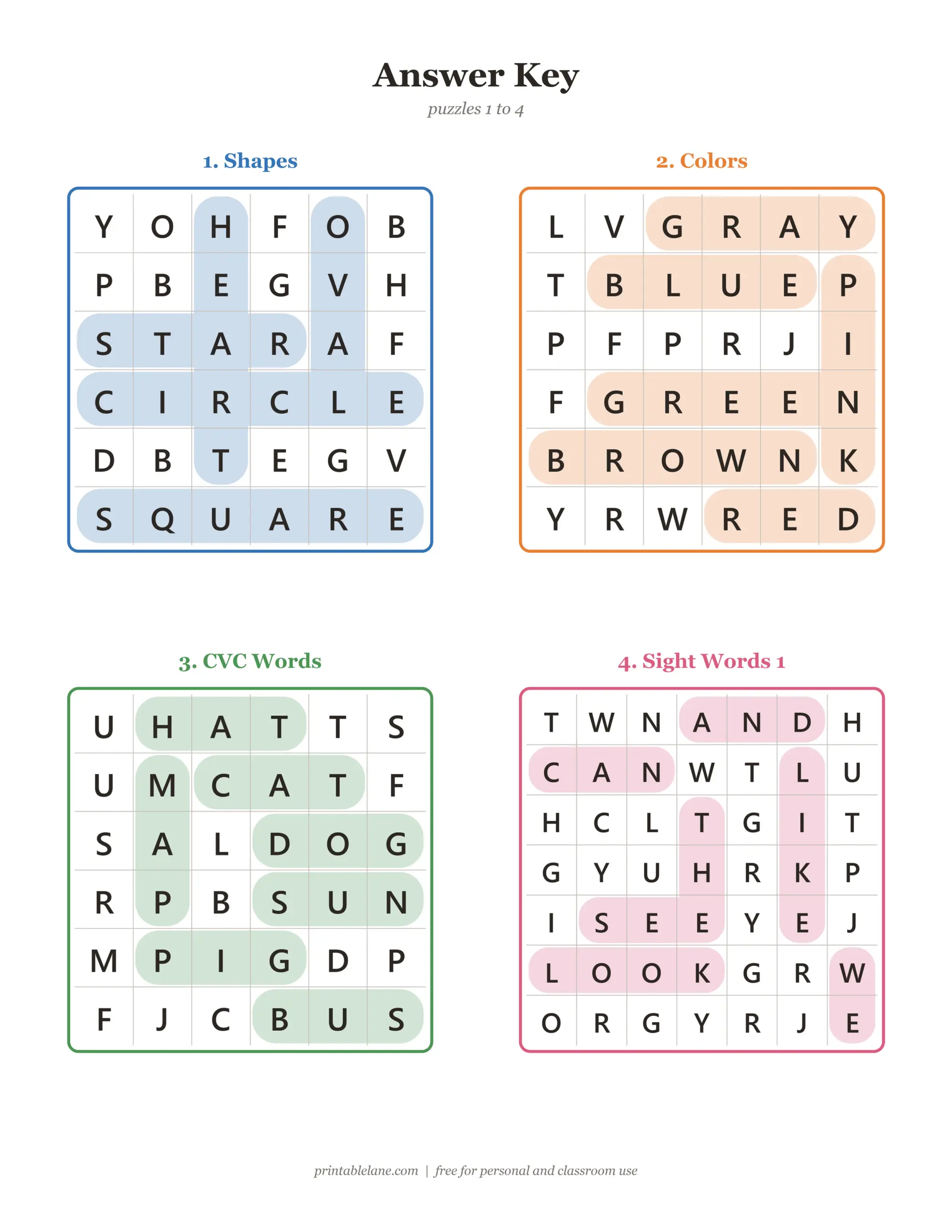
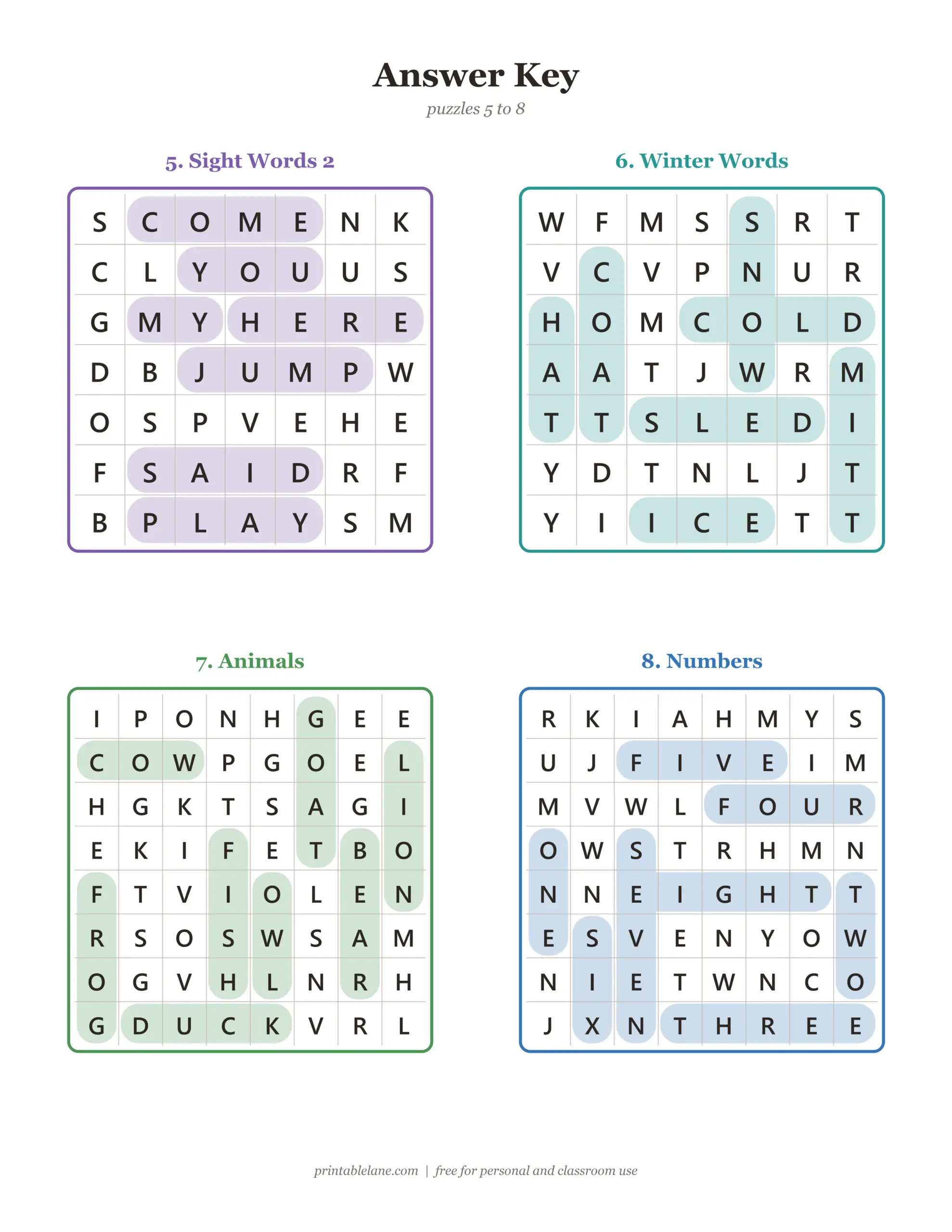
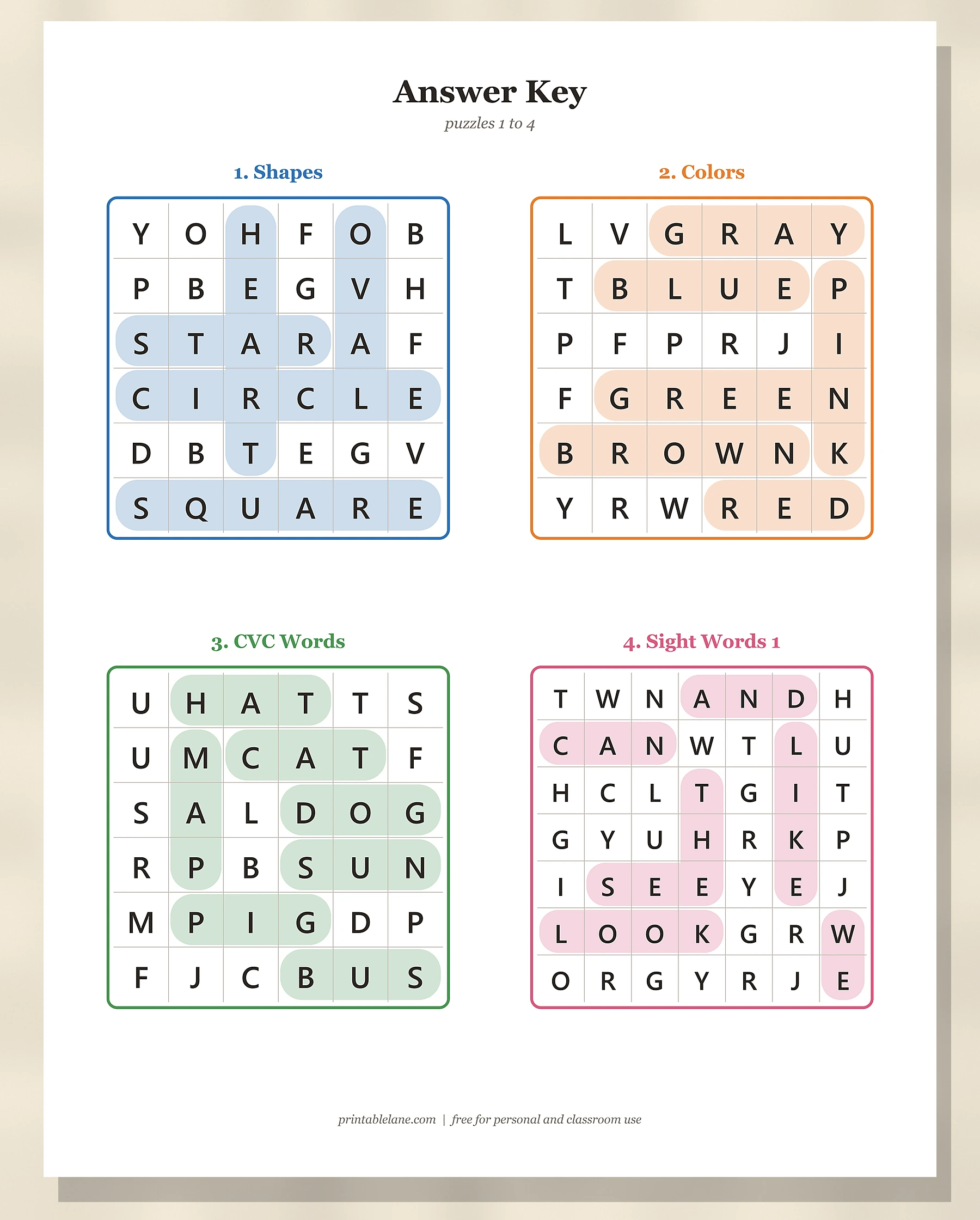
The two answer key pages show every word highlighted, four puzzles per page, so checking work takes seconds. The last page is an empty 8×8 grid with lines for eight words: kids write their own words in the grid, fill the empty squares with any letters and trade puzzles with a friend.
Ideas for the classroom
- Use one puzzle a day as morning work for a week.
- Put the make-your-own page in the writing center.
- Laminate a few pages and use dry-erase markers.
- Pair the winter puzzle with our winter coloring pages or the snowman coloring pages.
What kids practice with a word search
A word search looks like a game, and it is, but it quietly trains several pre-reading skills at once. Children have to hold a word in mind, recognize its first letter among many similar ones, and then check each following letter in order. That is visual discrimination, letter recognition and sequencing, all in a few minutes of focused, happy work.
- Letter recognition: telling B from D and M from W in a crowded grid.
- Left-to-right tracking: the same eye movement used for reading a line of text.
- Spelling: checking a word letter by letter makes the spelling stick.
- Fine motor control: circling a word neatly with a crayon or highlighter.
- Persistence: a small grid is just hard enough to feel like a win.
Make it easier or harder
- Easier: highlight the first letter of each word in the grid before you hand the page over, or work on one word at a time together.
- Easier: cut the word list off and give the words one by one on sticky notes.
- Harder: fold the word list under and read the words aloud instead, so kids have to spell them in their heads.
- Harder: set a sand timer for three minutes and see how many words they find.
Download single pages
Click a link to open the full-size PNG. The PDF with all 12 pages is in the download box.
- Shapes (PNG)
- Colors (PNG)
- CVC words (PNG)
- Sight words 1 (PNG)
- Sight words 2 (PNG)
- Winter words (PNG)
- Animals (PNG)
- Numbers (PNG)
- Answer key 1 to 4 (PNG)
- Answer key 5 to 8 (PNG)
- Make your own word search (PNG)
More for early learners: alphabet tracing worksheets, Christmas mazes and dot-to-dot, journal prompts for kids and the Christmas word search for older kids.
Frequently asked questions
Are word searches good for kindergarten?
Yes, when they are simple. Small grids, big letters and words that only go across and down help children practice letter recognition, left-to-right tracking and spelling.
What age are these word searches for?
They are designed for ages 4 to 6, pre-K to kindergarten. Older kids who are new to word searches can start here too.
Do the words go diagonally?
No. Every word reads across from left to right or down from top to bottom.
Are the letters uppercase?
Yes. Uppercase letters are the easiest for most beginners to tell apart.