 By
Butterflies are built for coloring: 4 wings, a body down the middle and plenty of room for spots and stripes. These butterfly coloring pages run from a chunky butterfly a toddler can fill with 2 crayons to a lace-filled mandala, with a life cycle and a monarch in between.
The 2 easiest butterflies come first, and every page after that adds a little more detail and a little more science.
A chunky first butterfly and a mirror-pattern butterfly
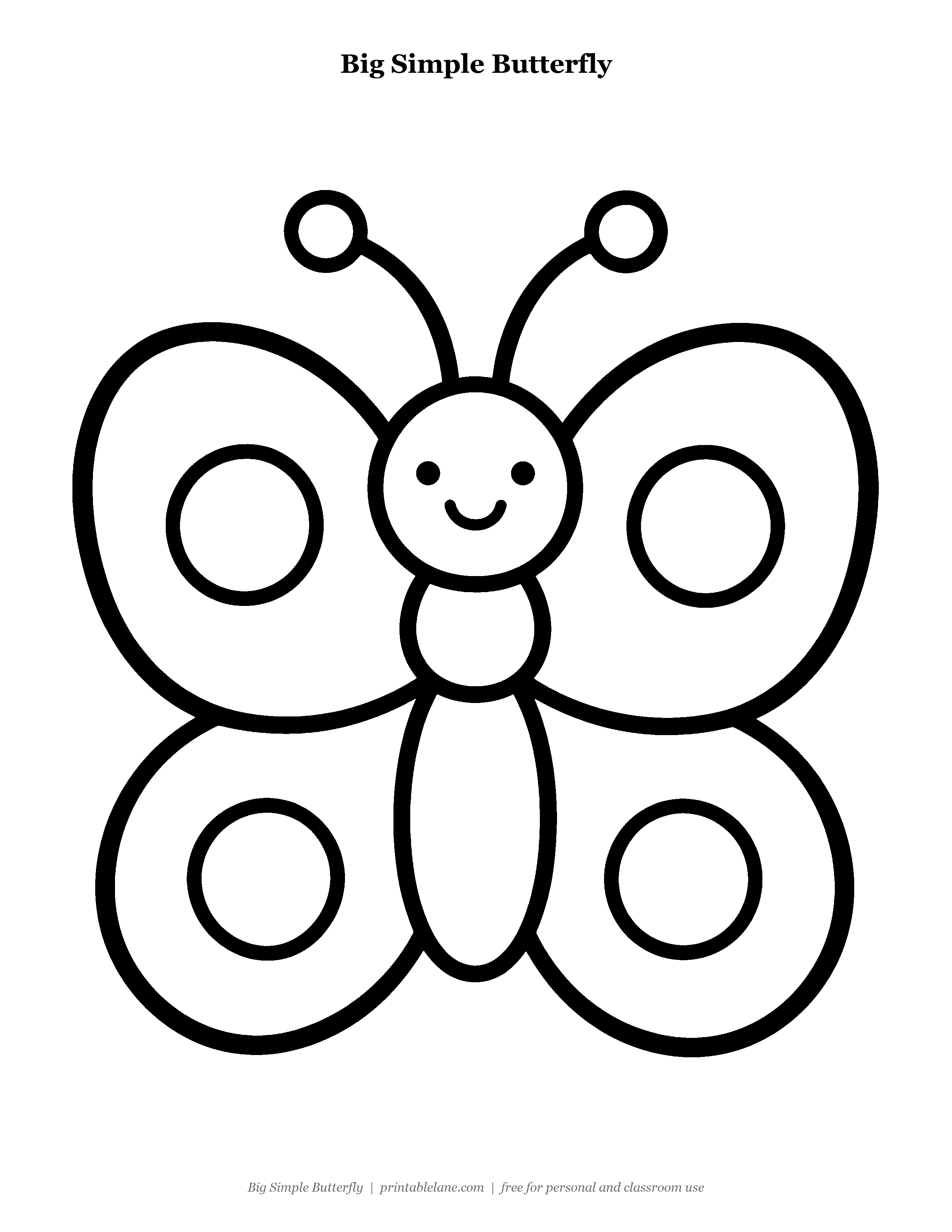
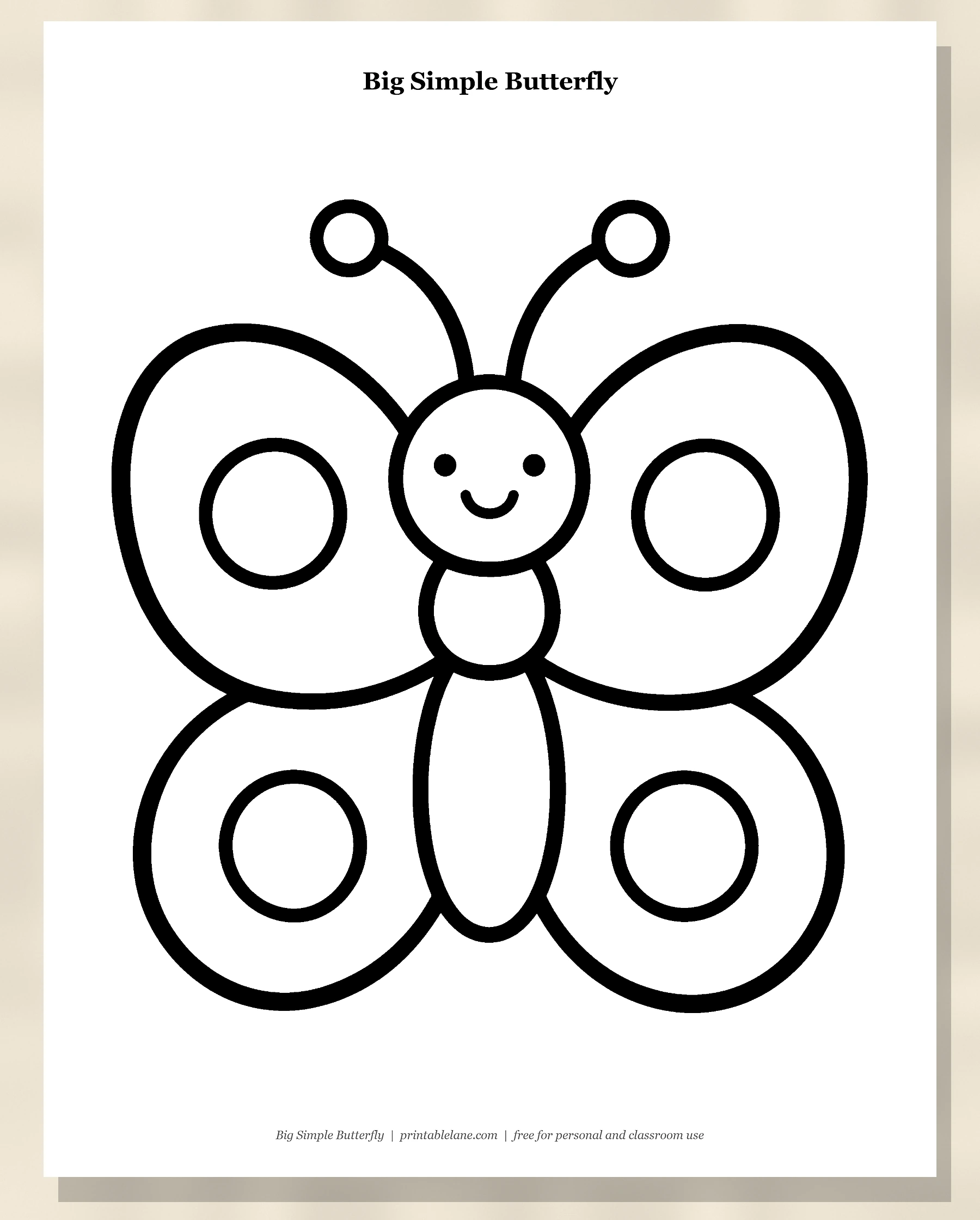
Big Simple Butterfly
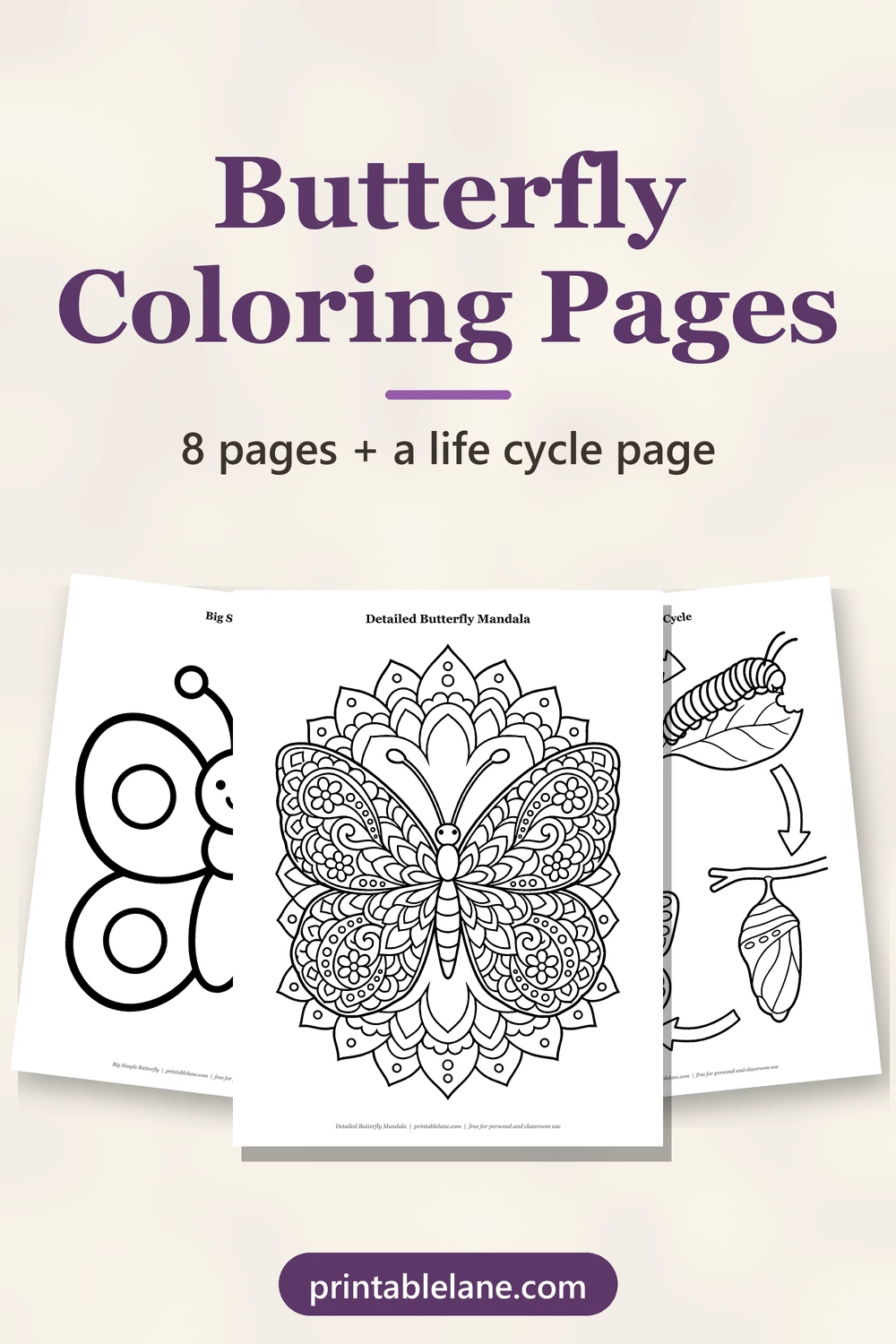
Easy, PDF page 2. A smiling butterfly with a round head, an oval body and 2 antennae ending in round balls fills the whole sheet. Each of its 4 rounded wings holds just 1 big circle, so there are very few lines to follow.
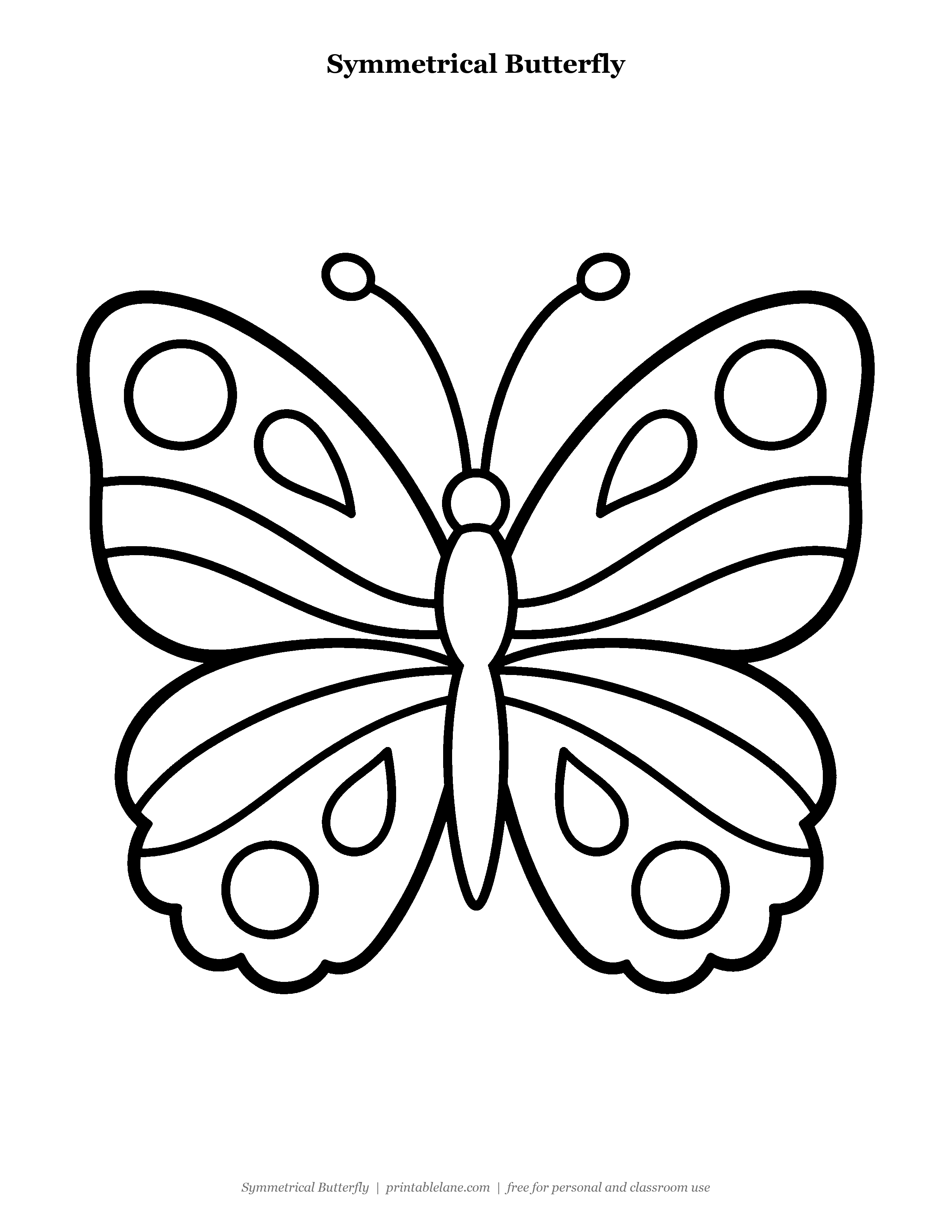
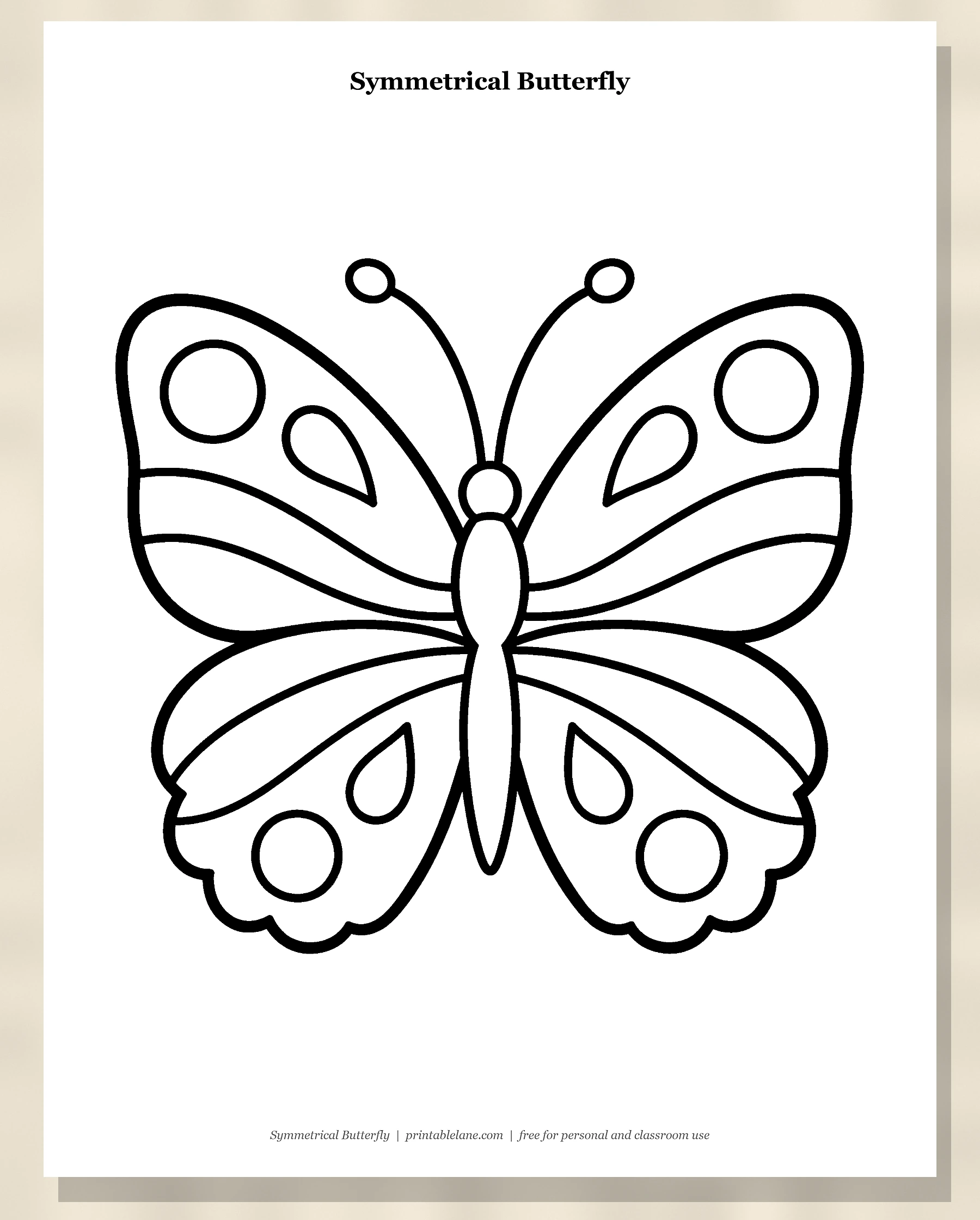
Symmetrical Butterfly
Easy to medium, PDF page 3. This butterfly has a slim, realistic body and no face. Each upper wing carries a circle, a teardrop and 2 wavy bands, and each lower wing has its own teardrop, a circle and a scalloped edge. The left side is a mirror of the right.
From egg to wings: the butterfly life cycle page
Butterfly Life Cycle
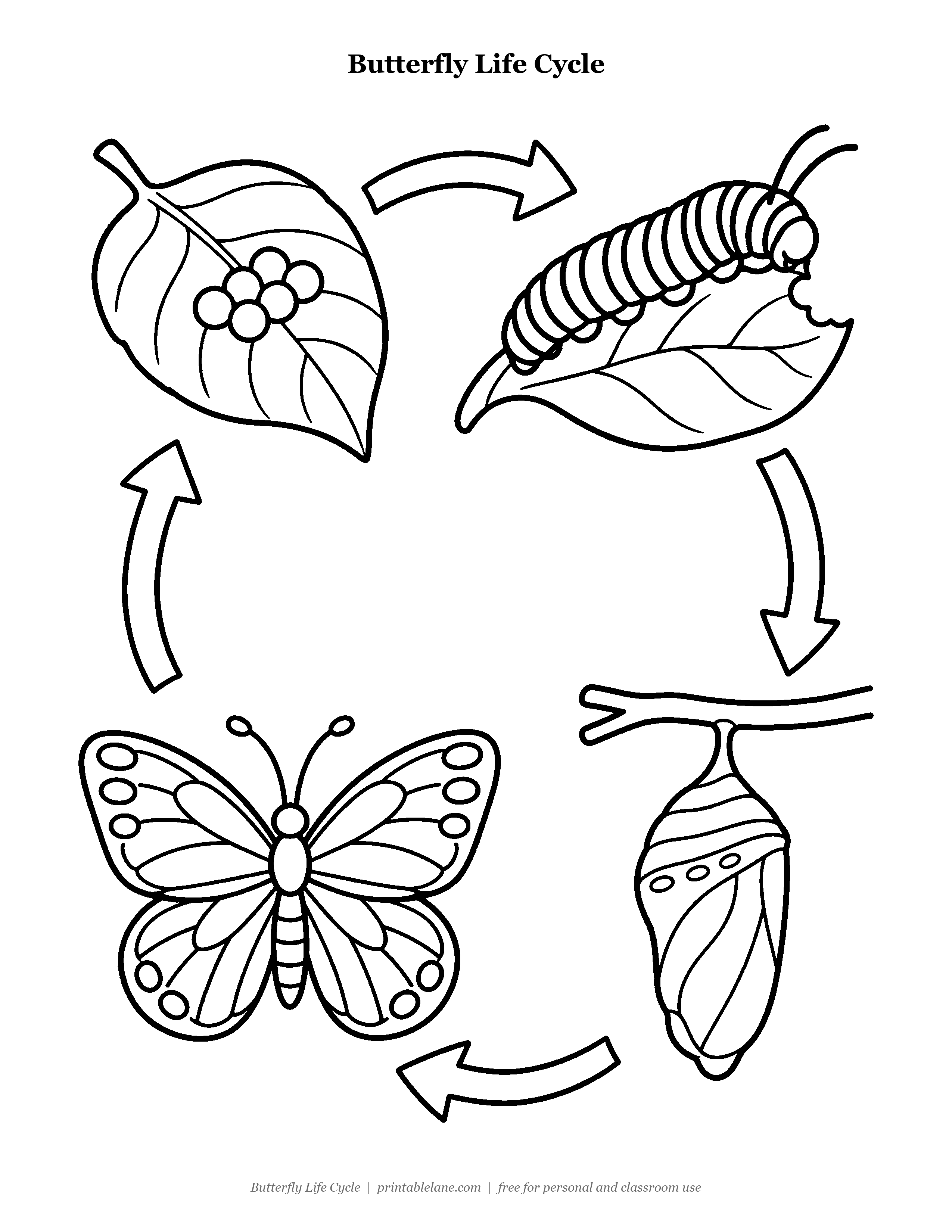
Medium, PDF page 4. 4 curved arrows run clockwise between 4 scenes. A small cluster of round eggs sits on a leaf at the top left, a striped caterpillar chews a bitten leaf at the top right, a chrysalis hangs from a twig at the bottom right, and an adult butterfly with spotted wing edges finishes the circle at the bottom left. There are no labels, so kids can write the stage names.
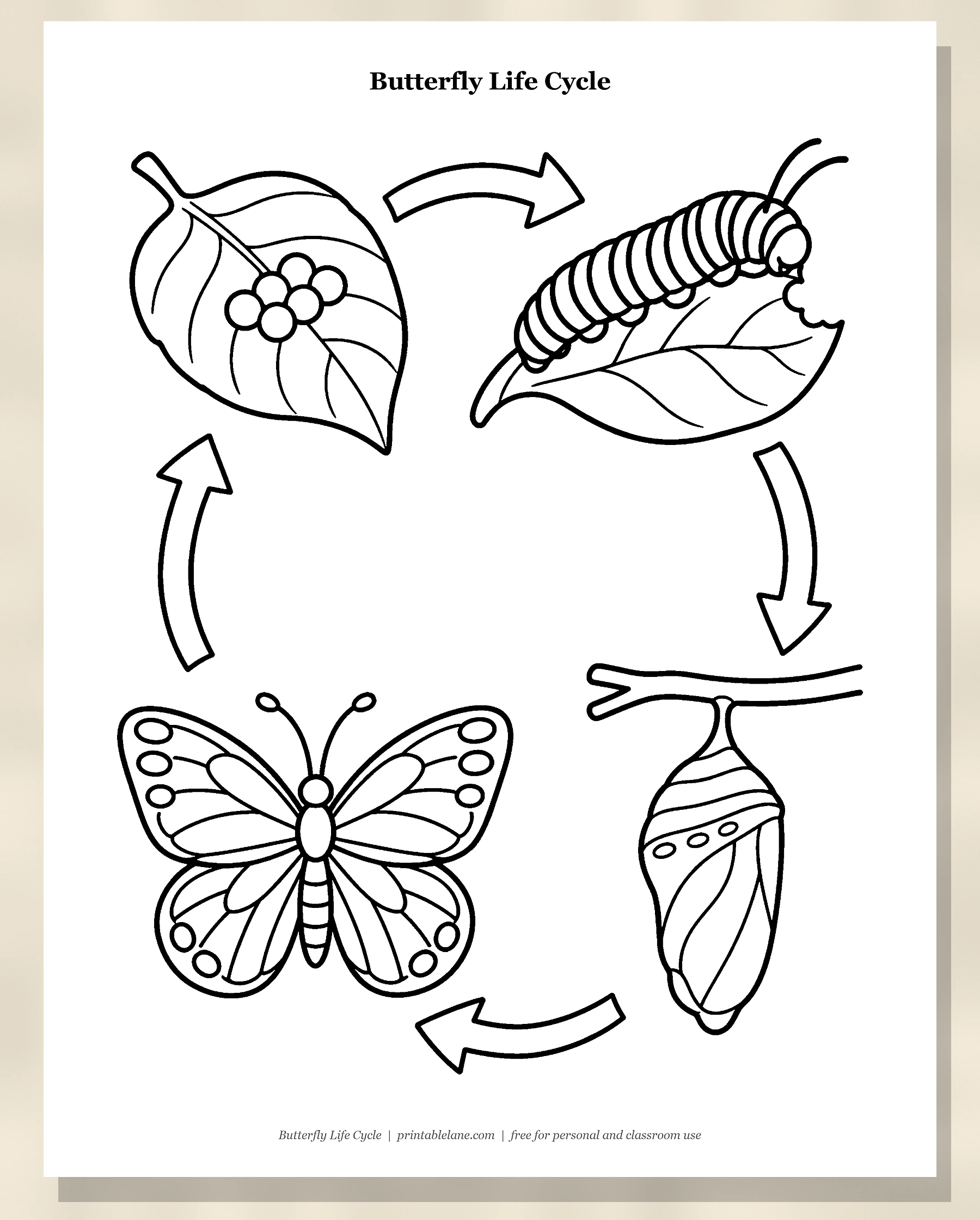
Butterflies go through complete metamorphosis, which means 4 stages. Read them aloud while kids follow the arrows:
- Egg. A female lays her eggs on a plant that the young caterpillars can eat.
- Caterpillar, also called the larva. It eats and grows, and most species shed their skin 4 or 5 times as the body gets bigger.
- Chrysalis, also called the pupa. Inside it, the caterpillar body is rebuilt into a butterfly.
- Adult butterfly. It comes out with wings, flies off to find a mate, and new eggs start the circle again.
This page pairs well with the tadpole circle in the frog coloring pages. Color both and compare how differently the 2 animals grow up.
A monarch on milkweed, and why that plant matters
Monarch Butterfly on Milkweed
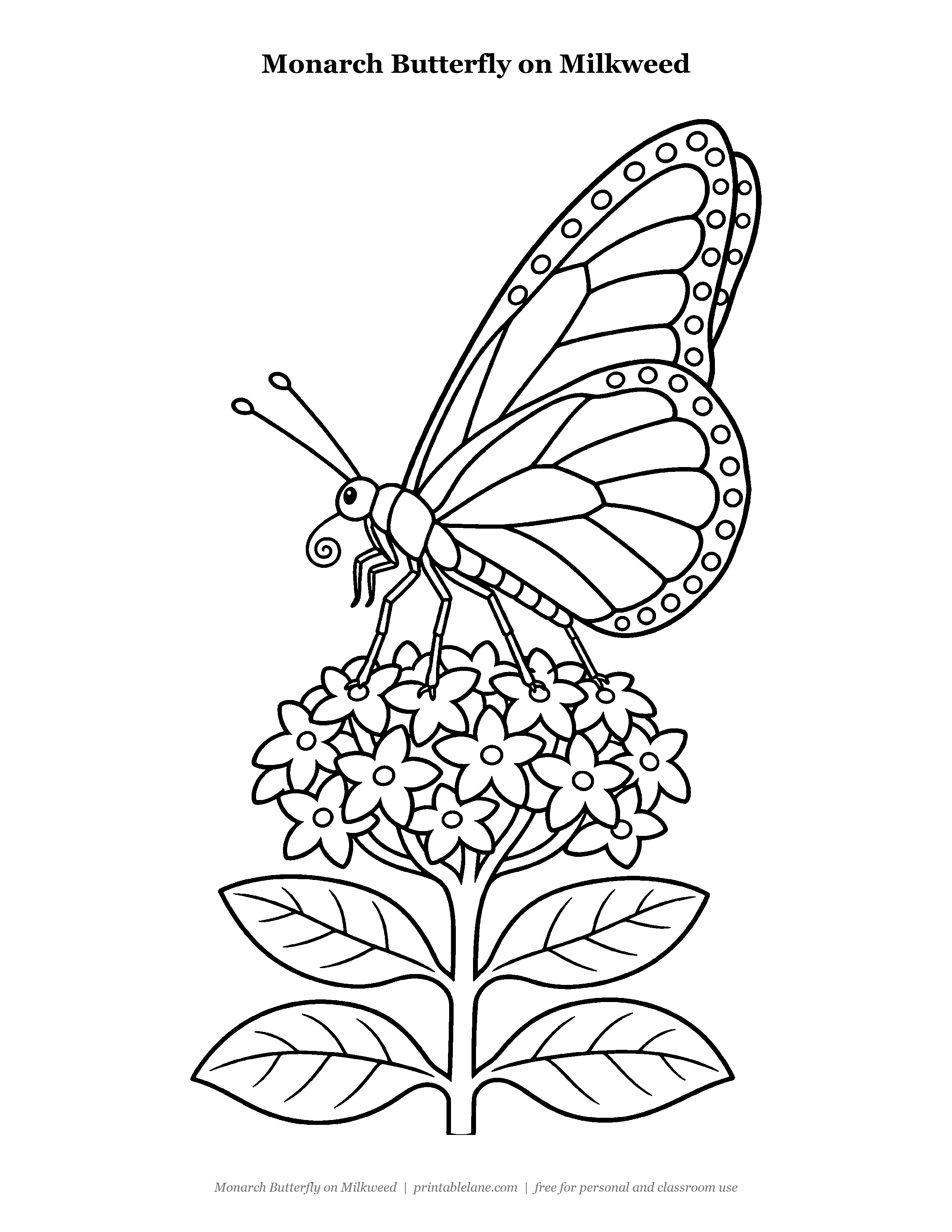
Medium, PDF page 5. A monarch perches on a rounded cluster of star-shaped milkweed flowers with its wings closed above its back. You can see the vein cells of the wings, a ring of small dots along the borders, 2 clubbed antennae and a coiled proboscis. 4 long legs grip the flowers, and 2 tiny front legs fold against the chest. Below the flowers, the stem carries 2 pairs of broad leaves.
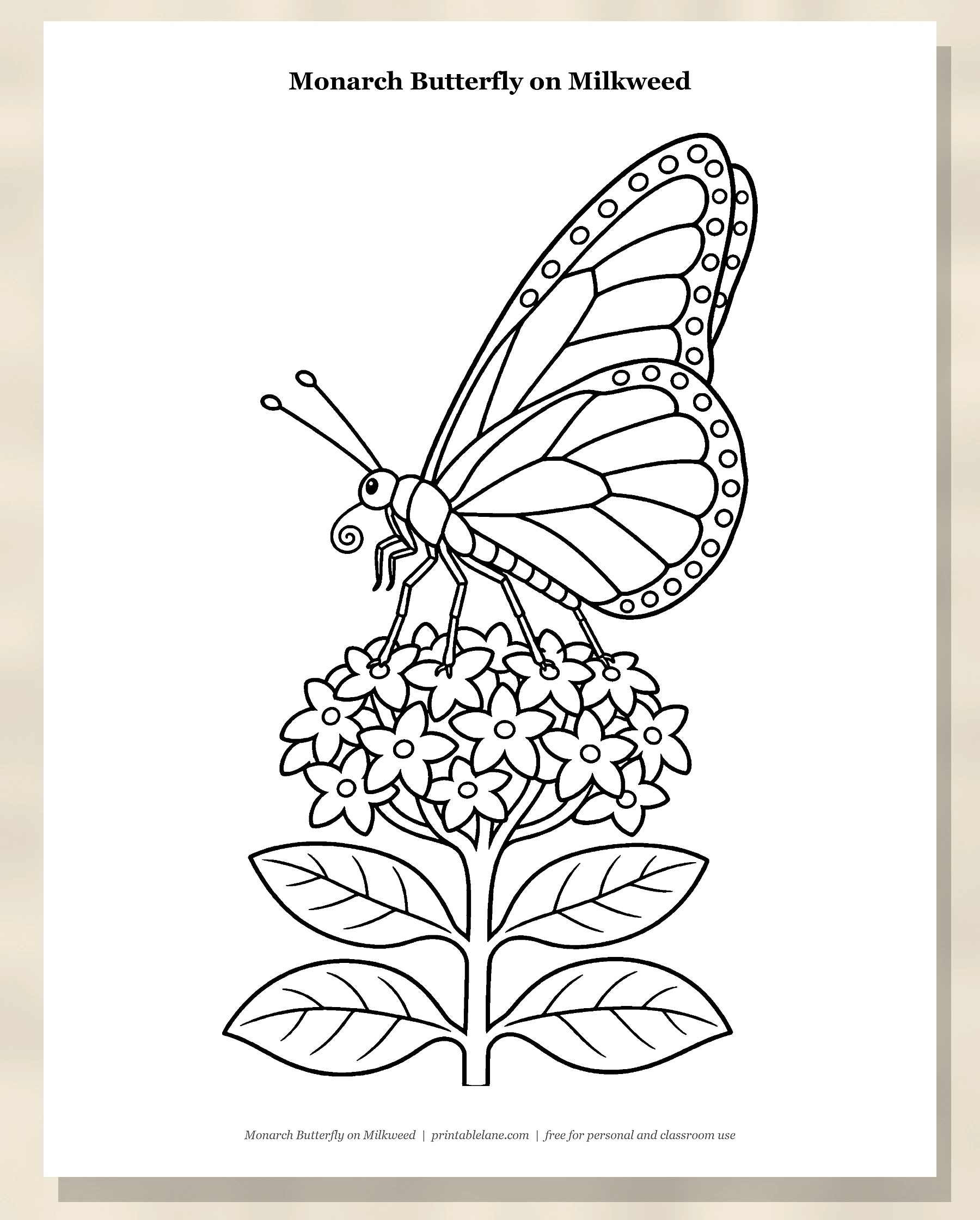
Those folded front legs are real. Monarchs belong to a family whose first pair of legs is small and held against the body, so they walk and cling with only their middle and back legs. It still has 6 legs.
Milkweed is the only plant monarch caterpillars eat. Its bitter chemicals stay in the caterpillar body, so adult monarchs taste bad to predators, and the bright orange wings act as a warning. In the fall, monarchs in North America travel between 1,200 and 2,800 miles or more. The eastern population mostly spends the winter in central Mexico, and the western population heads for sites on the California coast. No single butterfly makes the whole round trip; the migration takes several generations.
Butterfly on a sunflower and a hungry caterpillar
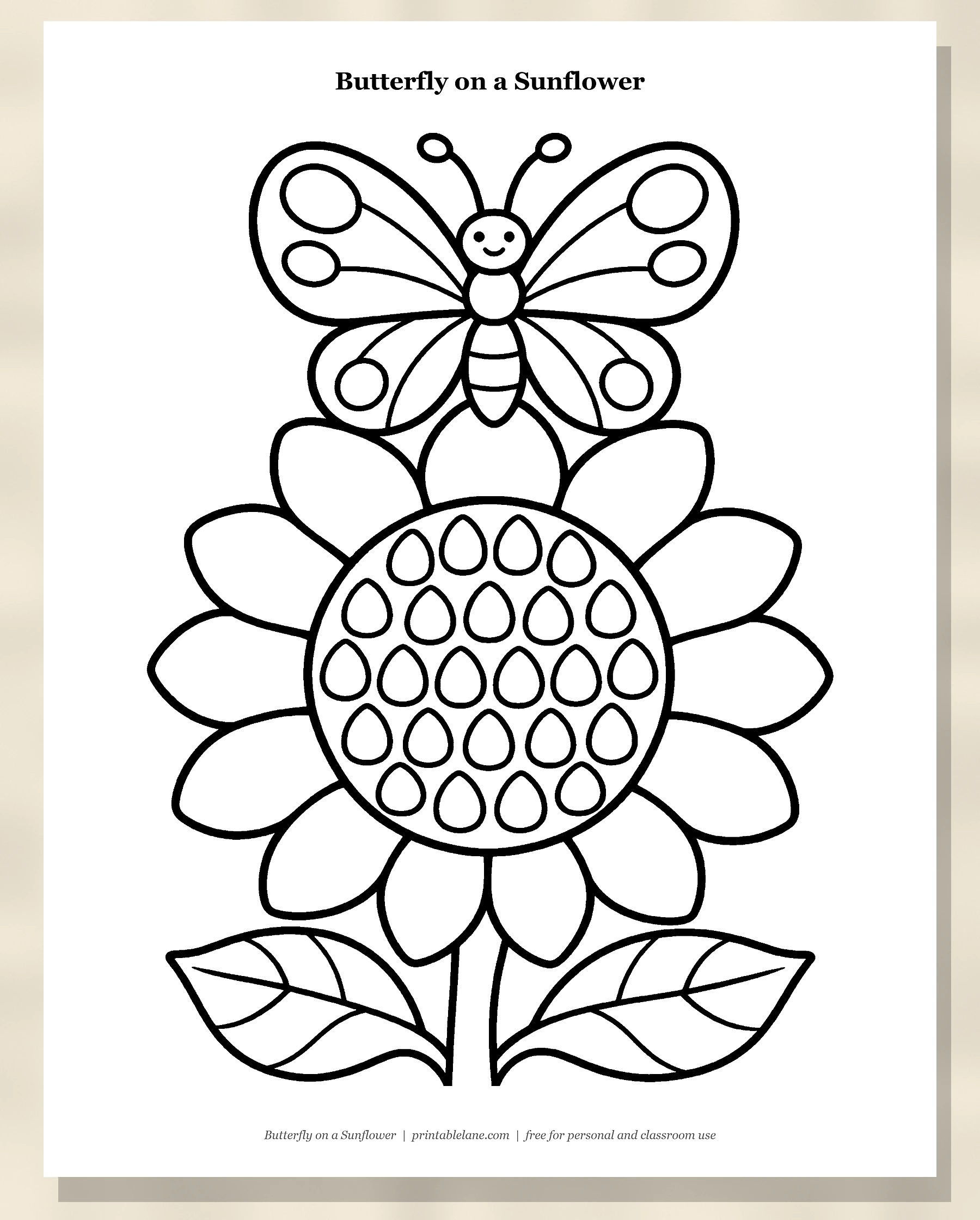
Butterfly on a Sunflower
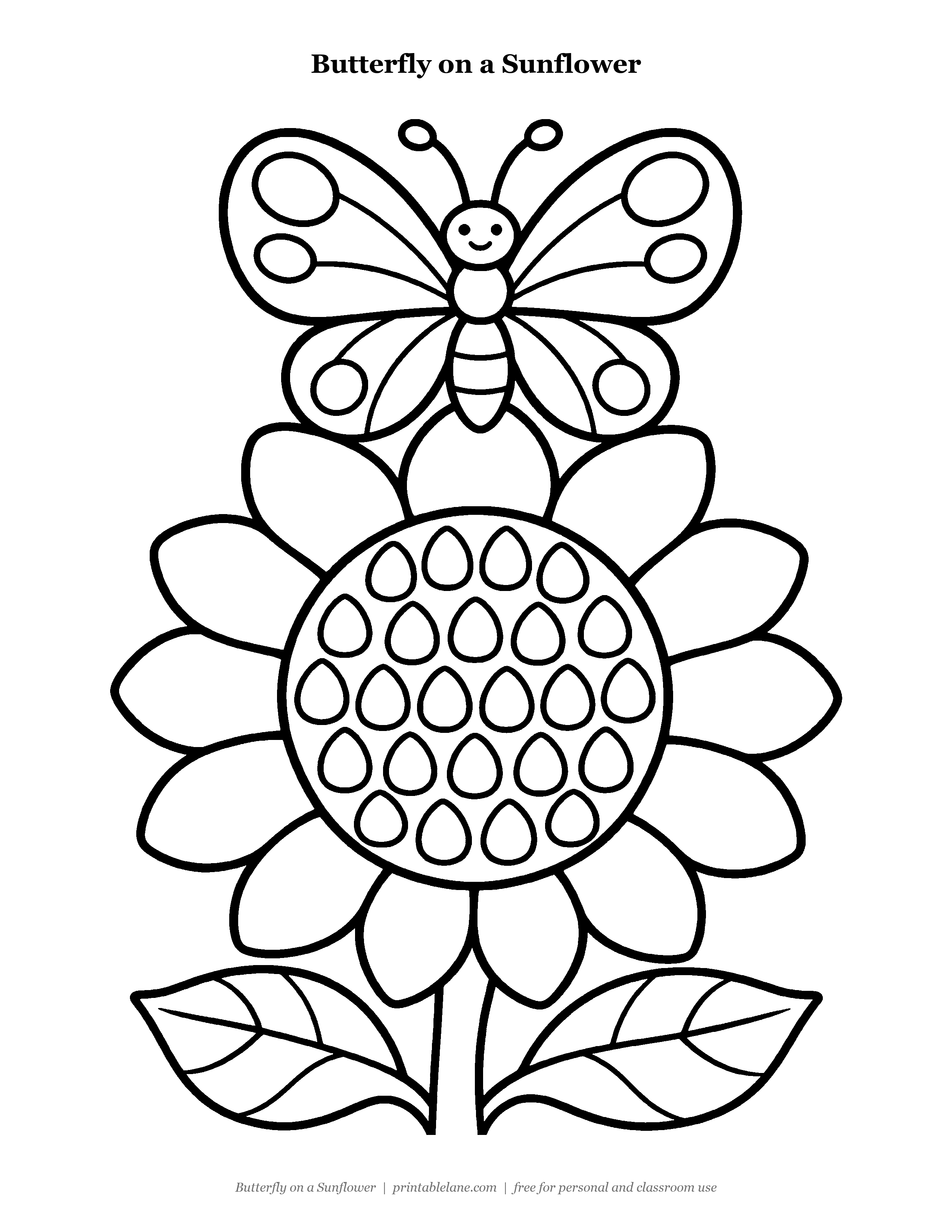
Easy, PDF page 6. A smiling butterfly with looped patterns on its wings lands on top of one big sunflower. The flower center is filled with rows of teardrop seed shapes, a ring of wide petals surrounds it, and 2 veined leaves grow from the stem.
Kids who want more blooms without butterflies can move on to the flower coloring pages, which start with a big daisy.
Caterpillar and Leaves
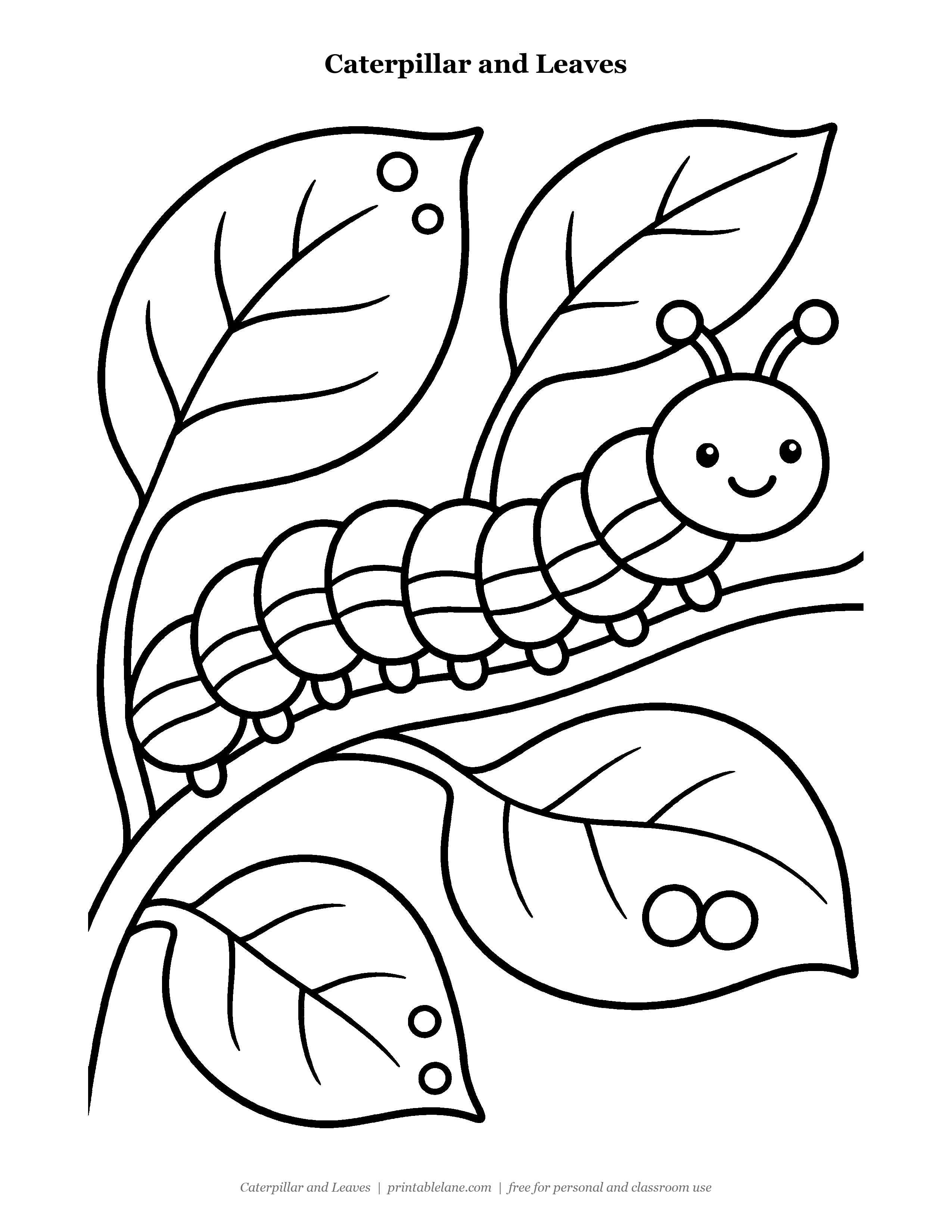
Easy, PDF page 7. A long, smiling caterpillar with banded segments and short stubby feet crawls along a stem between 4 big leaves. A pair of round eggs rests on the lower right leaf, and small circles dot 3 of the other leaves.
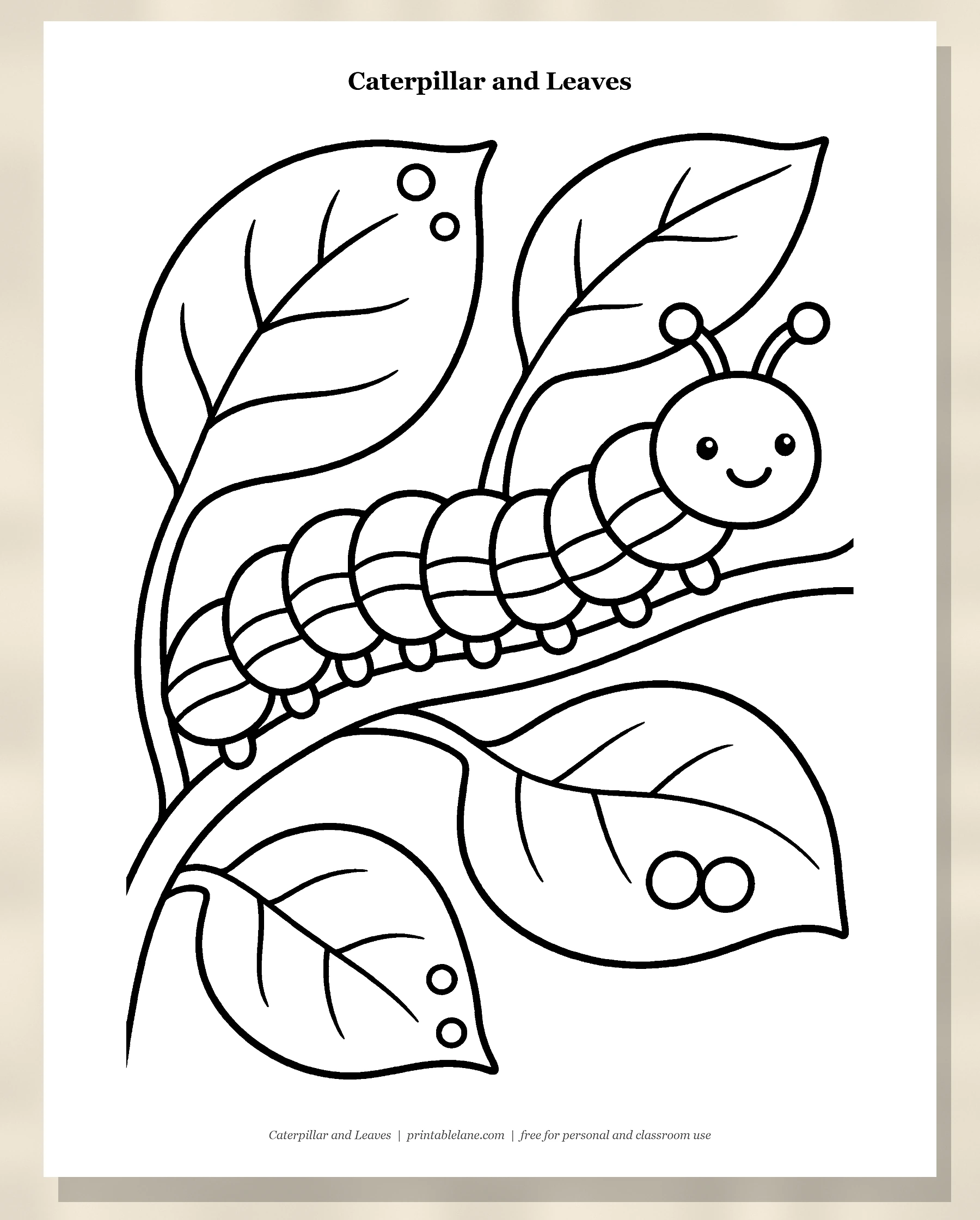
A real caterpillar has 2 kinds of legs. The jointed true legs sit right behind the head, and farther back are soft, stubby prolegs with tiny gripping hooks, at most 5 pairs of them.
Symmetry practice and a detailed butterfly mandala
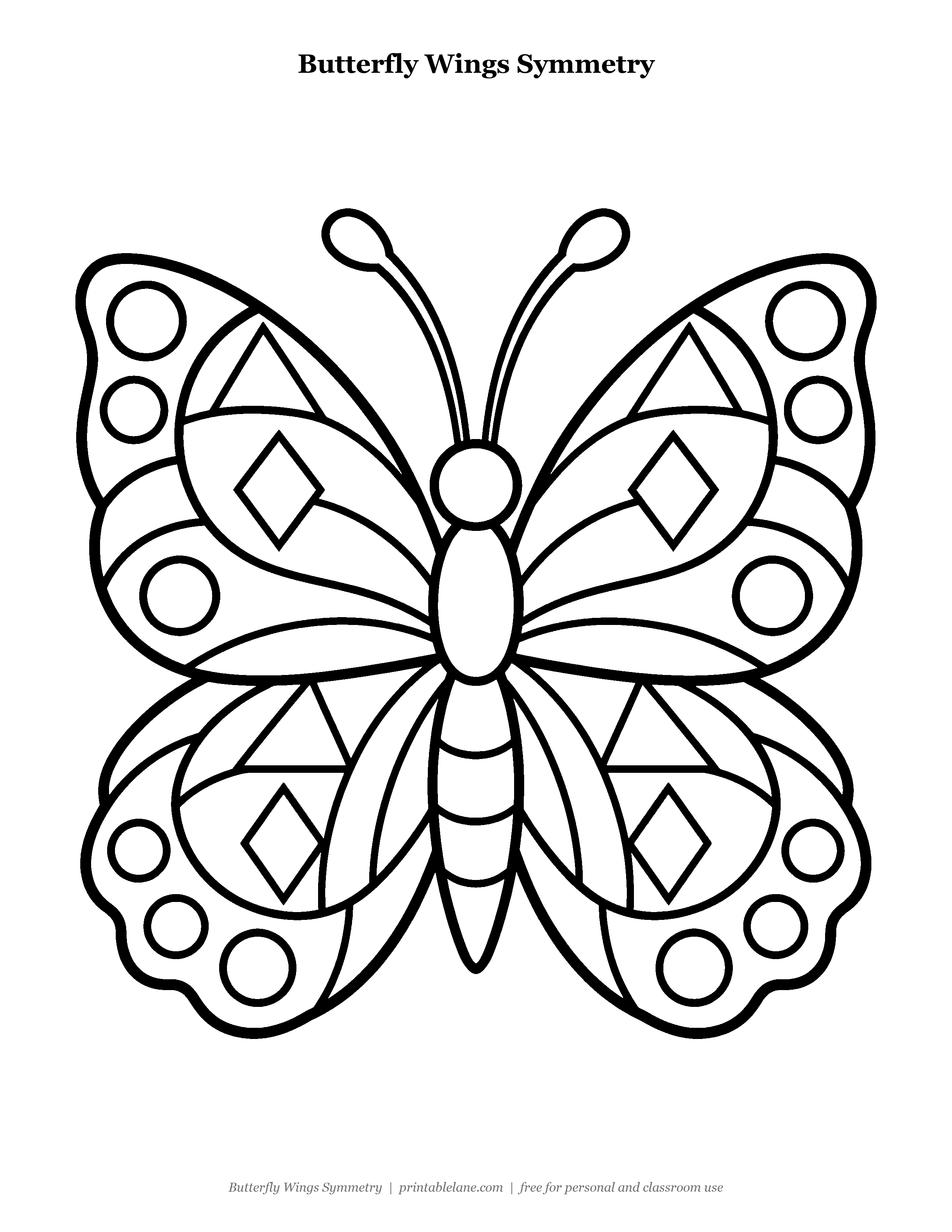
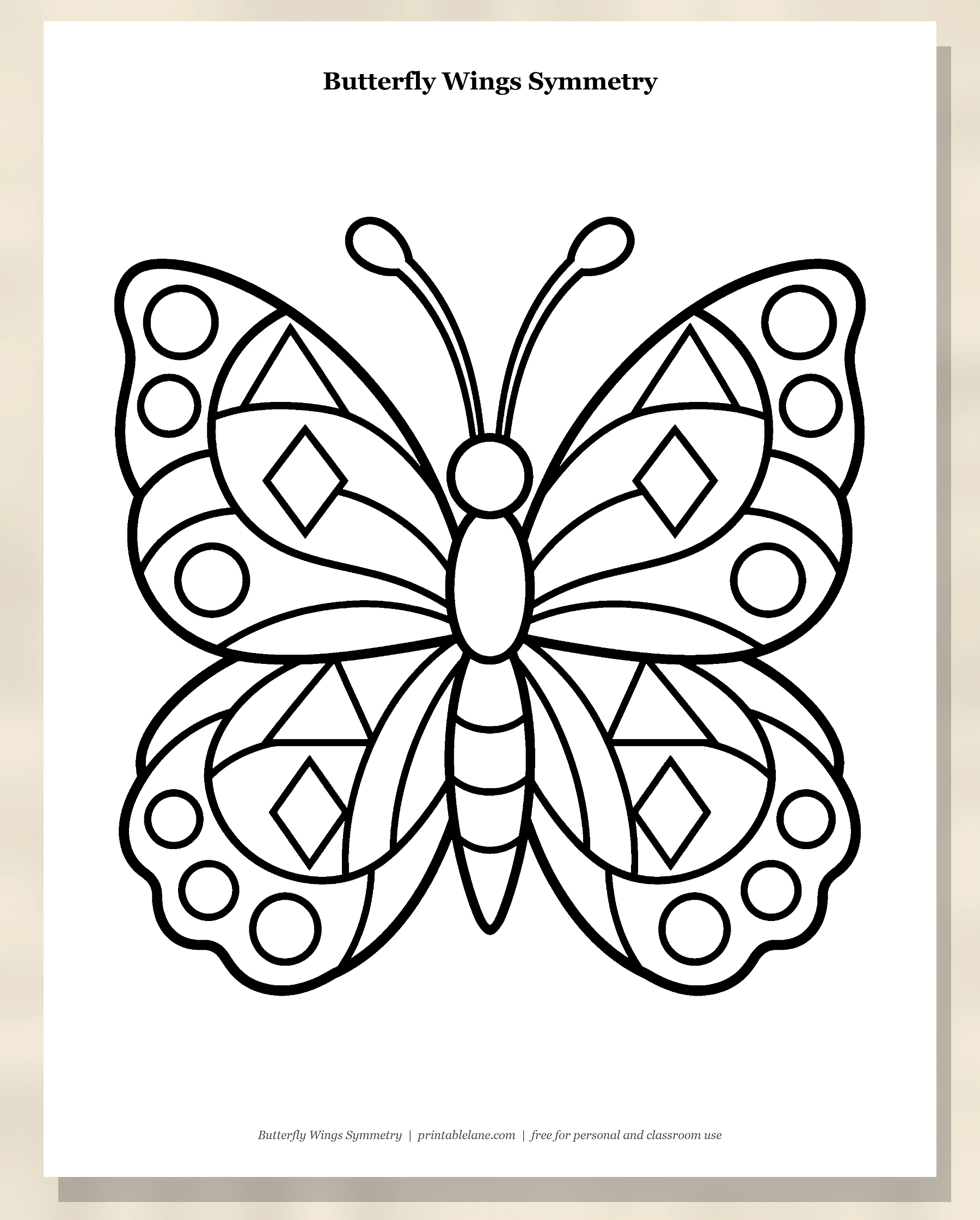
Butterfly Wings Symmetry
Medium, PDF page 8. One large butterfly sits right down the center of the page. Its wings are split into triangles, diamonds, circles and curved bands, and every shape on the left has an exact twin on the right.
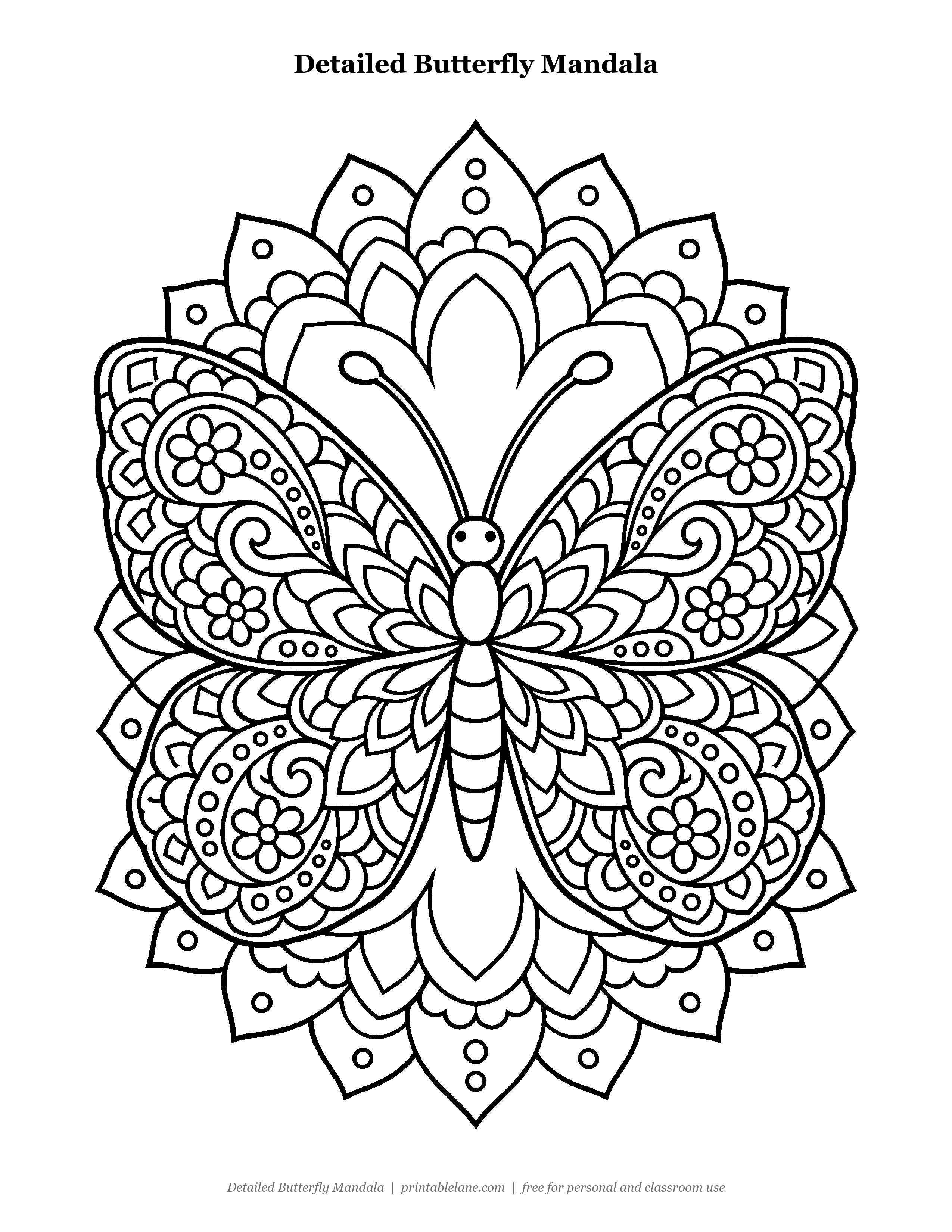
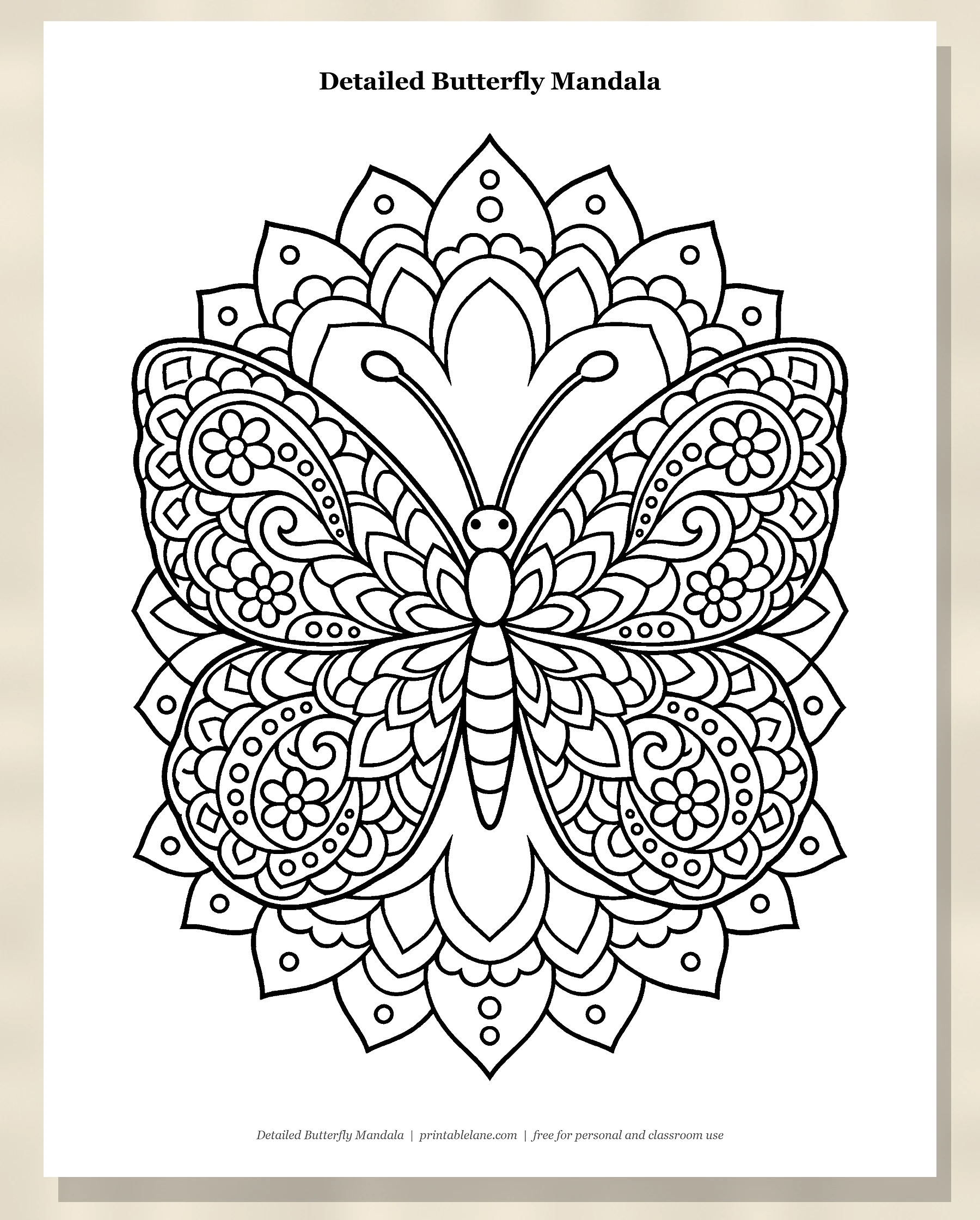
Detailed Butterfly Mandala
Detailed, PDF page 9. A butterfly with open wings sits on top of a ring of pointed mandala petals. Its wings are packed with small flowers, paisley swirls, rows of dots and petal layers that fan out from the body.
Older kids and adults who enjoy this page will find bigger, quicker patterns in the easy mandala coloring pages, and anyone who wants to draw their own wings can practice with these flower doodles.
What a real butterfly body looks like
Several butterflies here have cartoon faces, so use these facts to spot what the real insect looks like:
- Every butterfly has 4 wings: 2 forewings in front and 2 hindwings behind.
- The wings are covered with tiny scales, and those scales give the wings their color. The insect group name, Lepidoptera, comes from Greek words for scale and wing.
- Like all insects, a butterfly has a head, a thorax and an abdomen. The thorax has 3 segments, and each one carries a pair of legs, for 6 legs in all.
- In most butterfly families, the antennae end in little clubs, like the round tips on every butterfly here.
- A butterfly sips nectar through a long tube called a proboscis, which stays coiled up when it is not in use. Find it on the monarch page.
- Butterflies taste with their feet. The taste sensors sit on the feet and only work when the butterfly lands on something.
- There are about 20,000 butterfly species, and they can only fly when their body is warmer than about 81°F (27°C).
Real monarch wings are tawny orange with black veins and borders and 2 rows of small white spots along the edges, and the wingspan is about 3.5 to 4 inches. Use that as a guide for page 5 and let the others be any color.
Print the whole flutter or one butterfly at a time
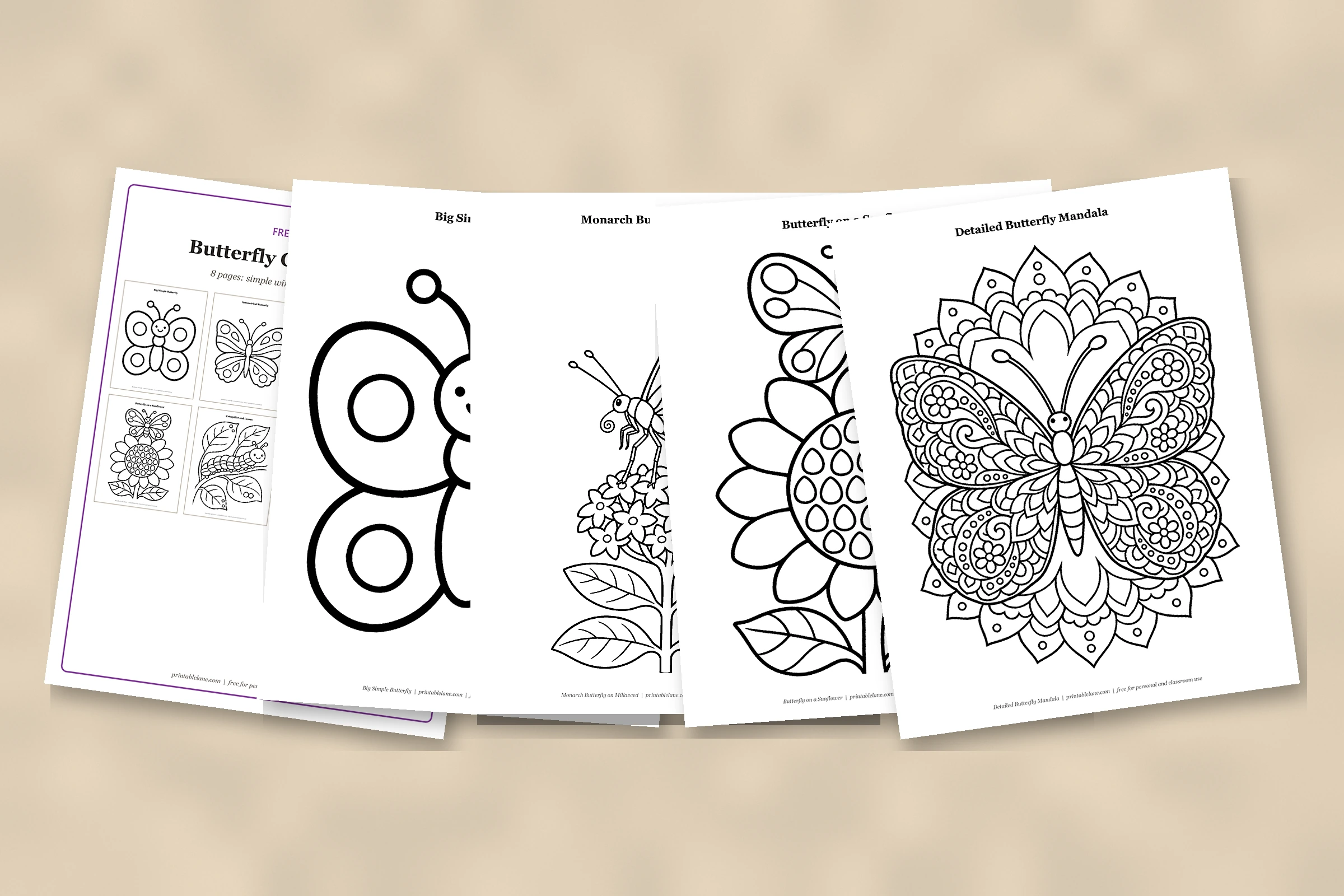
The PDF has 9 pages: a cover with small previews, then all 8 butterfly pages, from the big simple butterfly to the mandala. Pages are US Letter with wide margins, so on A4 paper either 100% or Fit to page keeps both wings on the sheet. Light cardstock handles markers on the mandala.
- Big Simple Butterfly (PNG)
- Symmetrical Butterfly (PNG)
- Butterfly Life Cycle (PNG)
- Monarch Butterfly on Milkweed (PNG)
- Butterfly on a Sunflower (PNG)
- Caterpillar and Leaves (PNG)
- Butterfly Wings Symmetry (PNG)
- Detailed Butterfly Mandala (PNG)