 By
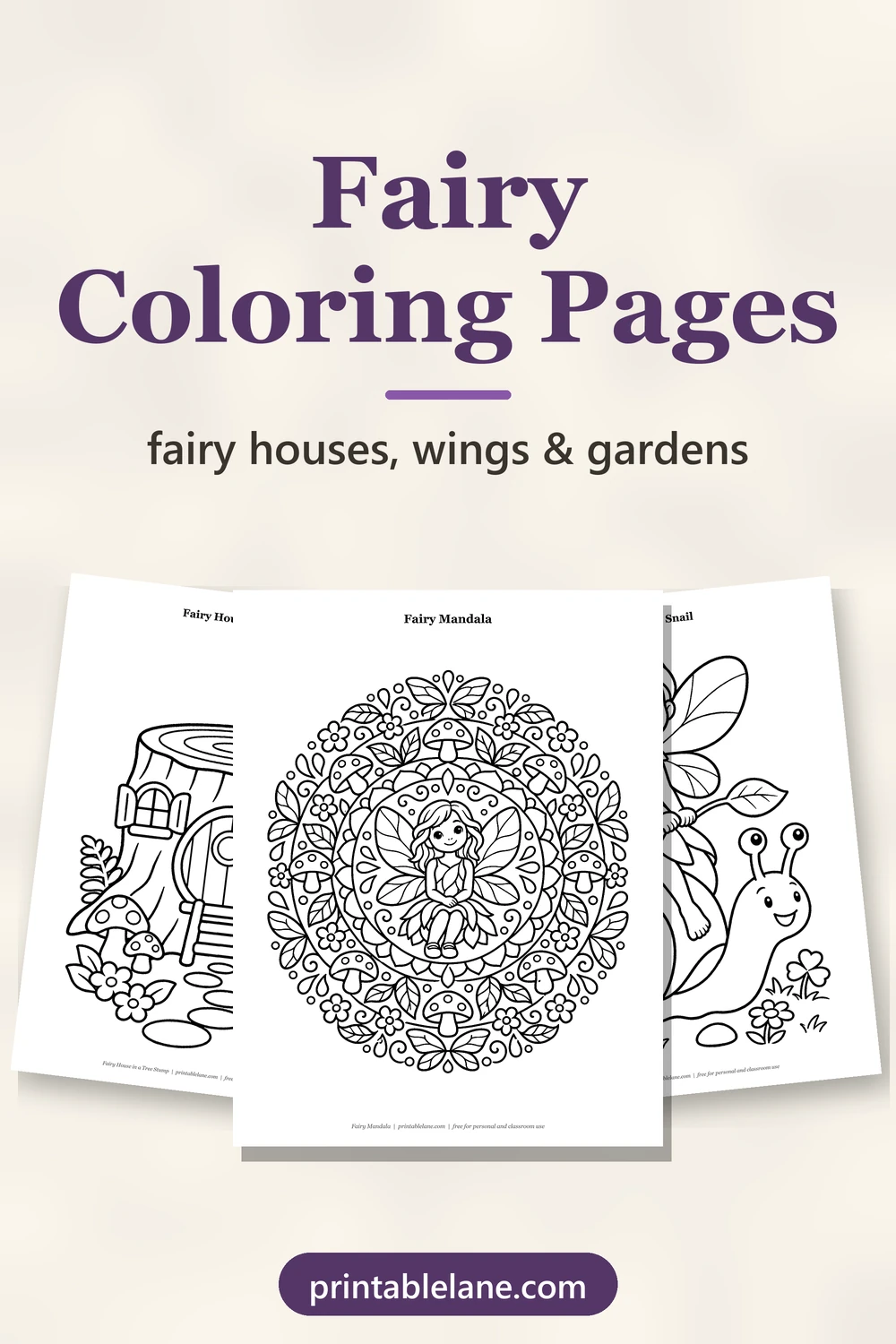
Fairies are tiny, so everything around them turns into furniture: a mushroom becomes a bed, a stump becomes a house and an acorn cap becomes a teacup. These fairy coloring pages lean into that small-world idea, with 6 scenes, a wings pattern and a mandala, all drawn with closed black outlines that leave every space ready for color.
The 2 easiest pages come first, so a preschooler can start coloring right away, and the more detailed garden scenes follow further down.
A sleepy fairy and a fairy house to start with
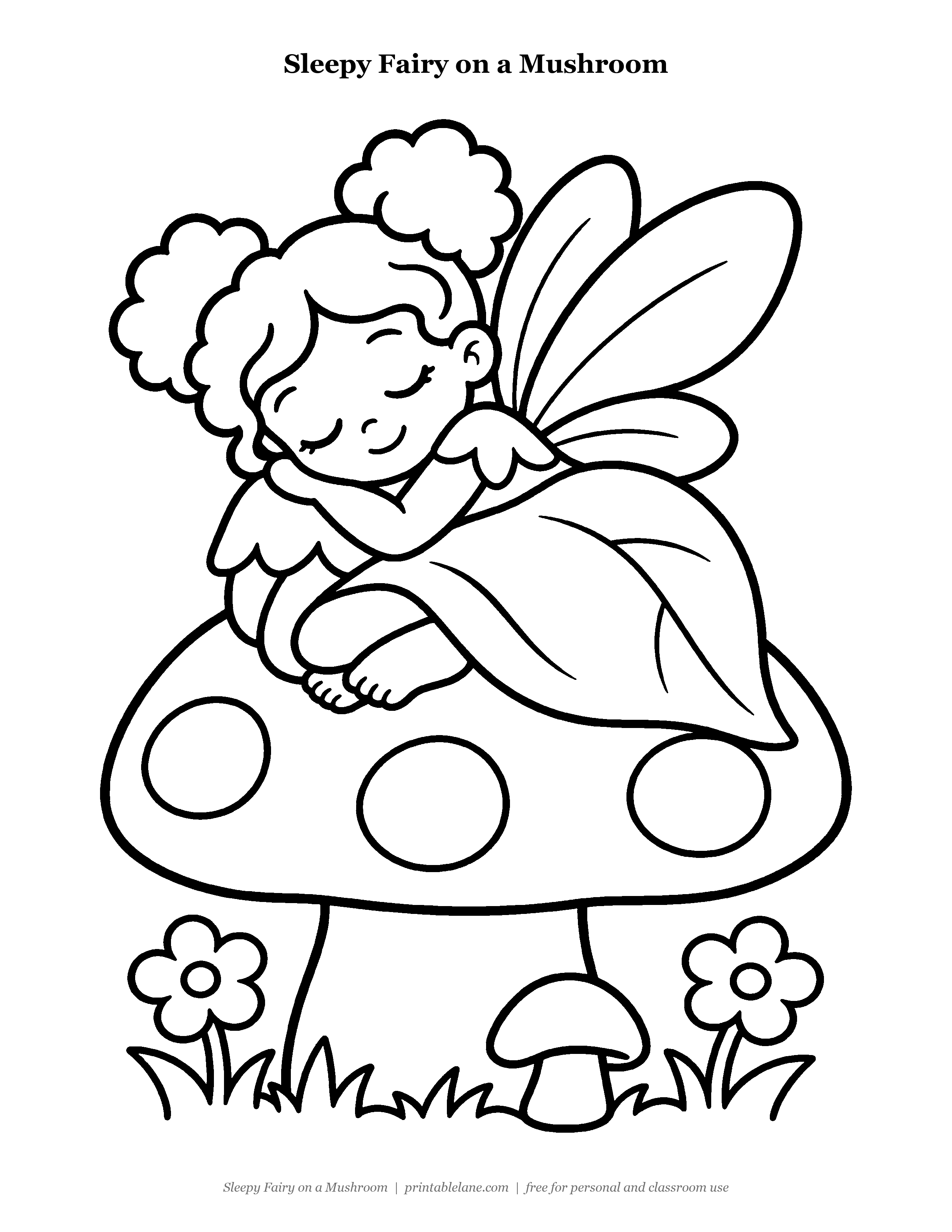
Sleepy Fairy on a Mushroom
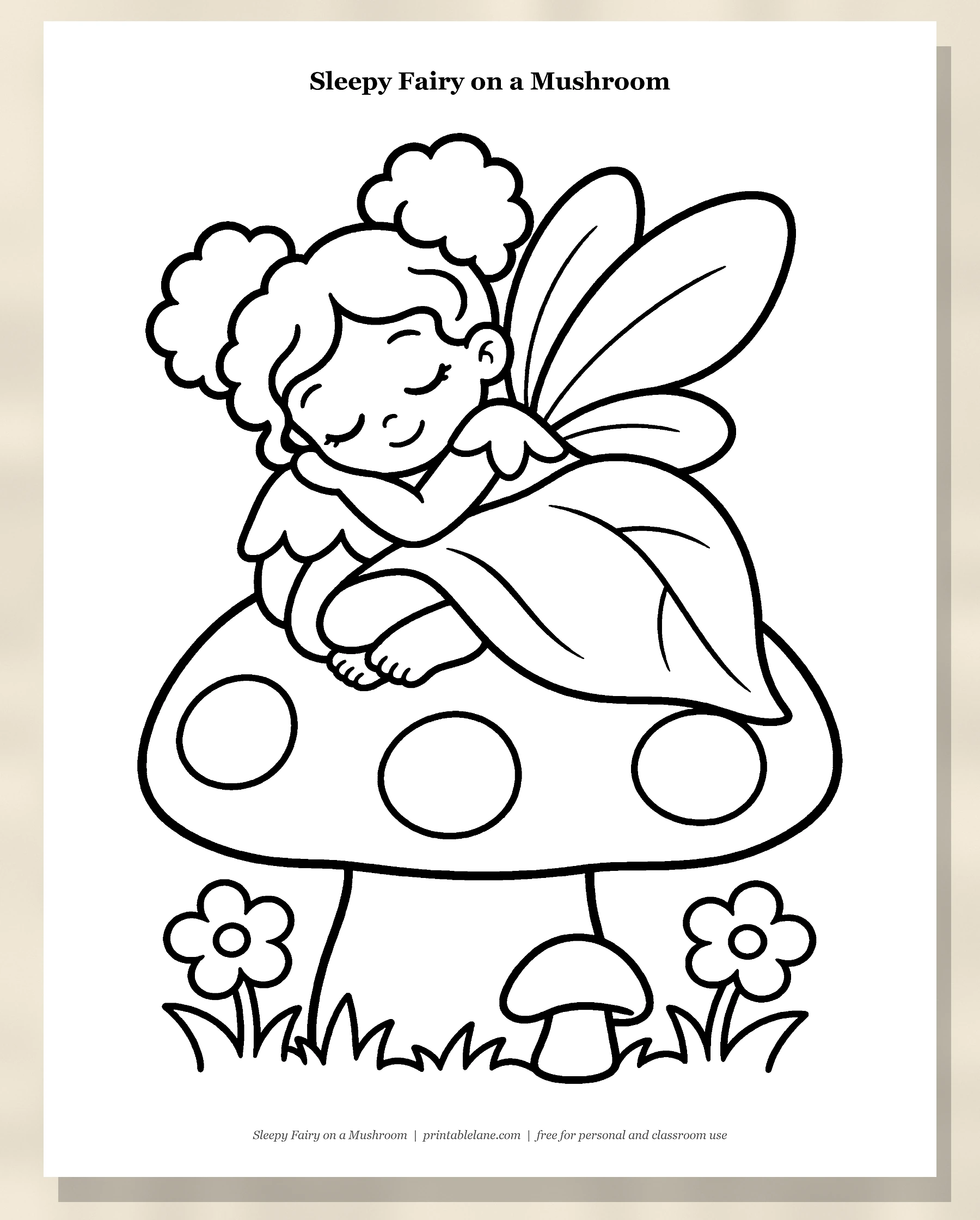
Easy, PDF page 2. A fairy with curly hair tied in 2 round puffs is curled up asleep on a big spotted mushroom cap, eyes closed and smiling, with a large leaf pulled over her like a blanket and her bare feet peeking out. Her wings rest behind her. A small mushroom, 2 flowers and a row of grass sit at the bottom. Wide shapes make it a quick 10 to 15 minute page for little kids.
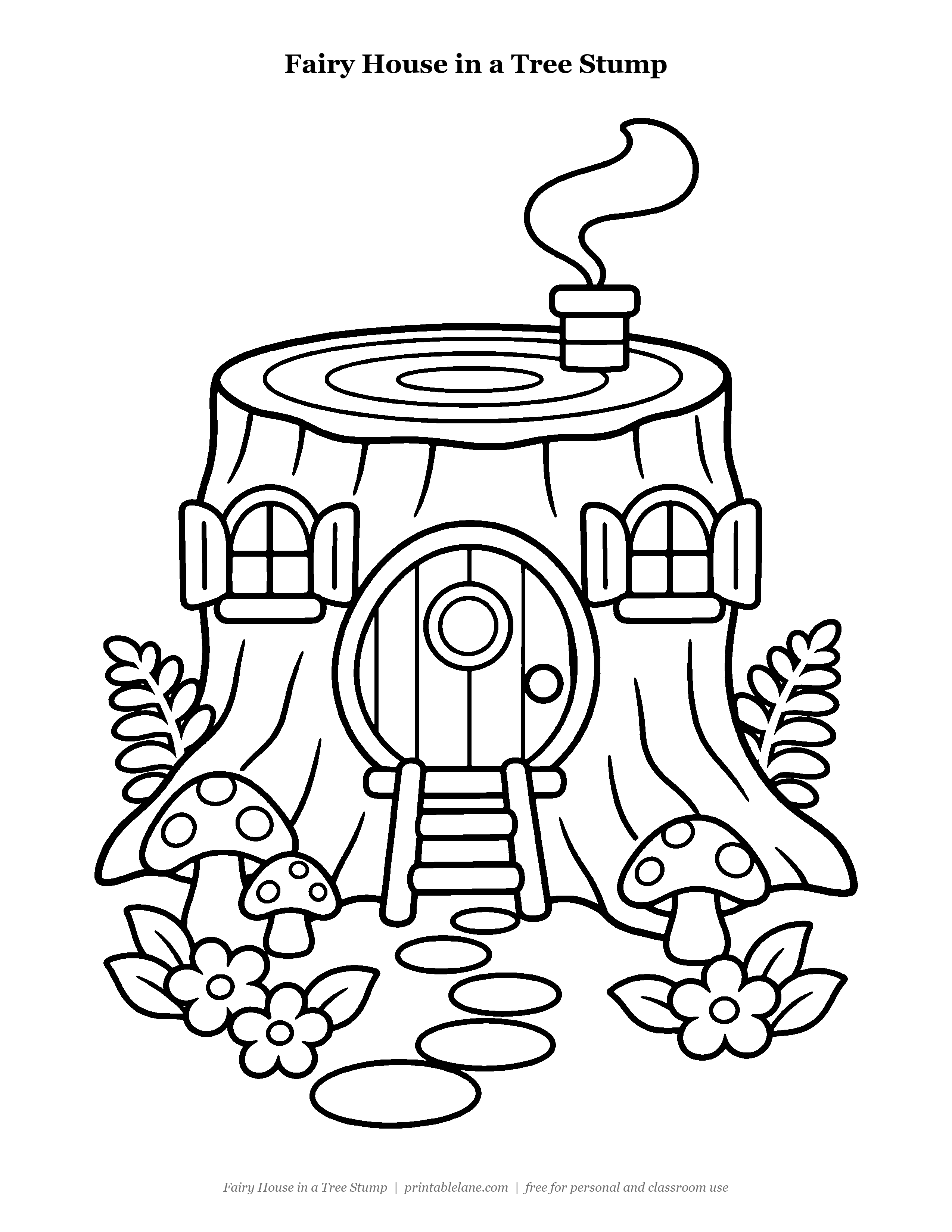
Fairy House in a Tree Stump
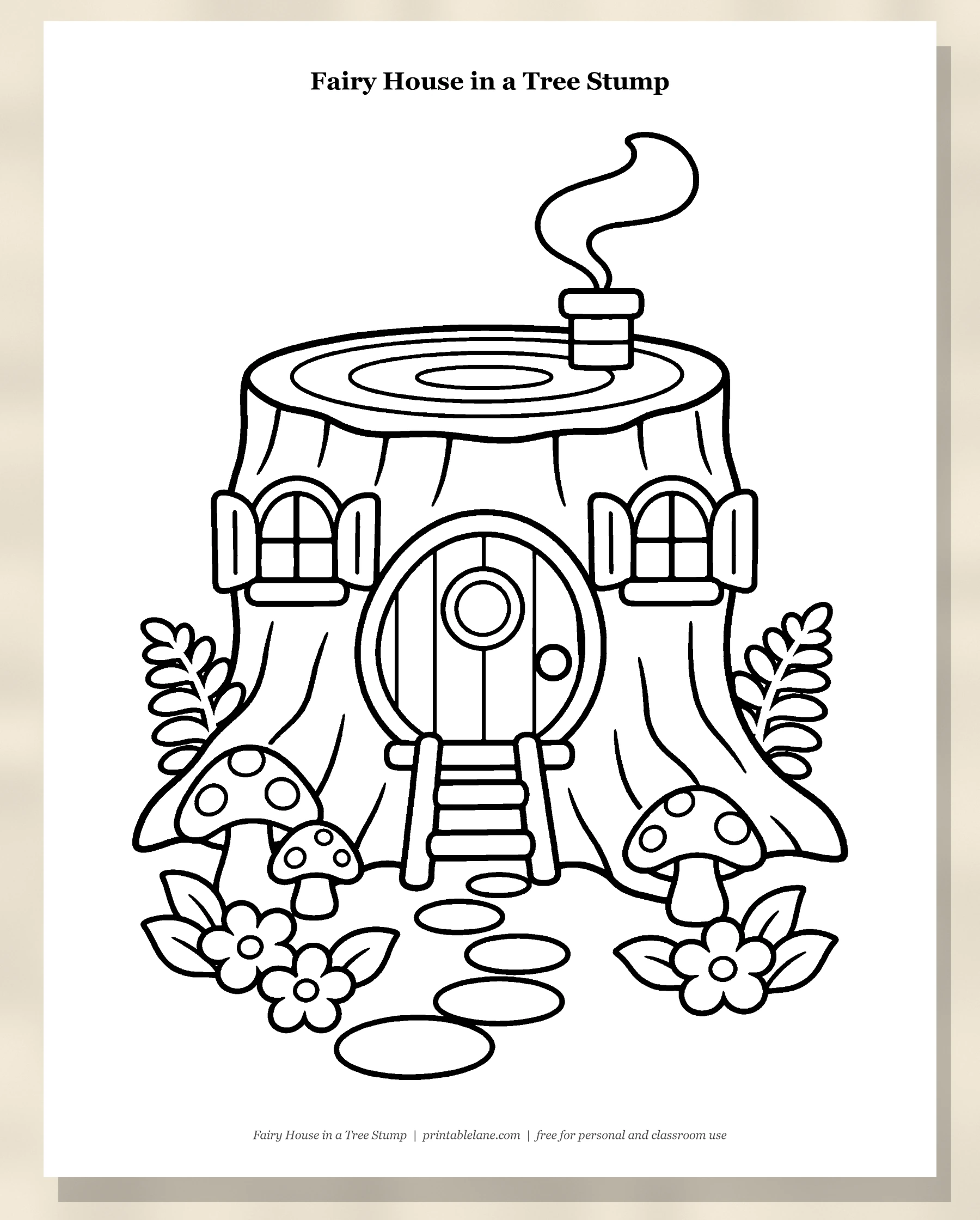
Easy to medium, PDF page 3. An old tree stump has become a cottage with a round plank door, a round window in the door, 2 arched windows with open shutters and a short chimney on top with a curl of smoke. A little ladder leads down from the door to 5 stepping stones. 3 spotted mushrooms, 3 flowers and 2 ferns grow around the roots. No fairy is drawn, so kids can add the owner at a window.
For more toadstools, the mushroom coloring pages add a mushroom village and a moonlit fairy ring.
A lantern walk and a snail ride
Fairy with a Lantern at Night
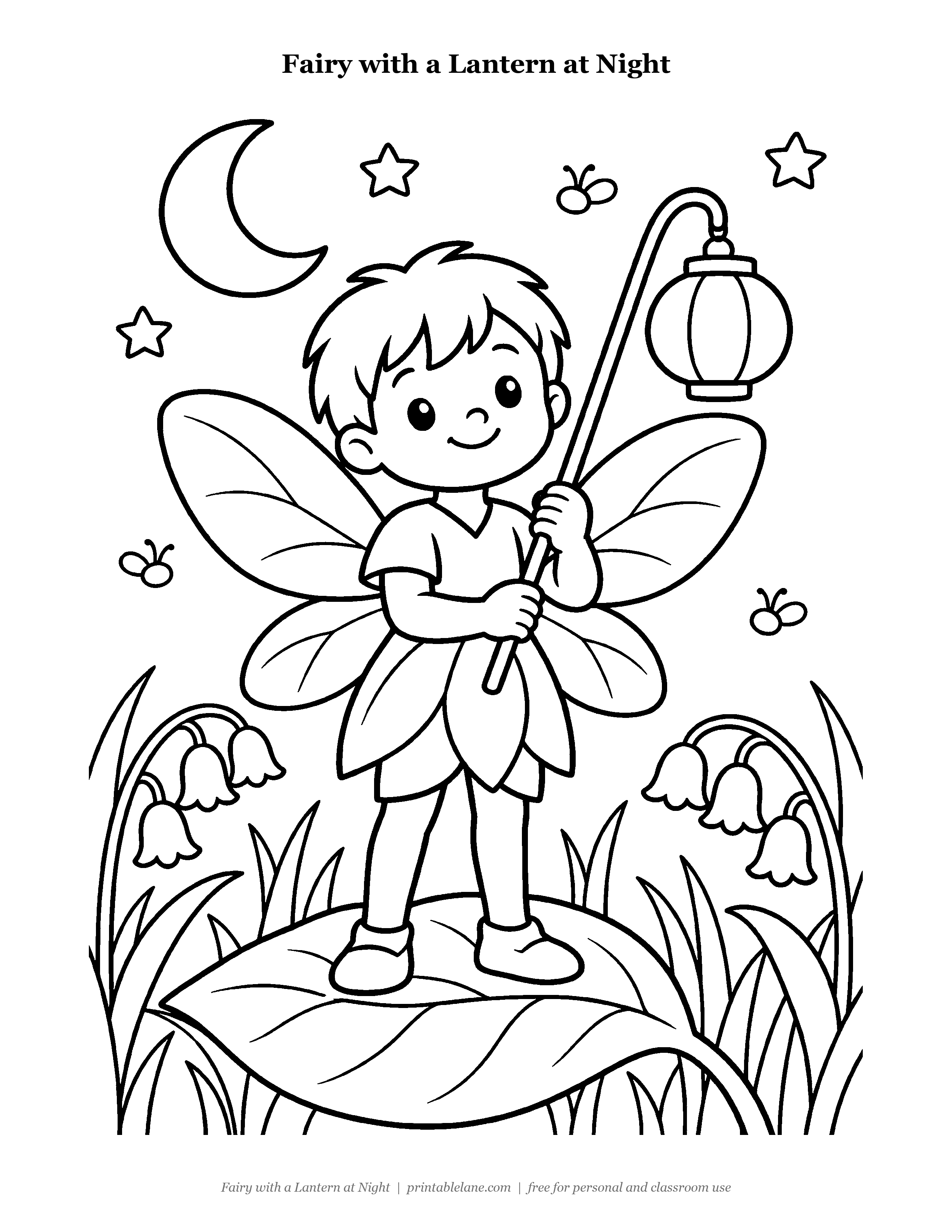
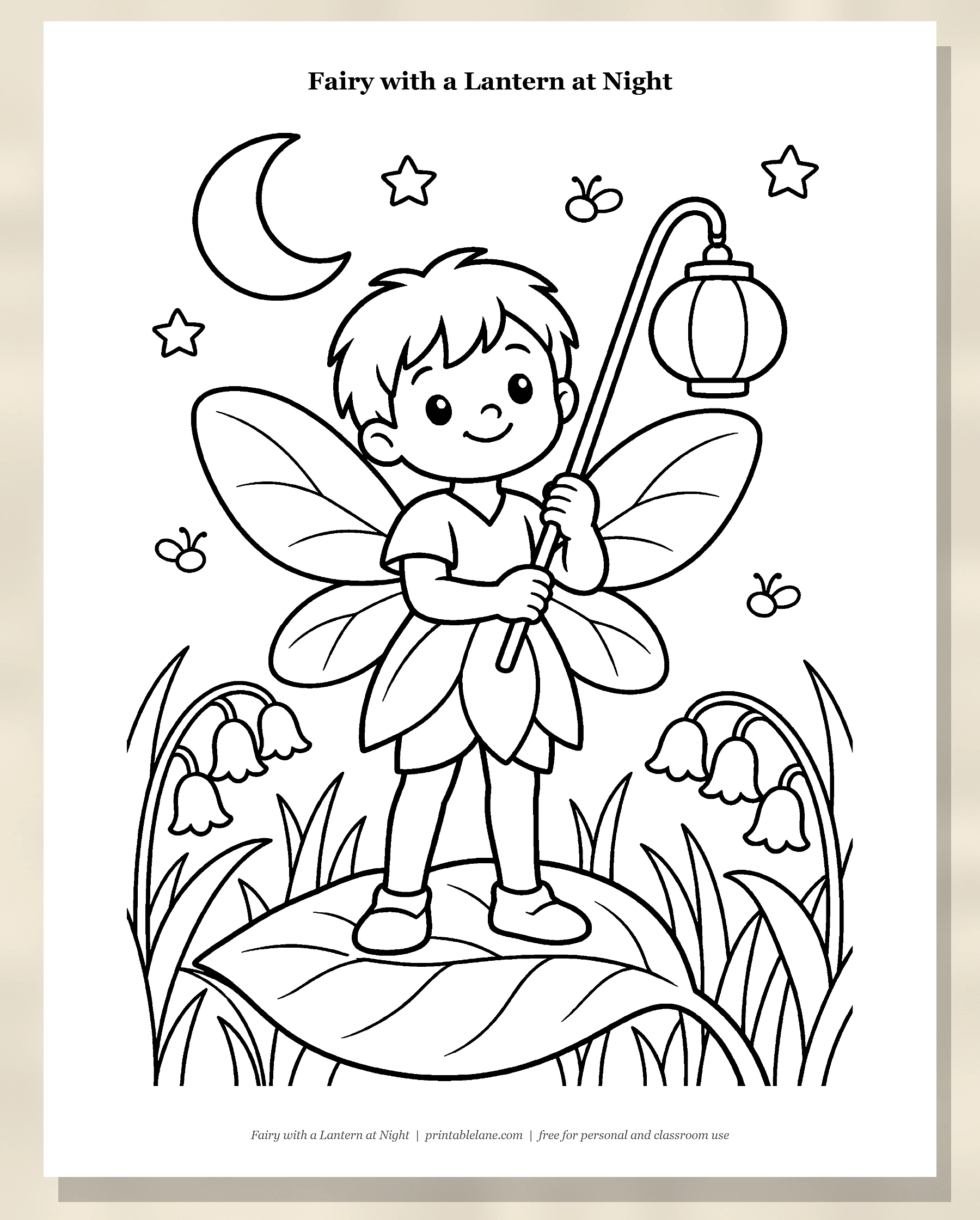
Medium, PDF page 4. A fairy boy with short spiky hair stands on a large leaf and holds a pole with both hands, and a round paper lantern hangs from a hook at the top of it. A crescent moon and 3 stars sit in the sky, small fireflies with round bodies float around him, and bluebells and tall grass grow on both sides.
Fairy Riding a Snail
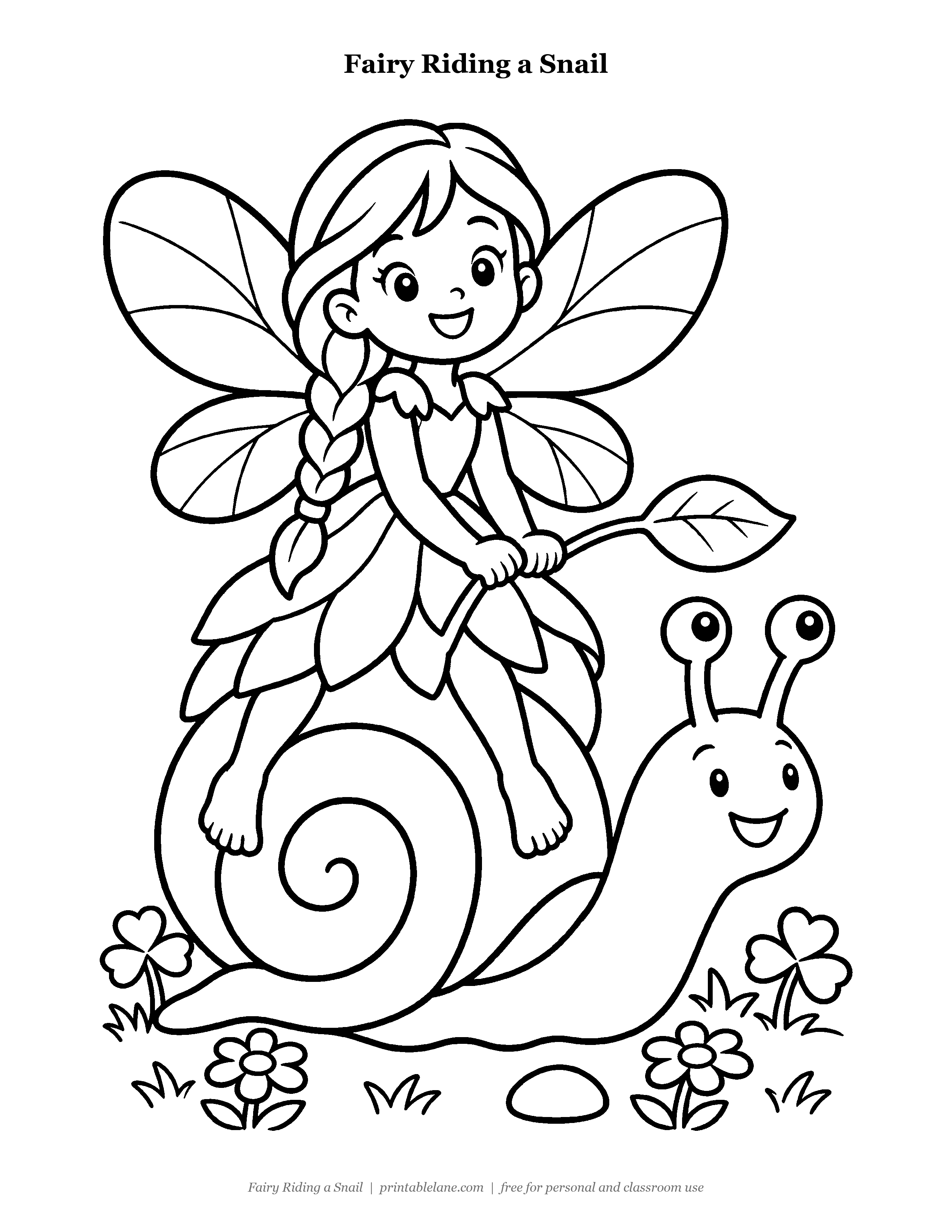
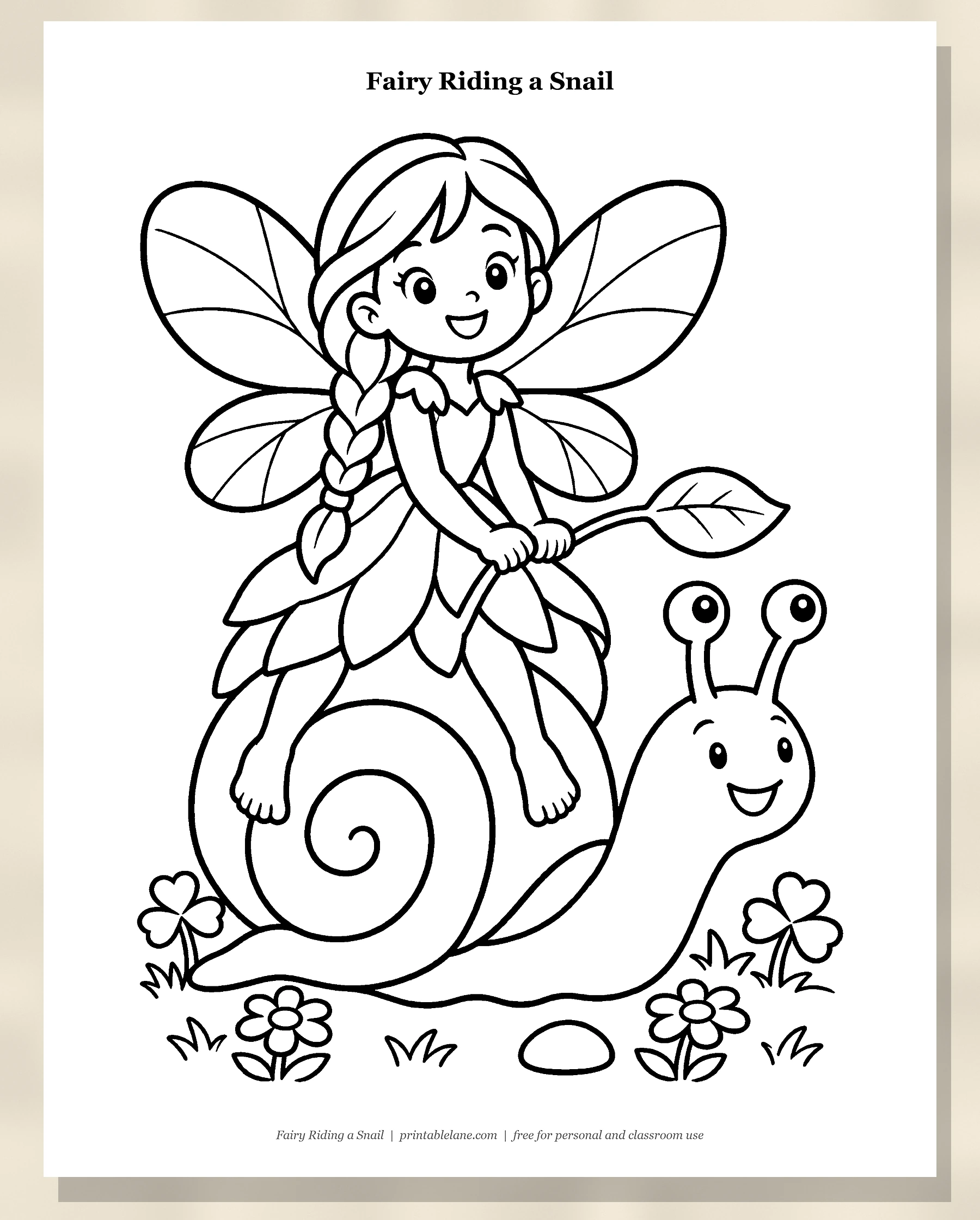
Easy to medium, PDF page 5. A smiling fairy girl with a long braid sits on top of a garden snail, holding a leaf on a stem in both hands like reins. The snail looks out at the reader with 2 eye stalks and a big grin. 2 clover plants, 2 daisies, grass tufts and a pebble line the ground.
Fairy doors, on paper and at the foot of a real tree
Fairy Door in a Tree Trunk
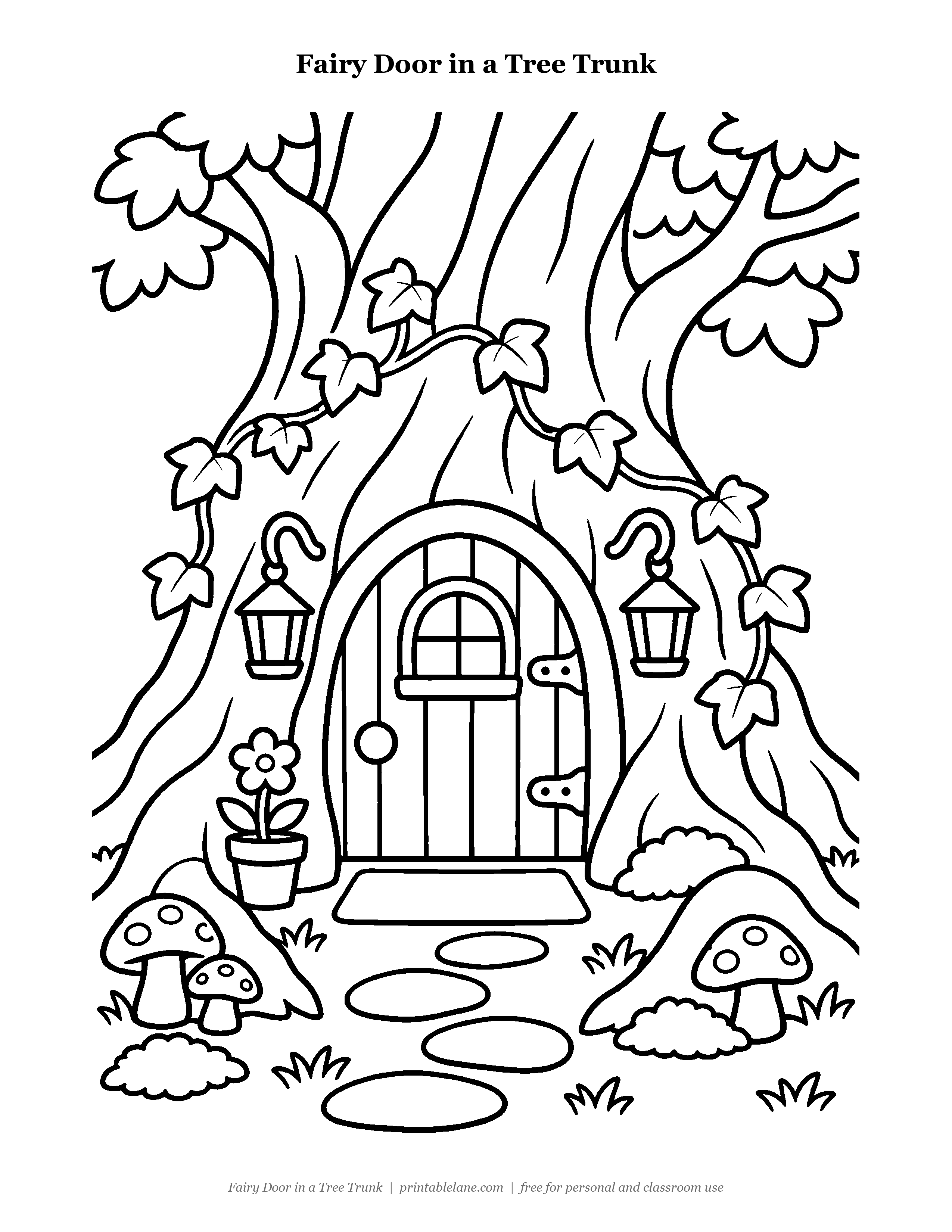
Medium, PDF page 6. A small arched door made of planks sits between the roots of a large tree. It has a round knob, 2 hinges and an arched window, with 2 lanterns on curled hooks beside it. A doormat lies in front, a potted flower stands to the left, and 4 stepping stones lead away through grass. Ivy climbs the trunk, while mushrooms and moss clumps fill the corners.
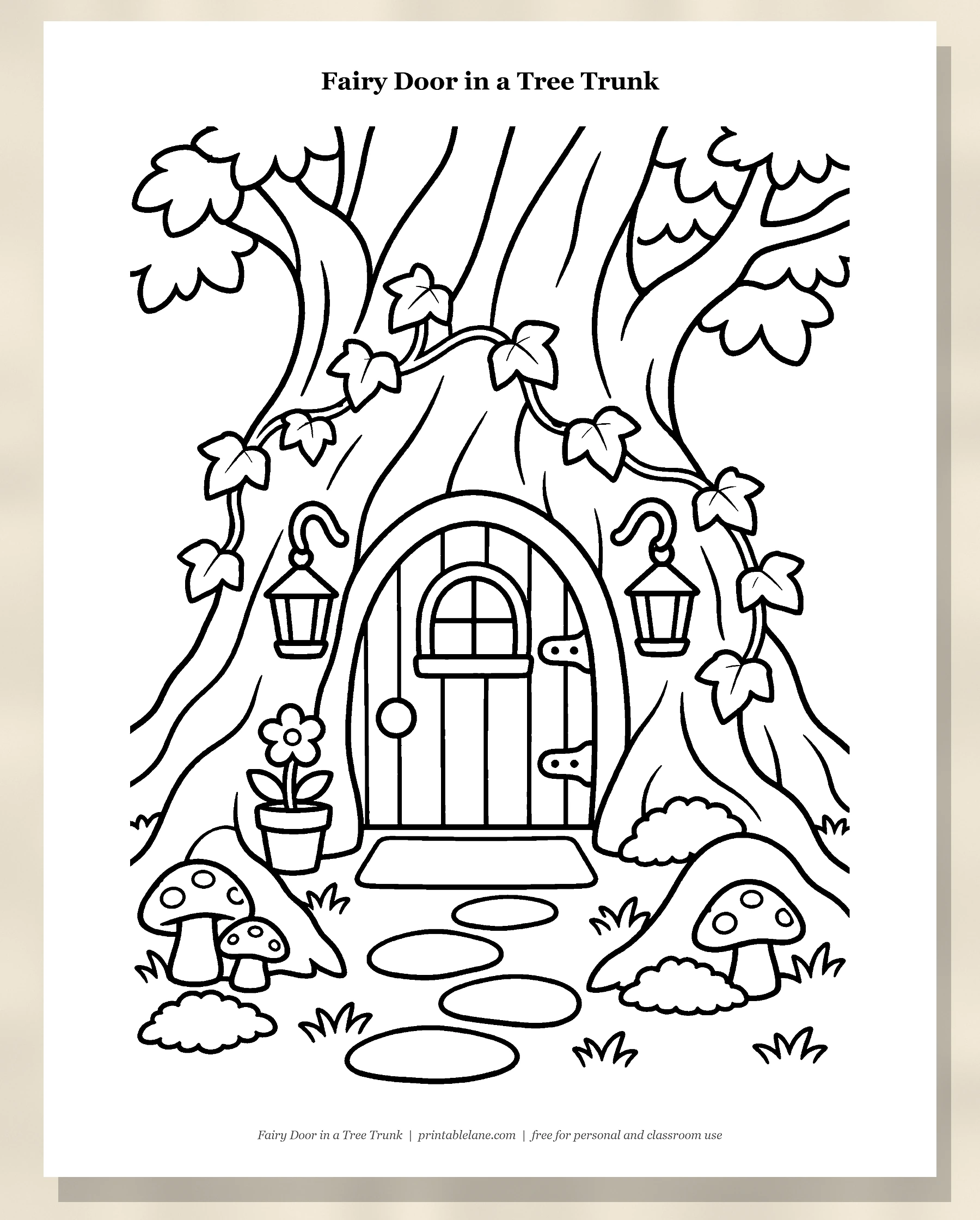
Real fairy doors work just like this drawing: they are tiny doors, usually set at the base of a tree, and people leave notes or small wishes behind them. Ann Arbor, Michigan, has a well-known series of them. Nails and glue can stress a living tree, so a kinder version is to color page 6, mount it on cardstock, cut out the door and lean it against the roots.
Fairy wings and where they came from
Fairy Wings Pattern
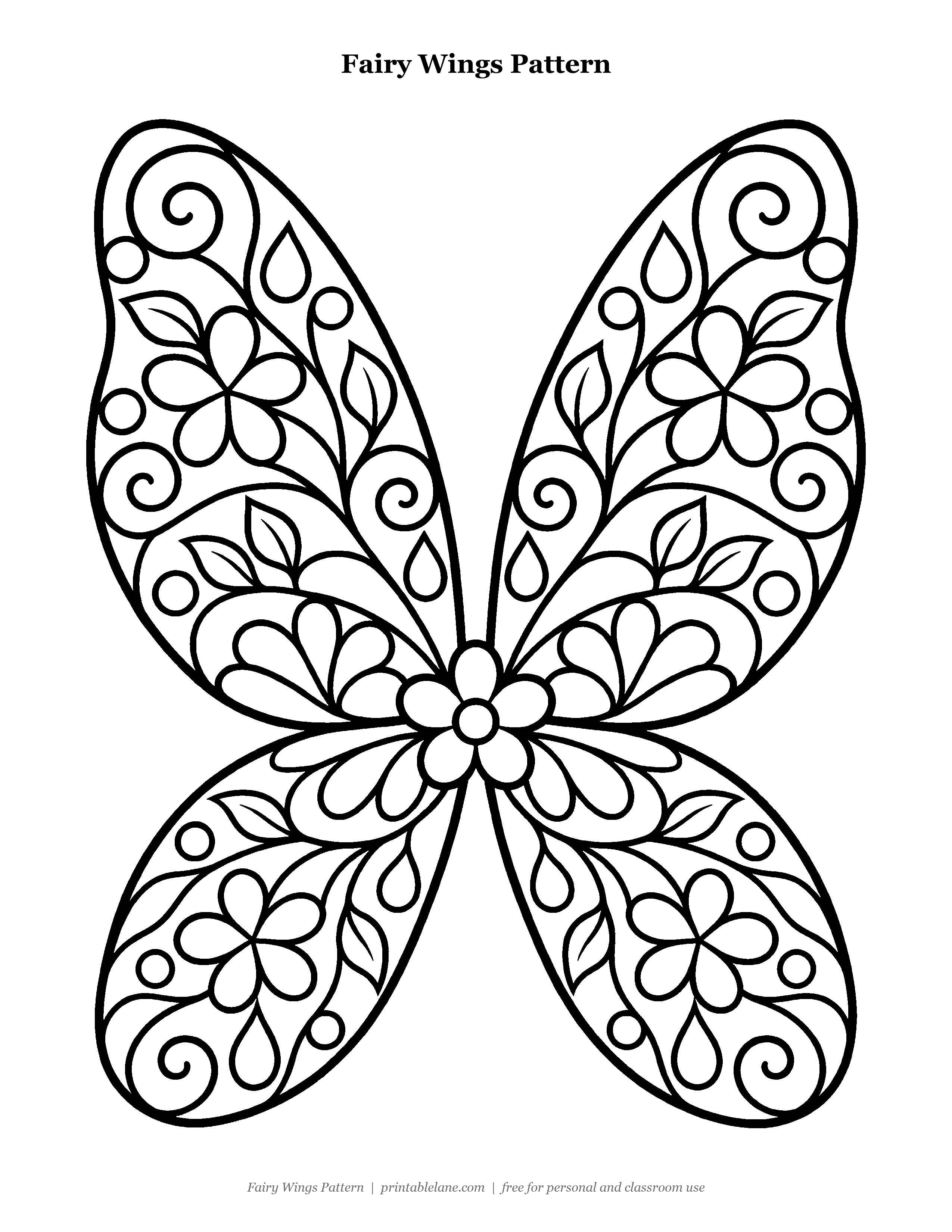
Medium to detailed, PDF page 7. A large pair of wings fills the page, with an upper and a lower wing on each side and a small flower where they meet. Every wing is packed with flowers, leaves, swirls, teardrops and circles, and the left and right sides mirror each other.
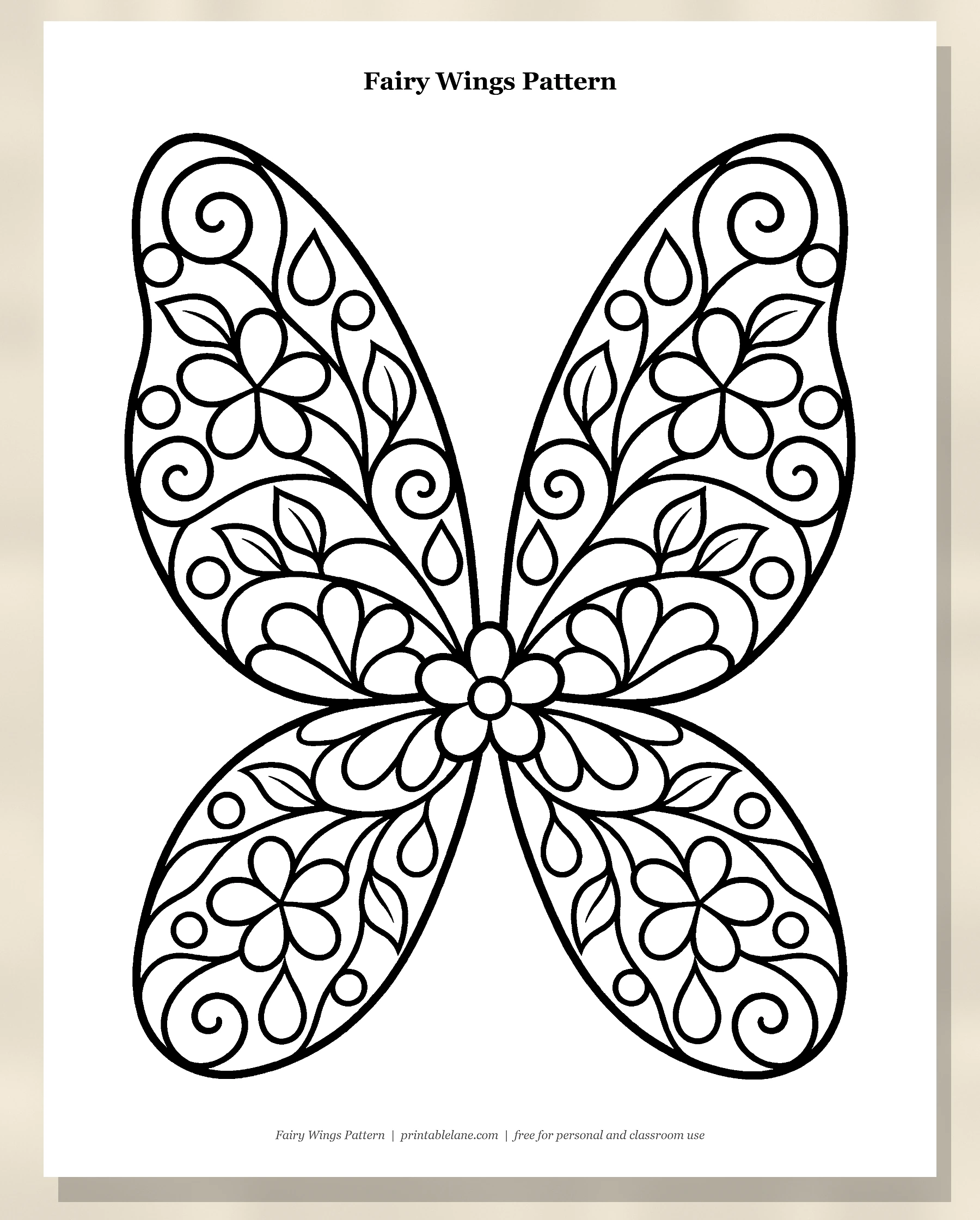
Wings are newer than most people think. In older folklore, fairies were rarely given wings at all and flew by magic, sometimes riding on ragwort stems or the backs of birds. The wings we picture today grew common in Victorian paintings, and modern artists usually borrow dragonfly or butterfly shapes. Page 7 uses the butterfly kind, while the fairies on pages 4 and 5 have thinner, dragonfly-like wings with long veins.
Tea in acorn cups, then a mandala for slow coloring
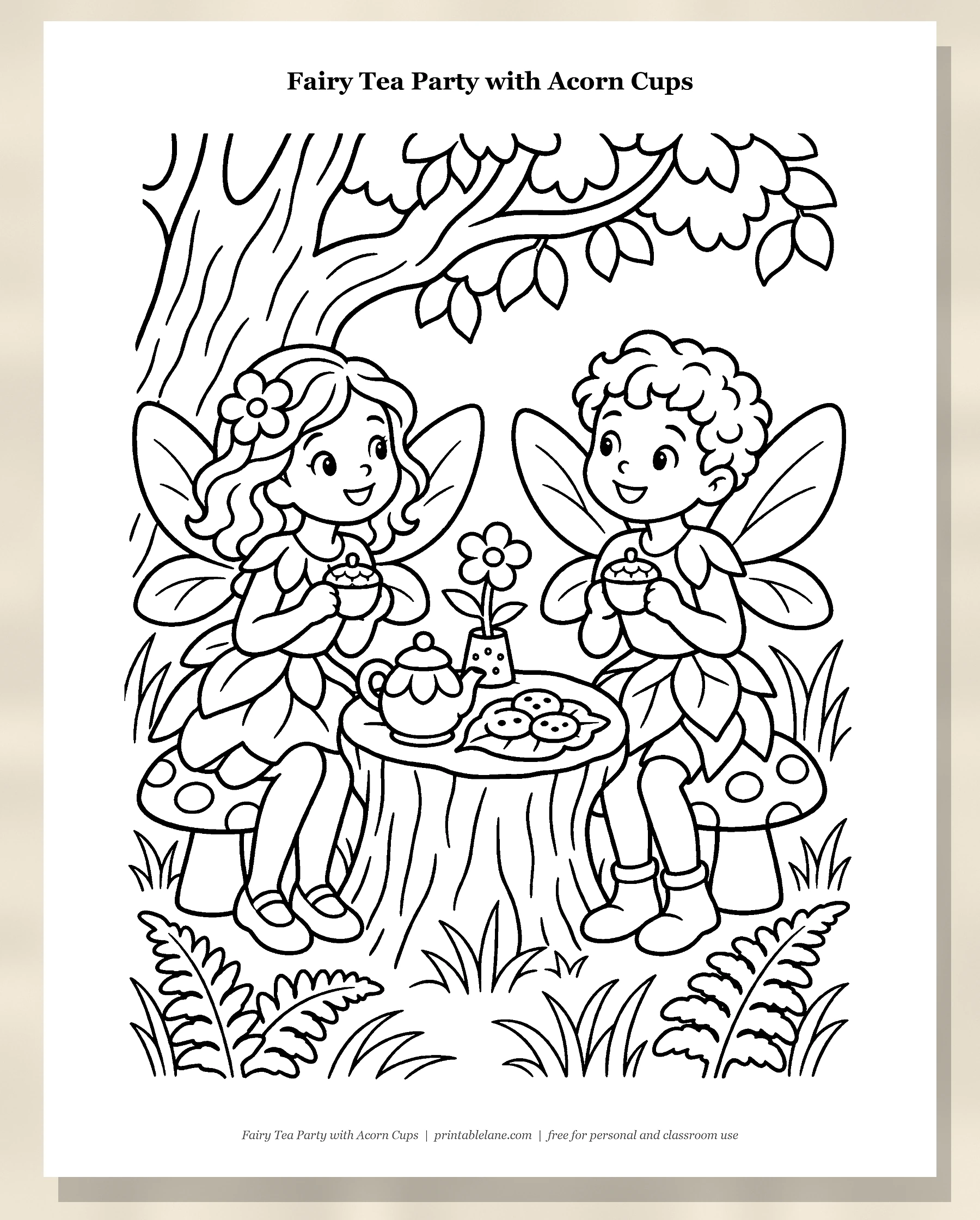
Fairy Tea Party with Acorn Cups
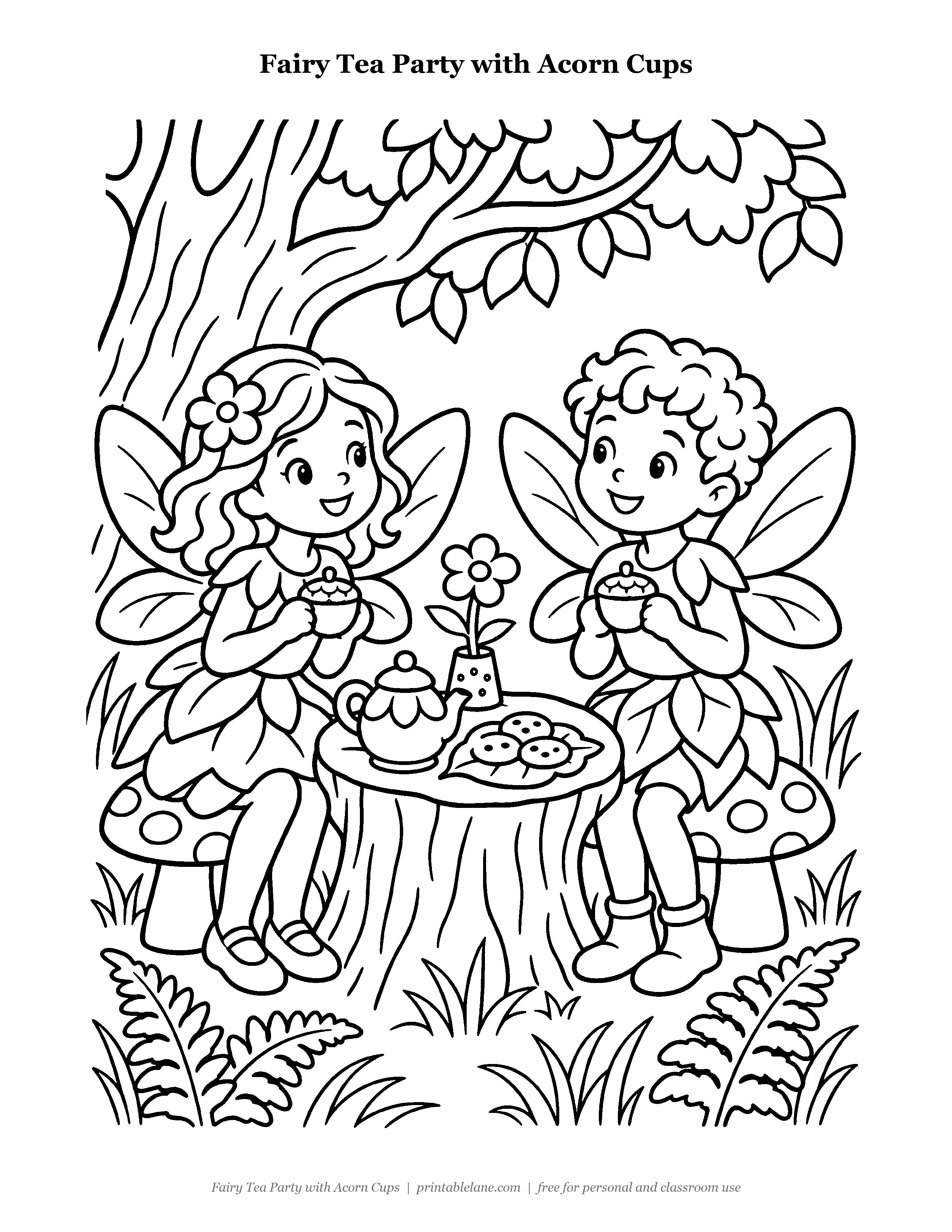
Medium, PDF page 8. 2 fairy friends sit on spotted mushroom stools under a big tree: a girl with wavy hair and a flower clip, and a boy with tight curls and boots. Both hold acorn-shaped cups with little caps on top. On the tree stump table between them are a teapot, a dotted vase with 1 flower and 3 cookies on a leaf plate. Ferns and grass fill the bottom.
Older kids who like tea party themes can keep going with the afternoon tea party junk journal kit.
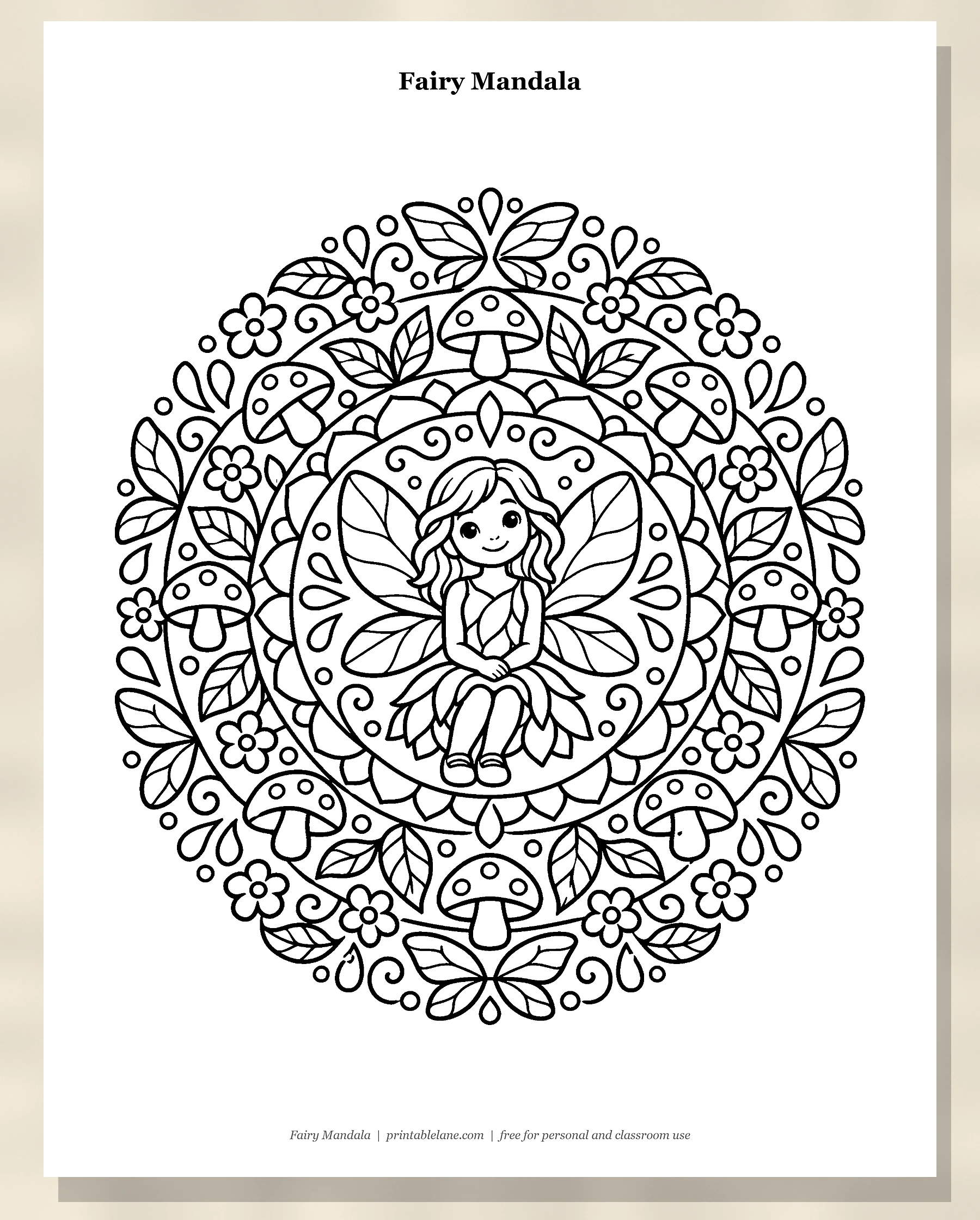
Fairy Mandala
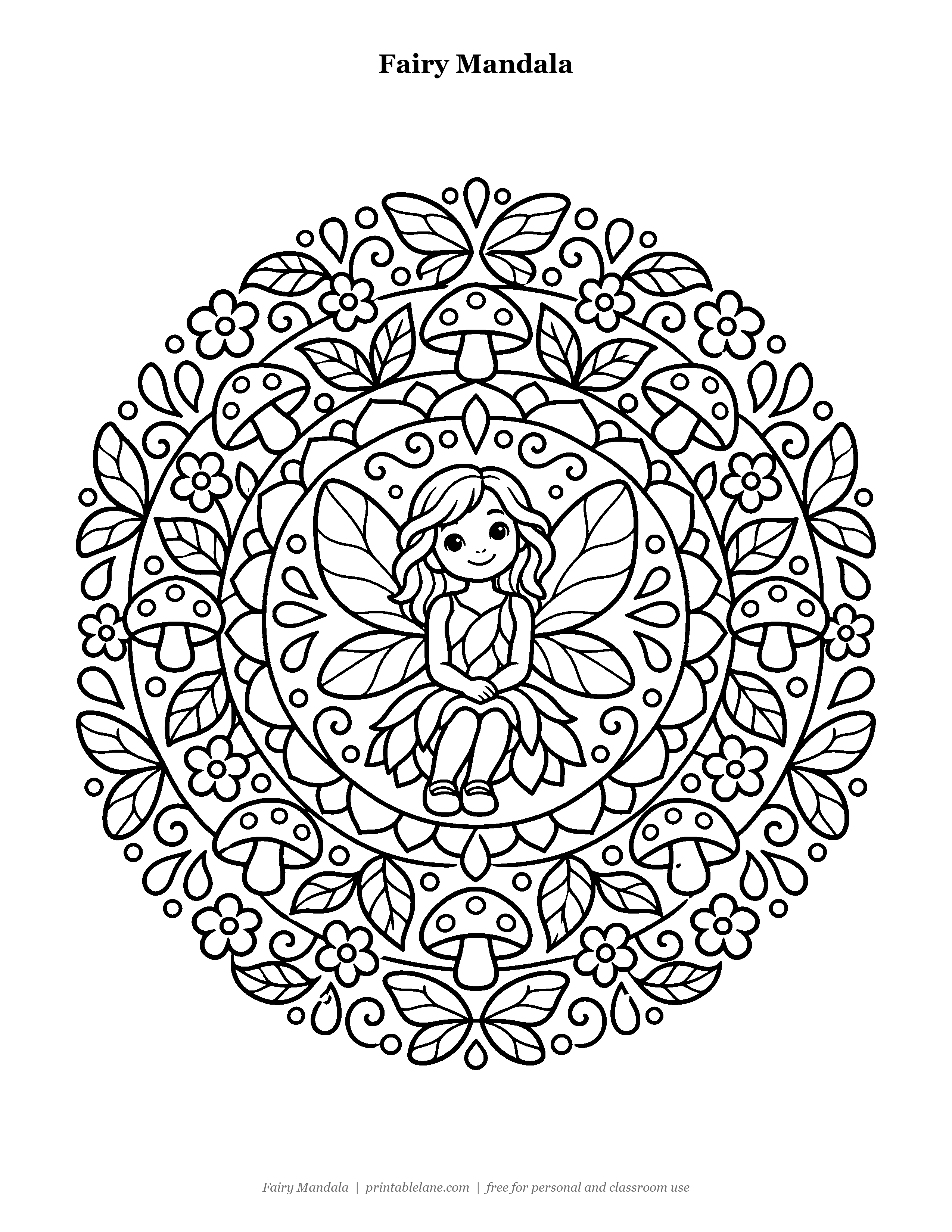
Detailed, PDF page 9. A small fairy with her hands folded sits in the center of a round mandala. Rings of spotted mushrooms, leaves, little flowers, swirls and dots repeat around her, with pairs of wing shapes at the top and bottom of the circle. It suits teens, adults and patient older kids with fine-tip markers.
If the mandala felt too busy, the easy mandala coloring pages use bigger spaces, and fans of other magical creatures can move on to the unicorn coloring pages.
Colors for wings, mushrooms and moonlight
There is no right color for a fairy. A few ideas for these 8 pages:
- For see-through wings, color very lightly, then trace the veins in a deeper tone of that hue.
- Color the mushroom caps red, brown or even purple, and leave the spots white for a classic storybook look.
- On the night page, use dark blue or purple for the sky and keep everything the lantern touches a little lighter.
- Add a gel pen shine to the wings and lanterns once the colors are dry.
The fairies here have different hair and outfits, so kids can color them to look like themselves or a friend. The coloring pages for girls include one more garden fairy in a different style.
Print one fairy or the whole garden
One download gives you 9 PDF pages, a preview cover and then the 8 fairies in the order shown above. Each sheet is US Letter, and the art sits well inside the edges, so A4 printers can use 100% or Fit to page without clipping a wing. Crayons work on everyday copy paper, while markers and the cut-out door hold up better on light cardstock.
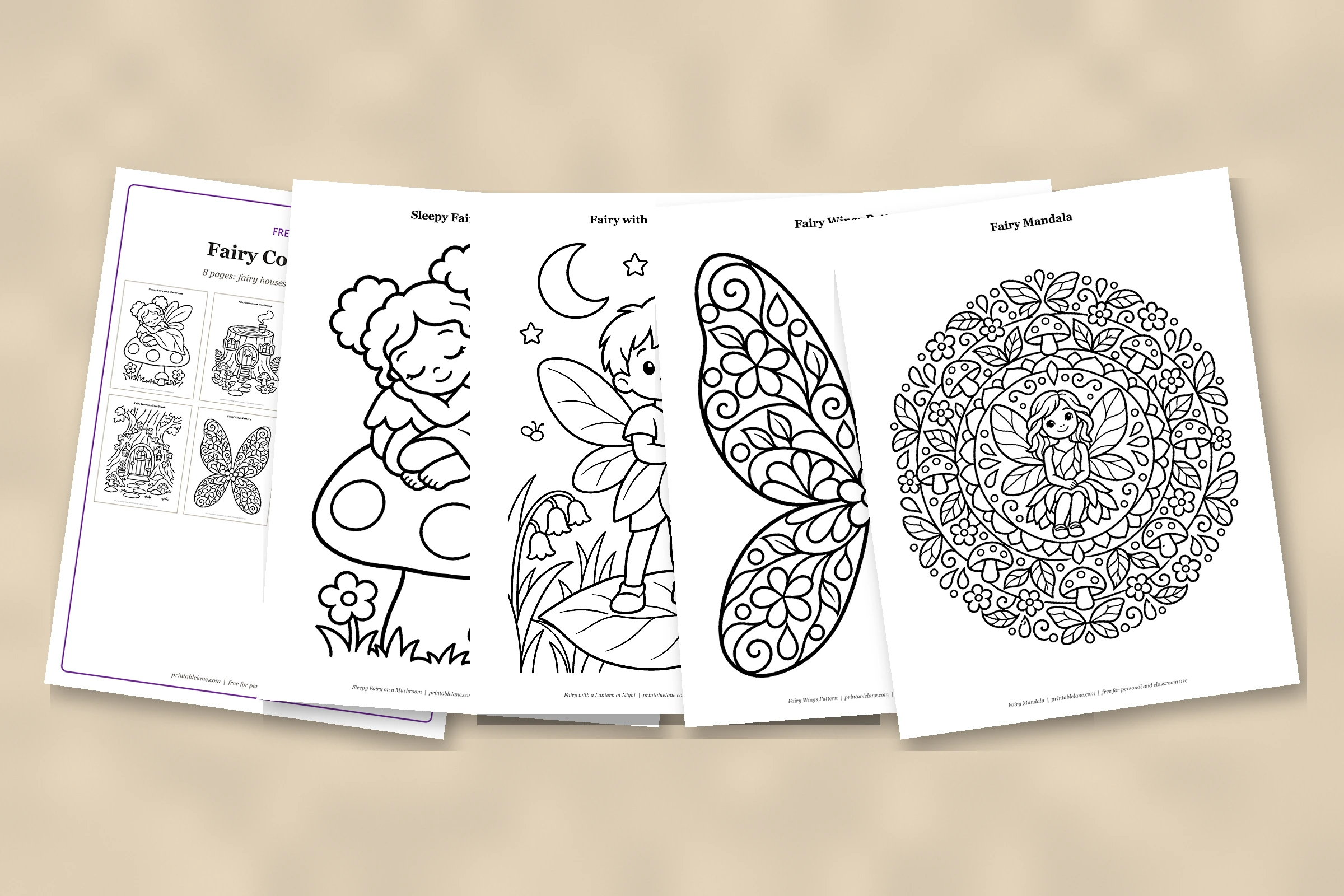
Need only the fairy door for a craft? Every page is also a separate PNG:
- Sleepy Fairy on a Mushroom (PNG)
- Fairy House in a Tree Stump (PNG)
- Fairy with a Lantern at Night (PNG)
- Fairy Riding a Snail (PNG)
- Fairy Door in a Tree Trunk (PNG)
- Fairy Wings Pattern (PNG)
- Fairy Tea Party with Acorn Cups (PNG)
- Fairy Mandala (PNG)