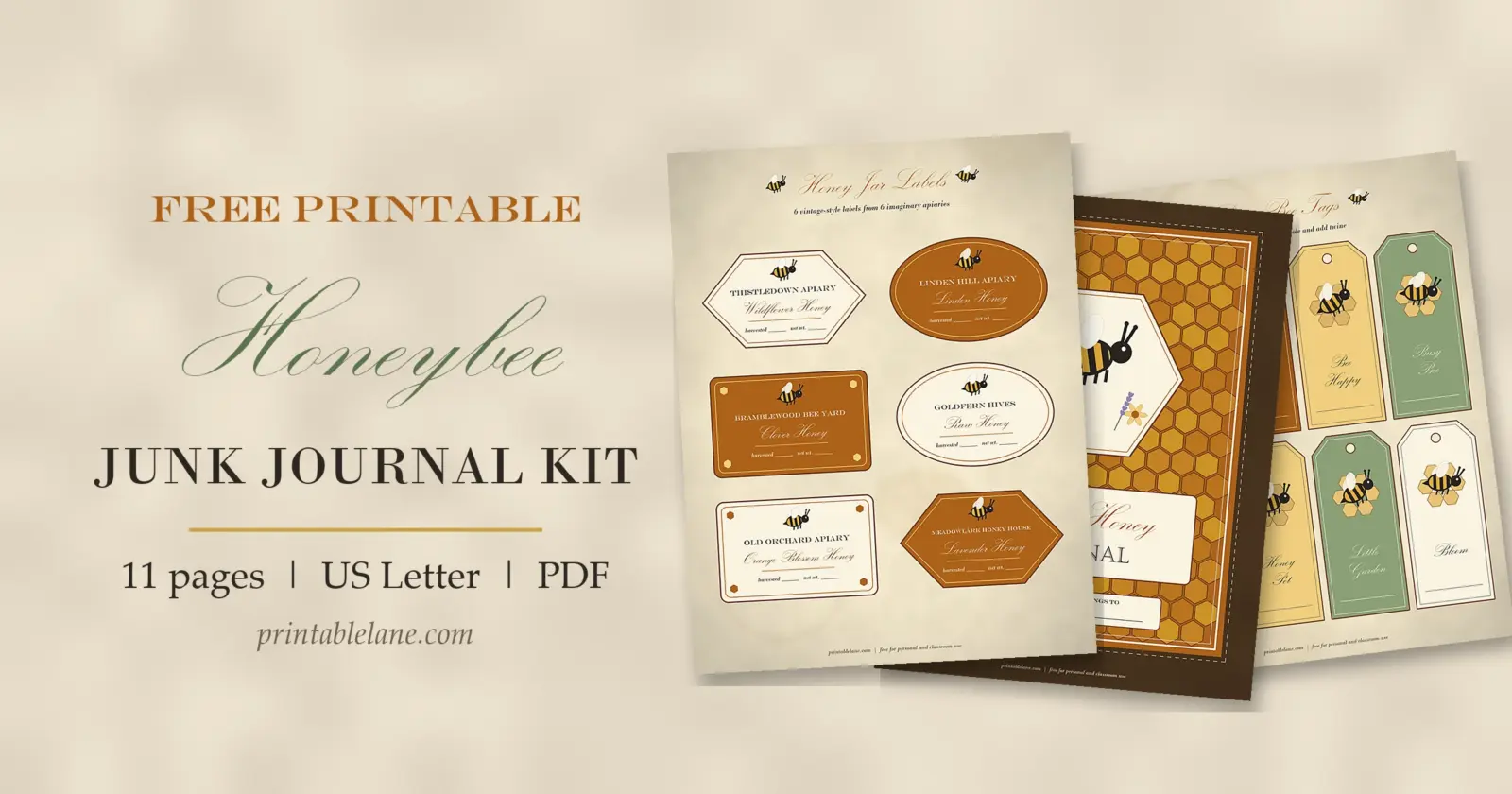
A bee junk journal almost designs itself: honeycomb gold, little striped bees, garden flowers and the warm brown of an old jar label. This free kit gathers all of that into one PDF in honey gold, amber, cream, sage and soft black, so the papers, labels and cards match without any planning.
It has substance too: 8 checked honey bee facts, a checklist of 12 plants that garden and extension sources list for bees, and a simple honey lemon tea recipe you can make tonight.
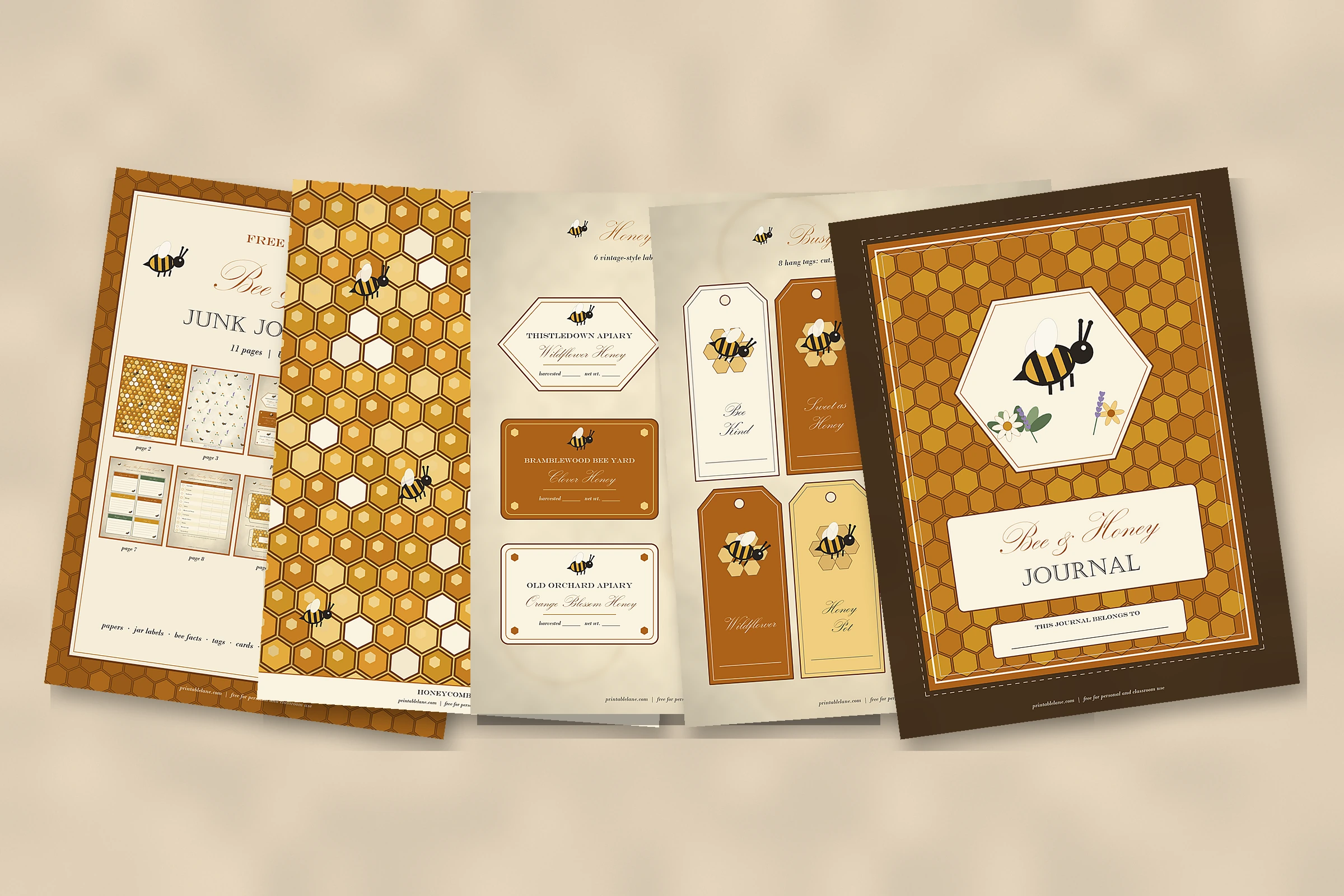
What’s in the PDF (11 pages)
- Page 1: cover with page thumbnails.
- Page 2: Honeycomb Paper.
- Page 3: Bee & Wildflower Paper.
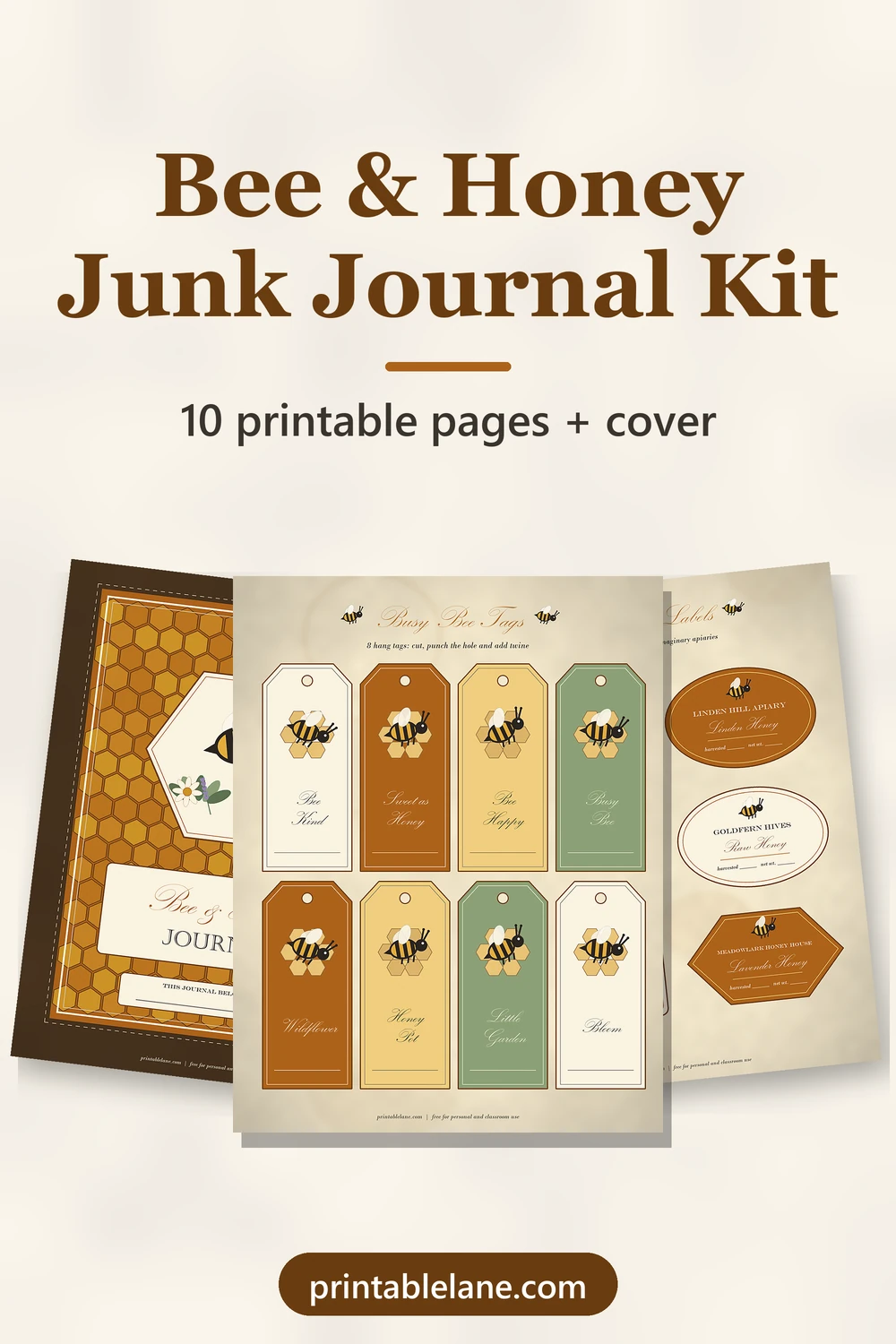
- Page 4: Honey Jar Labels (6 labels).
- Page 5: Bee Facts Cards (8 cards per page).
- Page 6: Busy Bee Tags (8 tags).
- Page 7: Honey Bee Journaling Cards (6 cards per page).
- Page 8: Bee-Friendly Flower Checklist.
- Page 9: Honeycomb Pocket Templates (2 sizes).
- Page 10: Honey Lemon Tea Recipe Cards (2 cards).
- Page 11: Bee & Honey Journal Cover.
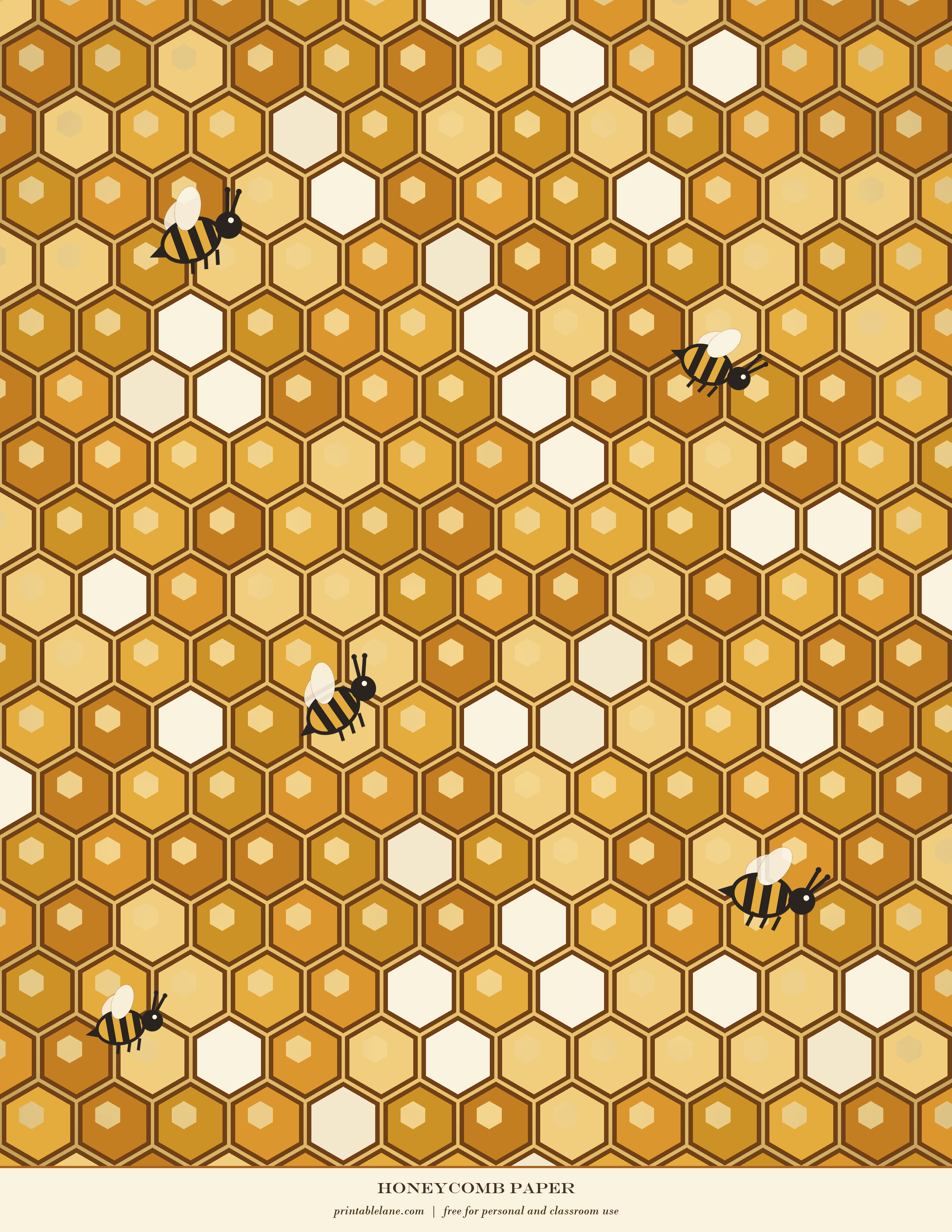
Honeycomb Paper
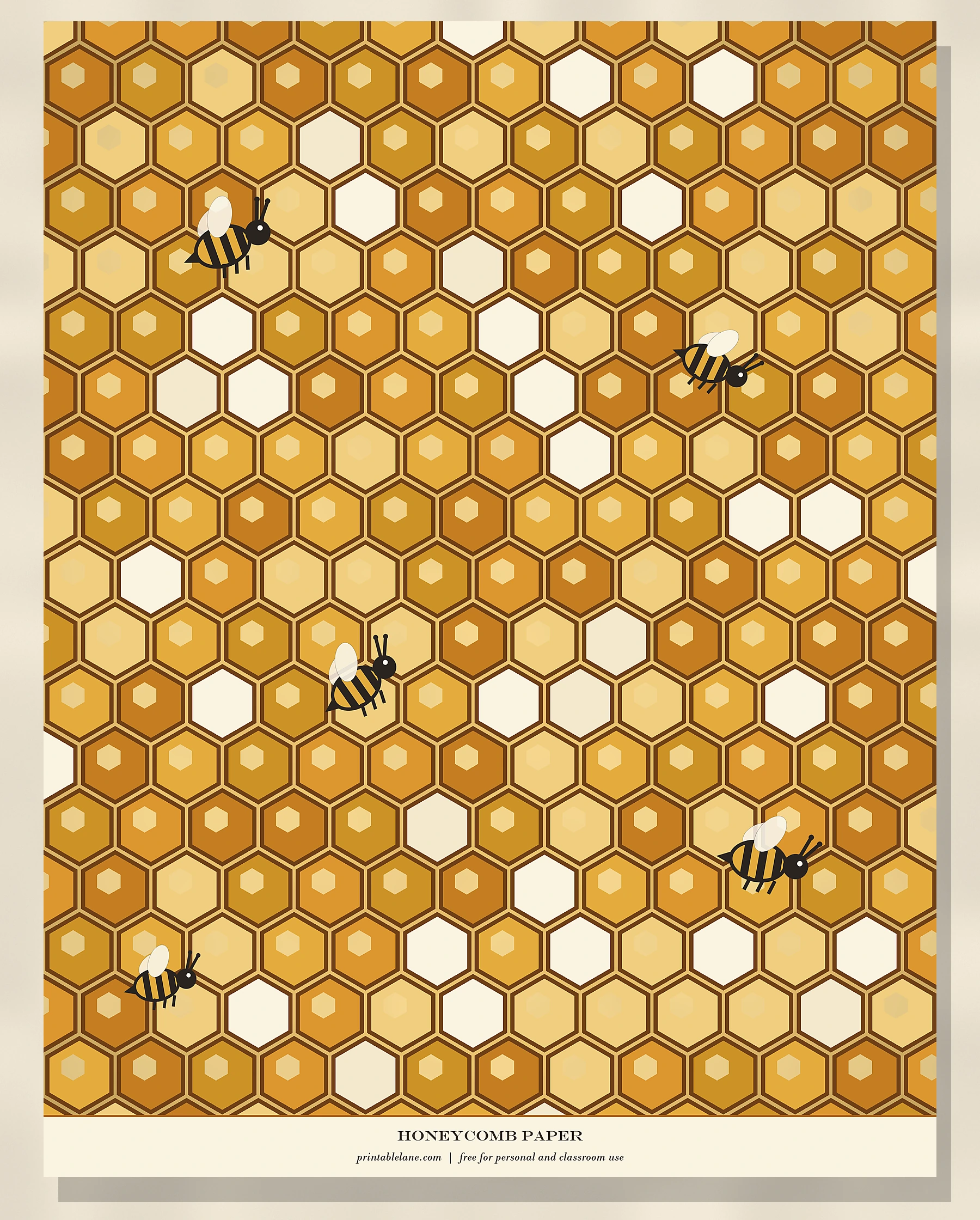
PDF page 2 is a full sheet of hexagon cells in 5 honey shades, outlined in dark brown, with a few pale cells and 5 bees crawling across it. The cream band with the paper name can be trimmed off.
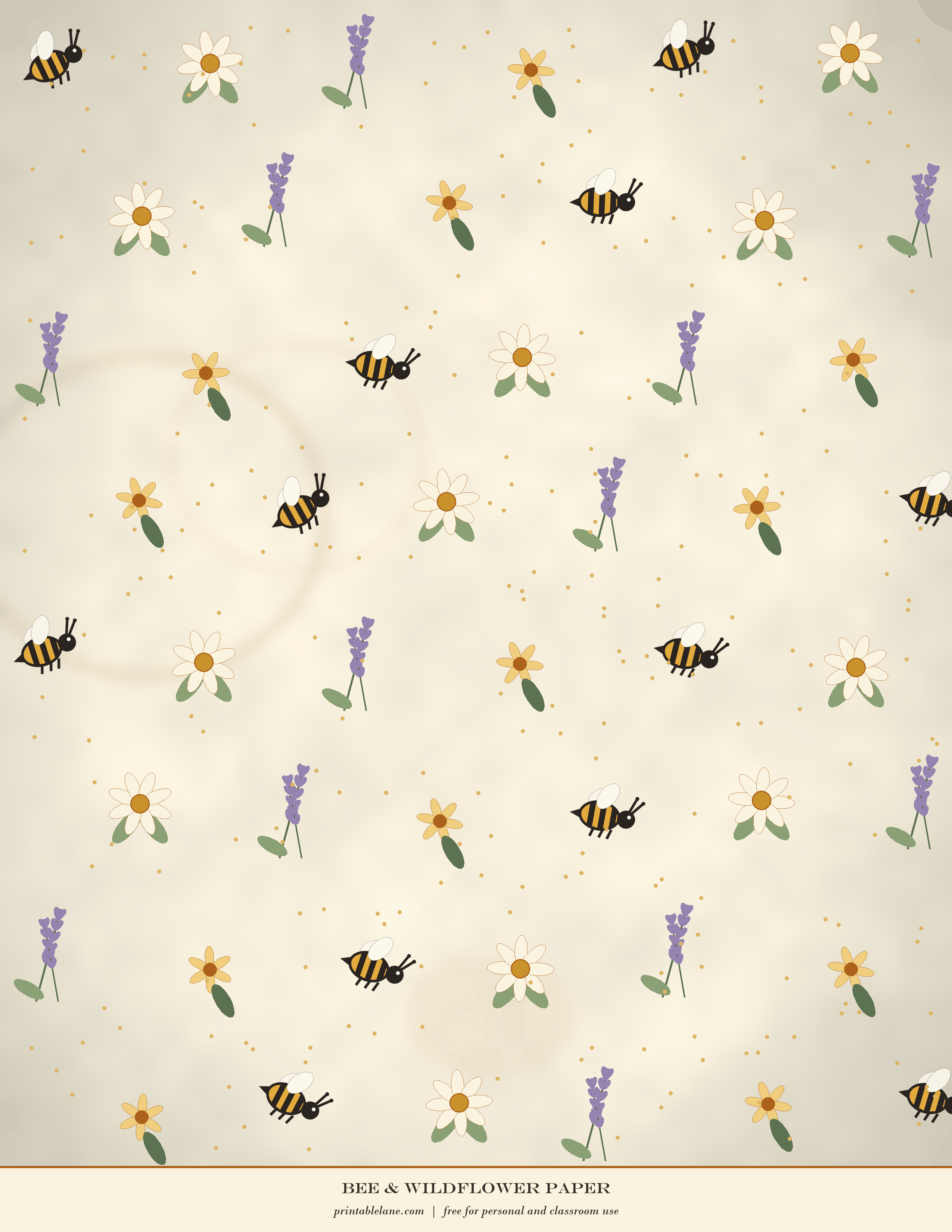
Bee & Wildflower Paper
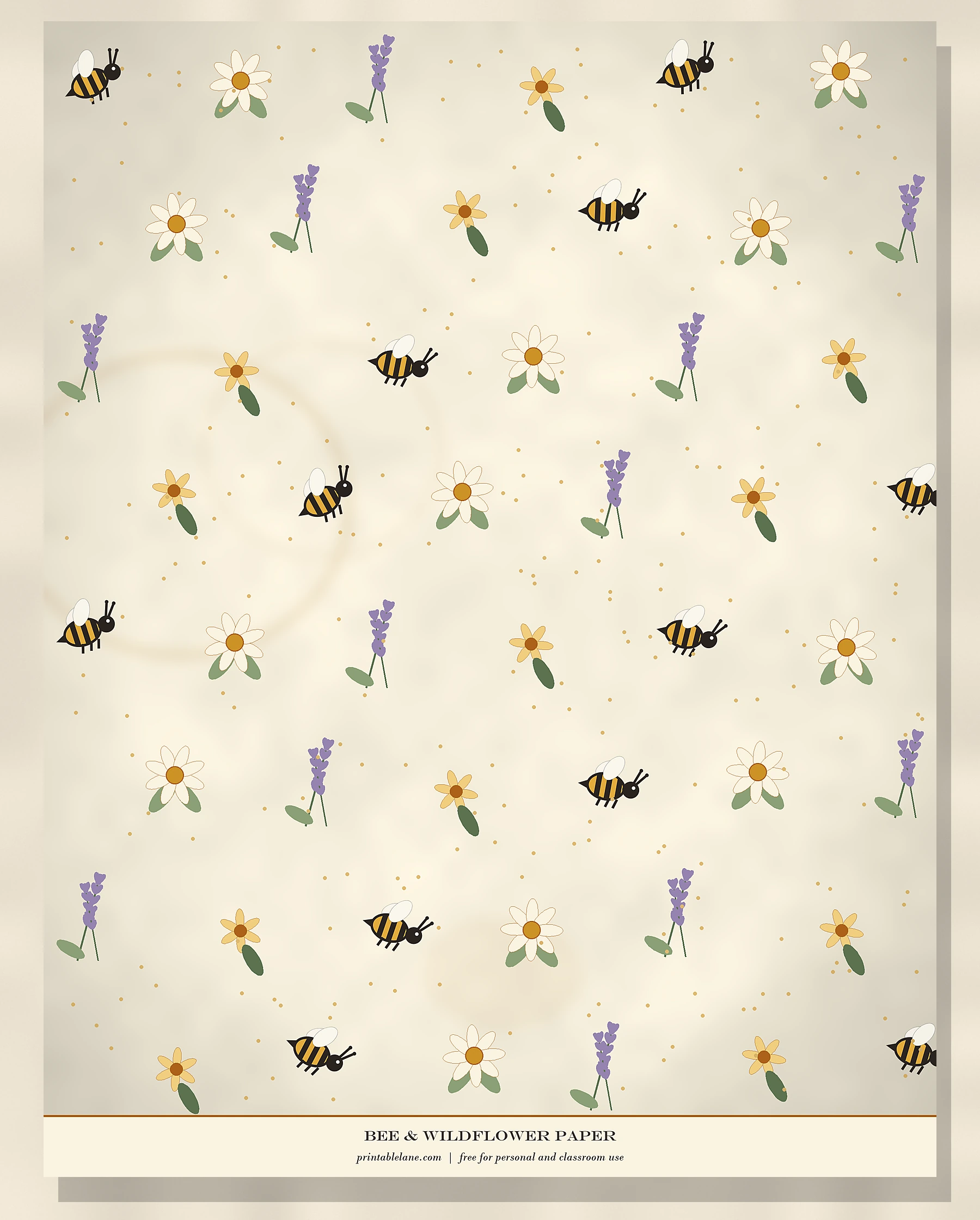
PDF page 3 is the light background: cream paper with tossed bees, white and yellow daisies, purple wildflower sprigs with sage leaves and tiny gold dots.
Honey Jar Labels
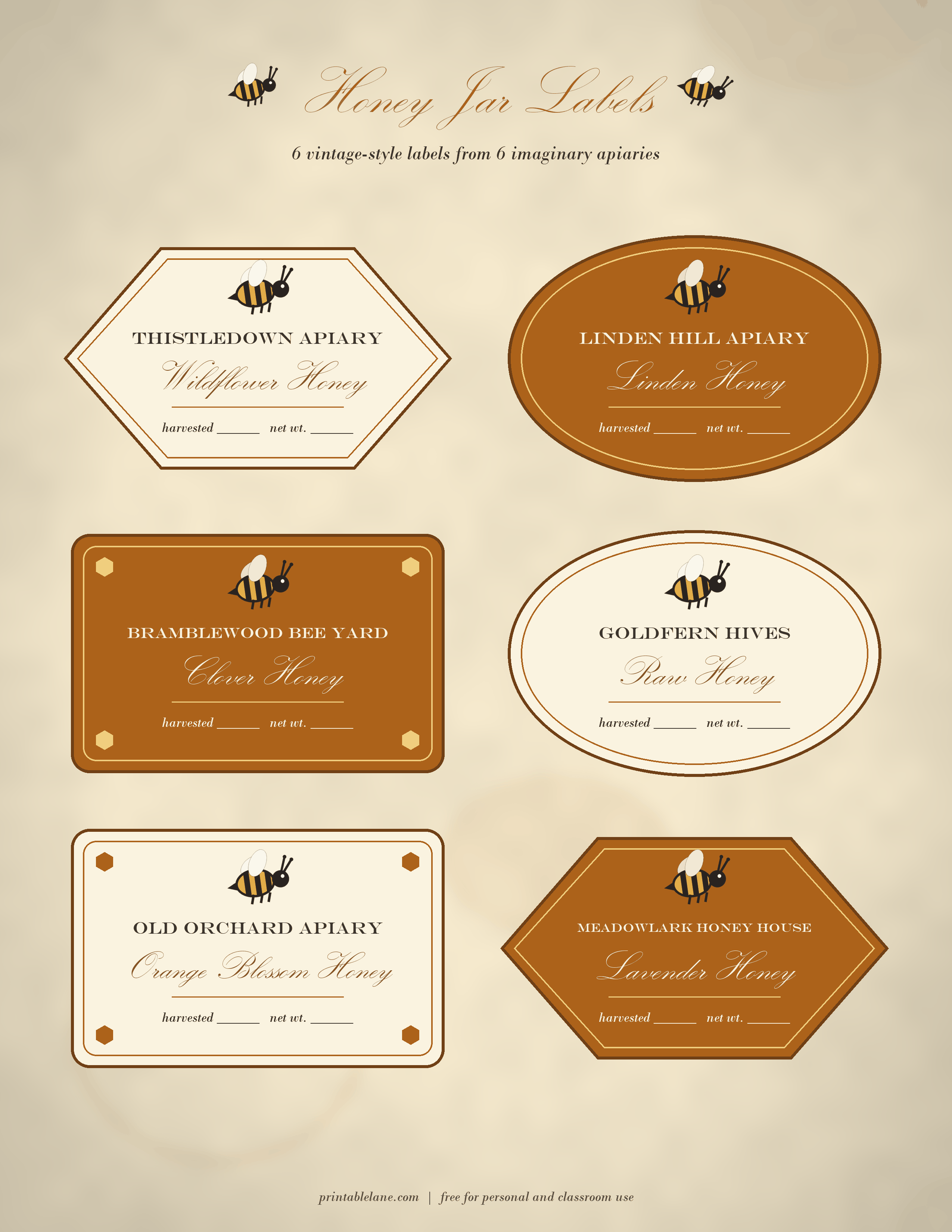
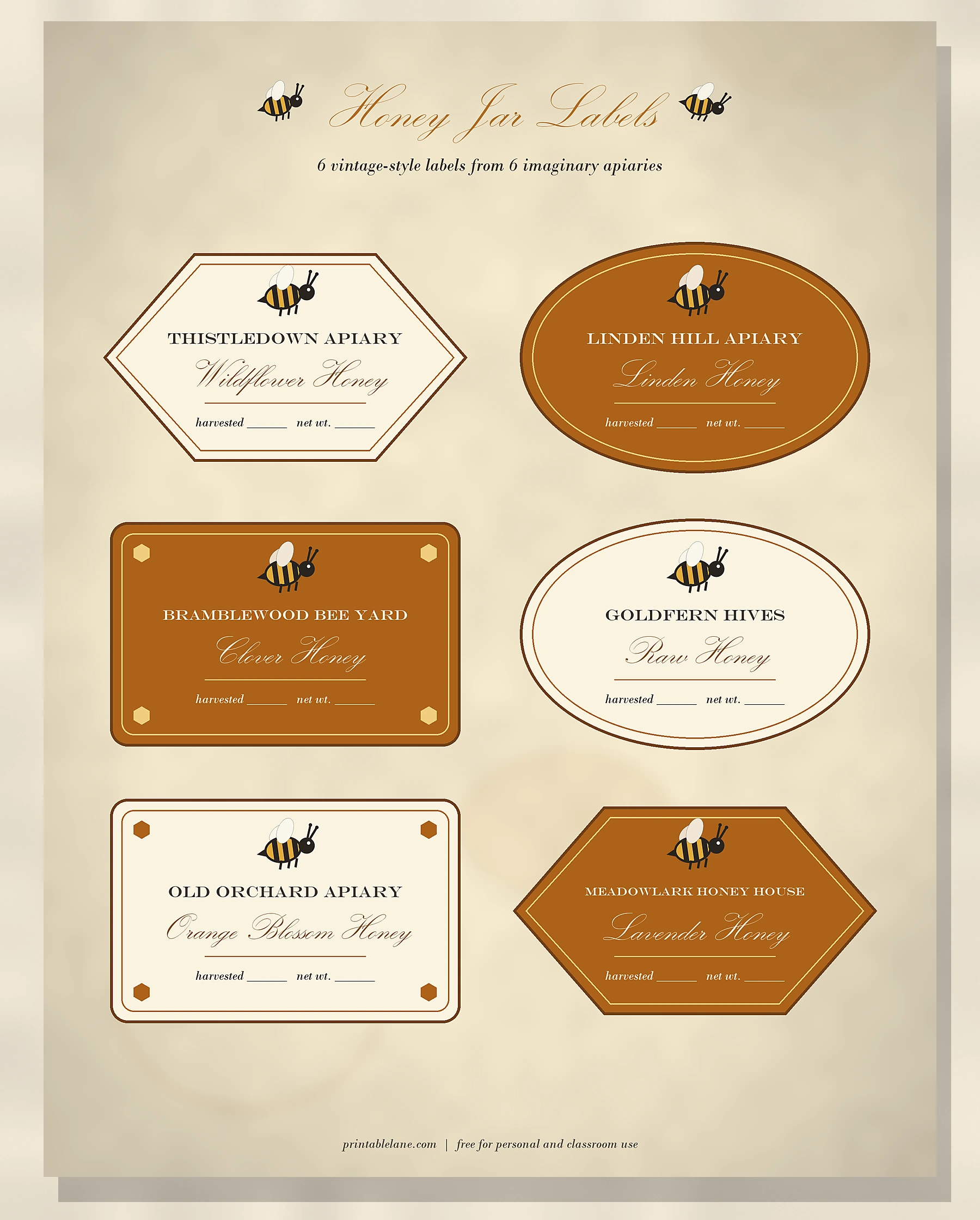
PDF page 4 holds 6 vintage-style labels (about 3.3 x 2.2 in each) from 6 made-up apiaries: Thistledown Apiary (Wildflower Honey), Linden Hill Apiary (Linden Honey), Bramblewood Bee Yard (Clover Honey), Goldfern Hives (Raw Honey), Old Orchard Apiary (Orange Blossom Honey) and Meadowlark Honey House (Lavender Honey). Each has a bee plus “harvested” and “net wt.” lines.
Bee Facts Cards
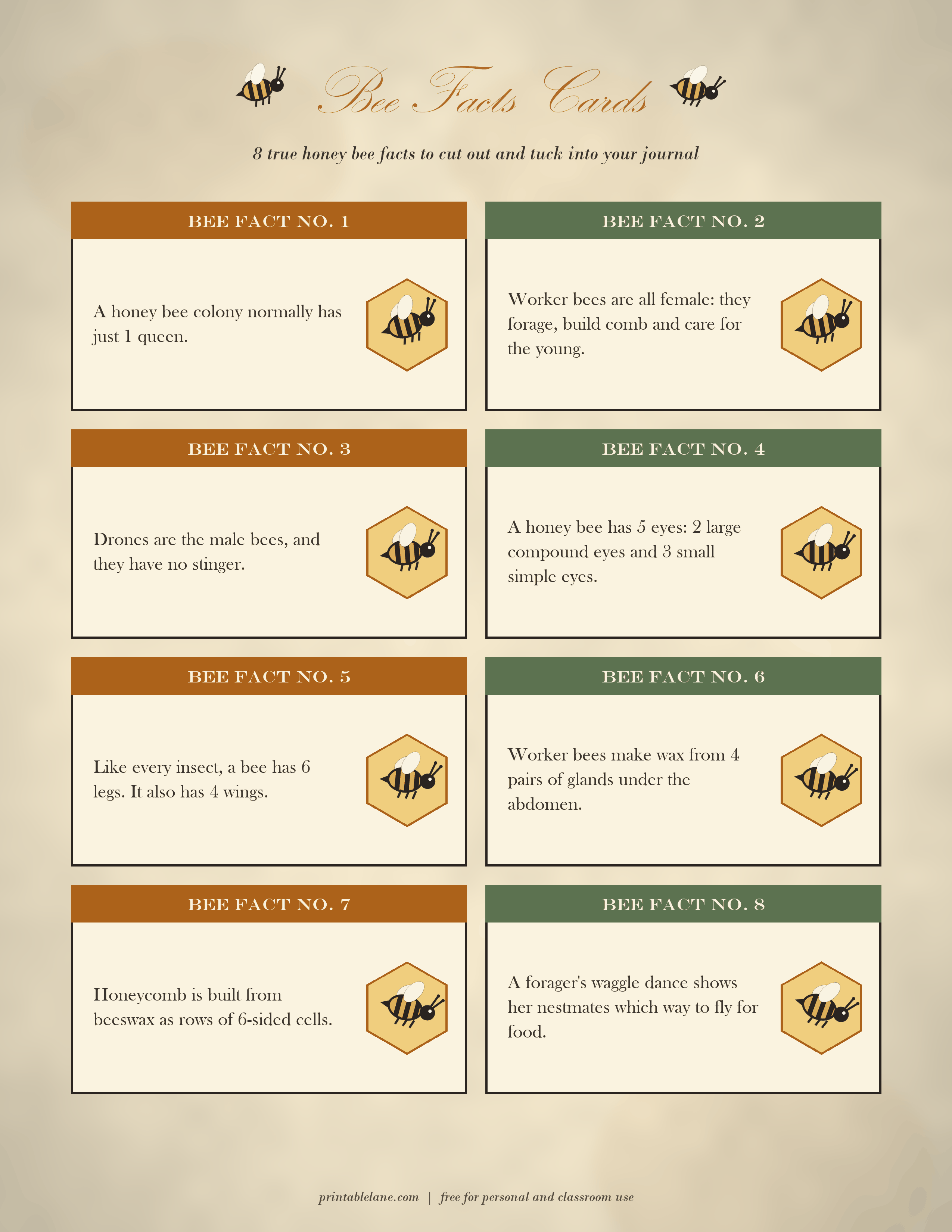
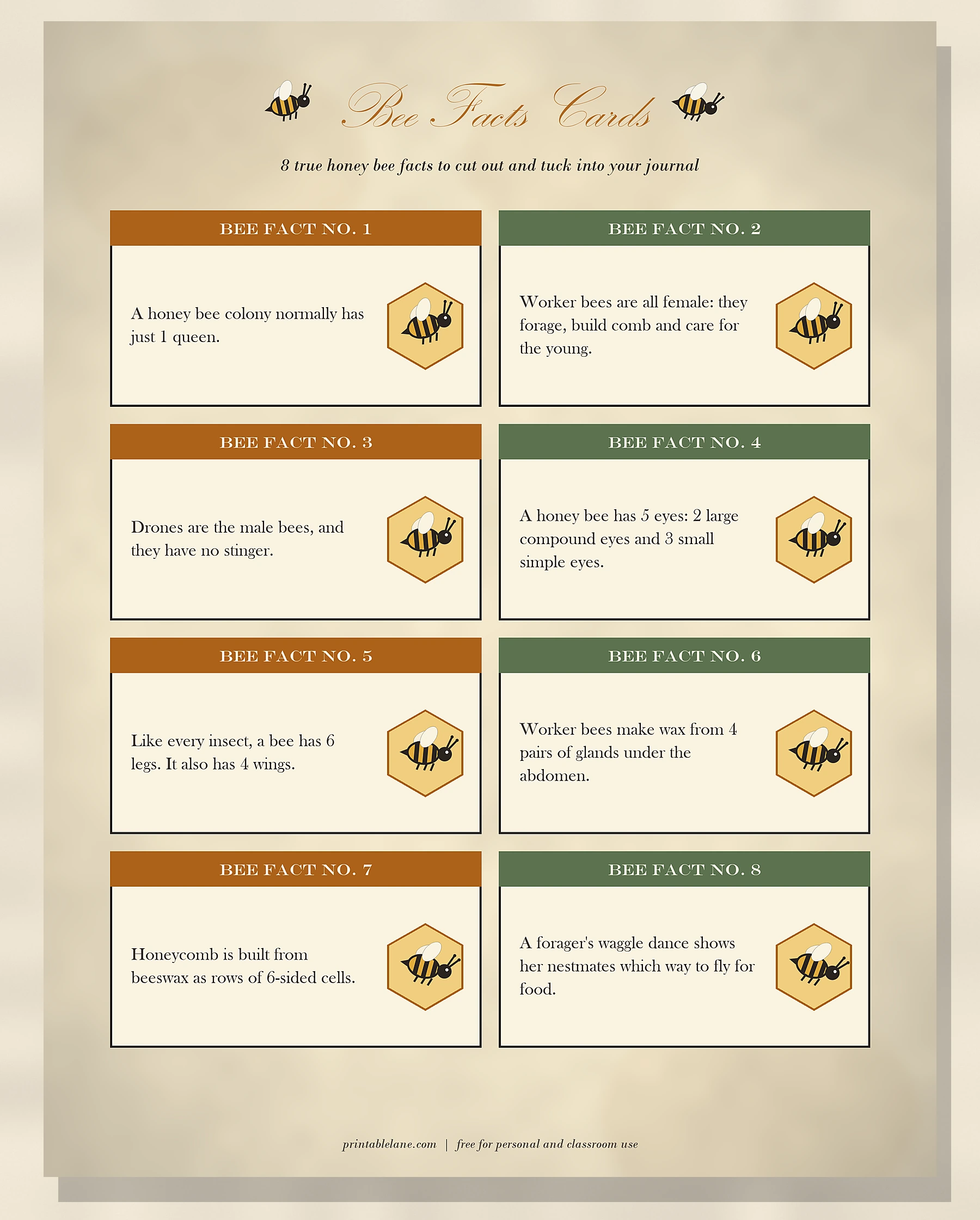
PDF page 5 has 8 numbered cards (about 3.5 x 1.9 in) with a bee in a gold hexagon on each. The facts: a colony normally has 1 queen; workers are all female; drones are male and have no stinger; a honey bee has 5 eyes; it has 6 legs and 4 wings; workers make wax from 4 pairs of glands under the abdomen; comb is built as 6-sided cells; and the waggle dance points nestmates toward food.
Busy Bee Tags
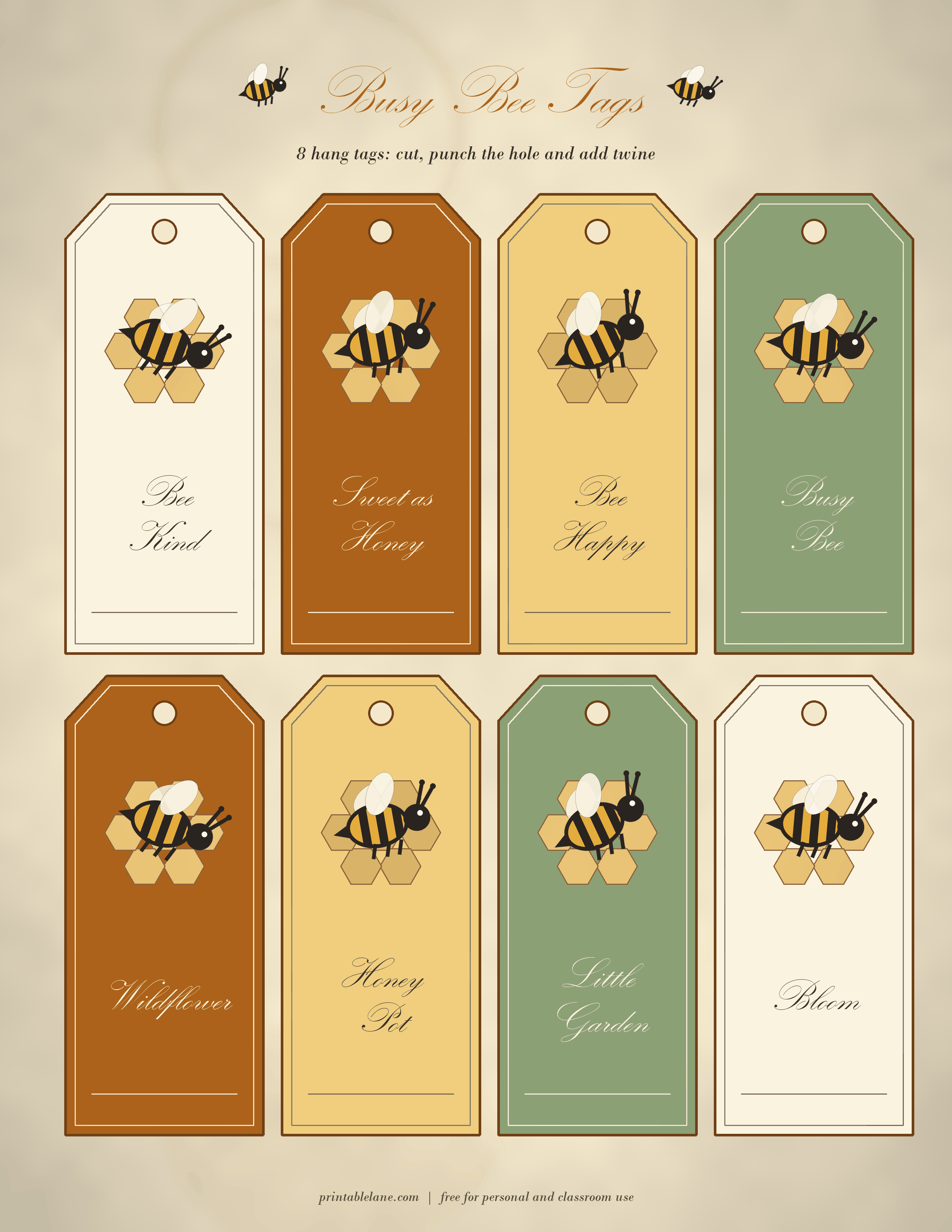
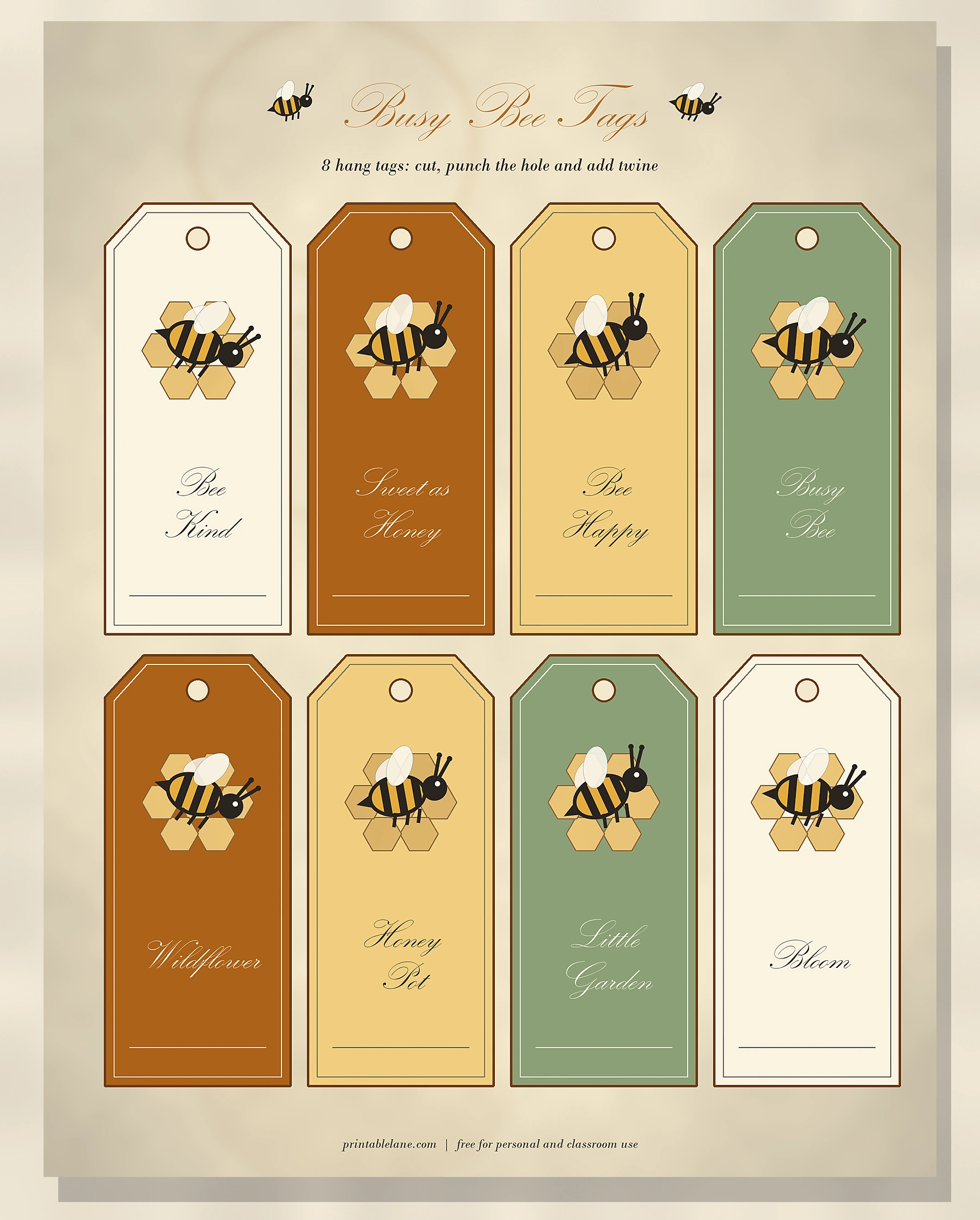
PDF page 6 gives you 8 hang tags (about 1.8 x 4.1 in) in cream, amber, honey and sage, each with a punch circle, a bee on a honeycomb cluster and a script word: Bee Kind, Sweet as Honey, Bee Happy, Busy Bee, Wildflower, Honey Pot, Little Garden and Bloom.
Honey Bee Journaling Cards
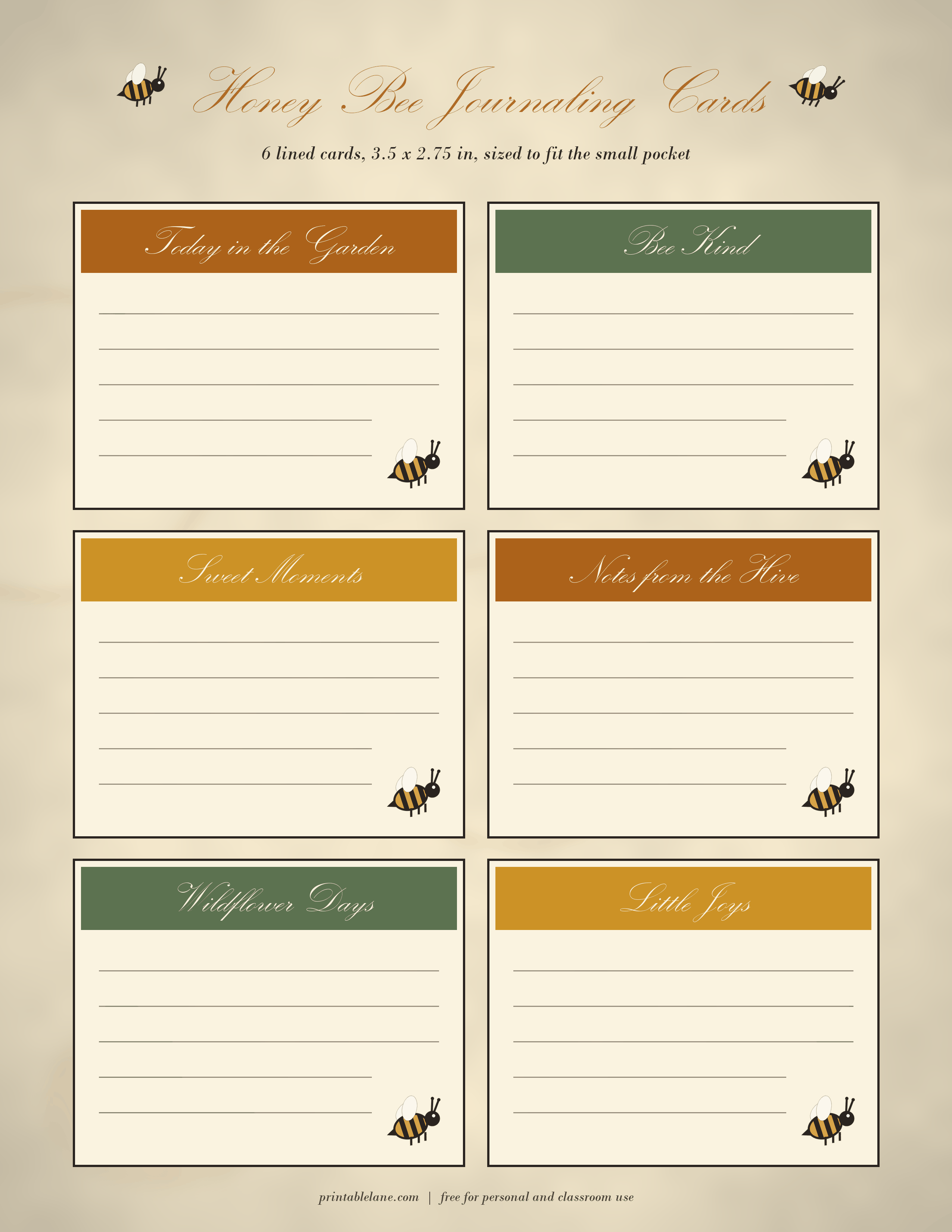
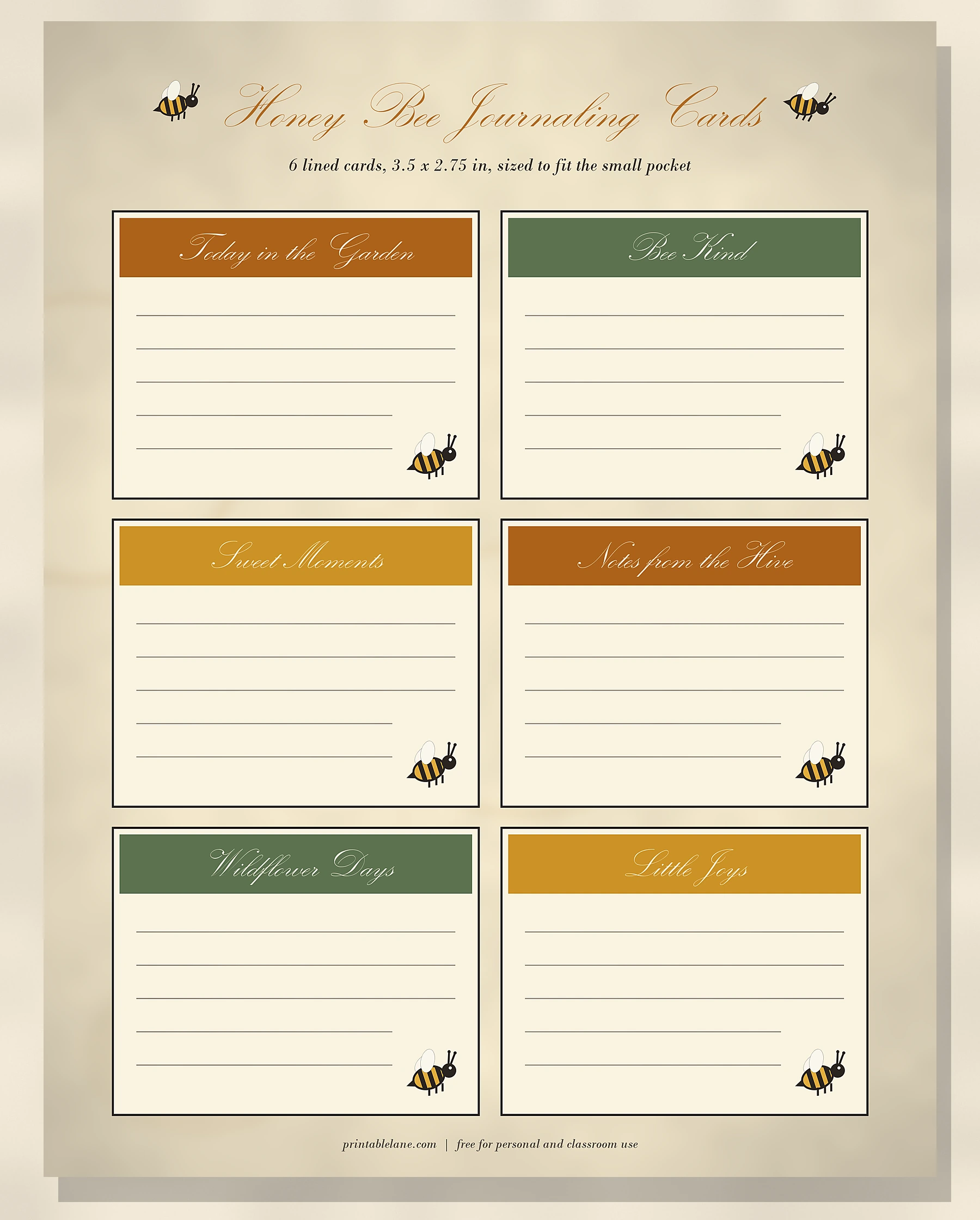
PDF page 7 has 6 lined cards, each 3.5 x 2.75 in, with amber, sage or gold headers: Today in the Garden, Bee Kind, Sweet Moments, Notes from the Hive, Wildflower Days and Little Joys. A small bee sits in the lower right corner of each.
Bee-Friendly Flower Checklist
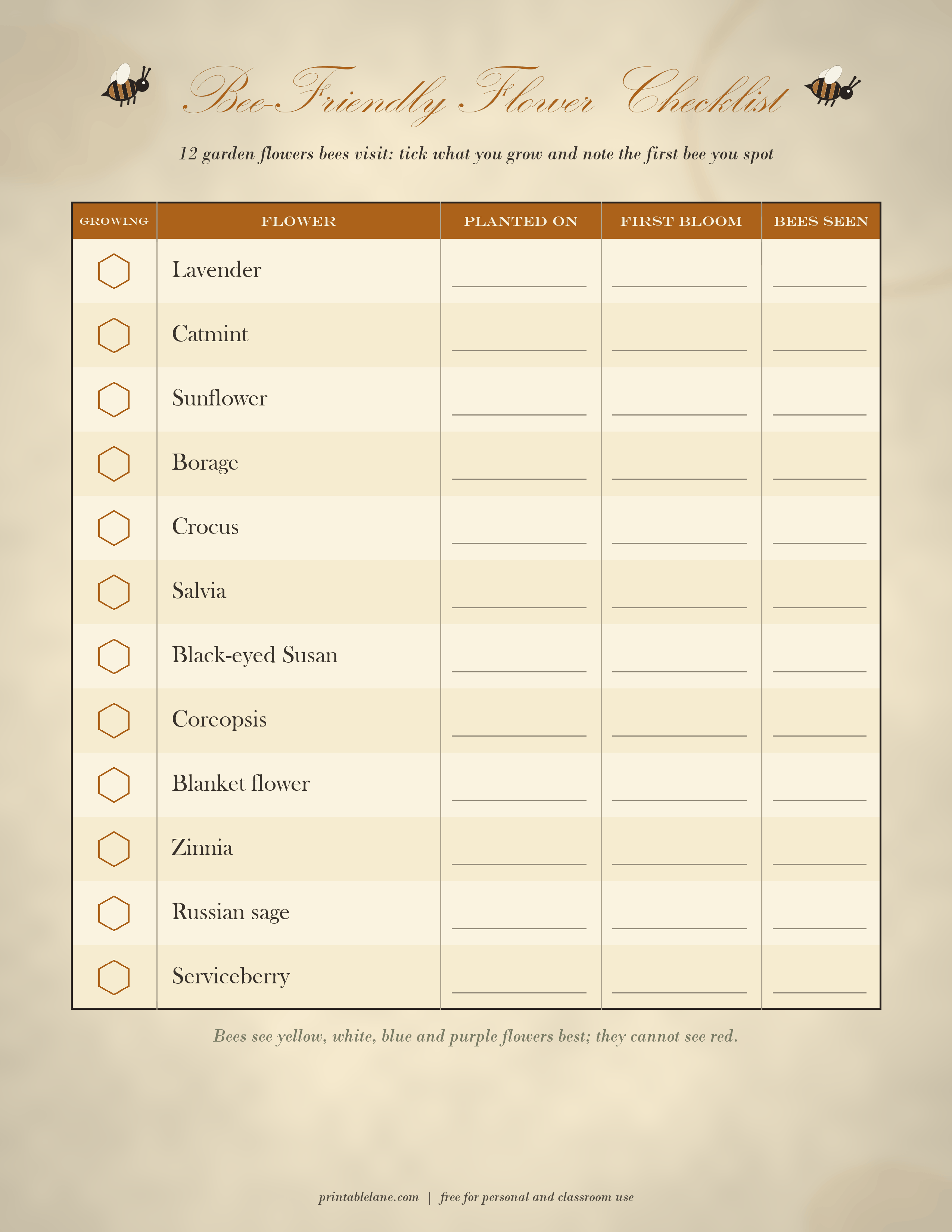
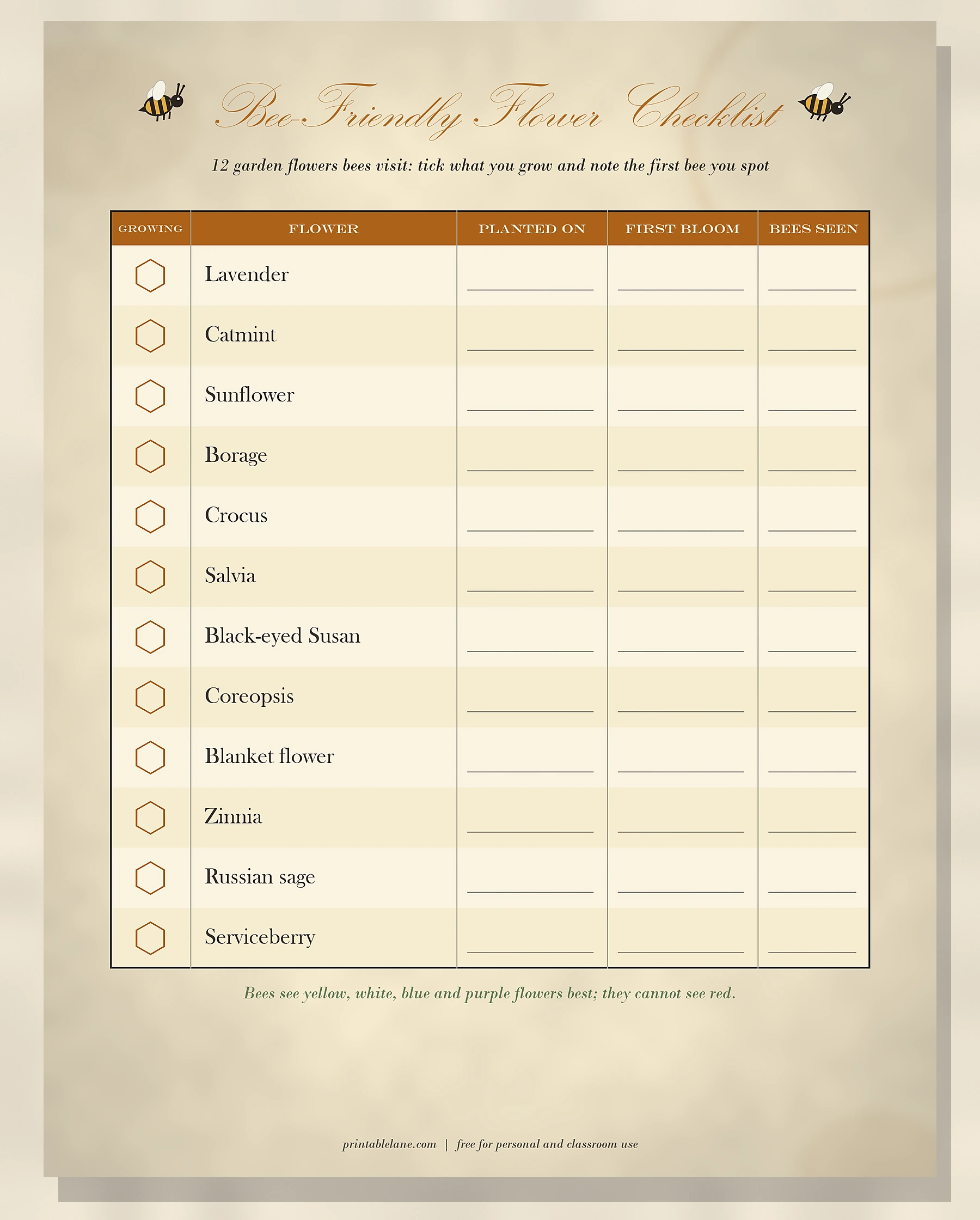
PDF page 8 is a table of 12 plants: Lavender, Catmint, Sunflower, Borage, Crocus, Salvia, Black-eyed Susan, Coreopsis, Blanket flower, Zinnia, Russian sage and Serviceberry. Each row has a hexagon tick box plus Planted On, First Bloom and Bees Seen columns. A note below says bees cannot see red.
Honeycomb Pocket Templates
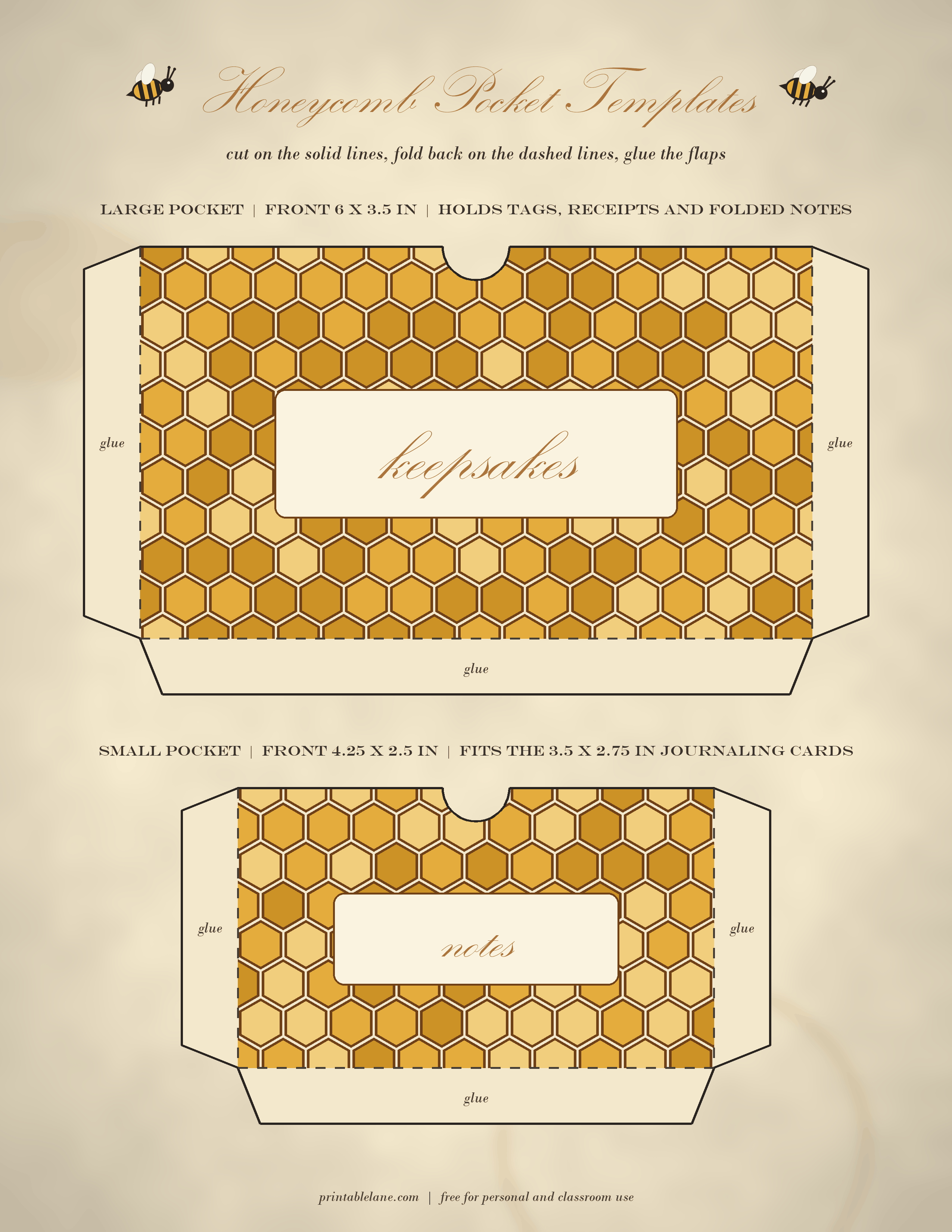
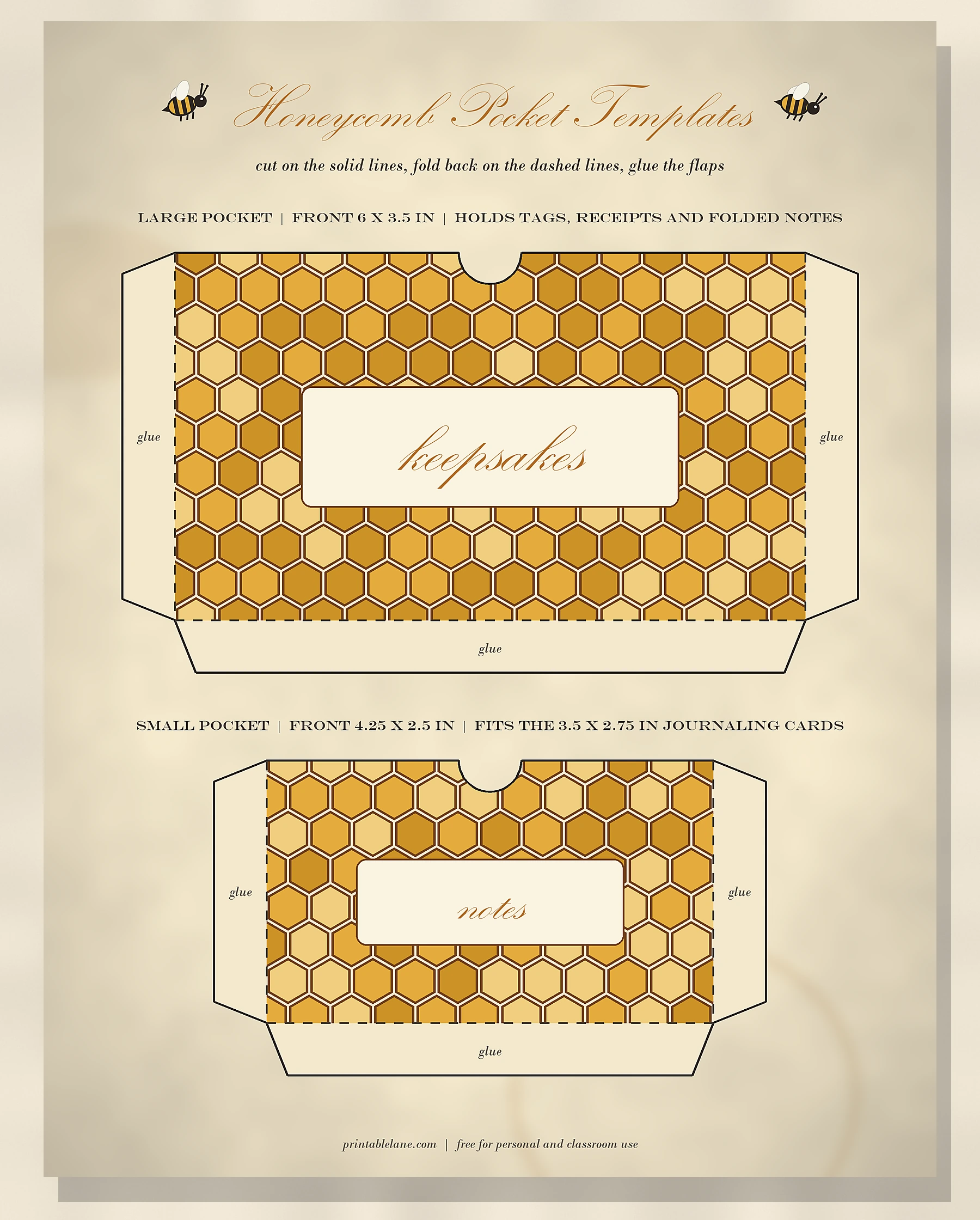
PDF page 9 has 2 pockets with honeycomb fronts, a thumb notch, solid cutting lines, dashed fold lines and 0.5 in glue flaps on the sides and bottom. The large pocket front is 6 x 3.5 in with a keepsakes plate; the small one is 4.25 x 2.5 in with a notes plate and fits the journaling cards.
Honey Lemon Tea Recipe Cards
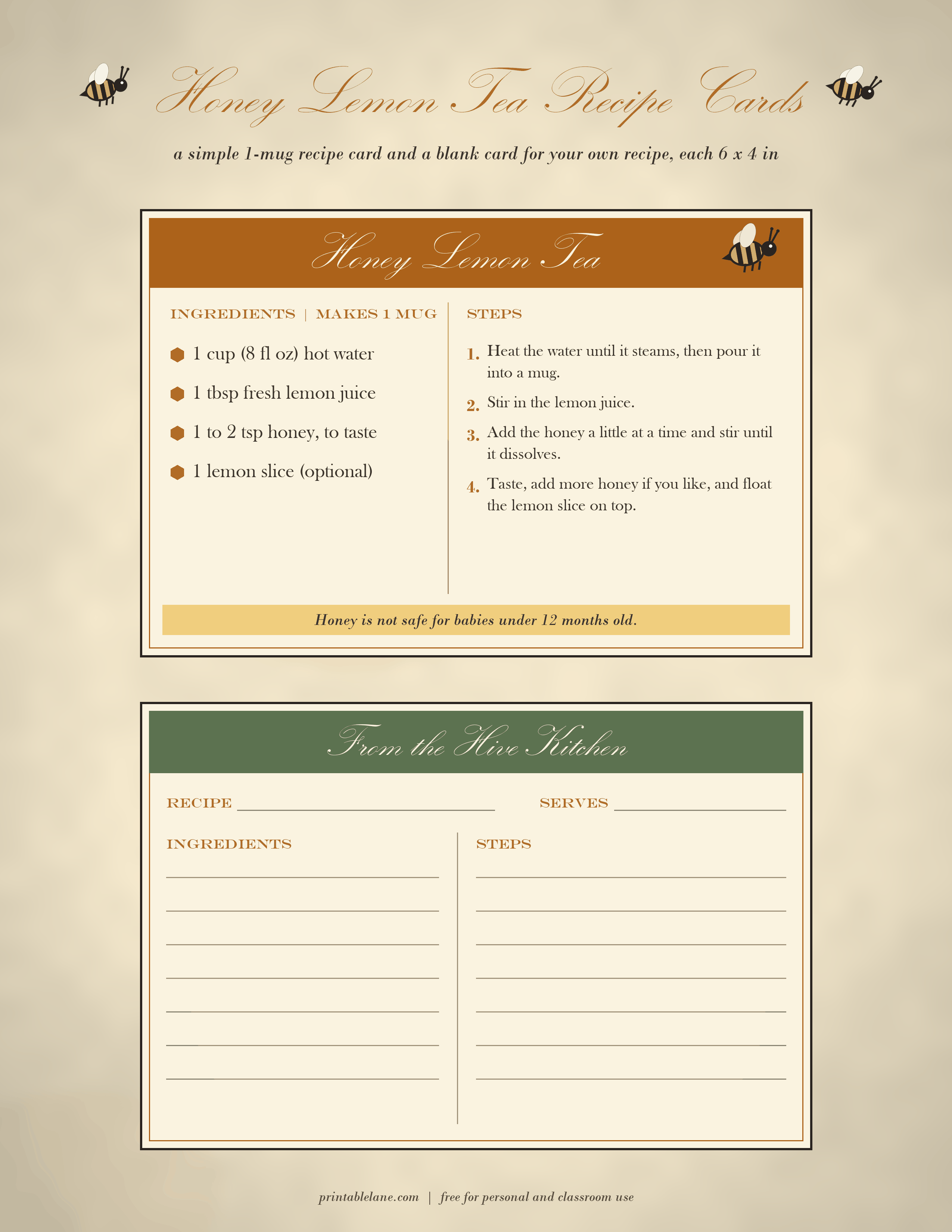
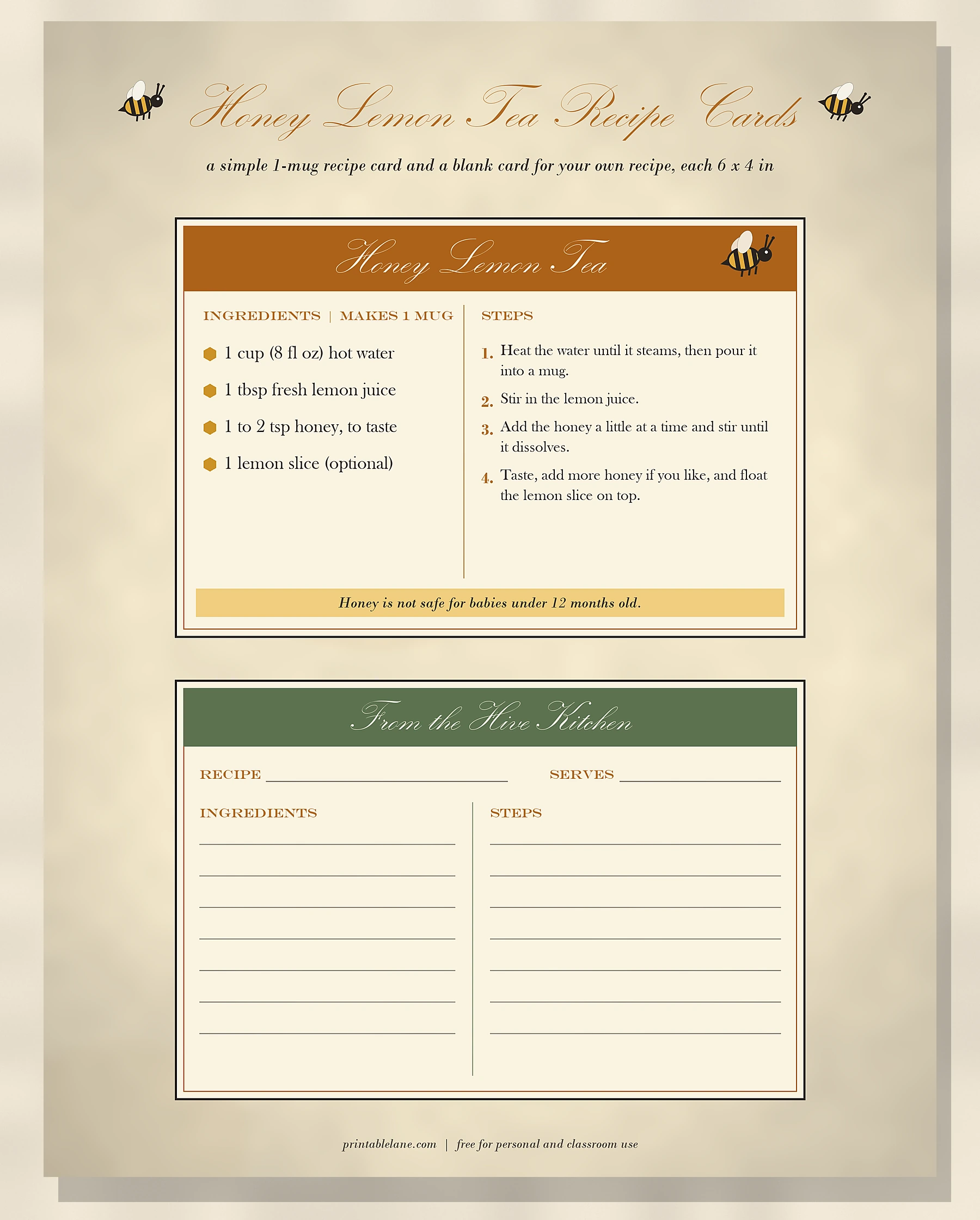
PDF page 10 has 2 cards, each 6 x 4 in. The first is the honey lemon tea recipe with 4 ingredients, 4 steps and a note that honey is not safe for babies under 12 months. The second, From the Hive Kitchen, is blank with Recipe, Serves, Ingredients and Steps lines.
Bee & Honey Journal Cover
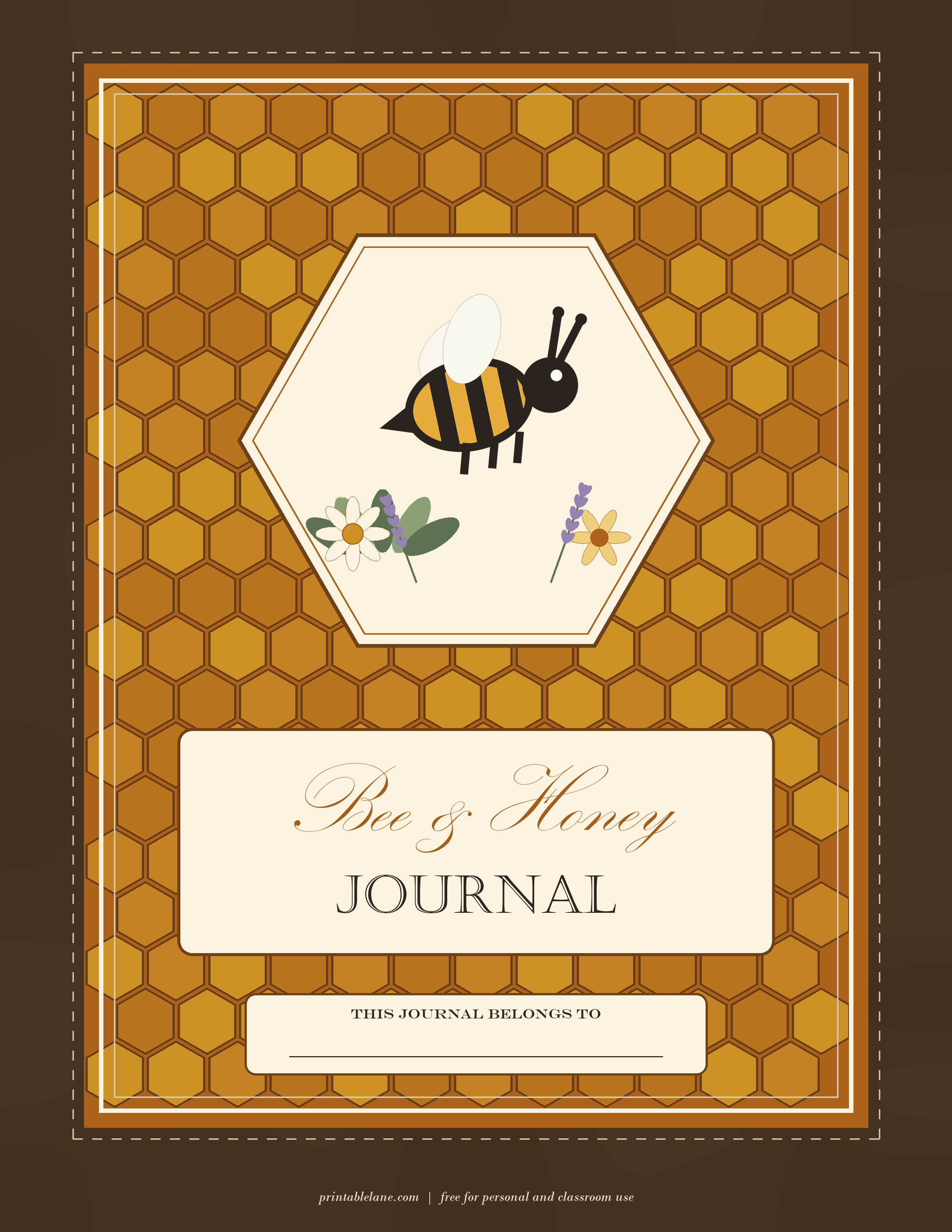
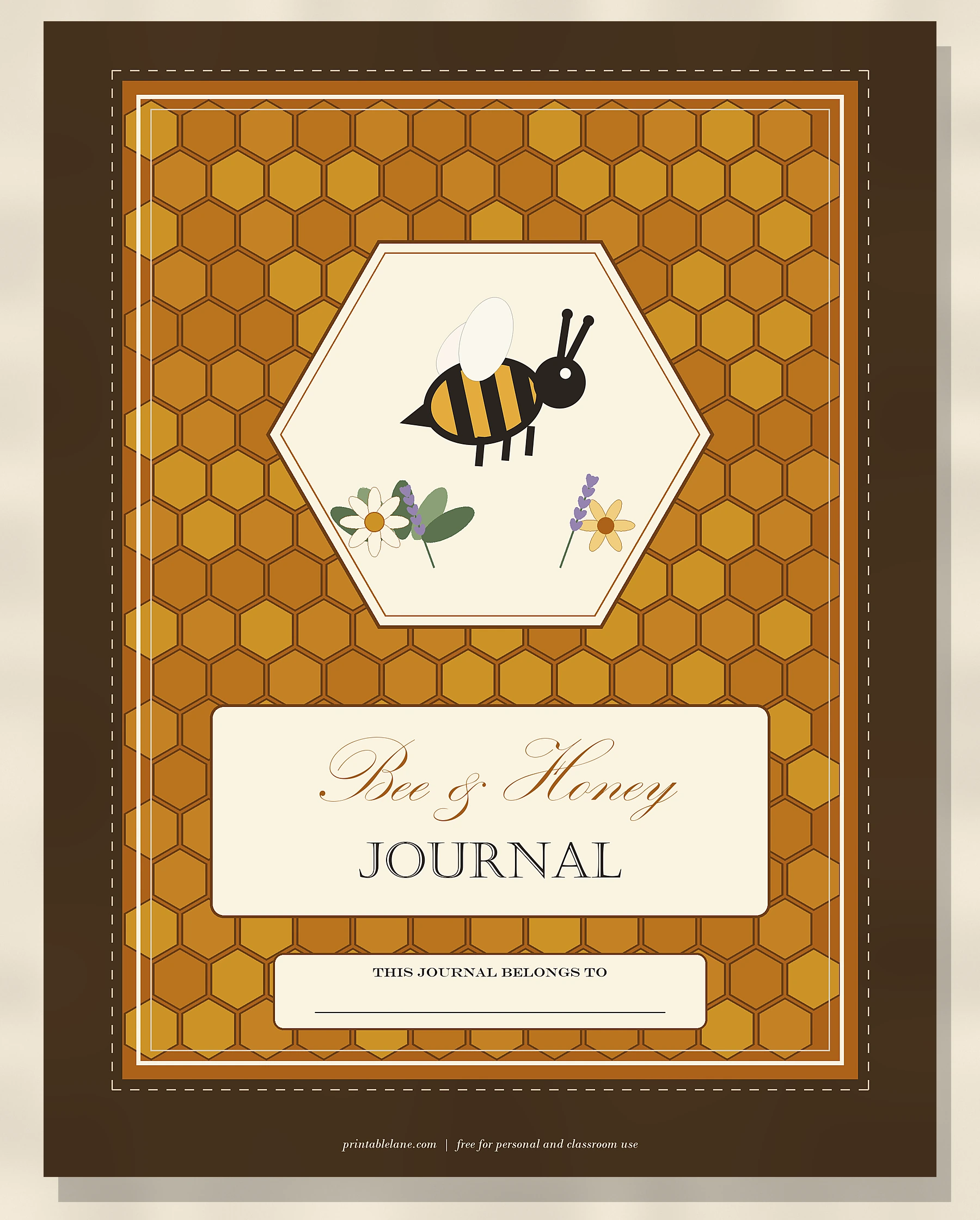
PDF page 11 is a cover panel of 7 x 9.5 in inside a dashed cutting line: amber honeycomb, a cream frame, a large bee with 2 daisies and wildflower sprigs in a hexagon, the words Bee & Honey Journal and a This Journal Belongs To plate.
The honey lemon tea recipe
For 1 mug: 1 cup (8 fl oz) hot water, 1 tbsp fresh lemon juice, 1 to 2 tsp honey and an optional lemon slice. Pour the steaming water into a mug, stir in the lemon juice, then add honey a little at a time until it tastes right. The card also carries one safety rule: no honey for babies under 12 months, because it can carry spores that cause infant botulism. US health agencies and pediatric groups give the same advice.
Bee spread ideas
- Garden year page: the flower checklist on the left, the bee and wildflower paper on the right, and the Today in the Garden card in the small pocket.
- Pantry spread: honeycomb paper as the base, 2 jar labels as headers, the tea recipe card glued down only along its top edge so it lifts like a flap.
- Bee study page: 4 fact cards in a column, a Busy Bee tag behind them and a pressed flower.
New to the hobby? Our guide to what a junk journal is explains signatures and binding in plain steps. Mix in the junk journal ephemera printables or a sheet from the free printable scrapbook paper set, and draw extra blooms around the bees with the easy flower drawing guide.
Printing tips
- US Letter: print at 100% (Actual size). A thin white printer margin around the 2 pattern papers is normal.
- A4: print at 100% (Actual size) so the pockets stay 6 x 3.5 in and 4.25 x 2.5 in, the recipe cards 6 x 4 in and the cover 7 x 9.5 in. A4 is a little narrower than Letter, so the edge-to-edge papers lose a thin strip at the sides; all cut pieces stay inside the A4 area.
- Paper: 20 to 24 lb printer paper for the background sheets; 65 to 110 lb cardstock for the tags, pockets, recipe cards and cover.
- Ink: the honeycomb paper and the cover use the most ink; matte paper takes glue best.
Download single pages
Need a second honeycomb sheet or another set of tags? Each kit page below is its own full-size PNG; the PDF with the cover is in the download box.
- Honeycomb Paper (PNG)
- Bee & Wildflower Paper (PNG)
- Honey Jar Labels (PNG)
- Bee Facts Cards (PNG)
- Busy Bee Tags (PNG)
- Honey Bee Journaling Cards (PNG)
- Bee-Friendly Flower Checklist (PNG)
- Honeycomb Pocket Templates (PNG)
- Honey Lemon Tea Recipe Cards (PNG)
- Bee & Honey Journal Cover (PNG)
Frequently asked questions
How many pages are in the PDF?
11 pages in total: a thumbnail cover as page 1, then 10 kit pages from the Honeycomb Paper (page 2) to the Bee & Honey Journal Cover (page 11).
Can I print the bee kit on A4 paper?
Yes. Pick 100% (Actual size) in the print dialog; the pocket, recipe card and cover sizes only stay correct at that setting.
Are the bee facts true?
Yes. Each of the 8 facts was checked against university extension sources before it went on a card.
Are the apiaries on the jar labels real?
No. Thistledown, Linden Hill, Bramblewood, Goldfern, Old Orchard and Meadowlark are invented names, so you can use the labels on your own jars or pages.
Will the flowers on the checklist grow where I live?
All 12 are listed for bees by garden or extension sources, but your climate decides what thrives, so ask a local nursery first.
Can I use the kit with a class?
Yes, it is free for personal and classroom use. The fact cards and flower checklist suit a spring lesson on pollinators.