What is a junk journal? It is a handmade book built from paper most people throw away: envelopes, receipts, tea tags, ticket stubs, maps, old book pages and the card from a cereal box. You fold that paper into pages, sew it together, then fill it with writing, collage, pockets and little tucked-in notes.
There is no single correct way to do it, which is why beginners stall. Below you will find what it is used for, how it compares to similar notebooks, its parts and a first simple journal, step by step, plus 8 free starter pages to print.
What is a junk journal, exactly?
A junk journal is a bound book whose pages and decorations come mostly from reused or found paper. Mixed sizes and textures make the closed book look thick and layered. Most are hand-sewn in groups of folded sheets called signatures; some people reuse an old hardcover instead.
What is junk journaling, then? It is the habit of collecting paper scraps and turning them into pages, plus the writing and memory keeping you do inside.
Junk journal vs. scrapbook, art journal and bullet journal
- Scrapbook: usually built around photos and events in an album. A junk journal can hold photos, but the paper itself is the focus.
- Art journal: a sketchbook for painting, drawing and mixed media. Many junk journals hold no painting at all, just collage and writing.
- Bullet journal: a planning method for logging tasks, events and notes. It is about organizing; a junk journal is about keeping and making. The bullet journal key and symbols guide explains that system if you want both.
What is a junk journal used for?
- Memory keeping: a trip or a season, with its tickets and receipts.
- Everyday journaling: short notes on cards instead of long diary entries.
- Collecting: pressed leaves, stamps, letters and labels.
- Gifts: a hand-sewn book for someone to fill.
- Slow crafting: folding and gluing with no fixed result.
The basic parts of a junk journal
- Signatures: folded sheets nested inside each other and sewn through the fold.
- Cover: card, a cereal box, a book cover or fabric over card.
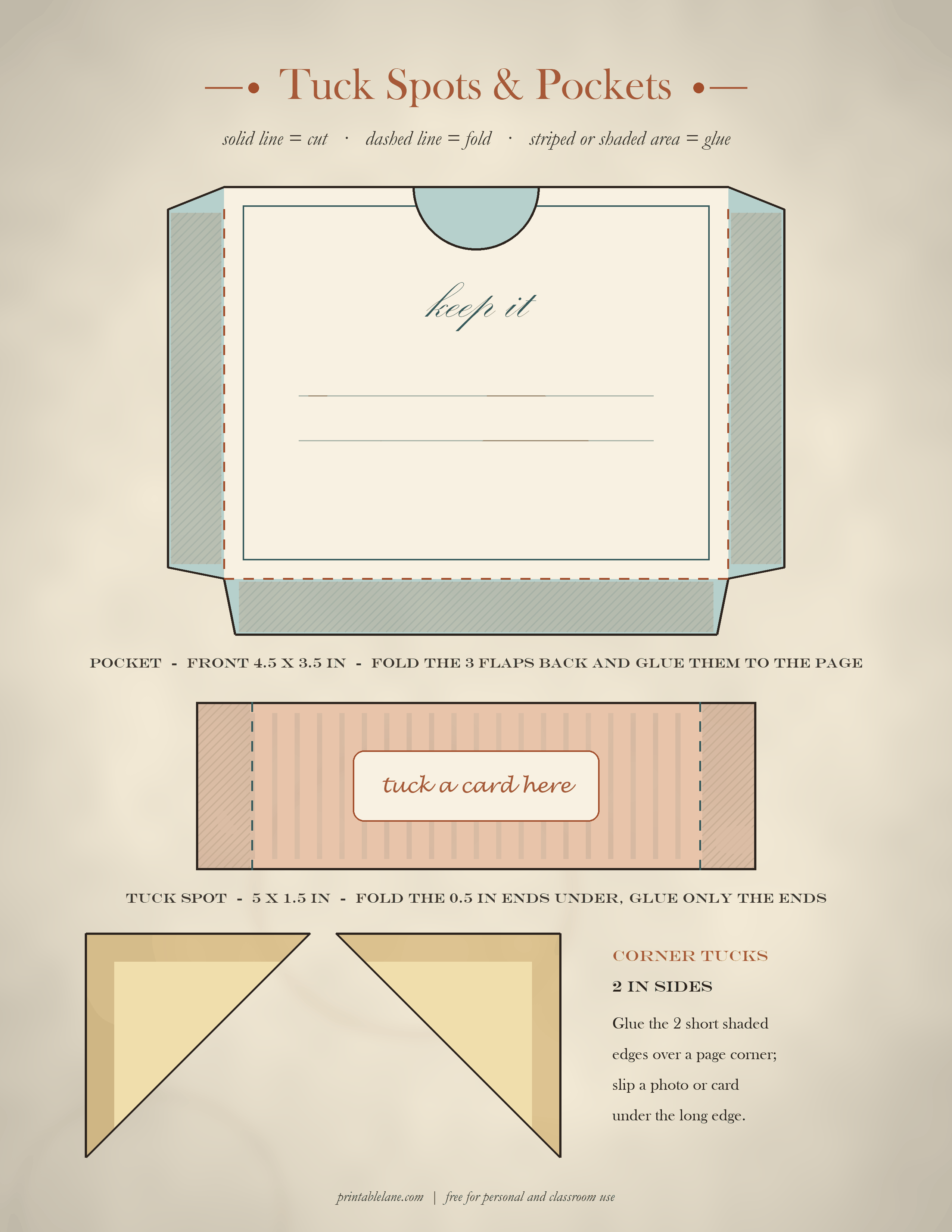
- Pockets: paper glued on 3 sides with an open top.
- Tuck spots: strips glued only at their ends, so a card slides underneath.
- Tags and journaling cards: loose pieces you write on and tuck away.
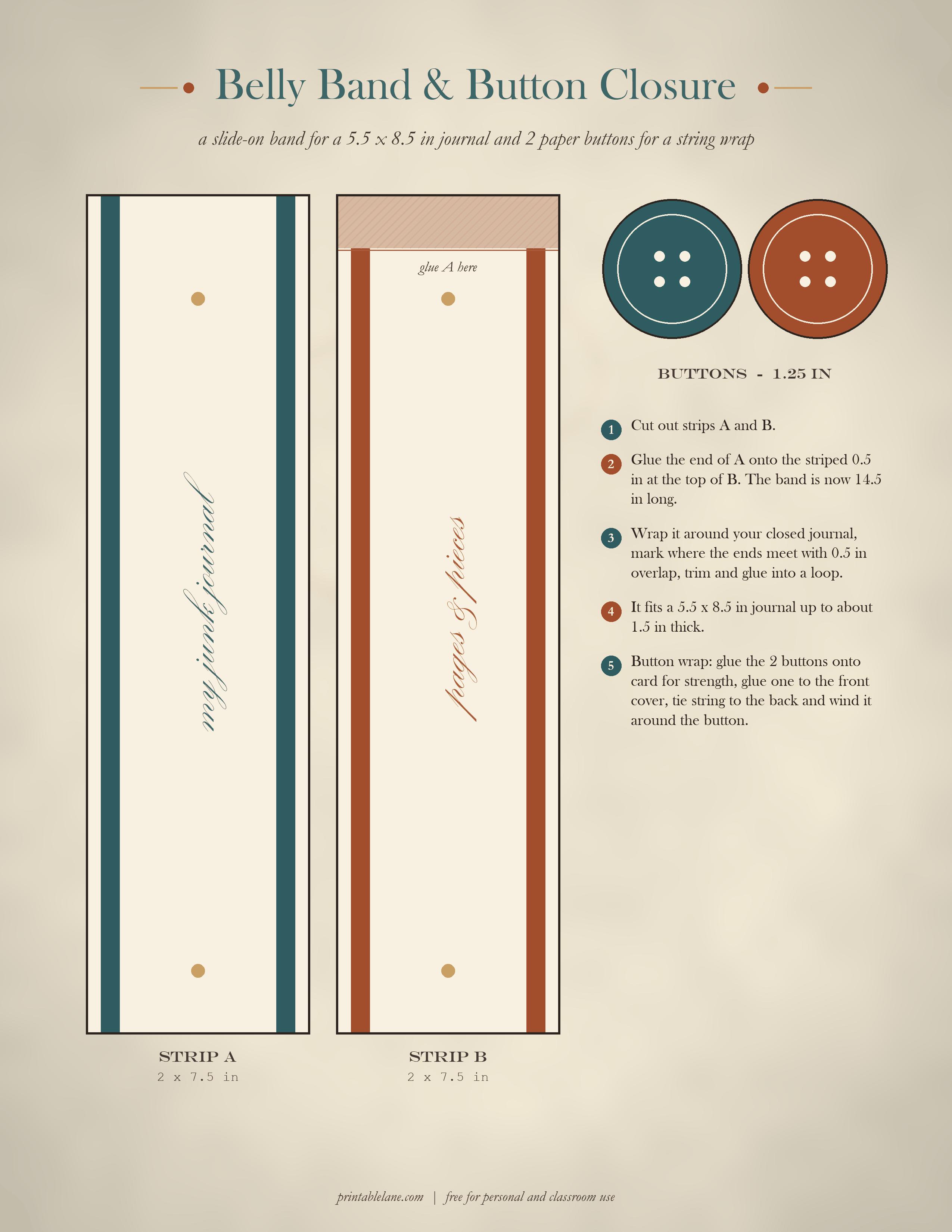
- Belly band: a paper loop that slides around the closed book and holds the bulk together.
How to make your first junk journal
- Collect for a week with the scavenger list on page 3; keep finds flat in a folder.
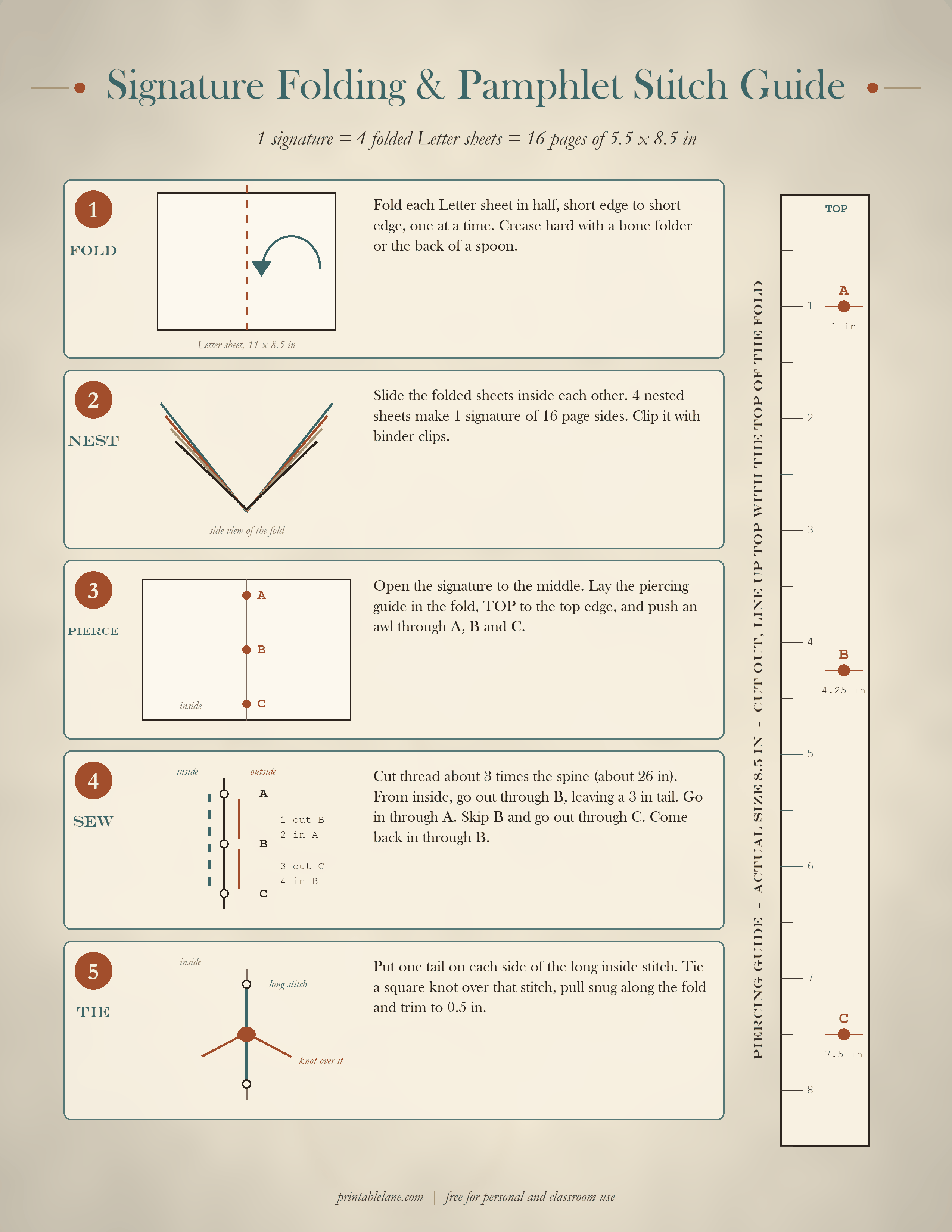
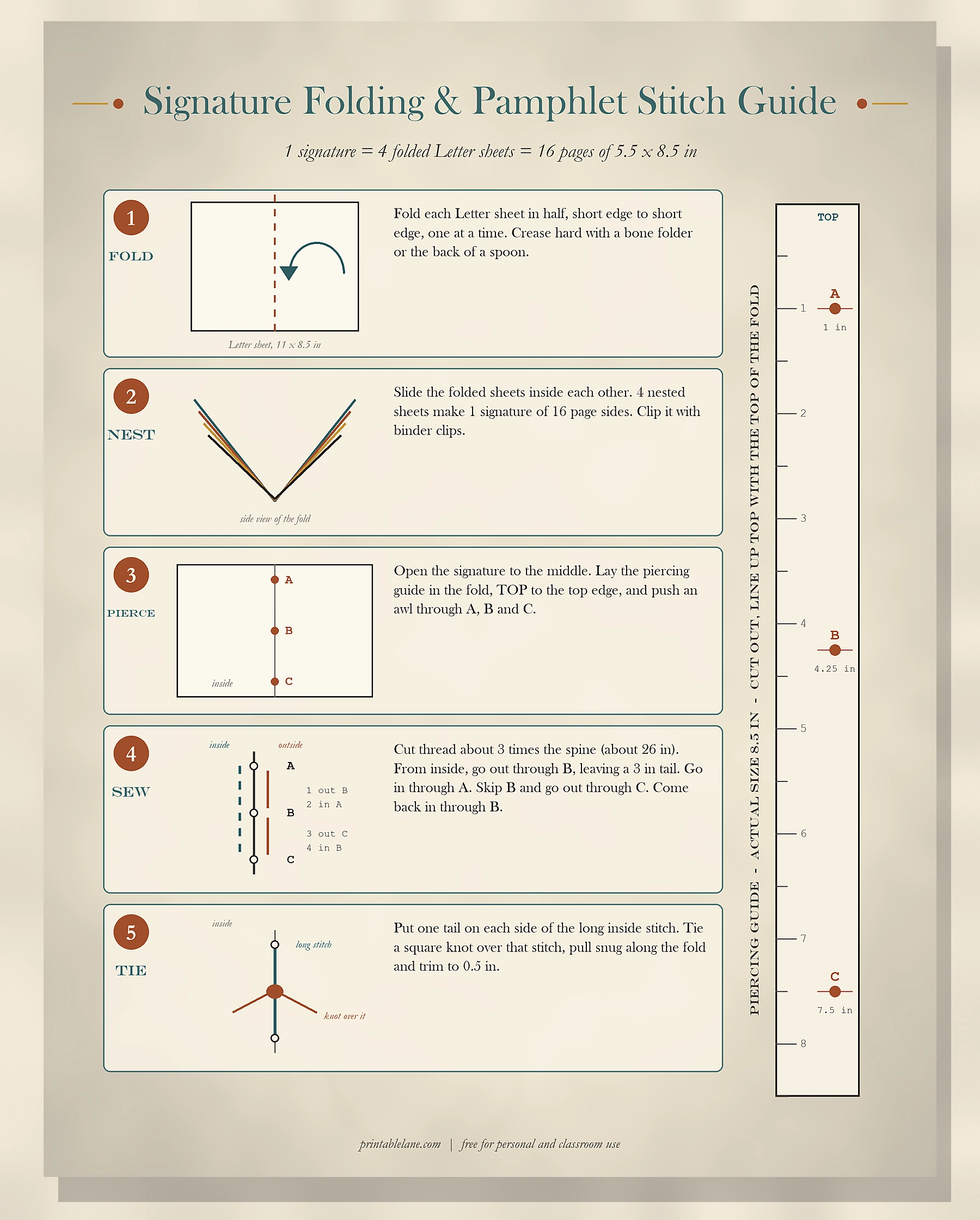
- Make 1 signature. Fold 4 Letter sheets in half one at a time and nest them. You get 16 sides to write on, each 5.5 x 8.5 in.
- Pierce 3 holes. Open the signature to the middle and use the piercing guide on page 4: holes 1 in from the top, at the center (4.25 in) and 1 in from the bottom.
- Sew a 3-hole pamphlet stitch. Cut thread about 3 times the spine length. From inside, go out through the center hole, in through the top hole, along the inside to the bottom hole and out, then back in through the center.
- Tie off. With one tail on each side of the long inside stitch, tie a square knot over it.
- Add a cover: card folded slightly larger than the pages, sewn on with the signature.
- Decorate last: bulky pockets and tags make sewing harder.
Beginner mistakes to skip
- Too many sheets: 4 or 5 sheets of printer paper per signature sew easily; thick stacks pull at the fold.
- Filling every page at once: leave room, or the book will not close.
- Fading receipts: thermal receipts fade with heat and light; photocopy favorites.
- Buying first: most supplies are at home already.
- Chasing perfect pages: crooked folds are part of the look.
What’s in the PDF (9 pages)
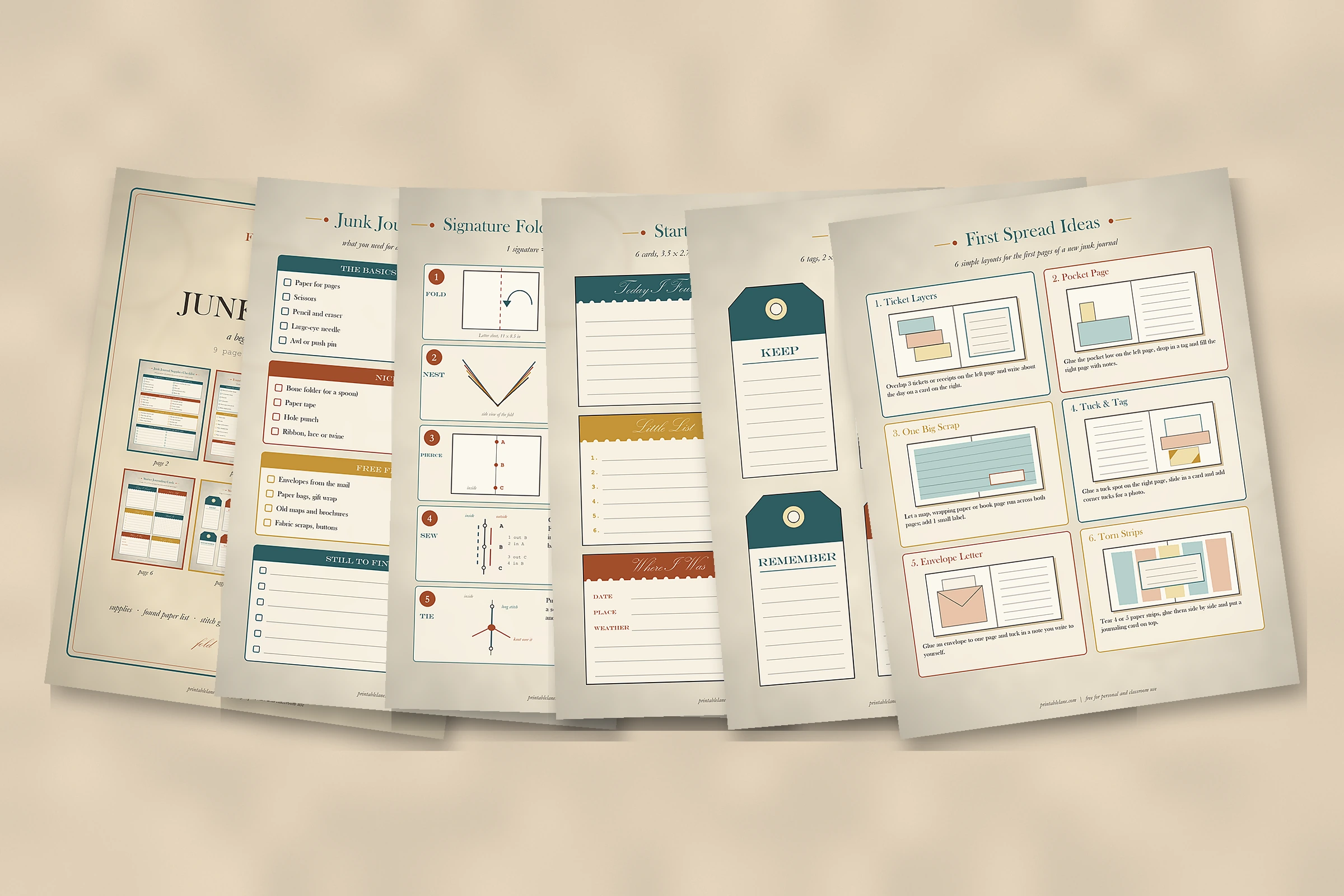
- Page 1: cover with thumbnails of the 8 starter pages.
- Page 2: Junk Journal Supplies Checklist (26 items).
- Page 3: Found Paper Scavenger List (24 items).
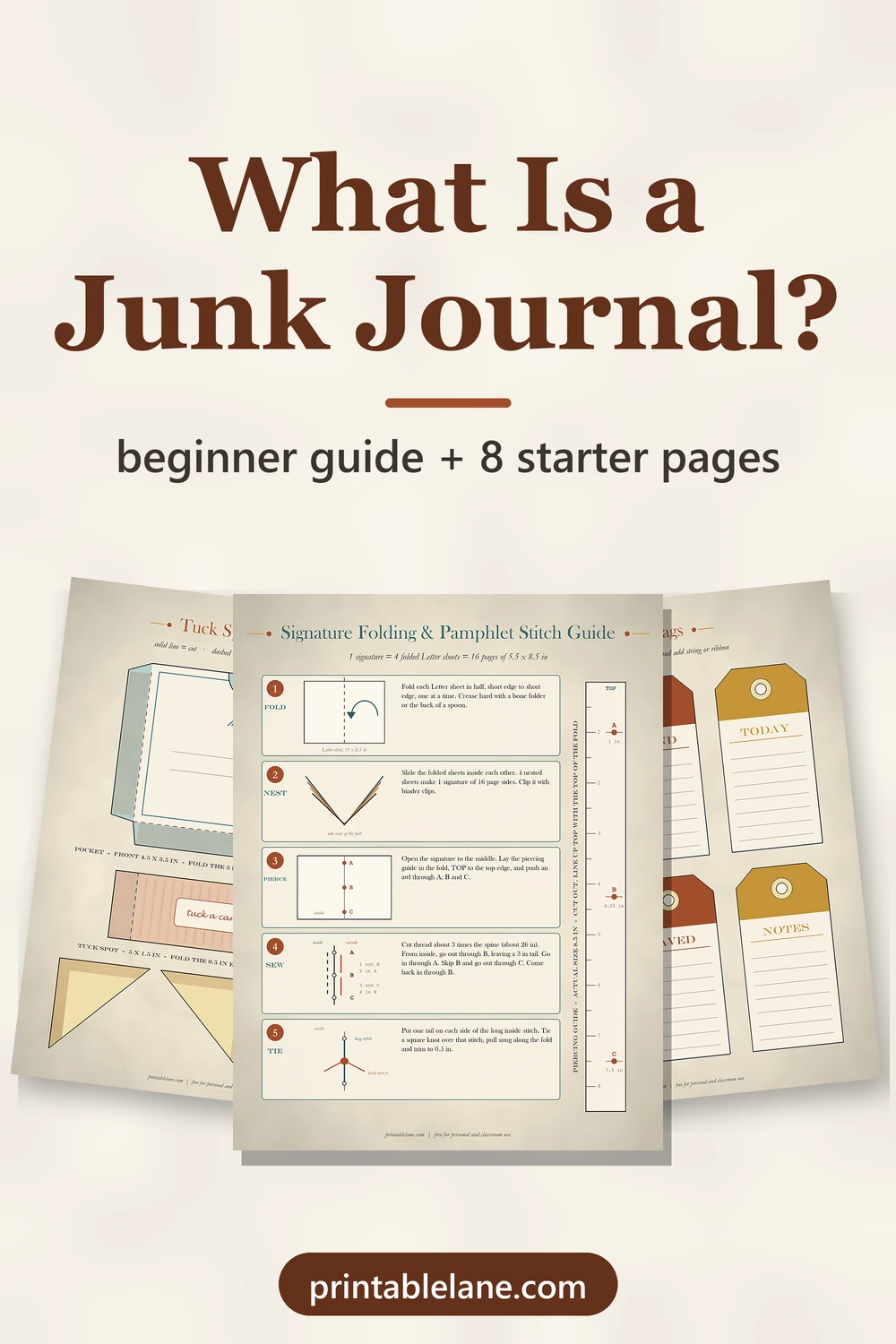
- Page 4: Signature Folding & Pamphlet Stitch Guide.
- Page 5: Tuck Spots & Pockets.
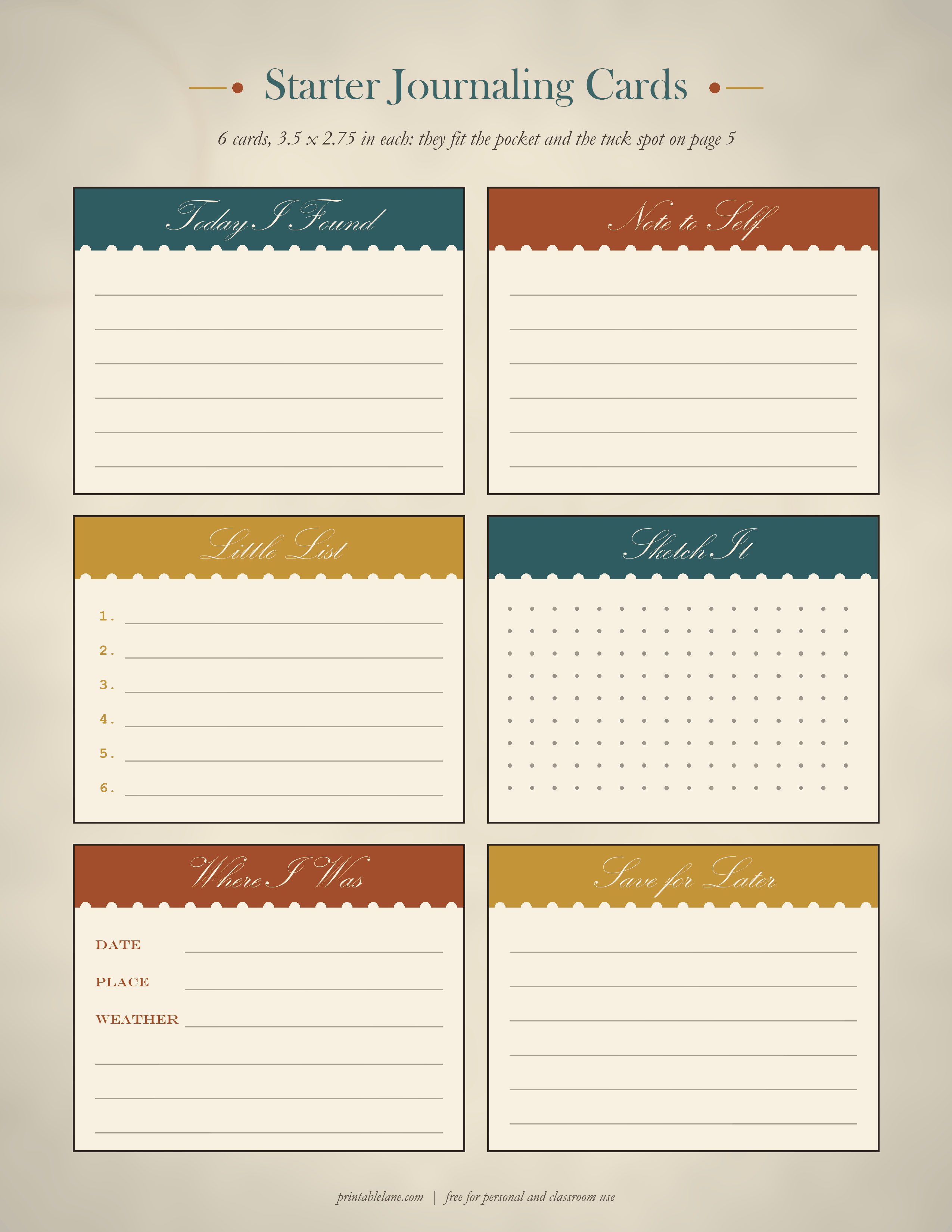
- Page 6: Starter Journaling Cards (6 cards).
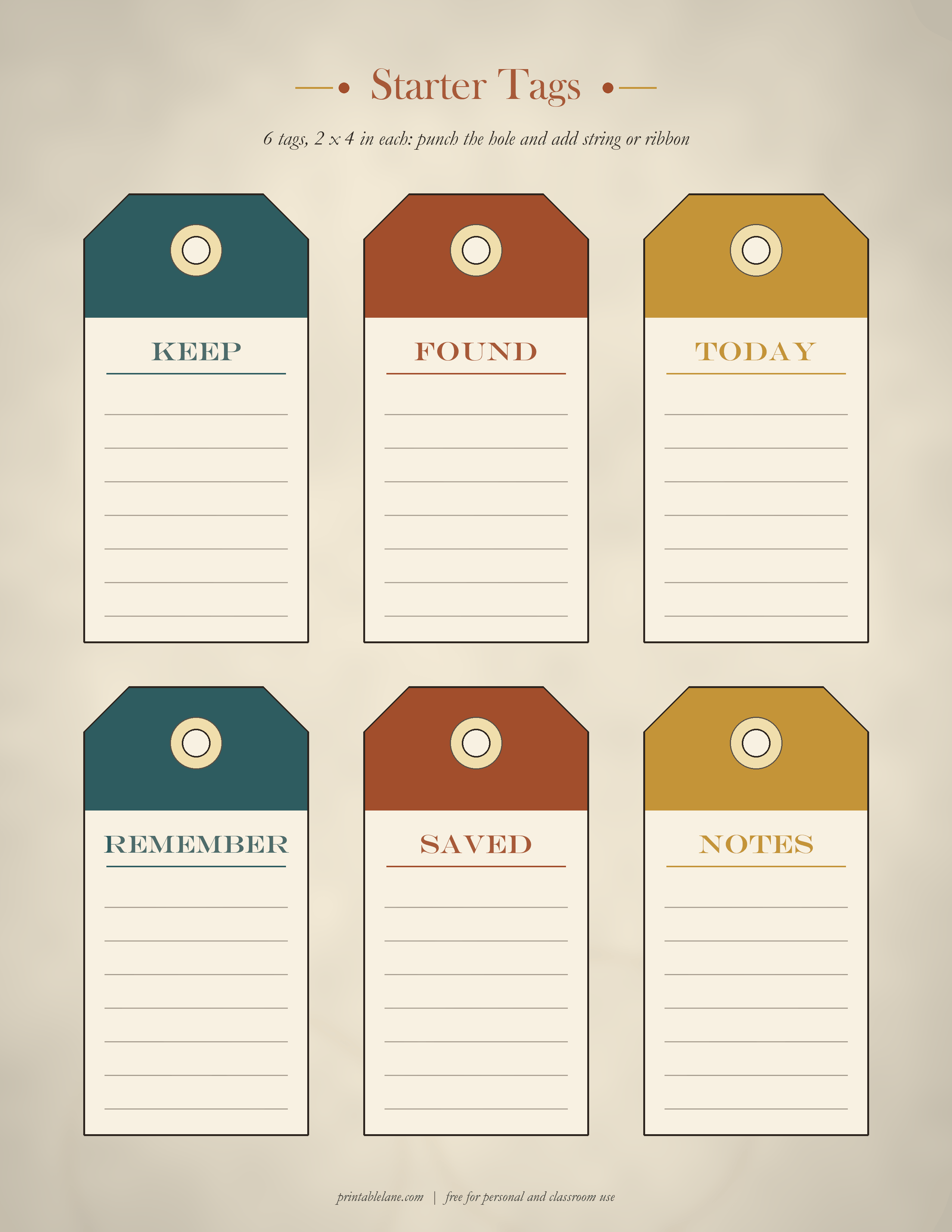
- Page 7: Starter Tags (6 tags).
- Page 8: Belly Band & Button Closure.
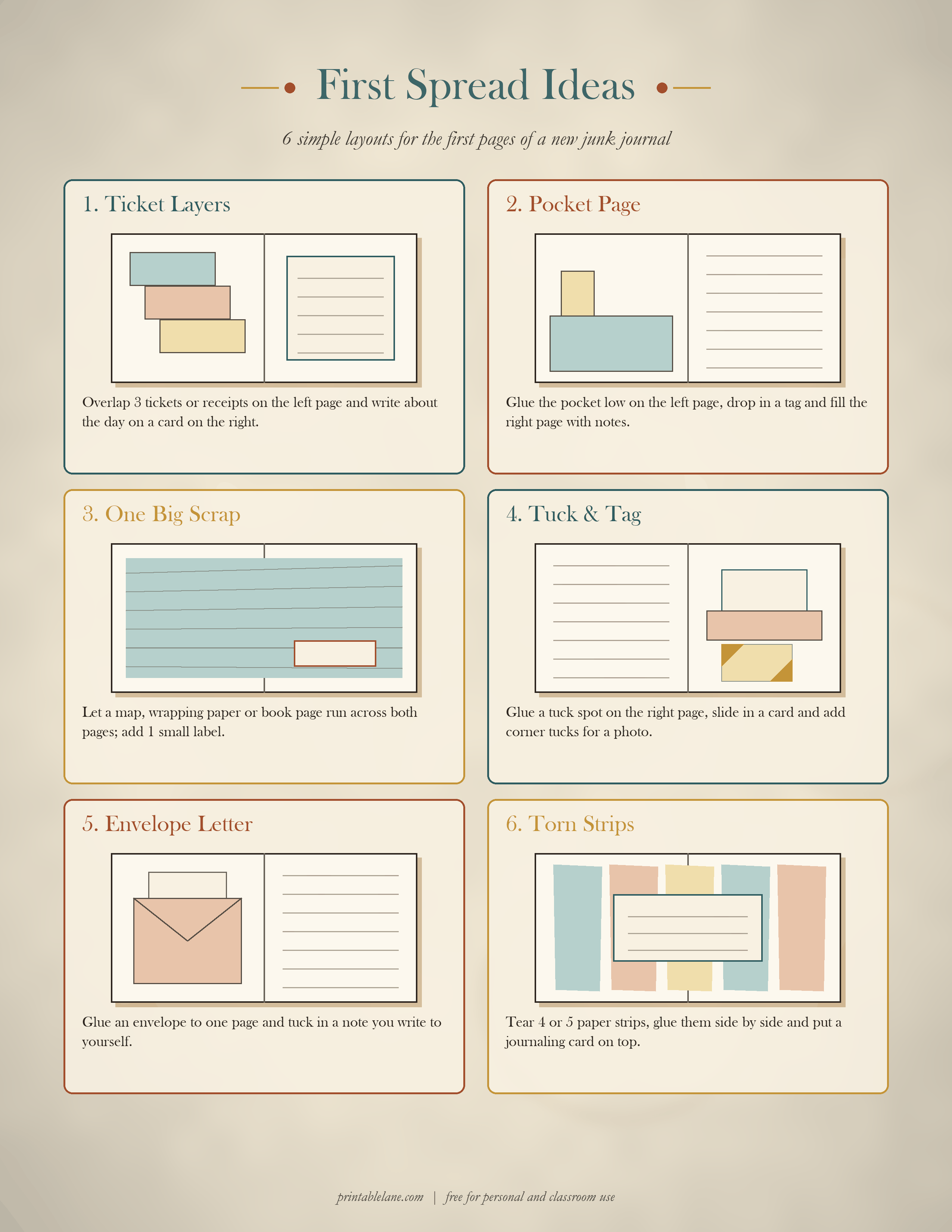
- Page 9: First Spread Ideas (6 layouts).
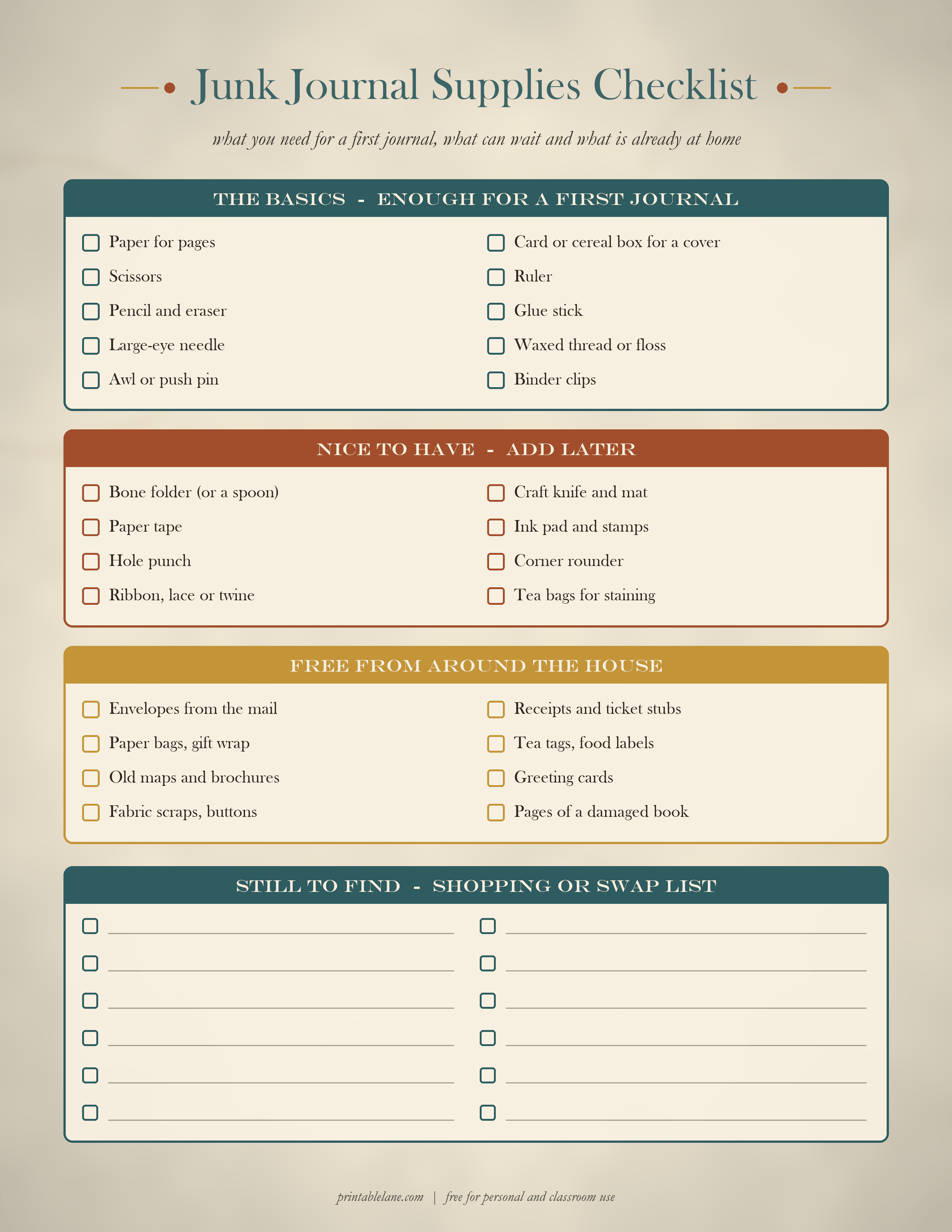
Junk Journal Supplies Checklist
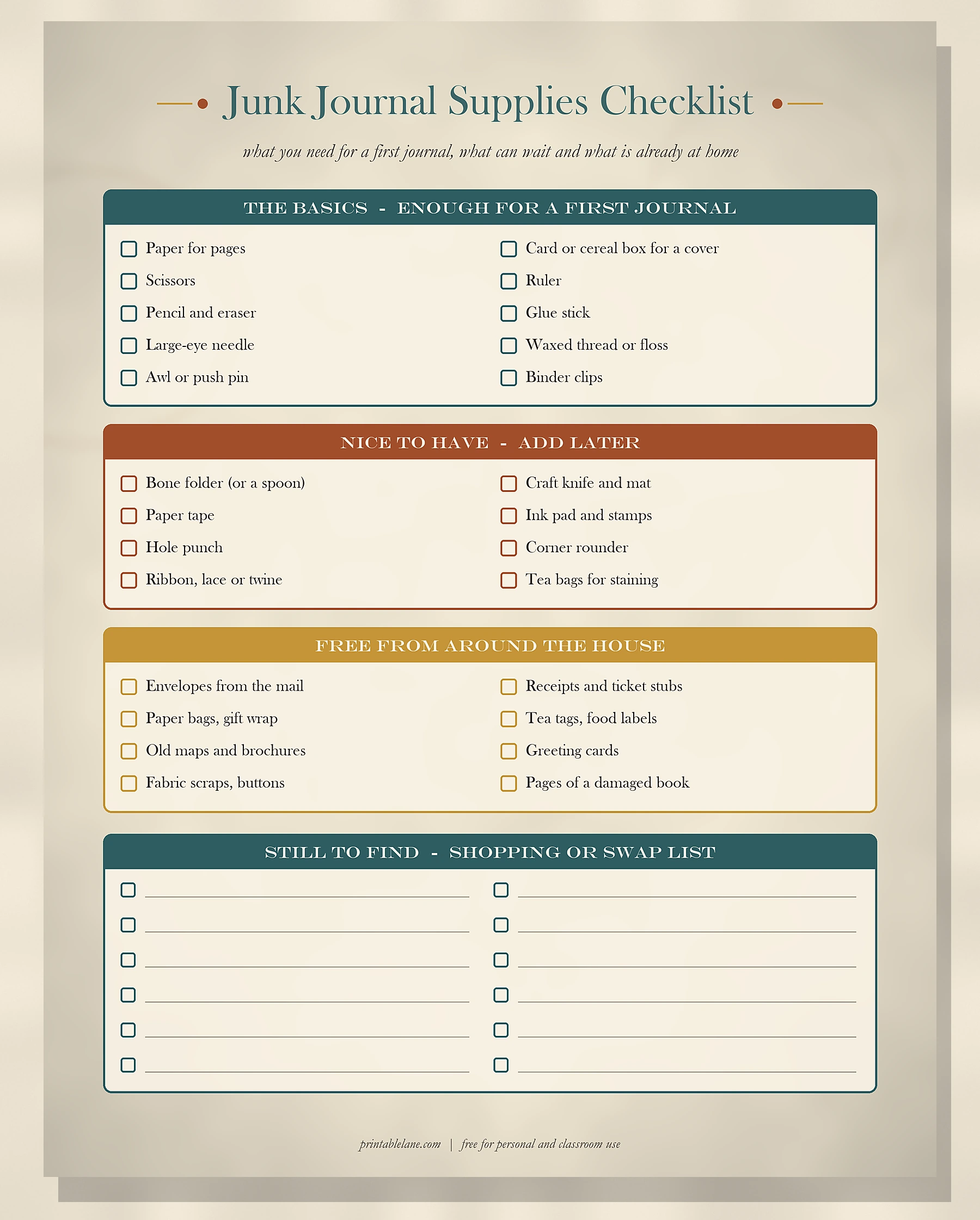
PDF page 2 sorts 26 checkbox items into The Basics (10), Nice to Have (8) and Free From Around the House (8) and adds a Still to Find list of 12 blank lines.
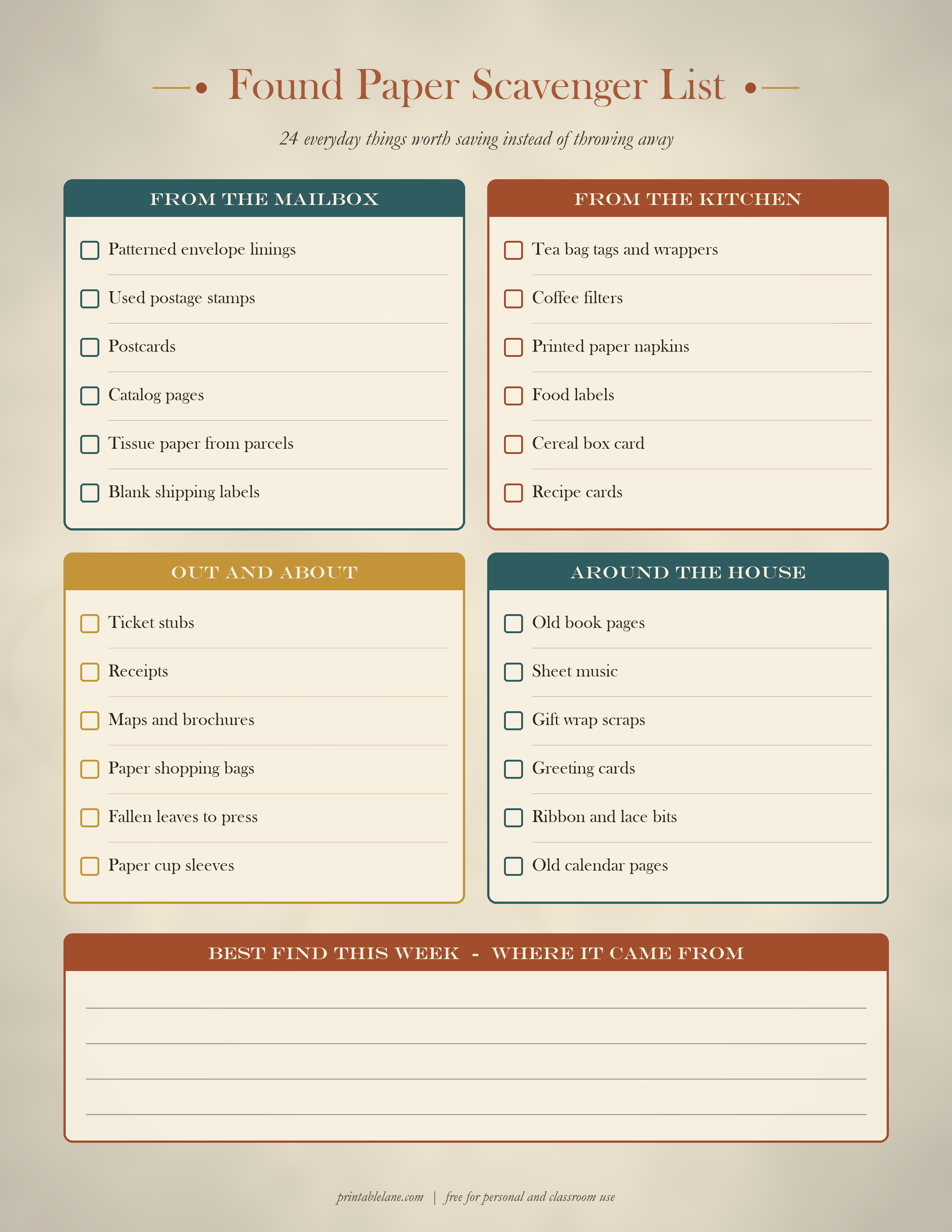
Found Paper Scavenger List
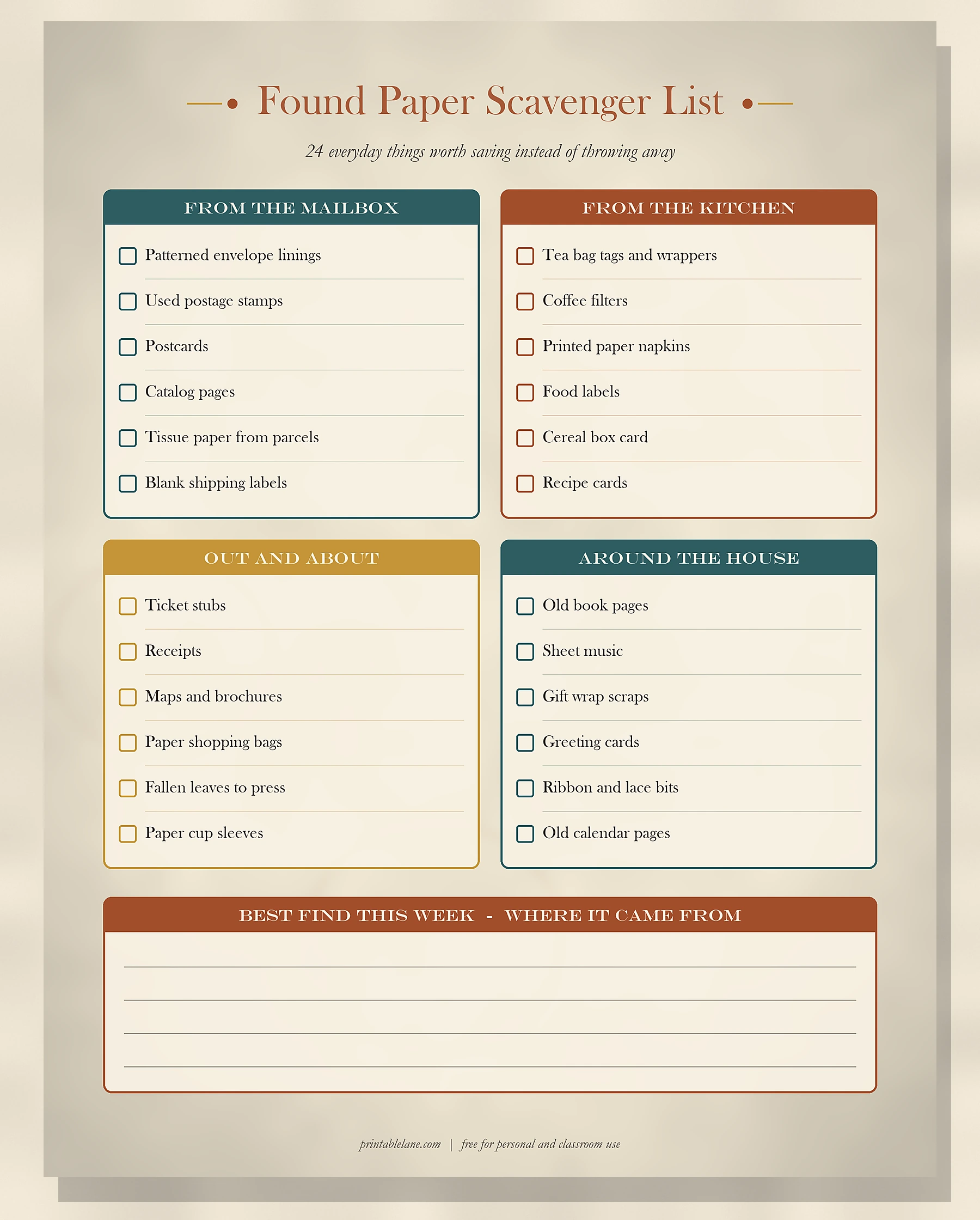
PDF page 3 lists 24 finds in 4 groups of 6: From the Mailbox, From the Kitchen, Out and About and Around the House. A Best Find This Week box sits at the bottom.
Signature Folding & Pamphlet Stitch Guide
PDF page 4 shows 5 numbered steps, Fold, Nest, Pierce, Sew and Tie, each with a diagram. Down the right side runs an actual-size 8.5 in piercing guide with holes A, B and C at 1, 4.25 and 7.5 in.
Tuck Spots & Pockets
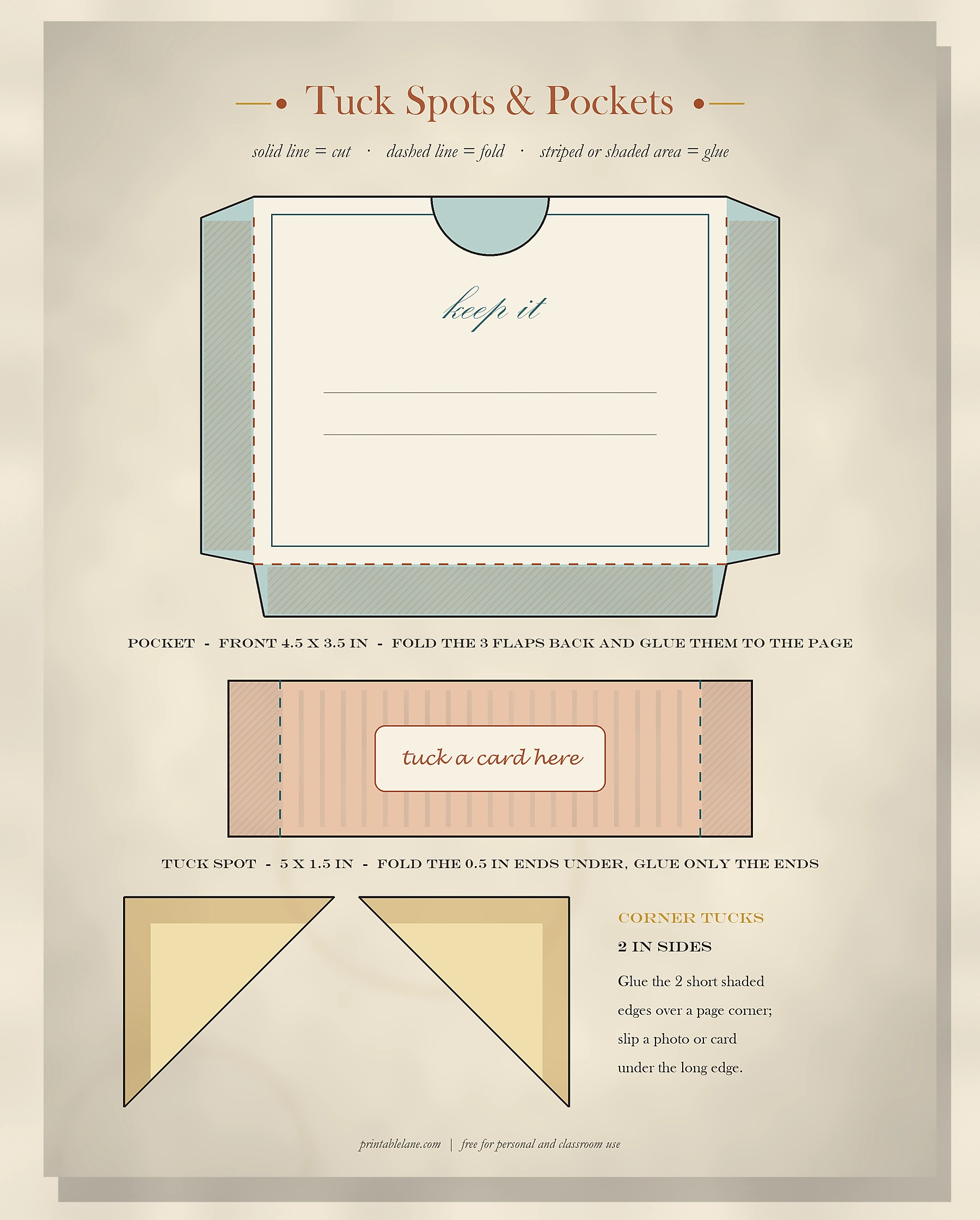
PDF page 5 holds a pocket with a 4.5 x 3.5 in front and 3 glue flaps, a 5 x 1.5 in tuck spot with 0.5 in glue ends, and 2 corner tucks with 2 in sides. Solid lines are cut lines, dashed lines are folds.
Starter Journaling Cards
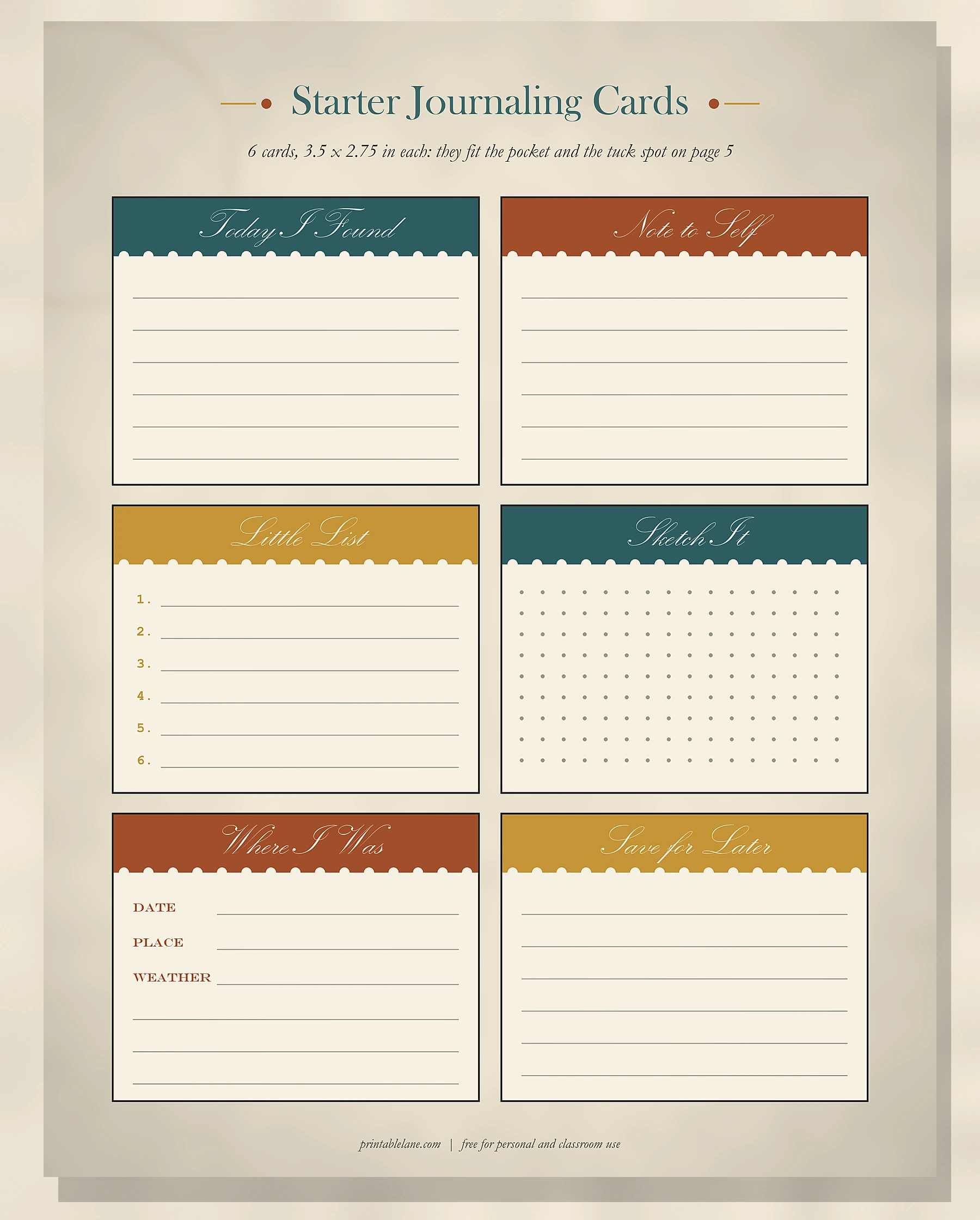
PDF page 6 has 6 cards, 3.5 x 2.75 in each: Today I Found, Note to Self, Little List (numbered 1 to 6), Sketch It (dot grid), Where I Was (Date, Place, Weather) and Save for Later.
Starter Tags
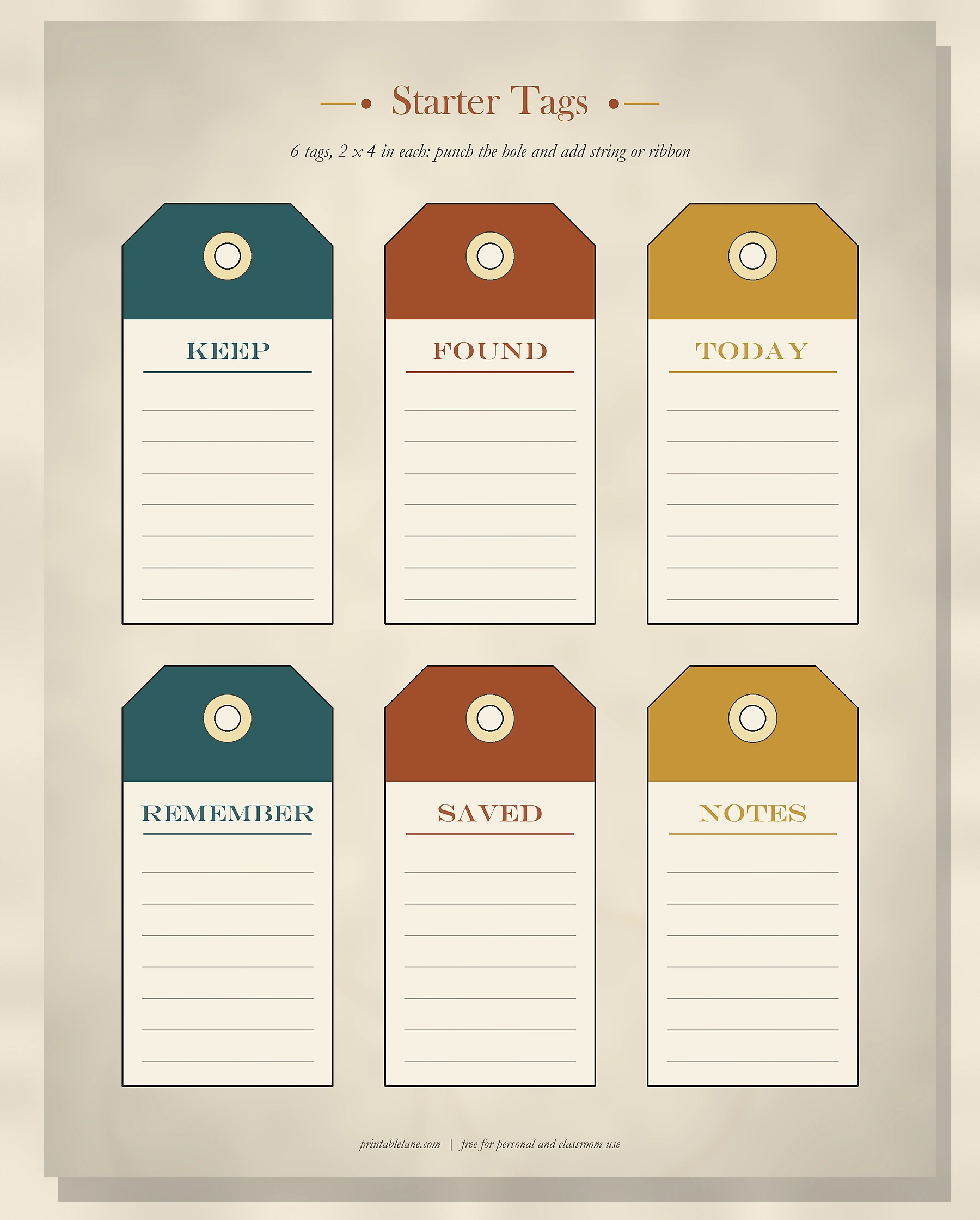
PDF page 7 has 6 tags, 2 x 4 in each, with clipped top corners and a reinforced hole: Keep, Found, Today, Remember, Saved and Notes, each with writing lines.
Belly Band & Button Closure
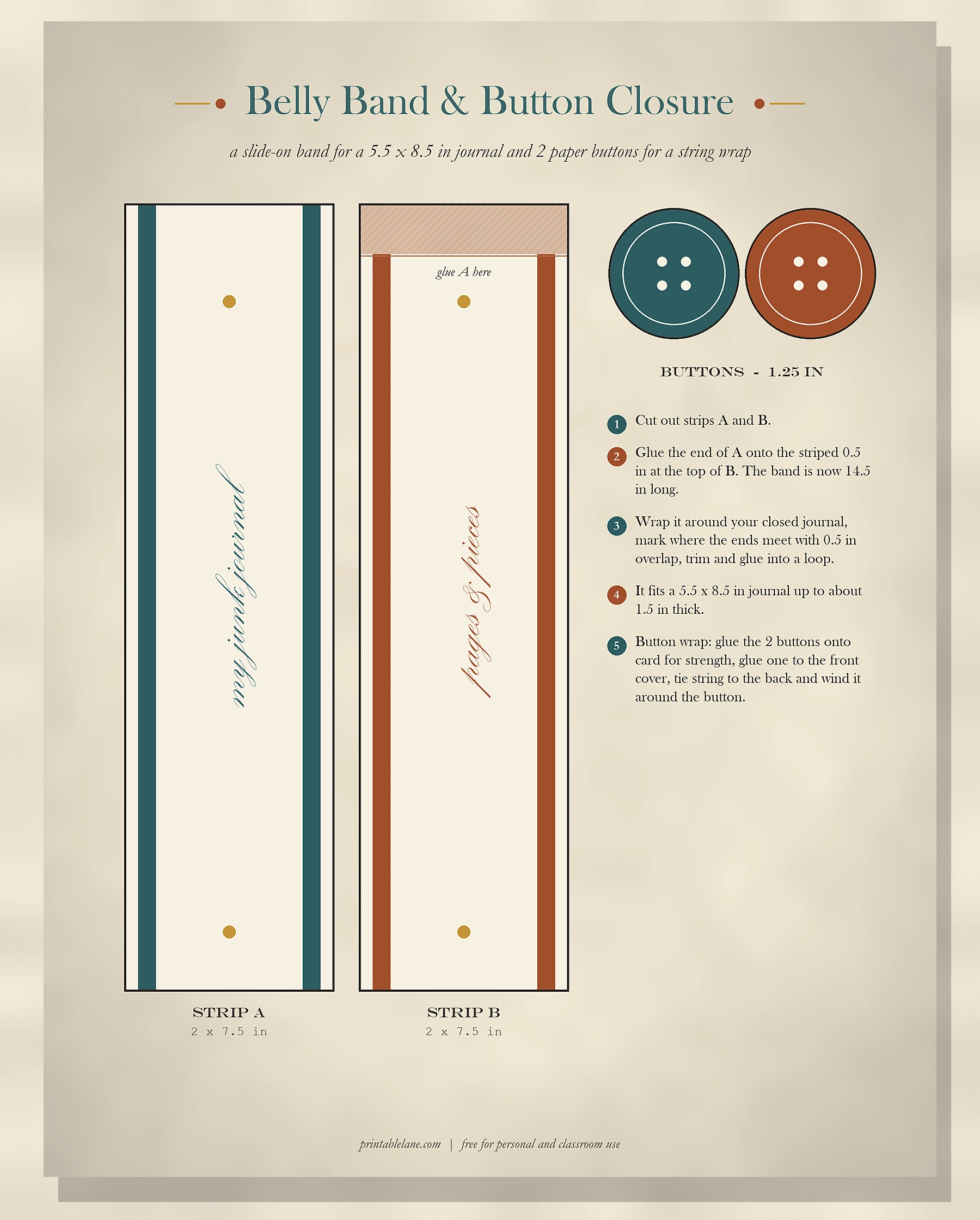
PDF page 8 has strips A and B, 2 x 7.5 in each, plus 2 paper buttons of 1.25 in and 5 assembly steps. Joined with the 0.5 in overlap, the strips make a 14.5 in band.
First Spread Ideas
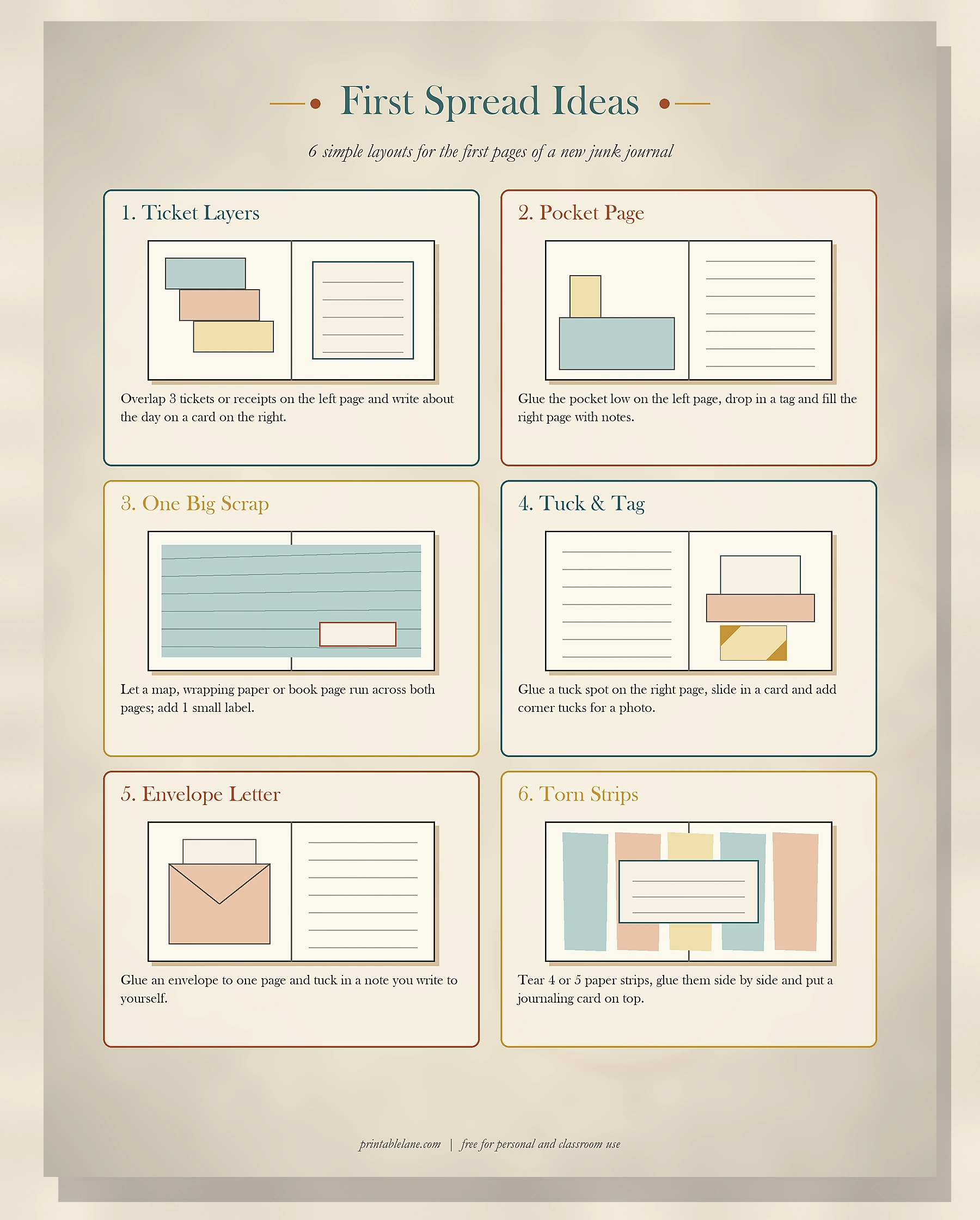
PDF page 9 sketches 6 layouts with a short how-to each: Ticket Layers, Pocket Page, One Big Scrap, Tuck & Tag, Envelope Letter and Torn Strips.
Where to go after your first journal
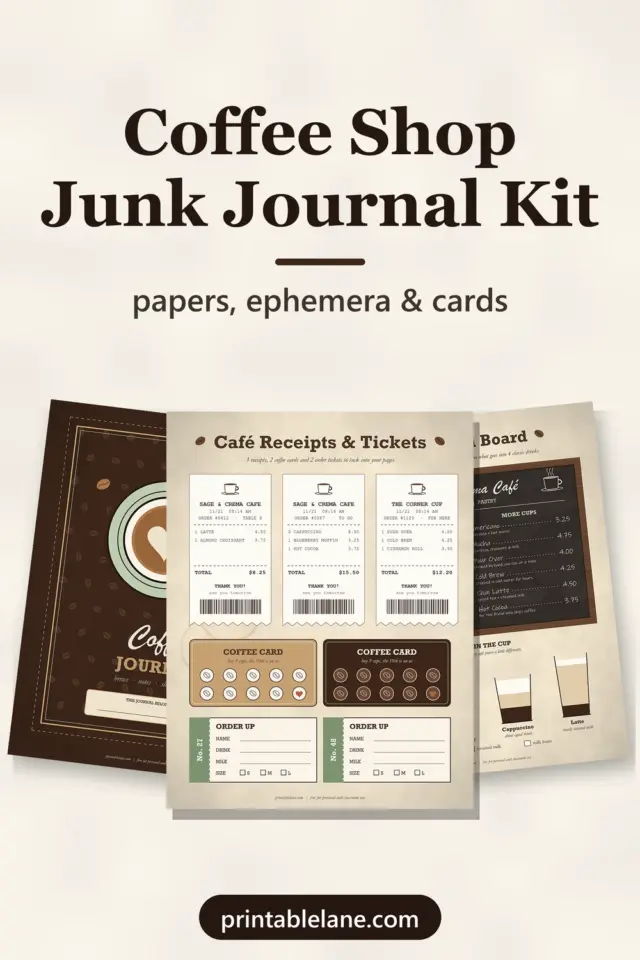
For your next book, themed papers help. The vintage junk journal kit and the junk journal ephemera printables add aged paper and labels, the coffee shop junk journal kit suits a café diary, and free printable scrapbook paper works as pocket and cover stock.
Printing tips
- US Letter: print at 100% (Actual size) so the piercing guide is a true 8.5 in.
- A4: choose 100% (Actual size), not Fit to page, to keep the pocket, tags and band to size. Everything sits at least 0.5 in inside the side edges.
- Paper: 20 to 24 lb (75 to 90 gsm) paper for the checklist and lists; 65 to 110 lb (176 to 300 gsm) cardstock for tags, cards, pocket, band and piercing guide.
- Check the size: hole C on the piercing guide should measure 7.5 in.
Download single pages
Want a stack of tags without reprinting the checklist? Each starter page has its own PNG.
- Junk Journal Supplies Checklist (PNG)
- Found Paper Scavenger List (PNG)
- Signature Folding & Pamphlet Stitch Guide (PNG)
- Tuck Spots & Pockets (PNG)
- Starter Journaling Cards (PNG)
- Starter Tags (PNG)
- Belly Band & Button Closure (PNG)
- First Spread Ideas (PNG)
Frequently asked questions
How many pages are in the PDF?
9 pages: the cover plus 8 starter pages. The stitch guide is PDF page 4, so type 4 in your print dialog to print it alone.
Can I print the starter pages on A4 paper?
Yes, at 100% (Actual size). Fit to page shrinks the piercing guide, moving the holes off 1, 4.25 and 7.5 in.
What is the difference between a junk journal and a scrapbook?
A scrapbook usually centers on photos arranged by event. A junk journal centers on reused paper, writing and tucked-in pieces, with photos optional.
Do I need a sewing machine or special tools?
No. A large-eye needle, thread and a push pin or awl are enough for a pamphlet stitch; a bone folder helps but a spoon works too.
How many signatures should a first journal have?
Start with 1. Once that feels easy, try 2 or 3 in a shared cover.