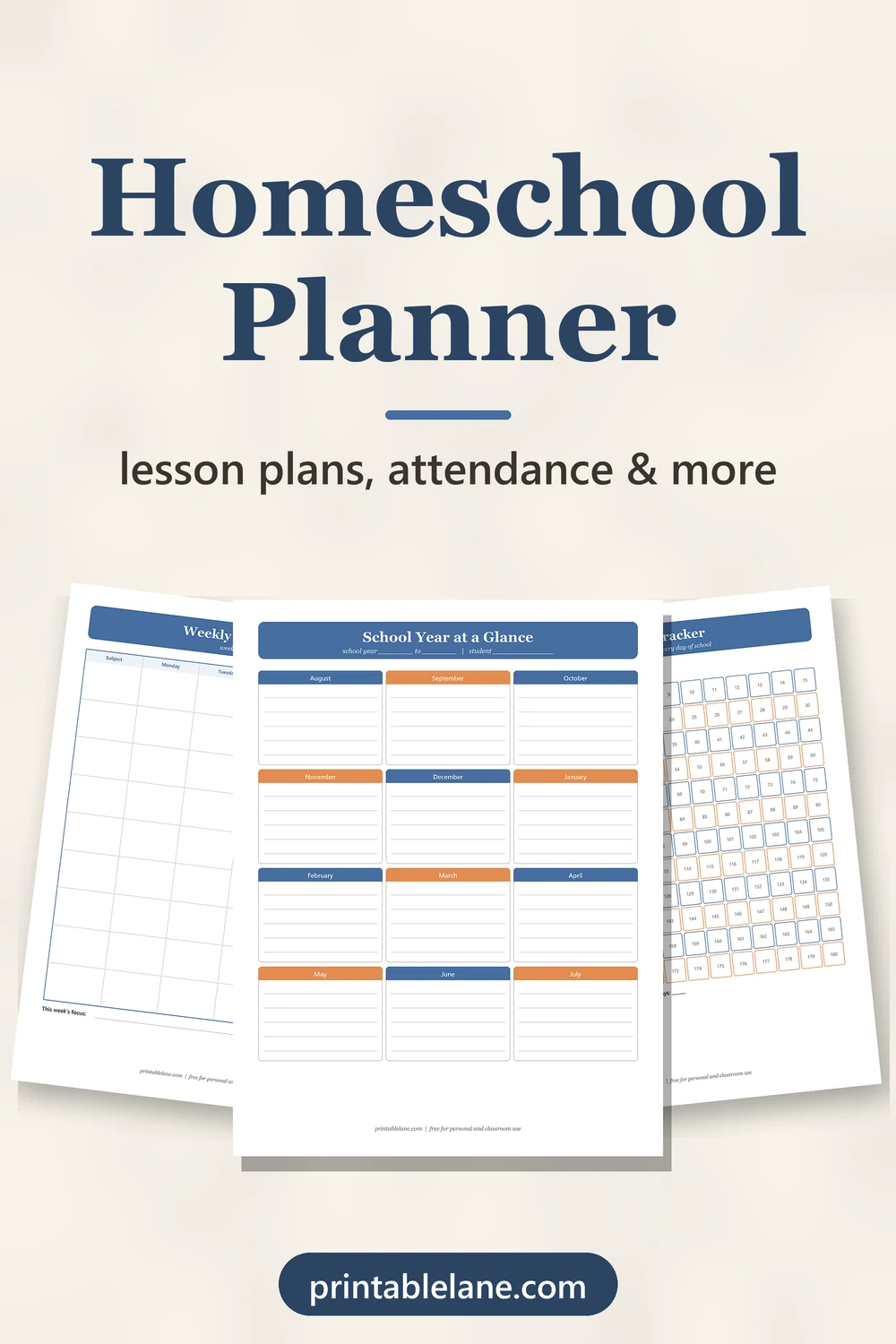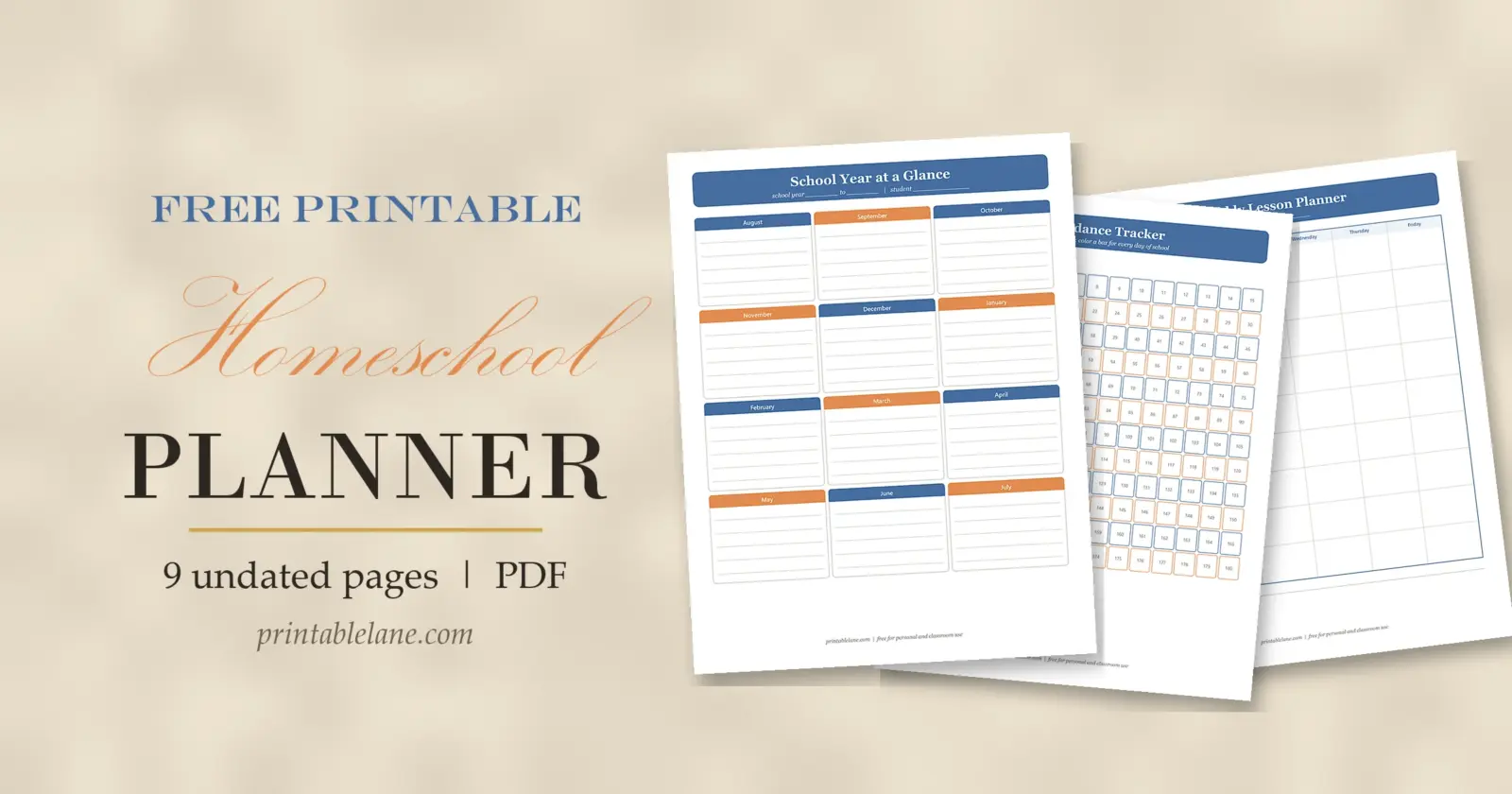
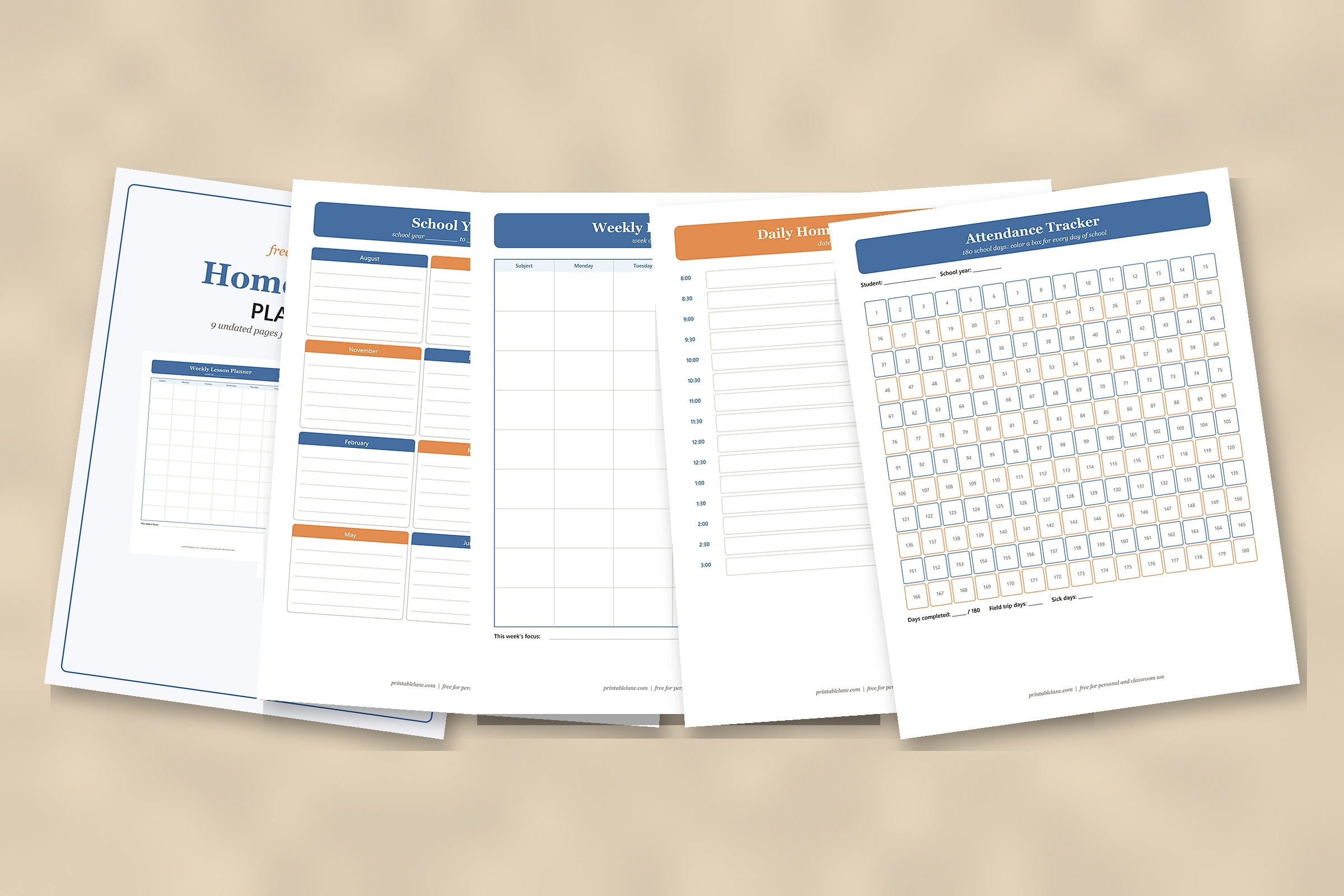
A good homeschool planner does not need to be fancy. It needs to answer 3 questions quickly: what are we doing this week, what did we actually do, and are we on track for the year? These free printables do that in 9 simple pages you can put in a binder.
Everything is undated, so you can start any month, print as many weekly pages as you need and use it again next year. It works for one child or several; just print a set of trackers per student.
What is in the homeschool planner
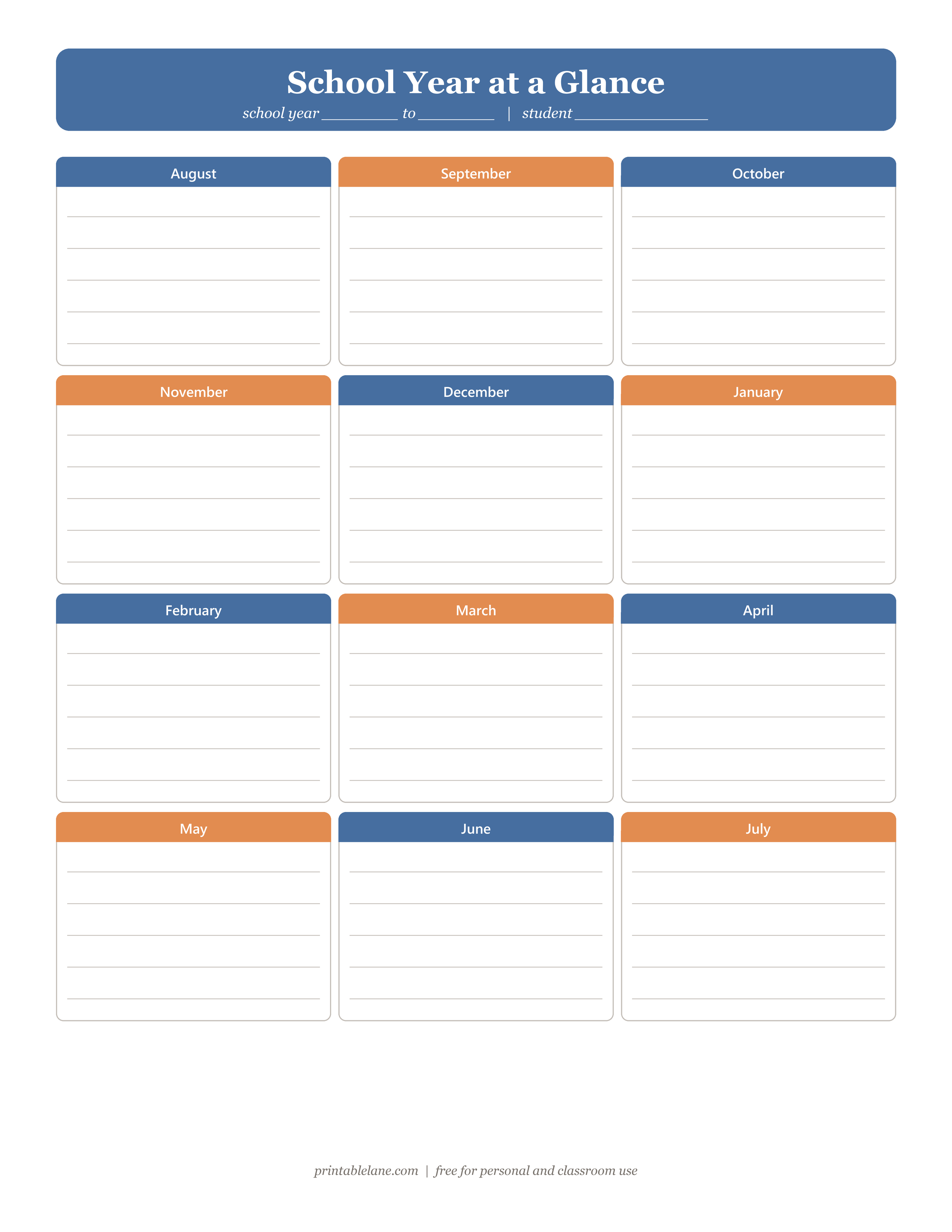
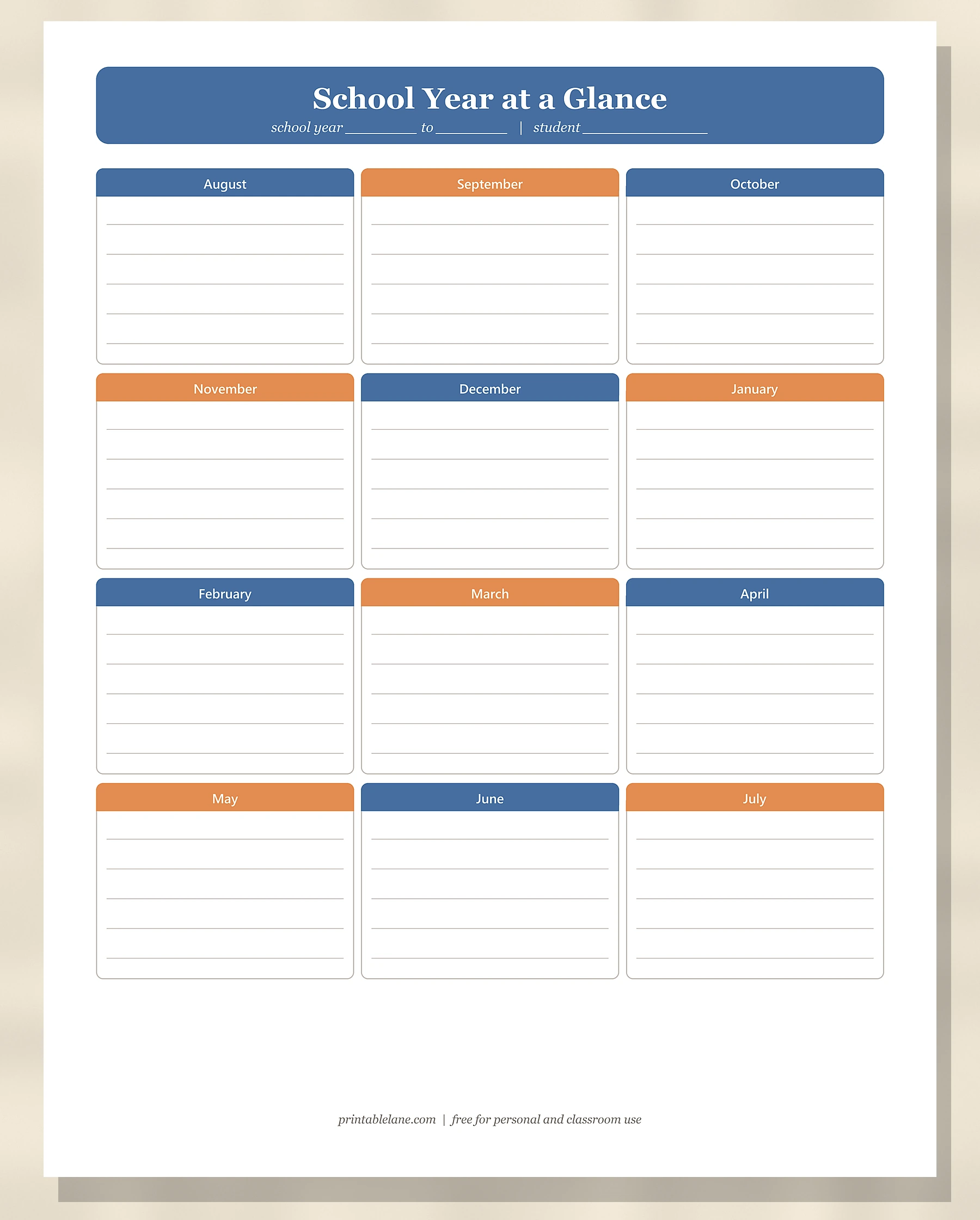
- School year at a glance: 12 months from August to July for holidays, breaks and big dates.
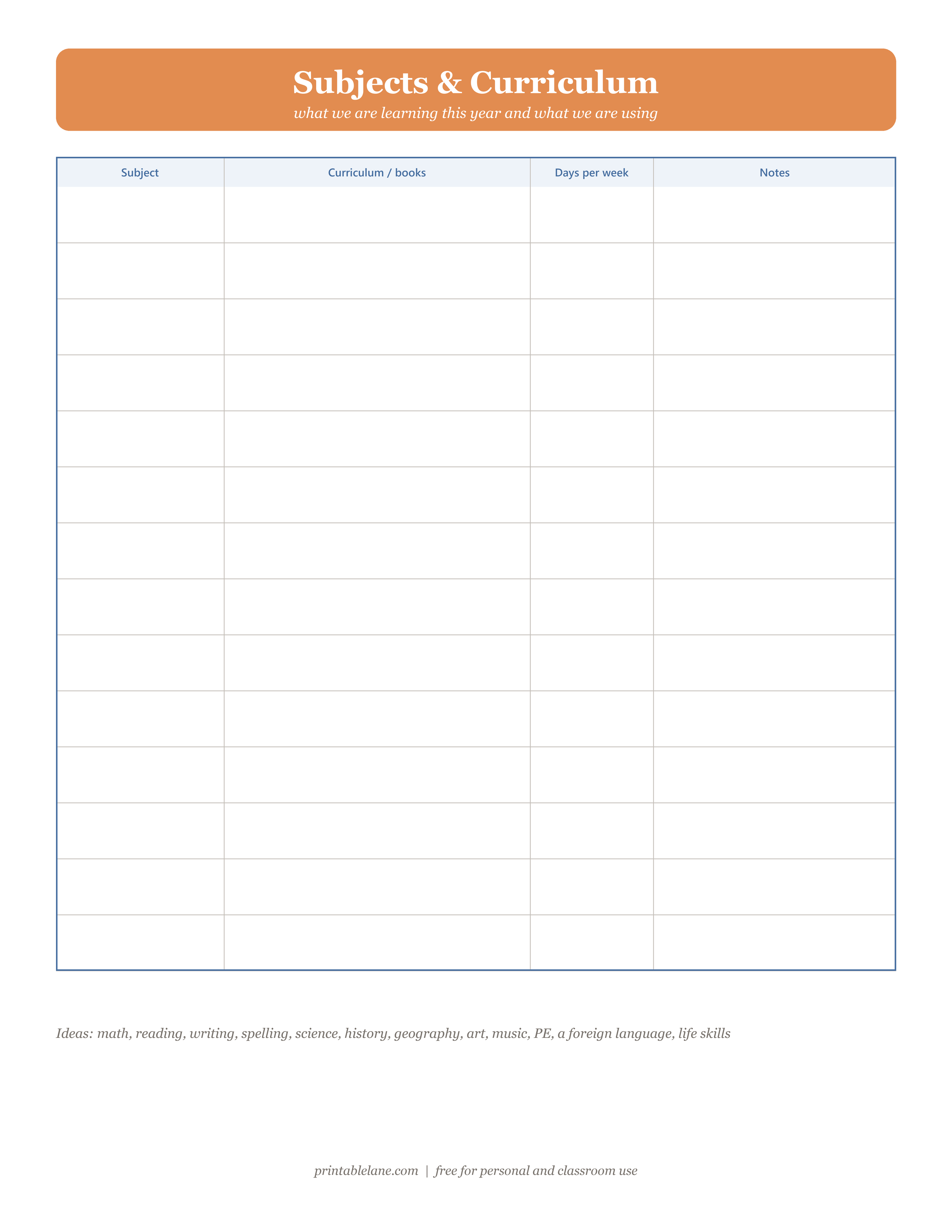
- Subjects and curriculum: each subject with the books or program you use and how many days a week.
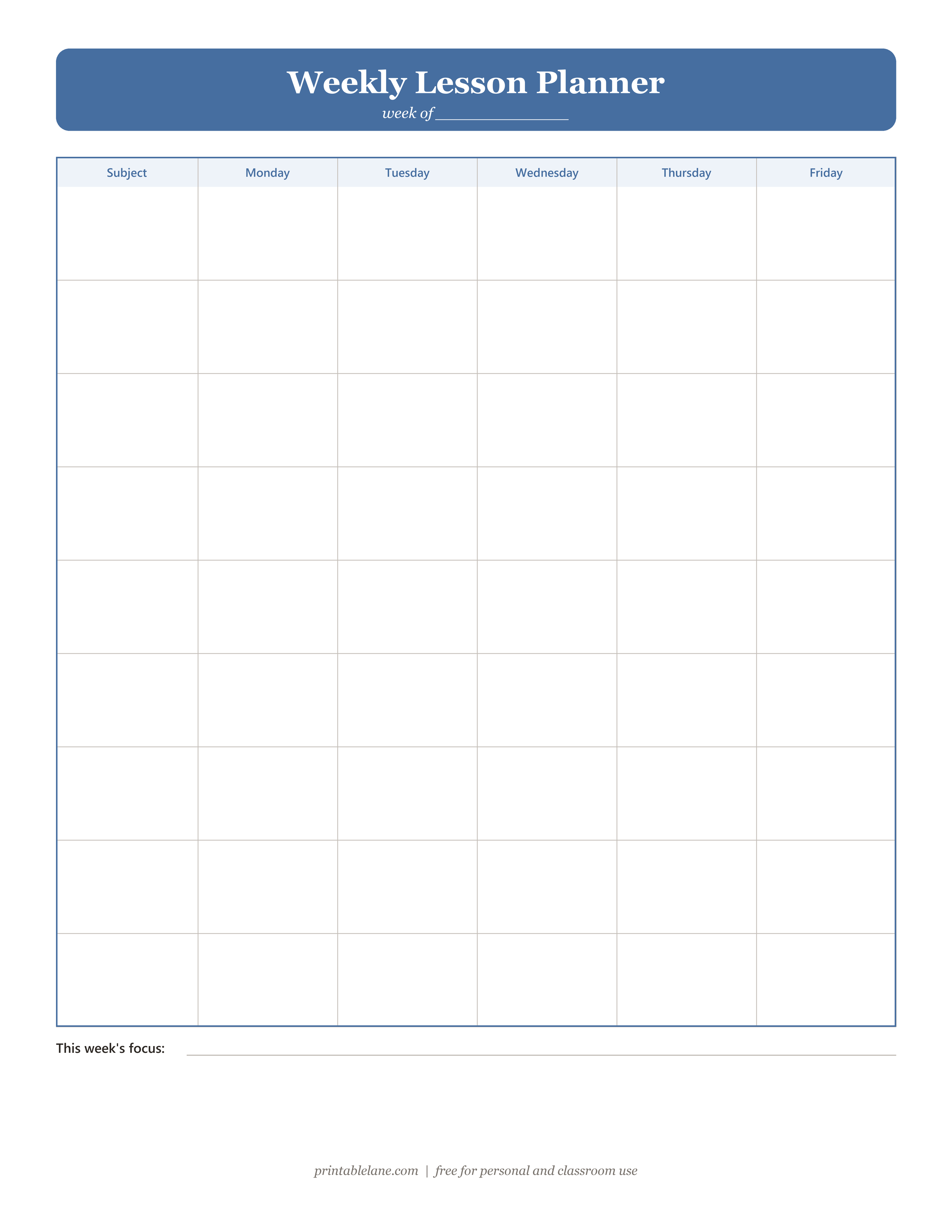
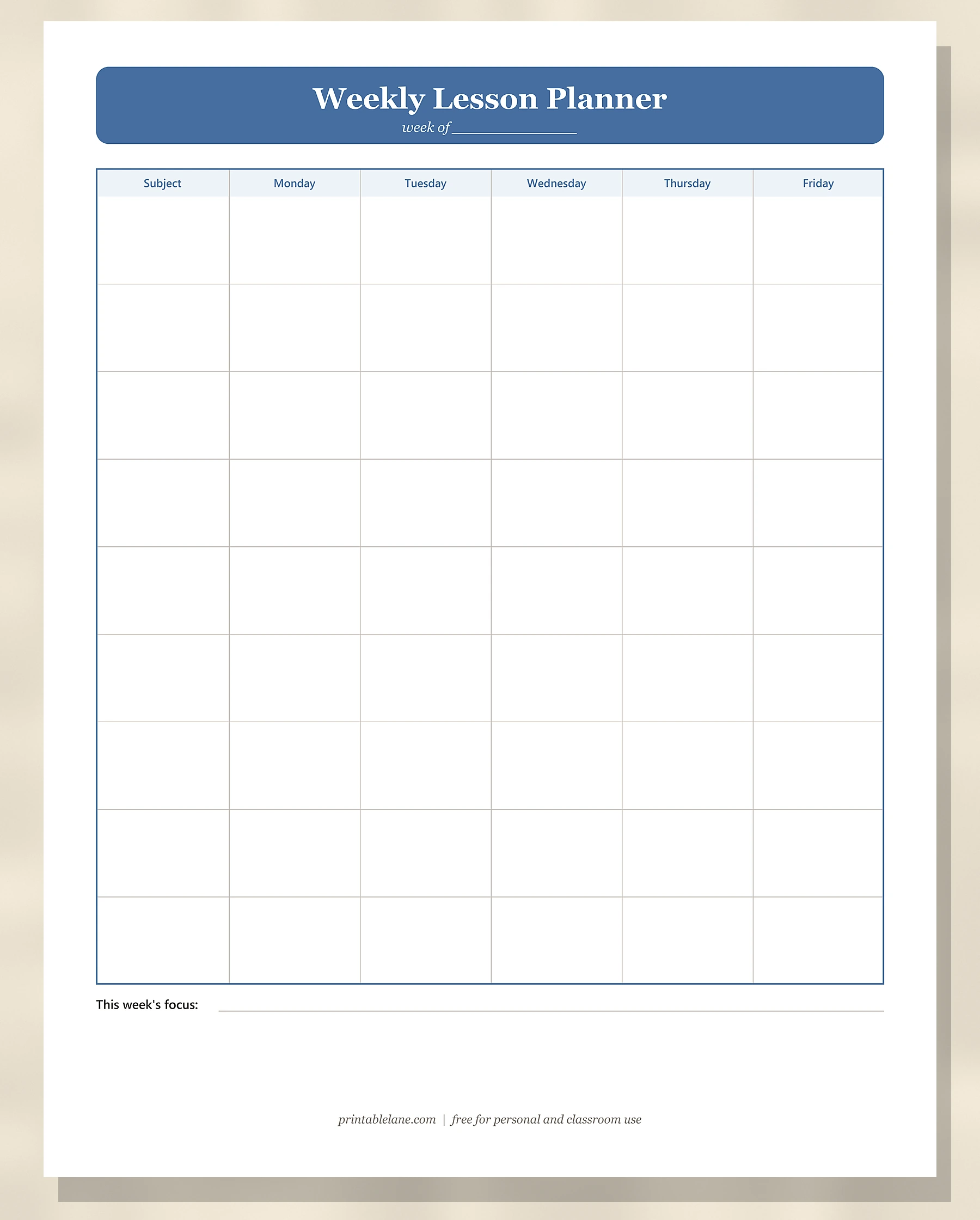
- Weekly lesson planner: nine subject rows across Monday to Friday, plus a focus for the week.
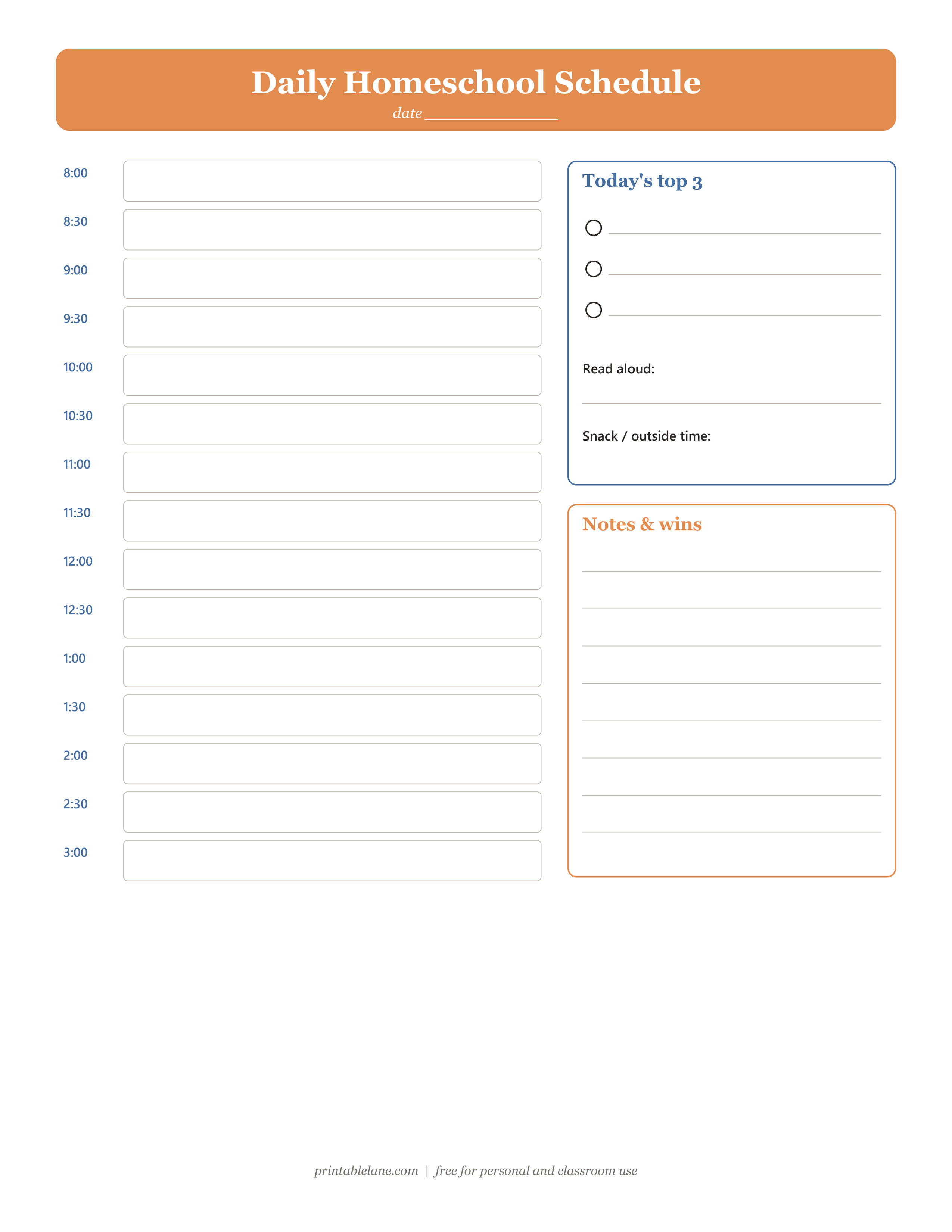
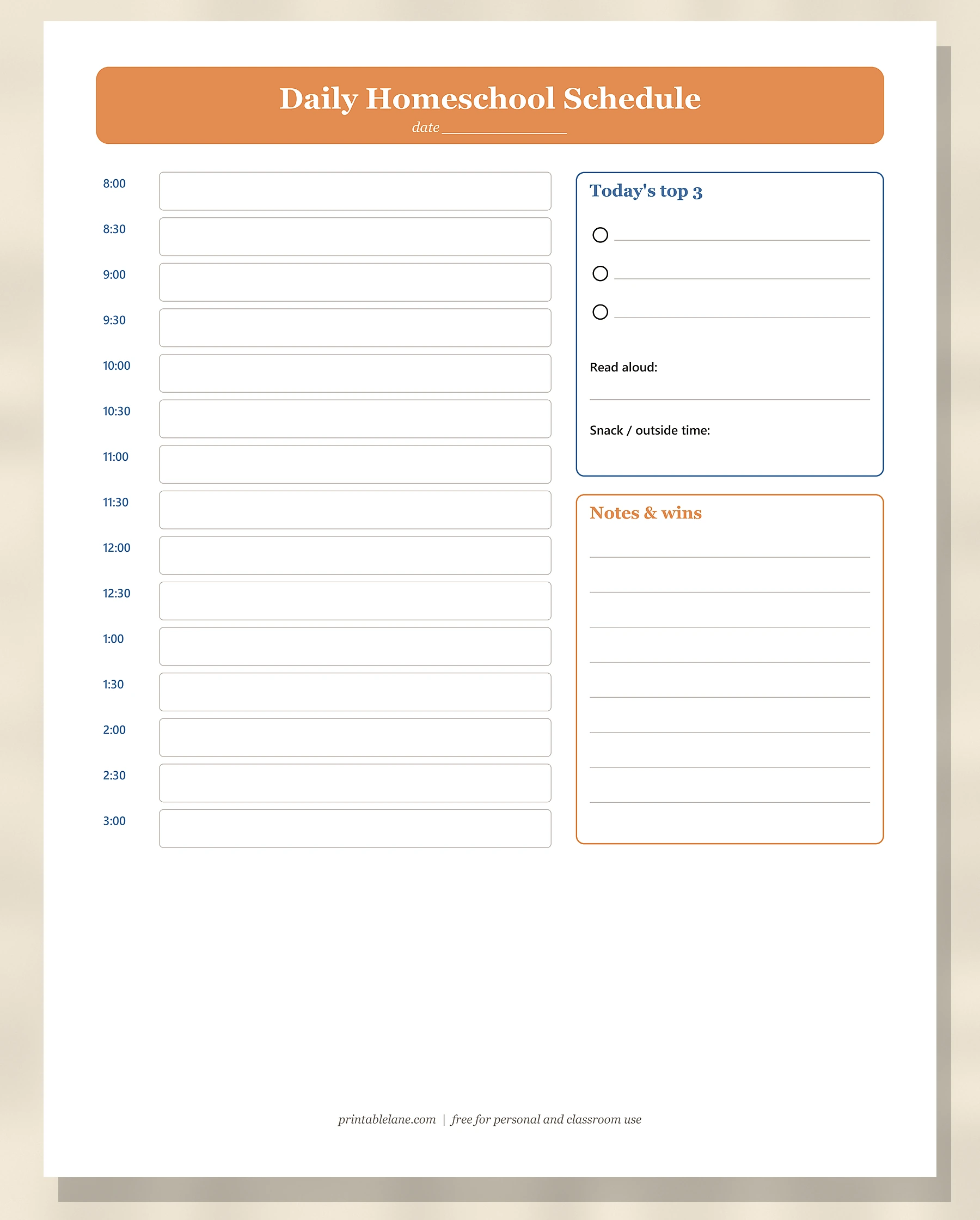
- Daily schedule: half-hour blocks from 8:00 to 3:00, a top 3 and a notes box.
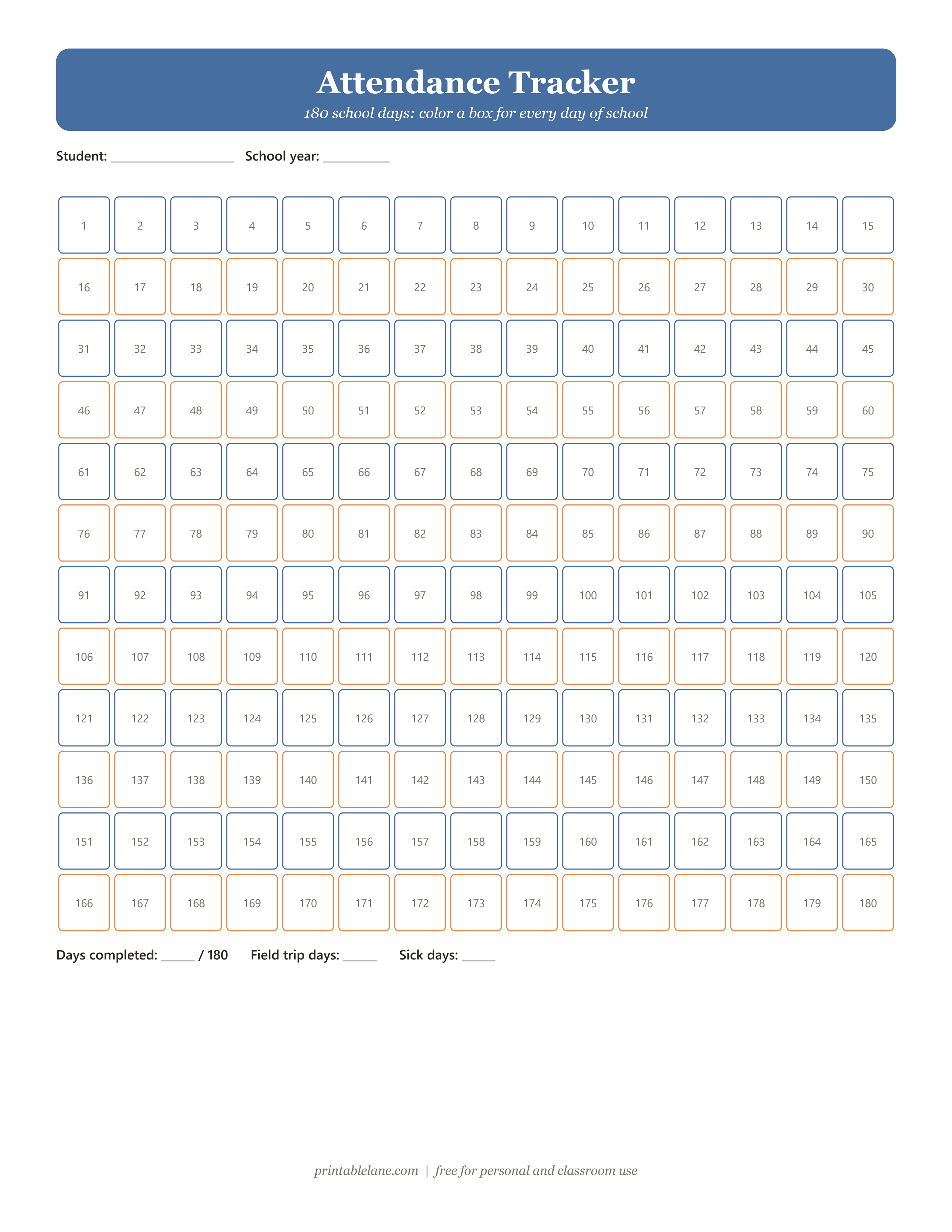
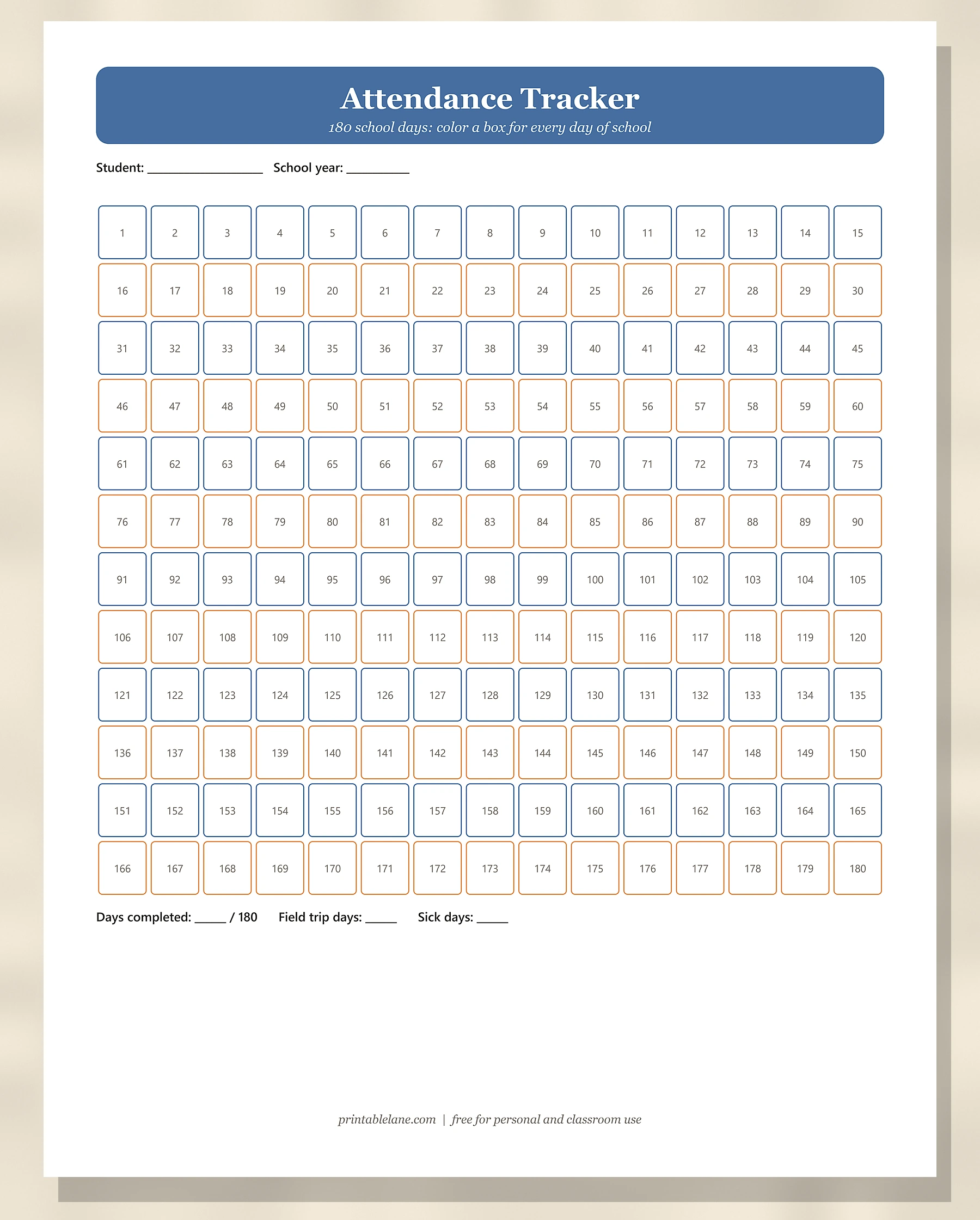
- Attendance tracker: 180 numbered boxes to color, one per school day.
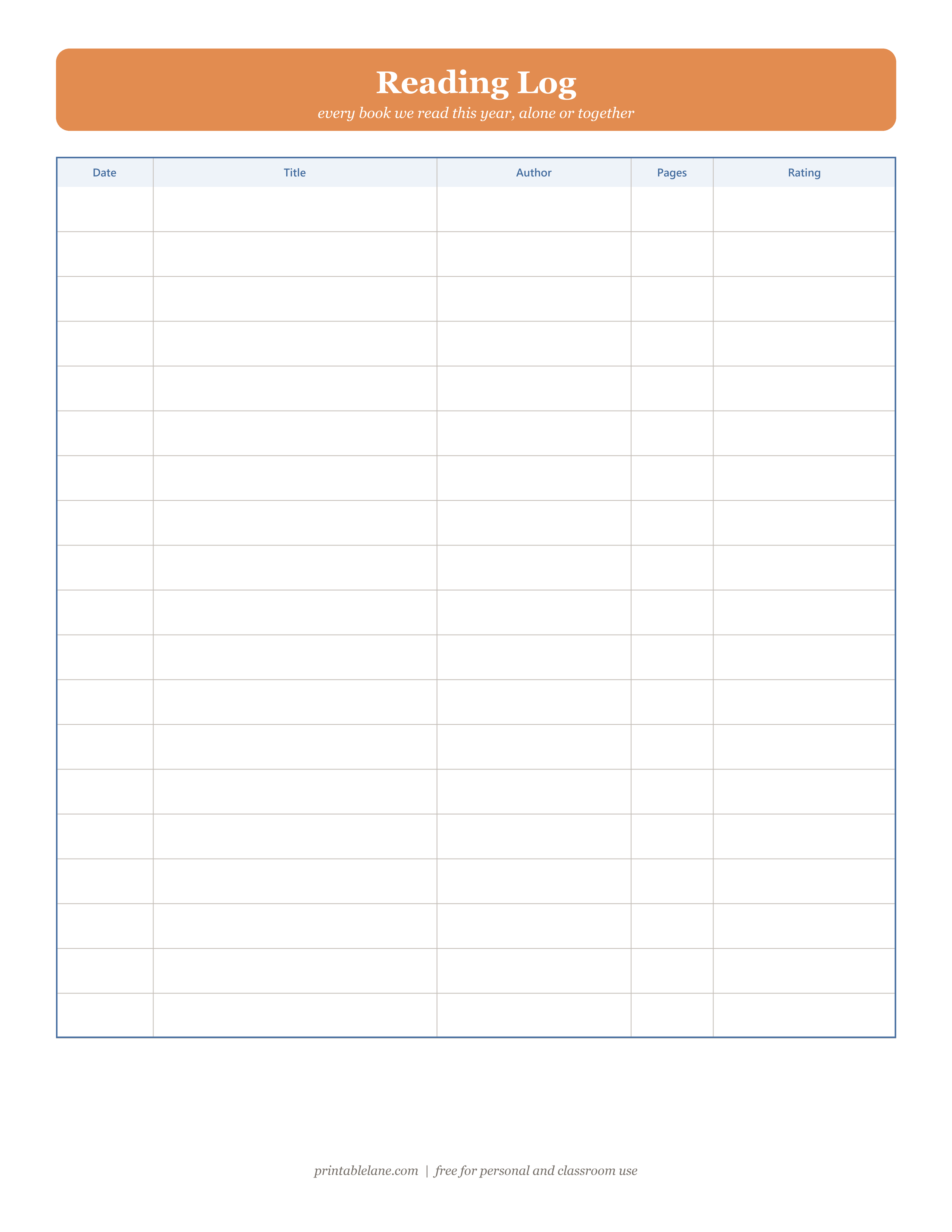
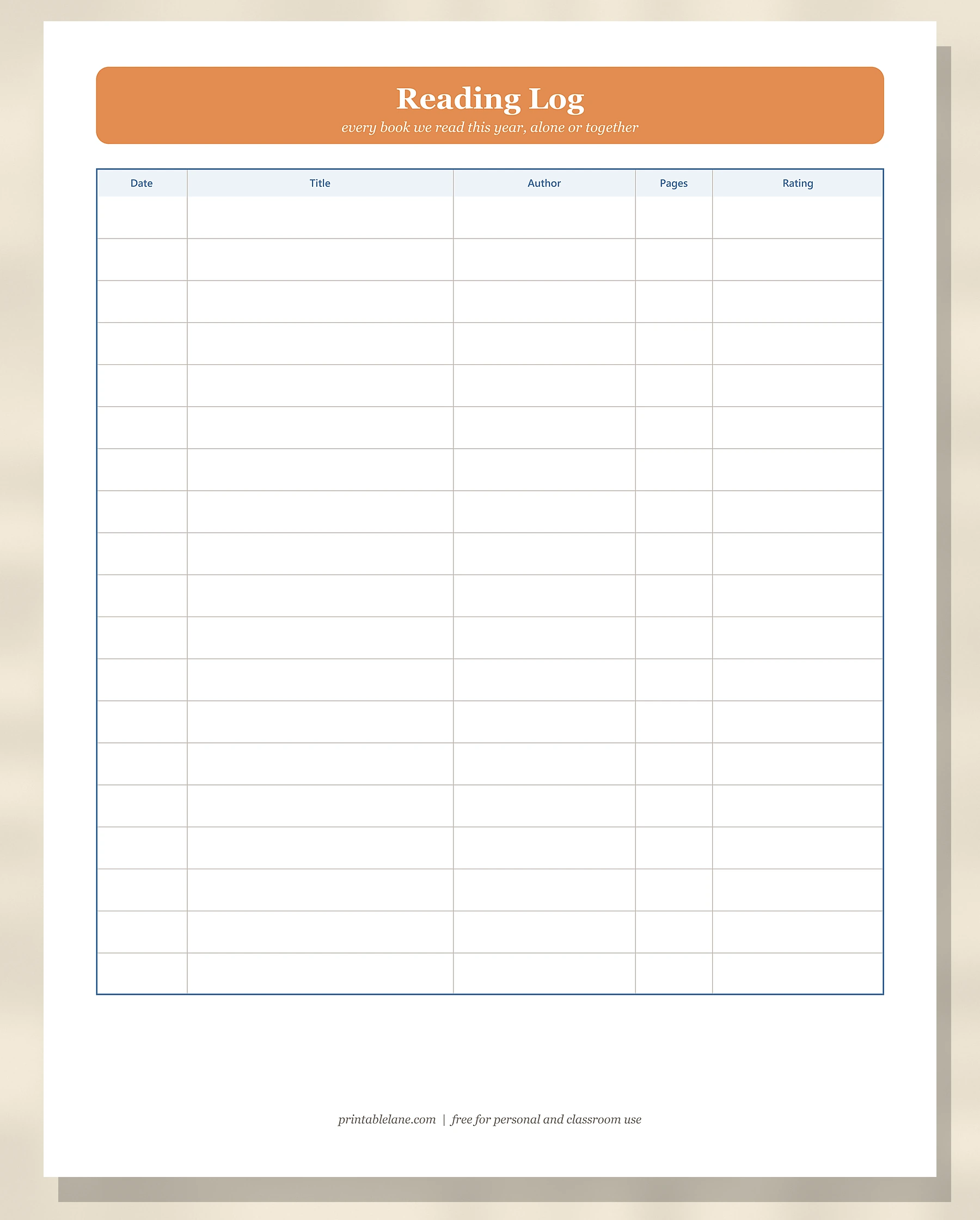
- Reading log: title, author, pages and a rating.
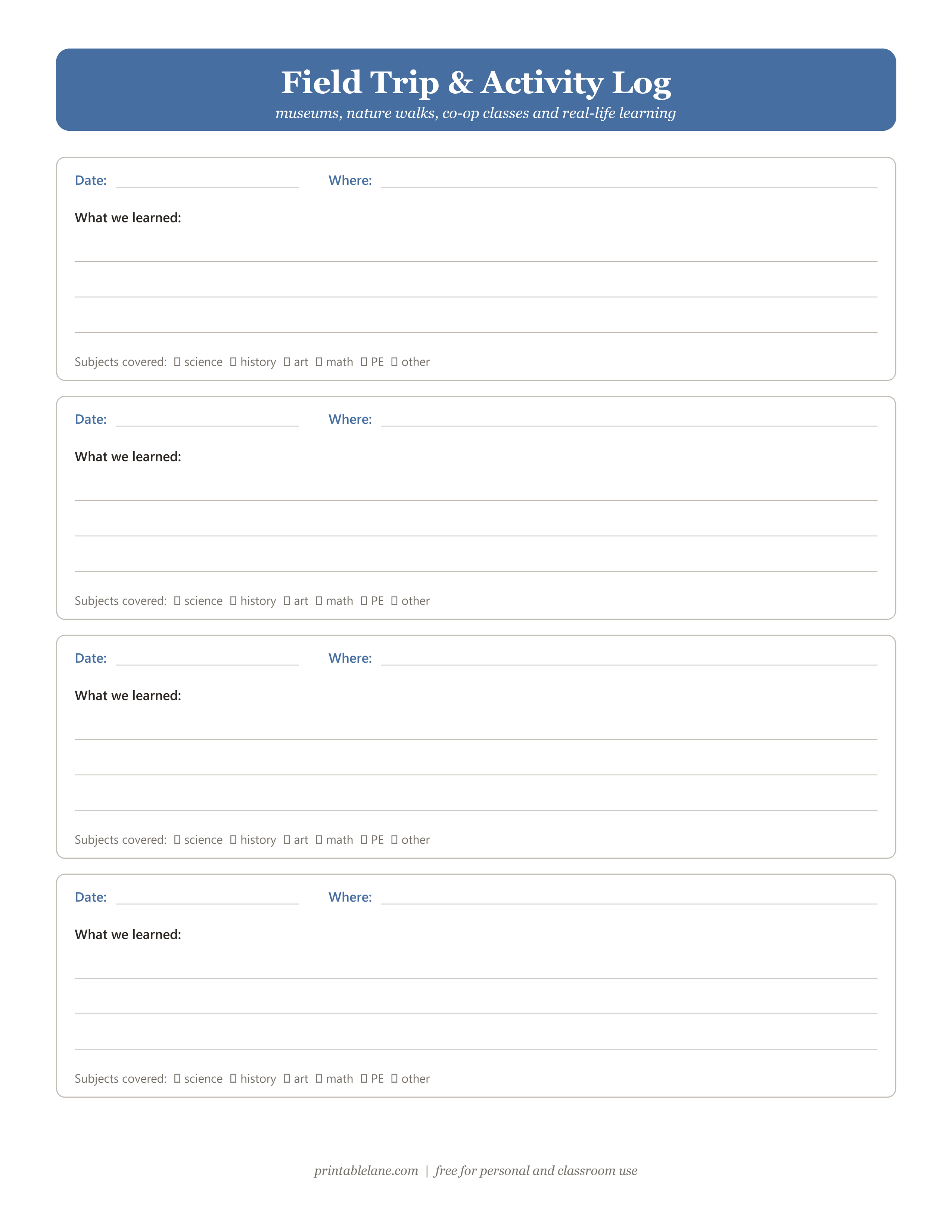
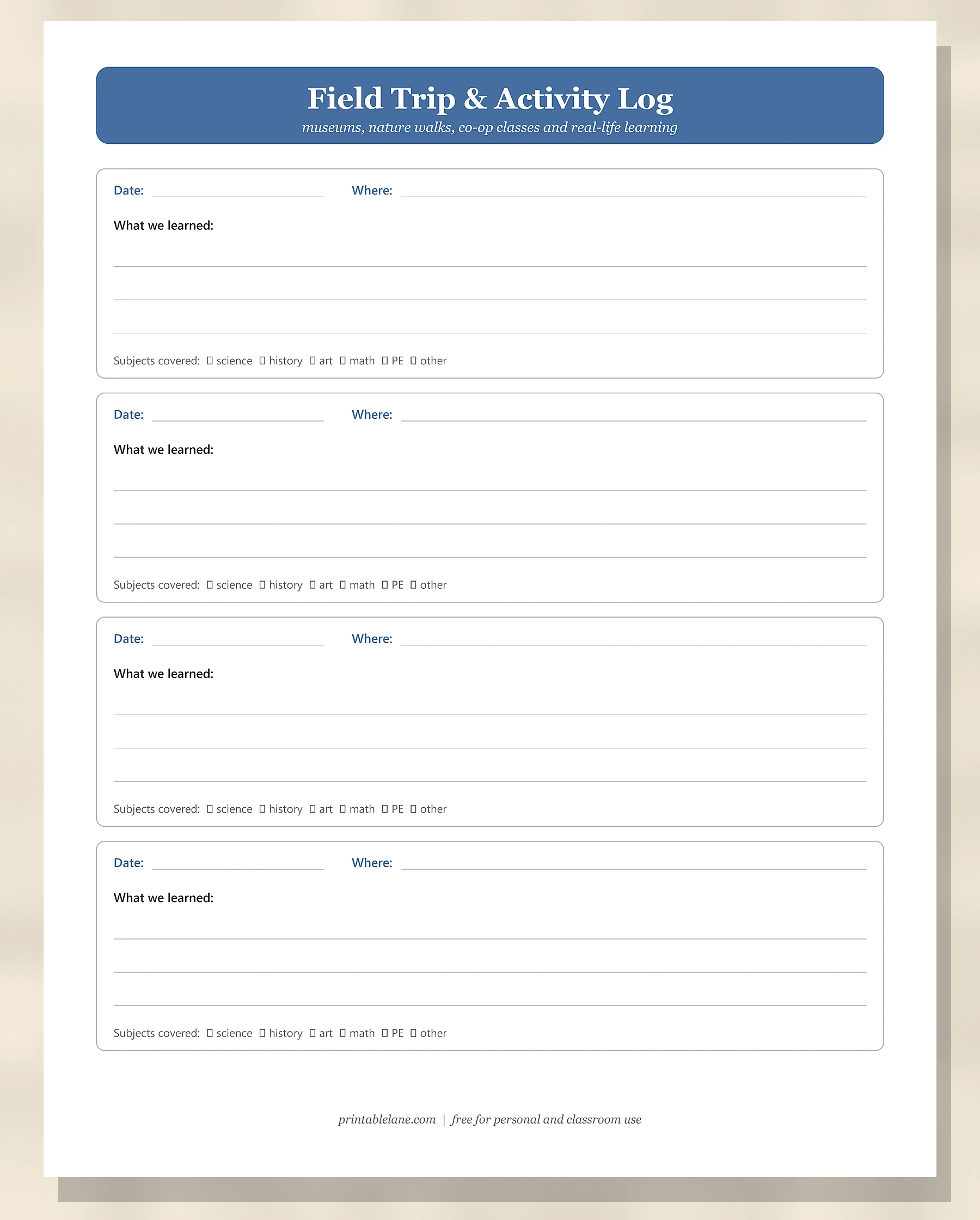
- Field trip and activity log: where you went, what you learned and which subjects it covered.
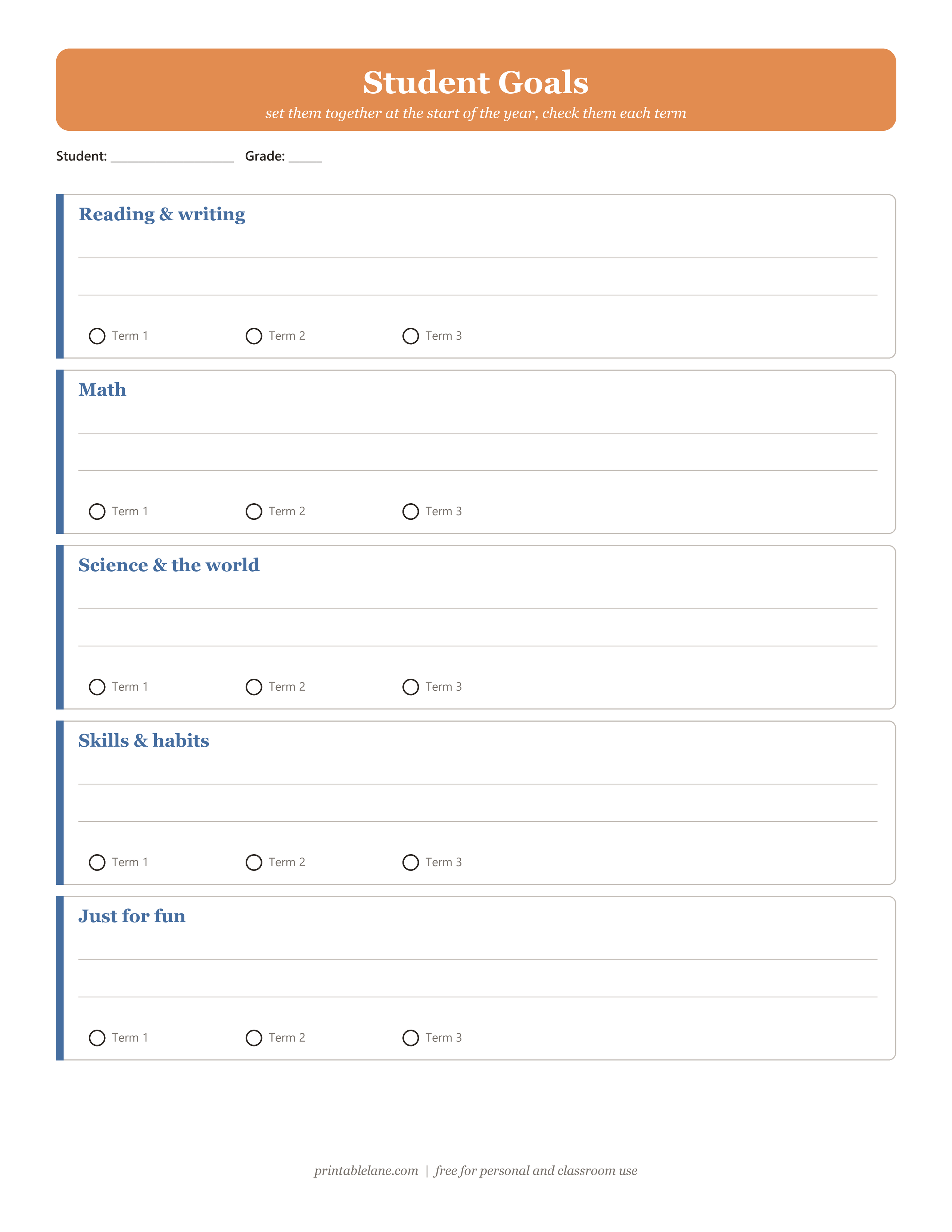
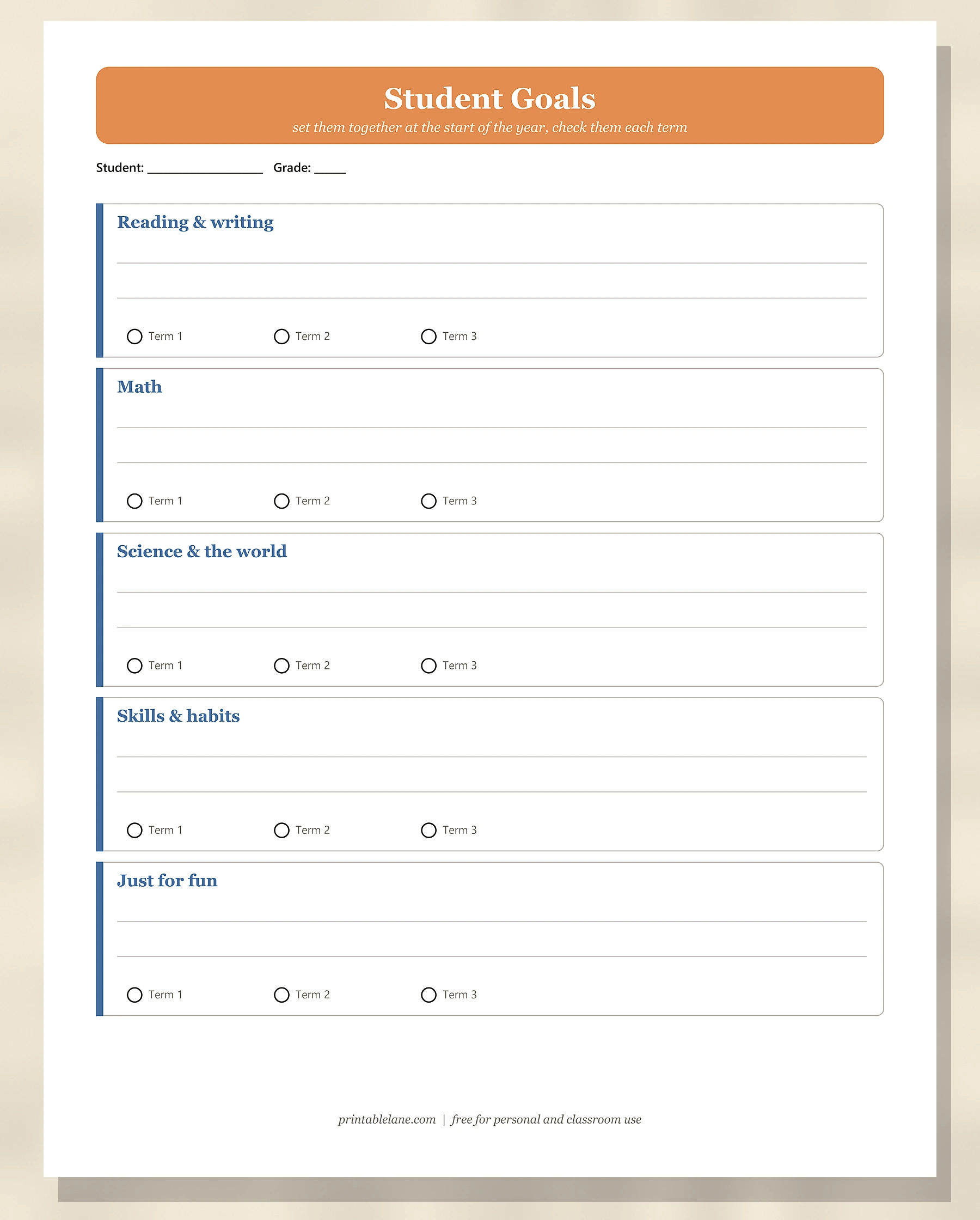
- Student goals: five areas with a check-in for each term.
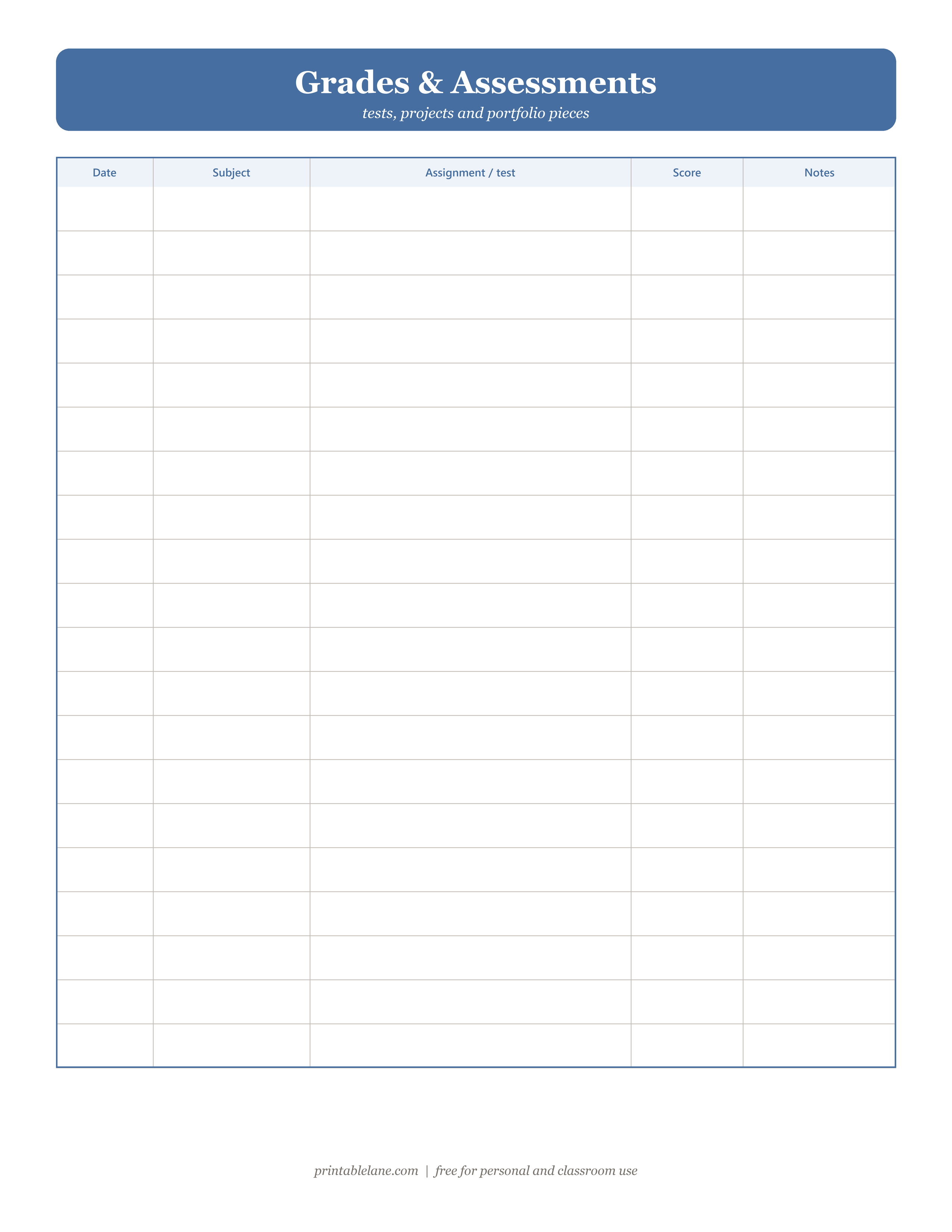
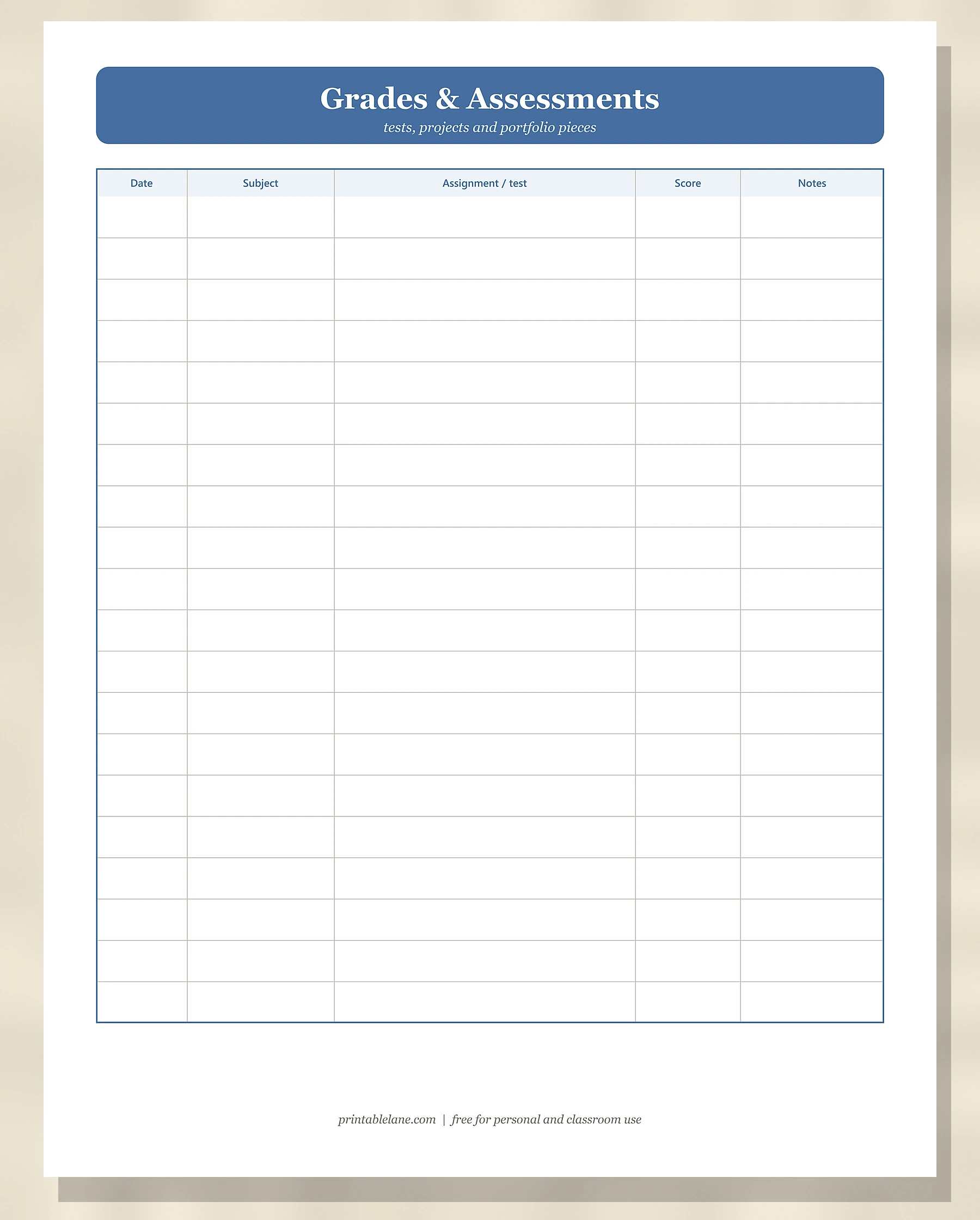
- Grades and assessments: tests, projects and portfolio pieces.
How to set up your homeschool binder
- Before the year starts: fill in the year at a glance with holidays, co-op days and planned breaks.
- List your subjects and curriculum on the subjects page. Decide how many days a week each one gets.
- Plan one week at a time. On Sunday evening, fill in the weekly lesson planner. Do not plan the whole year in detail; plans change.
- Use the daily schedule only on days that need structure, like co-op days or a new routine.
- Track as you go: color an attendance box at the end of each school day, and add books to the reading log the day you finish them.
- Review each term: look at the goals page with your child and celebrate what went well.
The weekly lesson planner, in practice
Write subjects down the left column (math, reading, writing, science, history, art…). In each box, write the lesson in a few words: “Math: lesson 24, fractions”, “Science: plant cell, draw diagram”. Leave Friday lighter for catch-up, a field trip or a project. When a lesson is done, tick it; when it moves, draw an arrow to the next day. At the end of the week, the page itself becomes your record of what you did.
A sample homeschool day
Every family’s rhythm is different, but here is one simple day that fits the daily schedule page: 8:30 morning basket (read-aloud, poem, calendar), 9:00 math, 9:45 snack and outside time, 10:15 reading and writing, 11:00 science or history, alternating days, 12:00 lunch and free play, 1:00 art, music or a project, 2:00 independent reading and tidy up. Younger kids may be done by lunch; older kids may add a foreign language or an online class in the afternoon. Write your own rhythm on the daily page once, then copy it into the weekly planner.
Tracking attendance and records
Many states and programs use 180 school days as a standard year, though the rules for homeschool attendance and records differ a lot from state to state. Check your own state’s requirements. The attendance page has 180 numbered boxes in rows of fifteen; color one each school day and count field trip days too if your state allows it. Together with the reading log, the field trip log and the grades page, it gives you a simple portfolio if you ever need to show your work.
Goals and grades
The goals page has five areas: reading and writing, math, science and the world, skills and habits, and one just for fun. Set one or two goals in each with your child at the start of the year, and tick each term when you check in. The grades page is for tests, projects and portfolio pieces; even if you do not give letter grades, a list of finished work is lovely to look back on.
Download single pages
Click a link to open the full-size PNG. The PDF with all pages and a cover is in the download box.
- School year at a glance (PNG)
- Subjects and curriculum (PNG)
- Weekly lesson planner (PNG)
- Daily schedule (PNG)
- Attendance tracker (PNG)
- Reading log (PNG)
- Field trip log (PNG)
- Student goals (PNG)
- Grades and assessments (PNG)
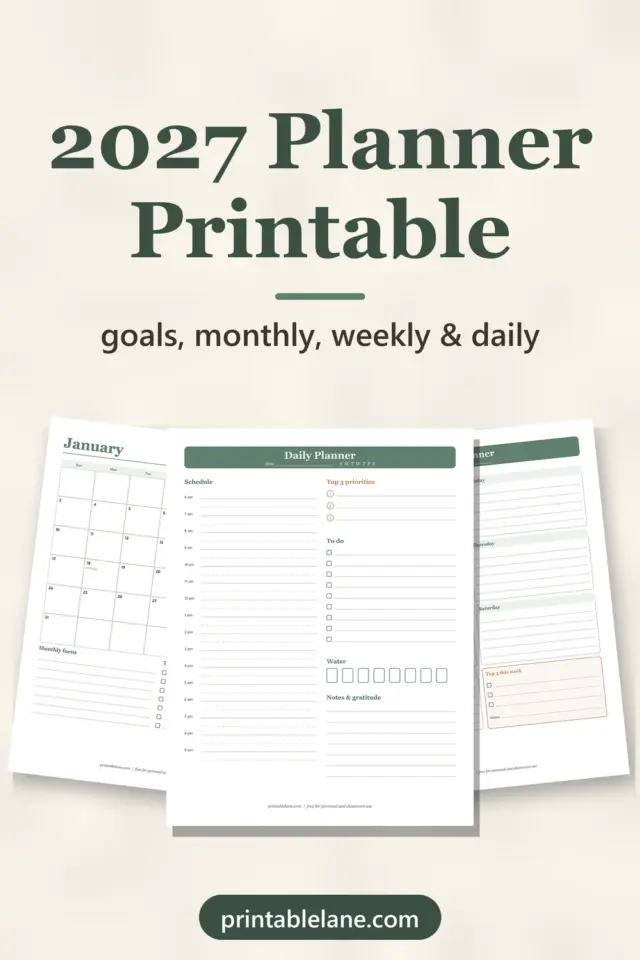
More for learning at home: alphabet tracing worksheets, cursive handwriting worksheets, kindergarten word searches, a multiplication chart and the 2027 planner for parents.
Frequently asked questions
Is this homeschool planner dated?
No. Every page is undated, so you can start in any month and reuse it every year.
How many school days should a homeschool year have?
Many states and programs use 180 days, but requirements differ by state. Check your own state’s homeschool rules.
Can I use this planner for more than one child?
Yes. Use one weekly planner for the family and print a separate attendance tracker, reading log and goals page for each child.
What is the best way to organize homeschool printables?
A 1-inch binder with tabs works well: year and subjects at the front, weekly pages in the middle and the trackers and logs at the back.