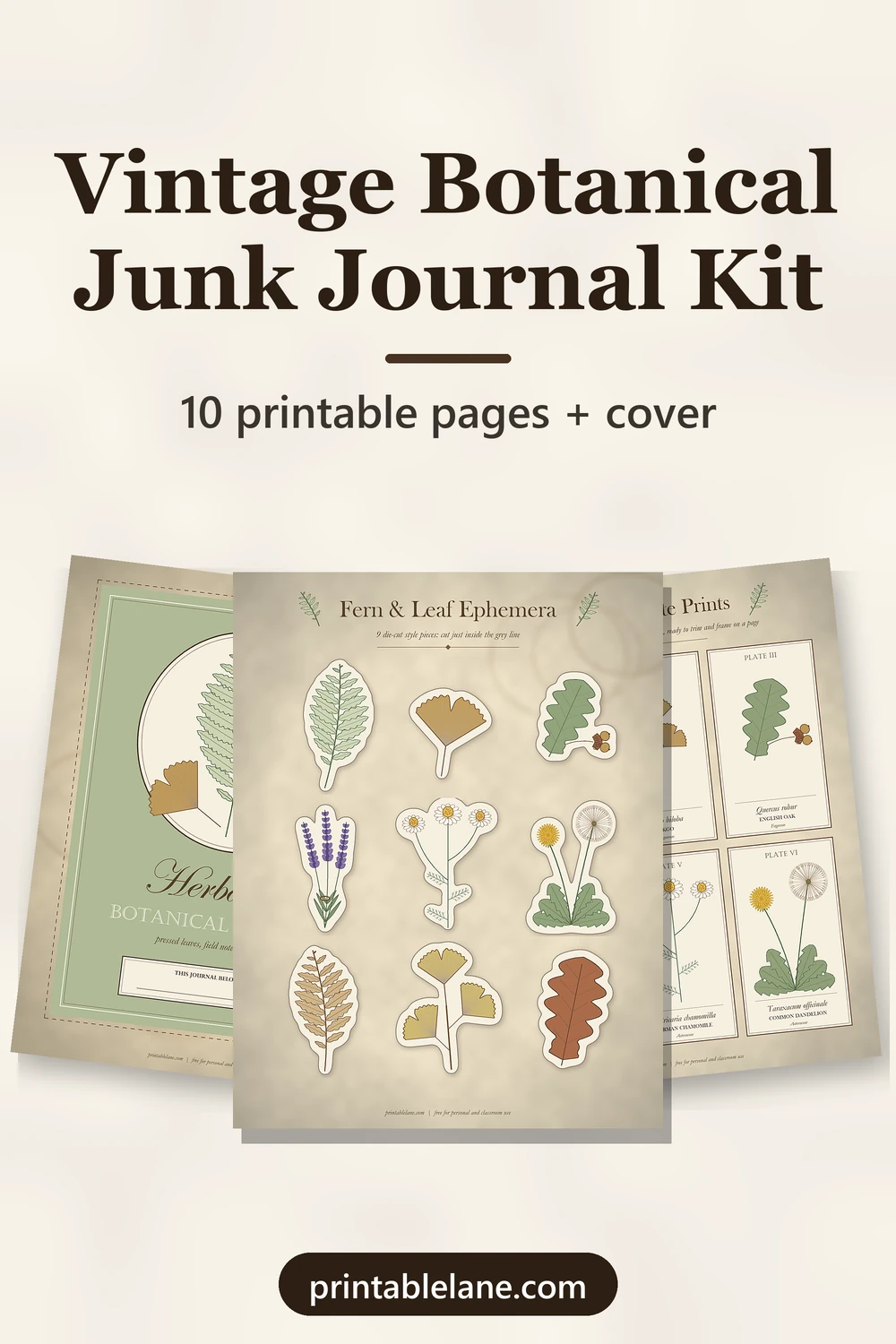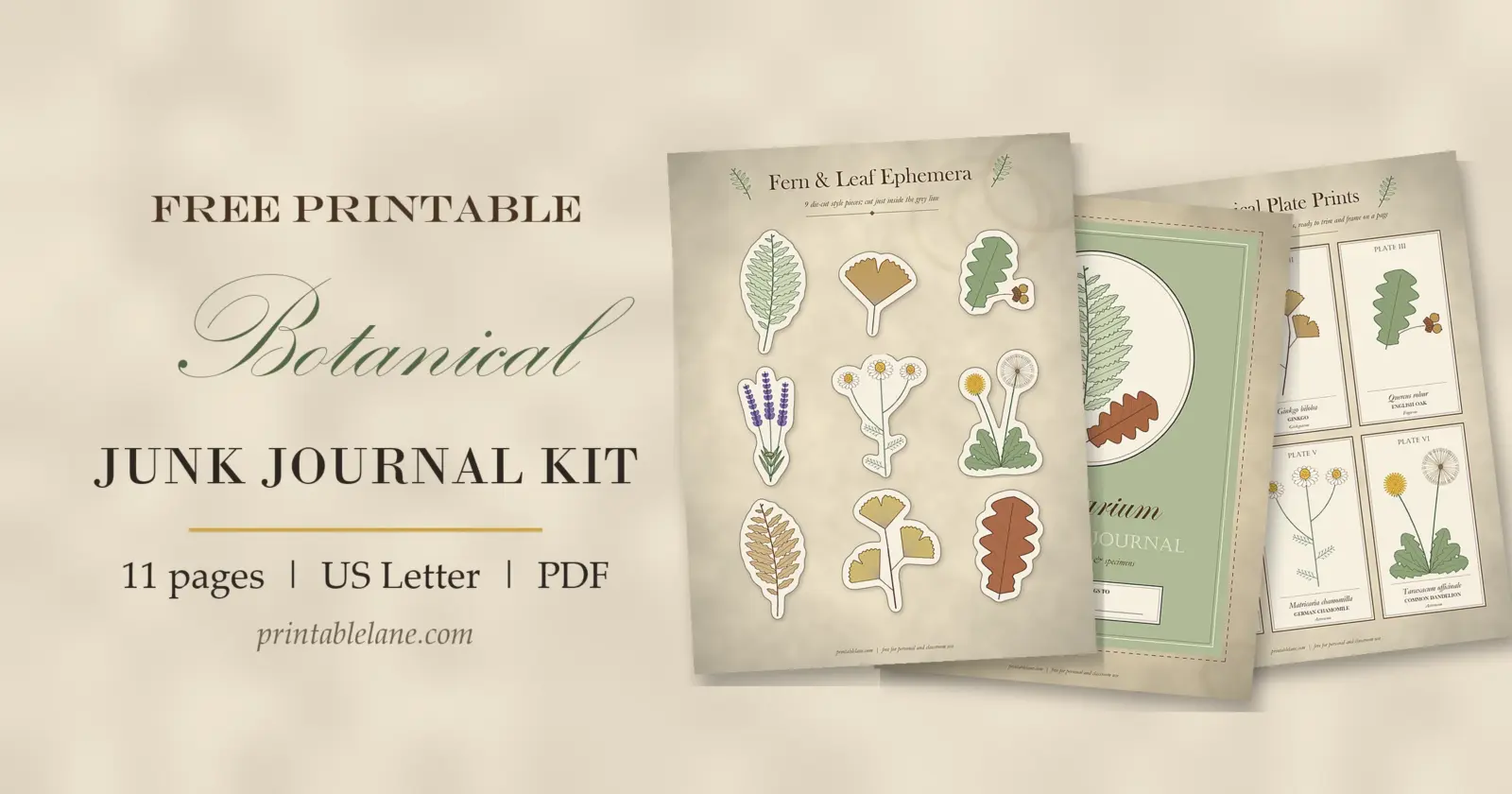
A vintage botanical junk journal borrows from 2 old sources: hand-tinted plates in 19th-century flora books and the mounted sheets of a herbarium. This kit keeps to sepia ink, sage, ochre and a little rust, with Latin names in italic.
Each printed Latin name matches its plant: the male fern is labeled Dryopteris filix-mas, not a word that only sounds old. Use the pages for a nature journal, a pressed leaf album or a stitched junk journal.
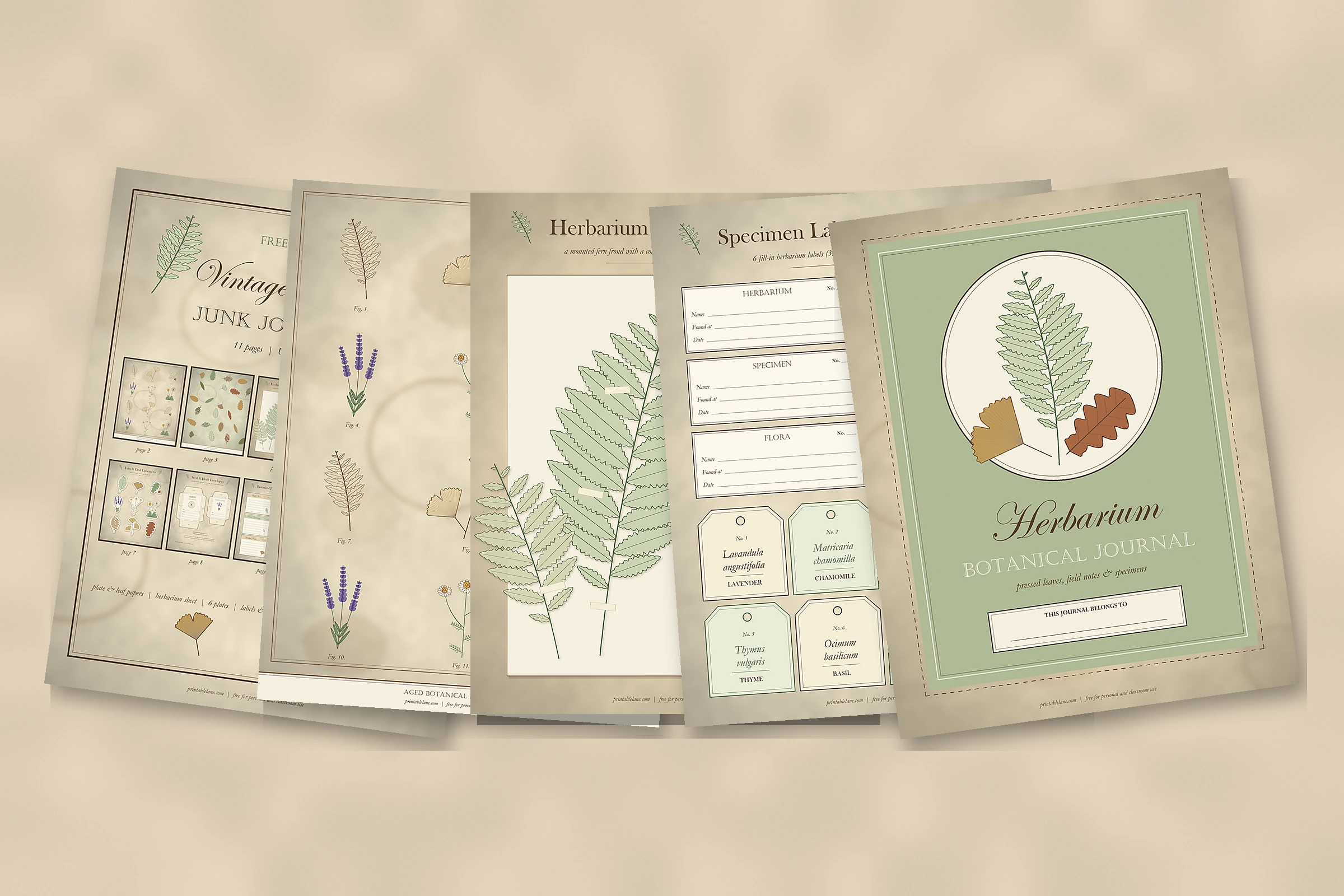
What’s in the PDF (11 pages)
- Page 1: cover with thumbnails of the 10 kit pages.
- Page 2: Aged Botanical Plate Paper (12 numbered figures).
- Page 3: Pressed Leaf Paper.
- Page 4: Herbarium Specimen Sheet.
- Page 5: Botanical Plate Prints (6 plates).
- Page 6: Specimen Labels & Herb Tags (6 labels, 8 tags).
- Page 7: Fern & Leaf Ephemera (9 die-cut style pieces).
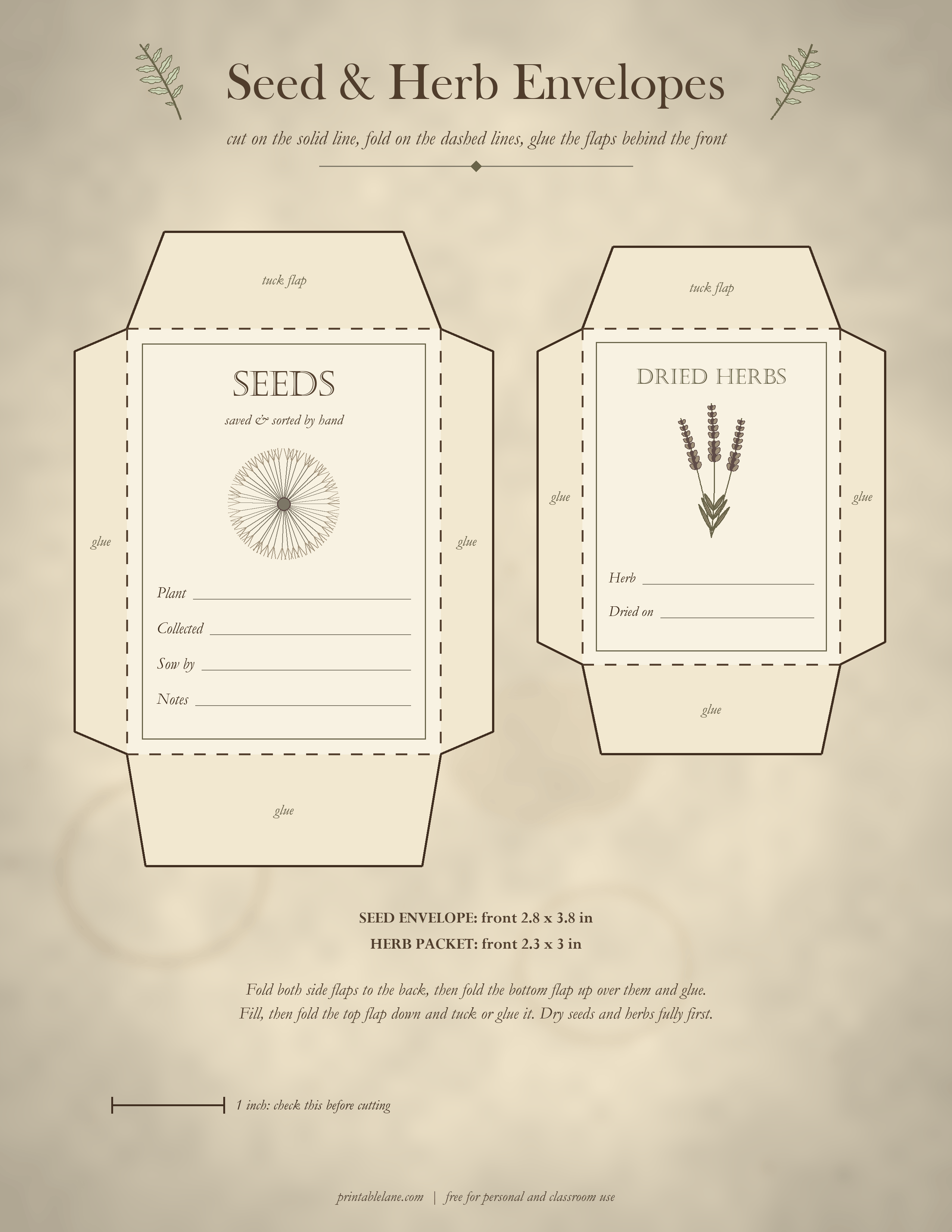
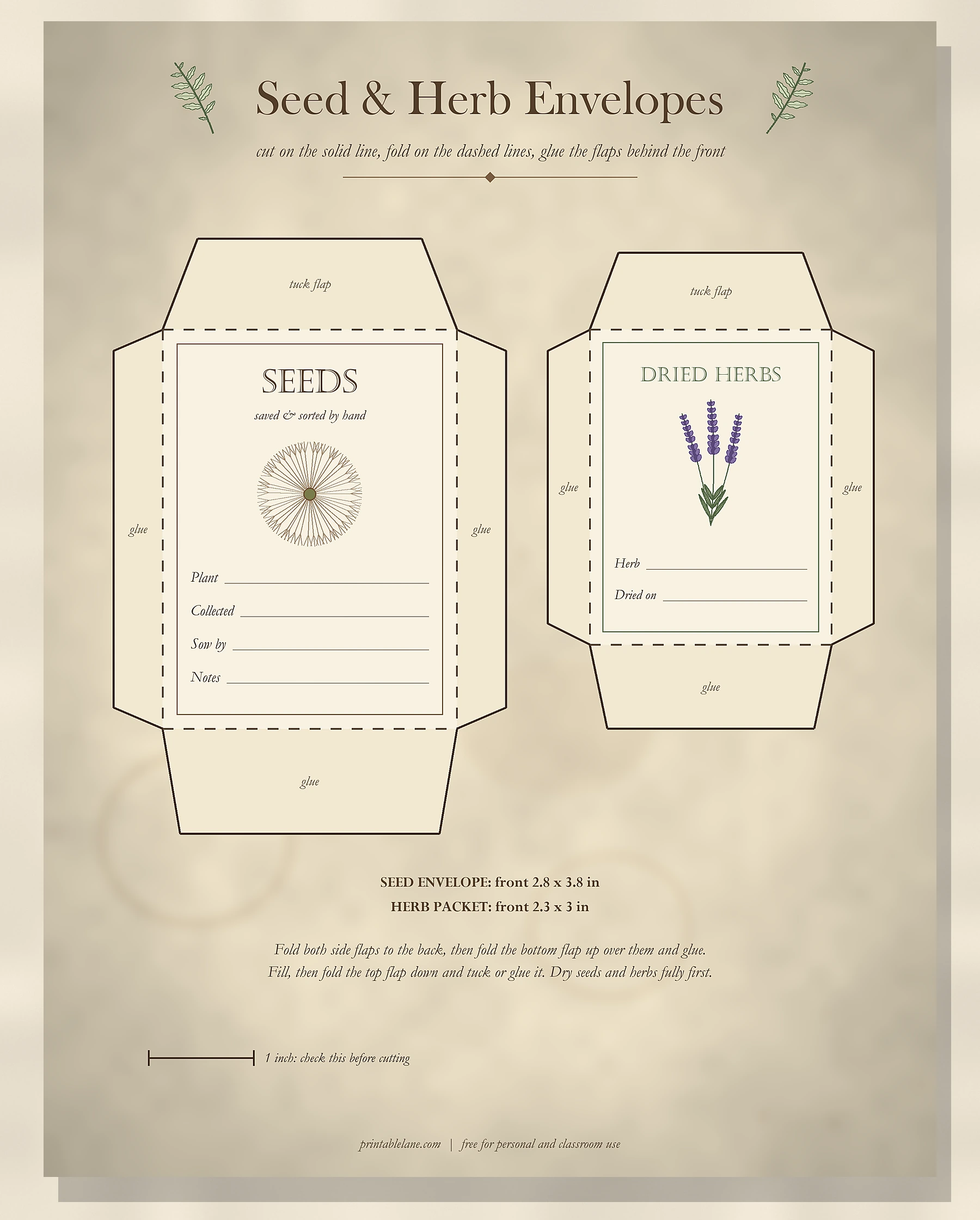
- Page 8: Seed & Herb Envelopes (2 templates).
- Page 9: Botanical Journaling Cards (6 cards).
- Page 10: Botanist’s Ledger.
- Page 11: Botanical Journal Cover.
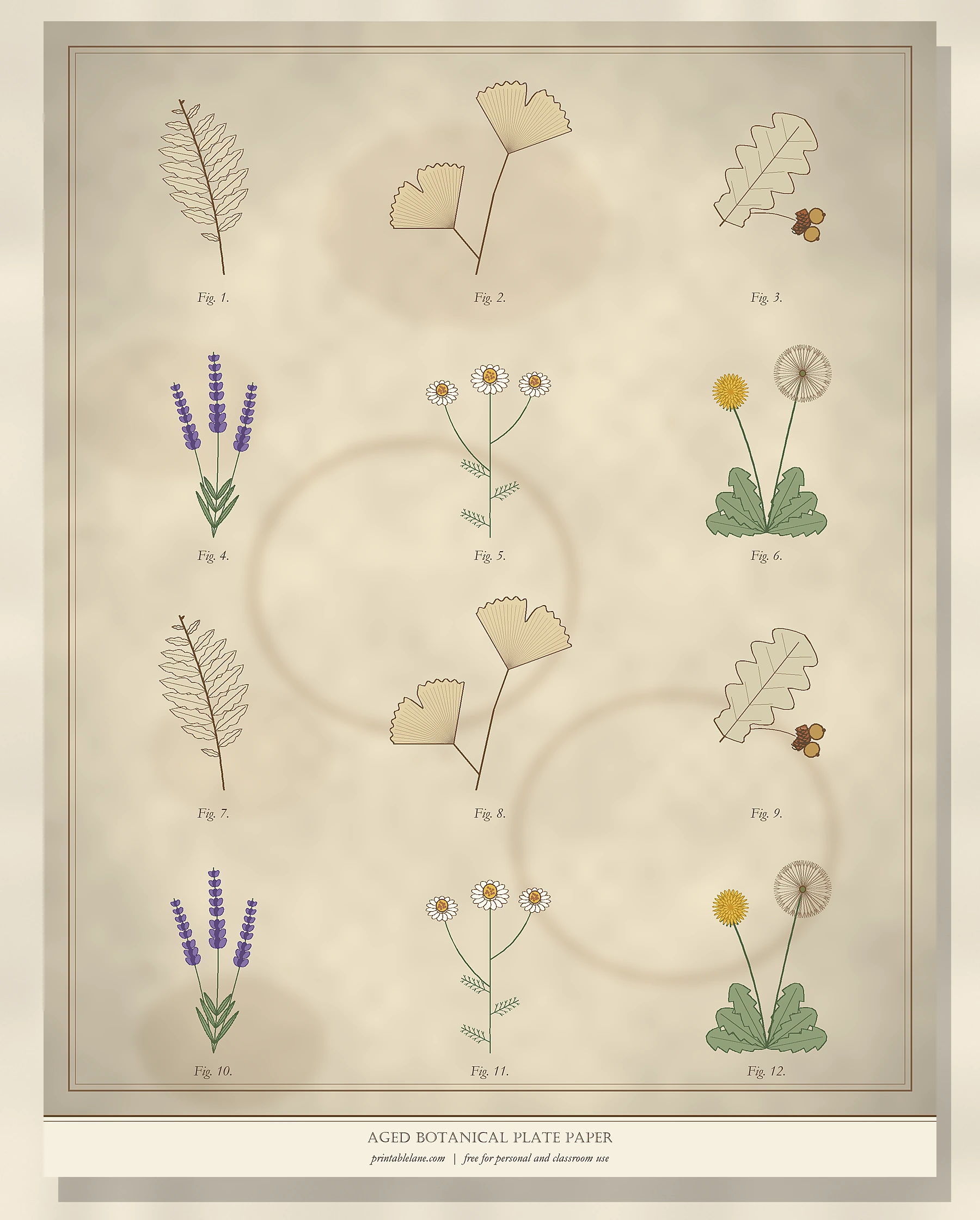
Aged Botanical Plate Paper
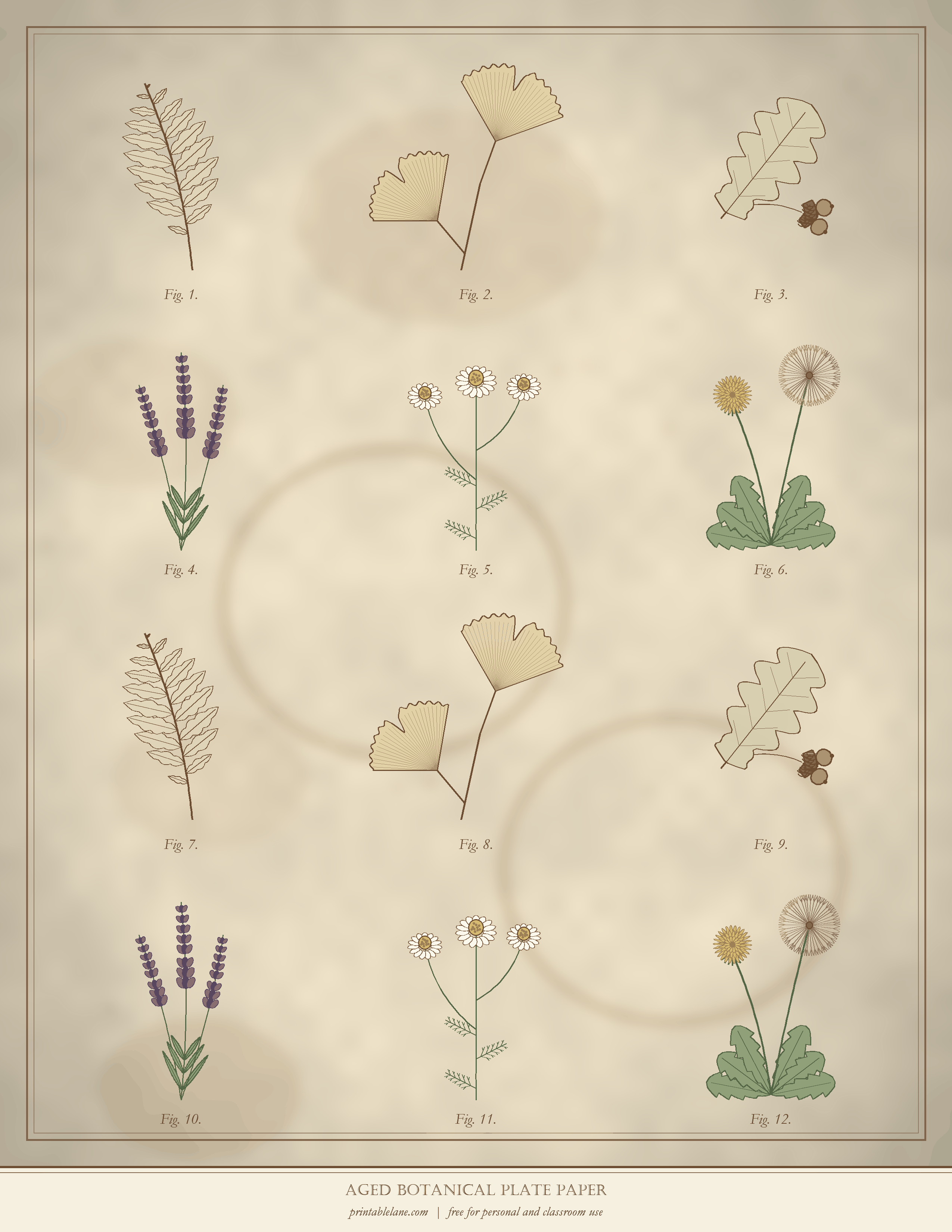
PDF page 2 is a stained sheet in a double ruled border with 12 sepia drawings, Fig. 1 to Fig. 12. 6 subjects appear twice: a fern frond, 2 ginkgo leaves on a twig, an oak leaf with acorns, 3 lavender stems, a branched chamomile and a dandelion with a flower and a seed clock.
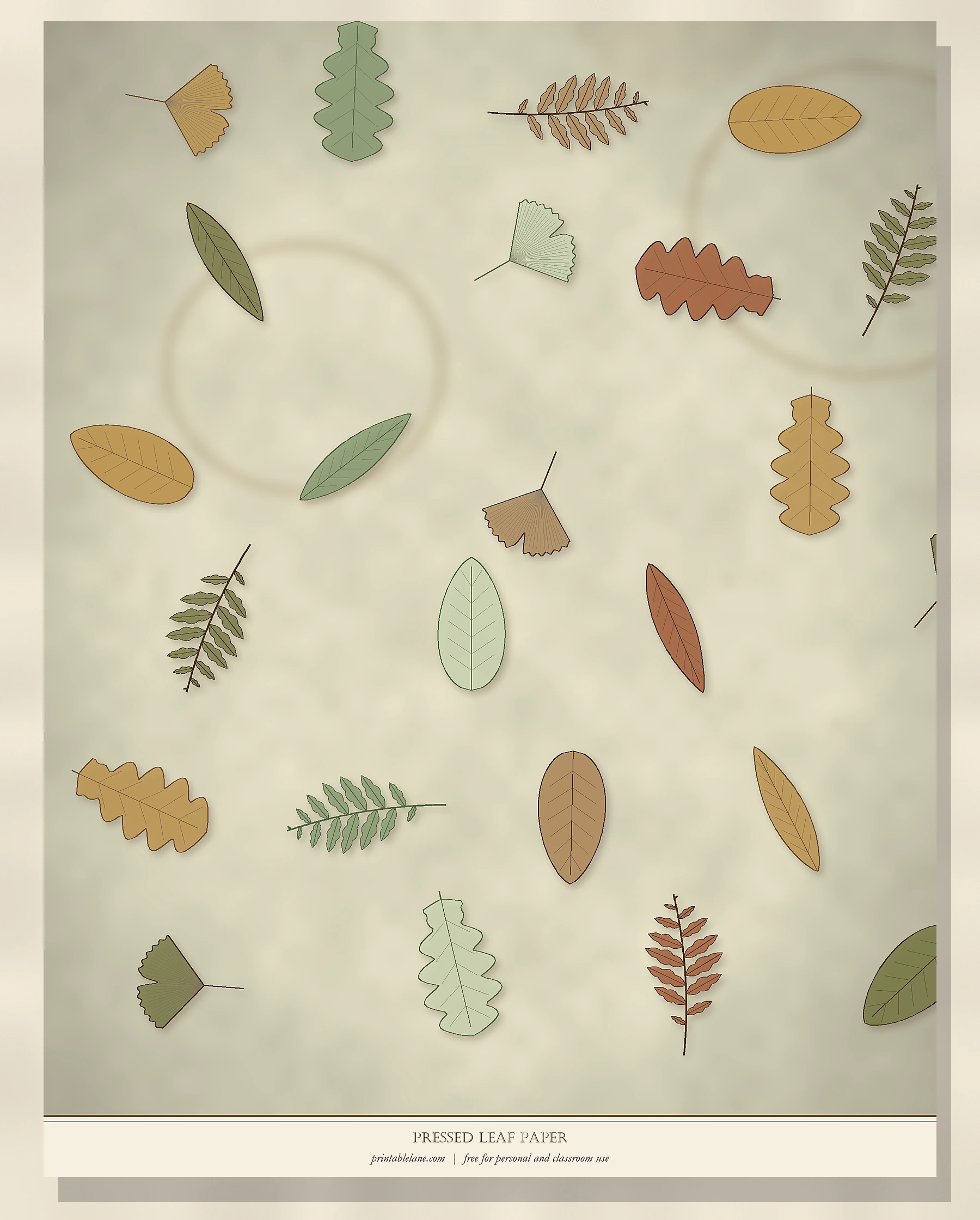
Pressed Leaf Paper
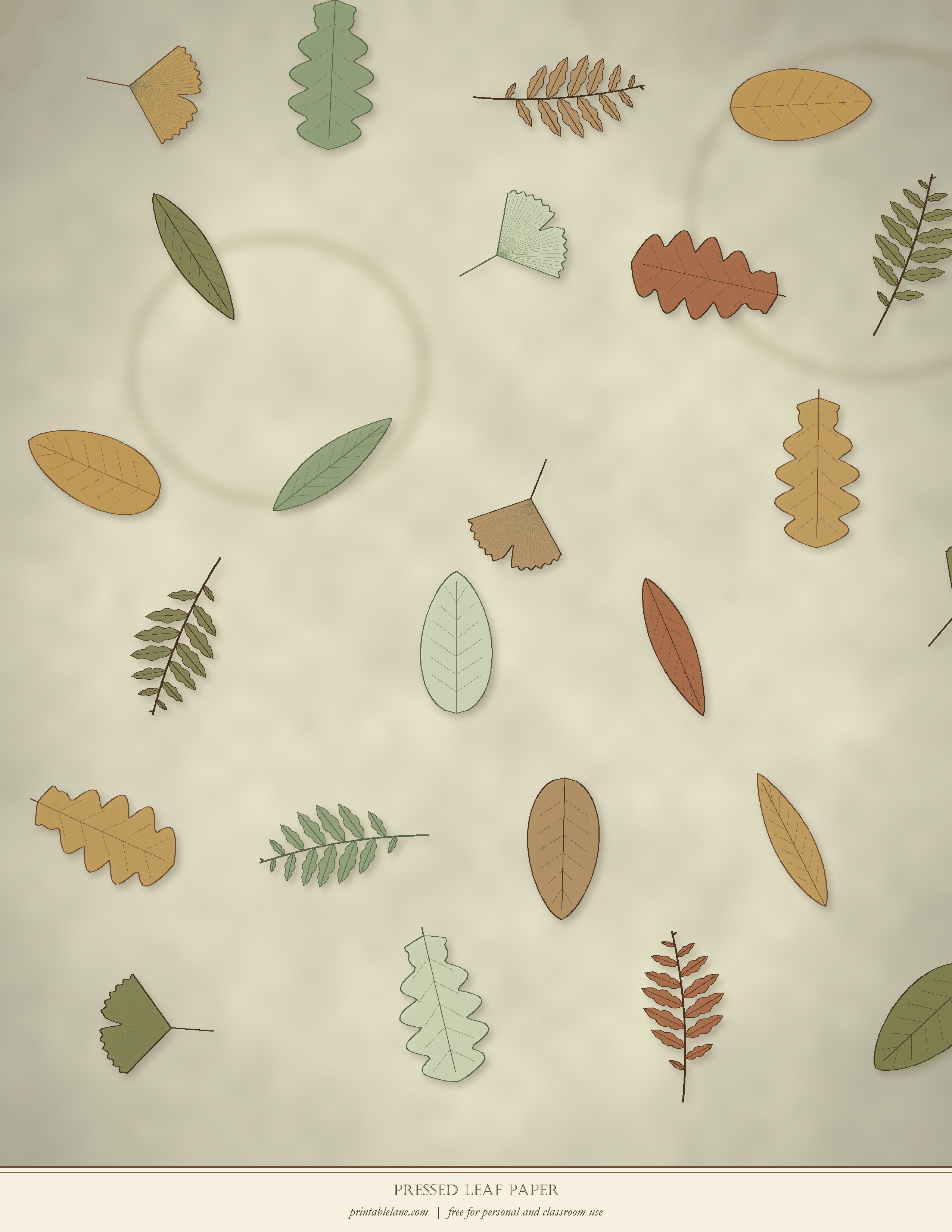
PDF page 3 scatters pressed-looking ginkgo, oak, fern, oval and narrow leaves over pale sage paper in ochre, rust, sage, olive and brown, each with a soft shadow.
Herbarium Specimen Sheet
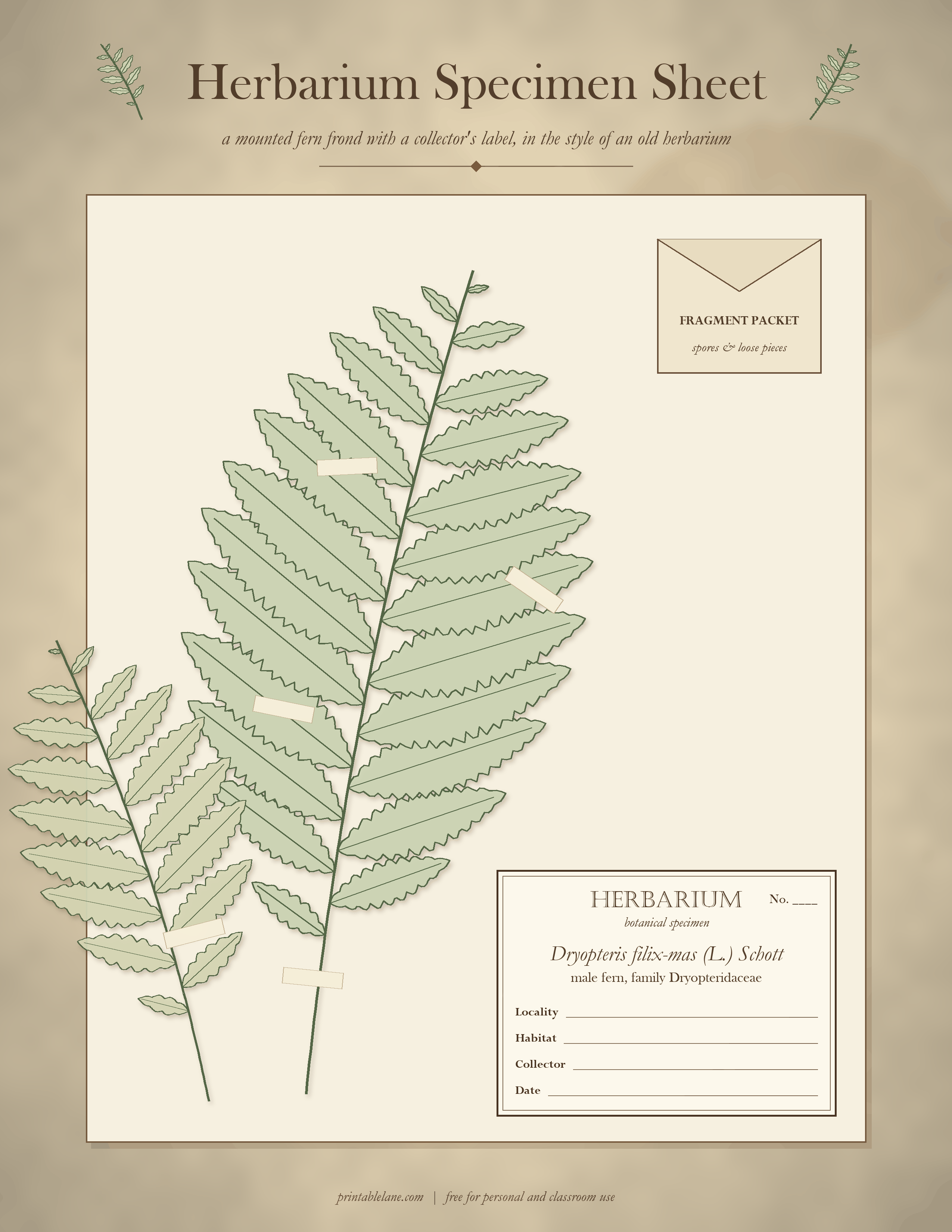
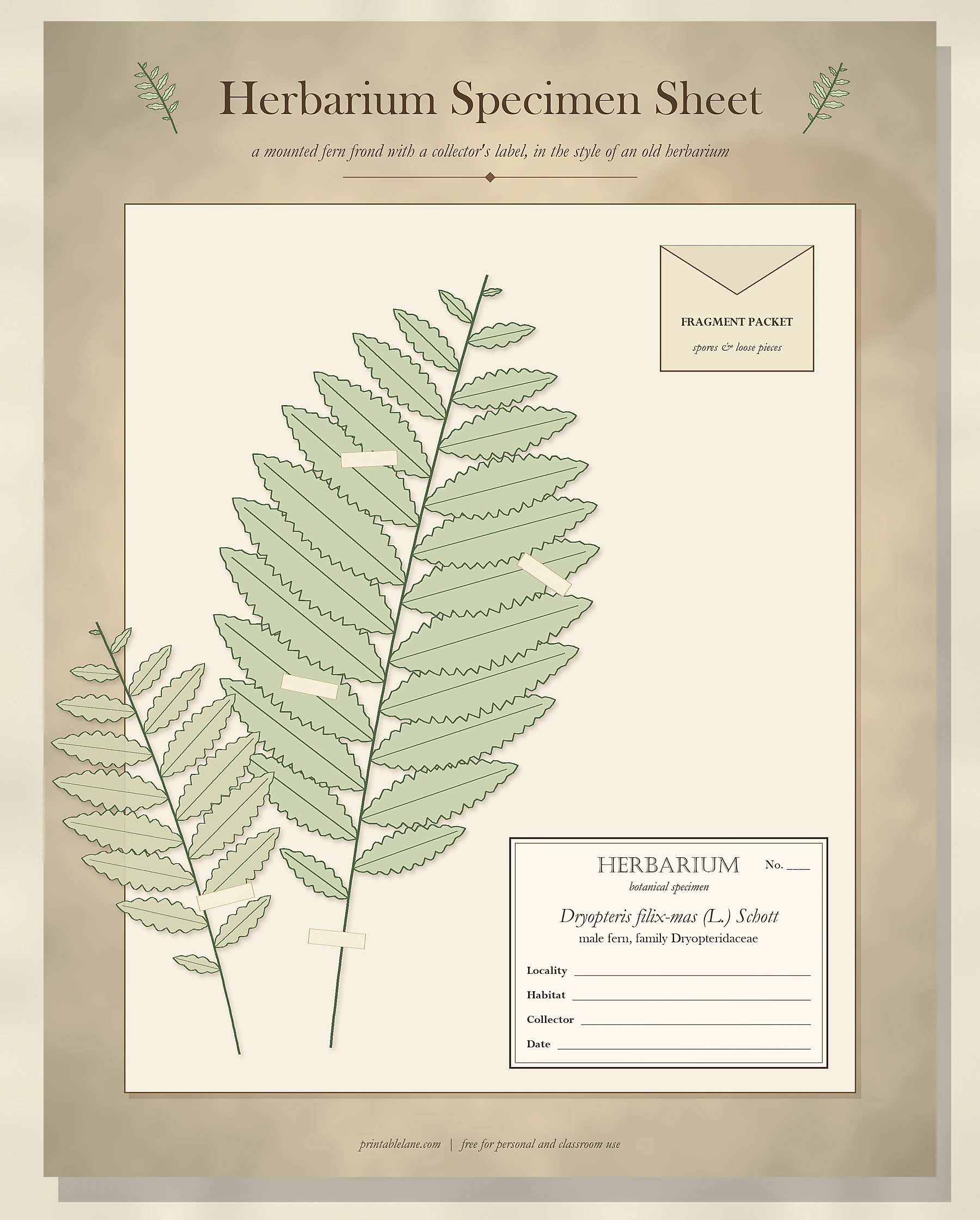
PDF page 4 follows a museum sheet layout: 2 fern fronds held down by 5 paper strips, a folded fragment packet for spores and loose pieces in the top corner, and a label reading HERBARIUM, Dryopteris filix-mas (L.) Schott, male fern, family Dryopteridaceae, with lines for Locality, Habitat, Collector and Date.
Botanical Plate Prints
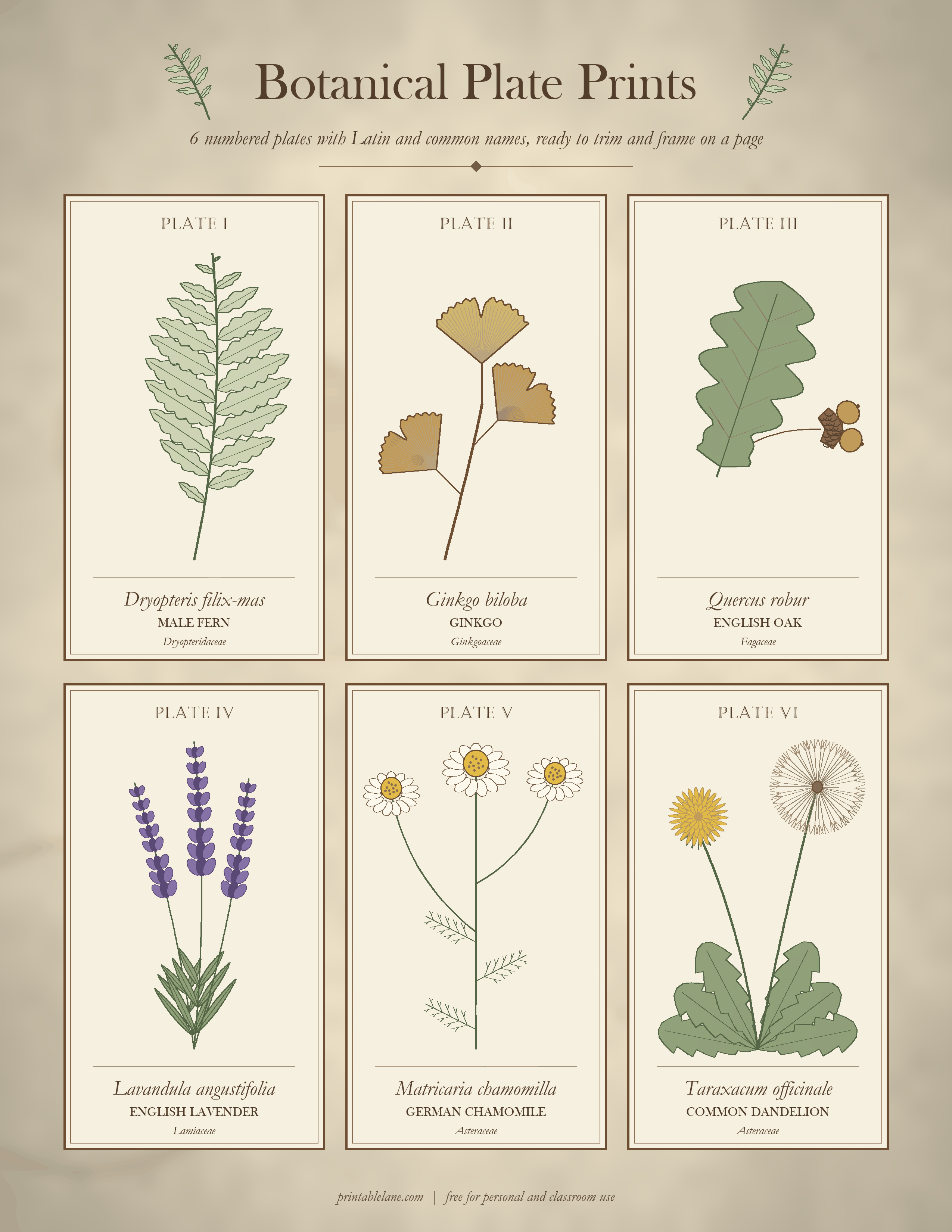
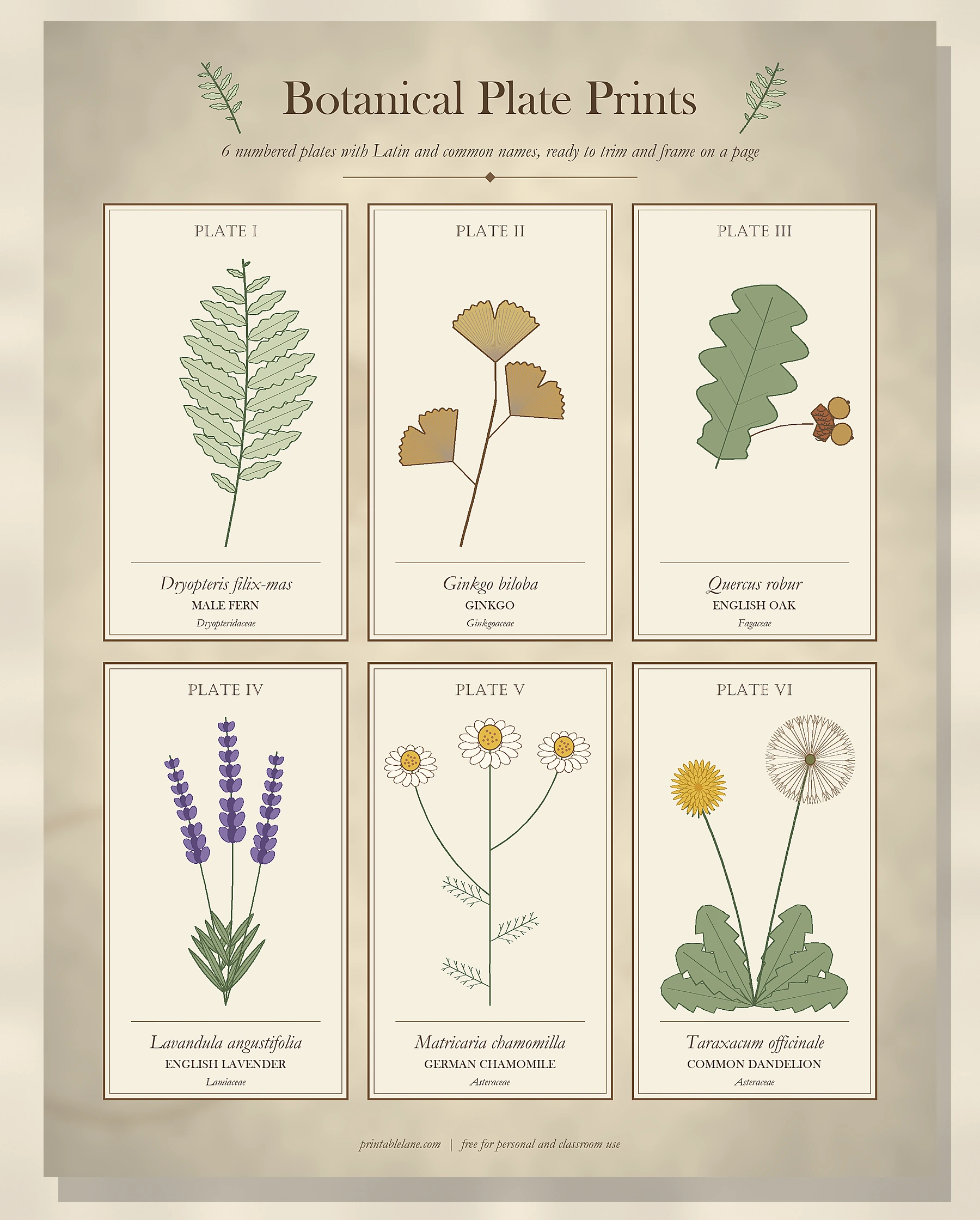
PDF page 5 holds 6 portrait plates (about 2.3 x 4.2 in), numbered PLATE I to VI. Each shows a single plant with its Latin name, common name and family: Dryopteris filix-mas (male fern), Ginkgo biloba (ginkgo), Quercus robur (English oak), Lavandula angustifolia (English lavender), Matricaria chamomilla (German chamomile) and Taraxacum officinale (common dandelion).
Specimen Labels & Herb Tags
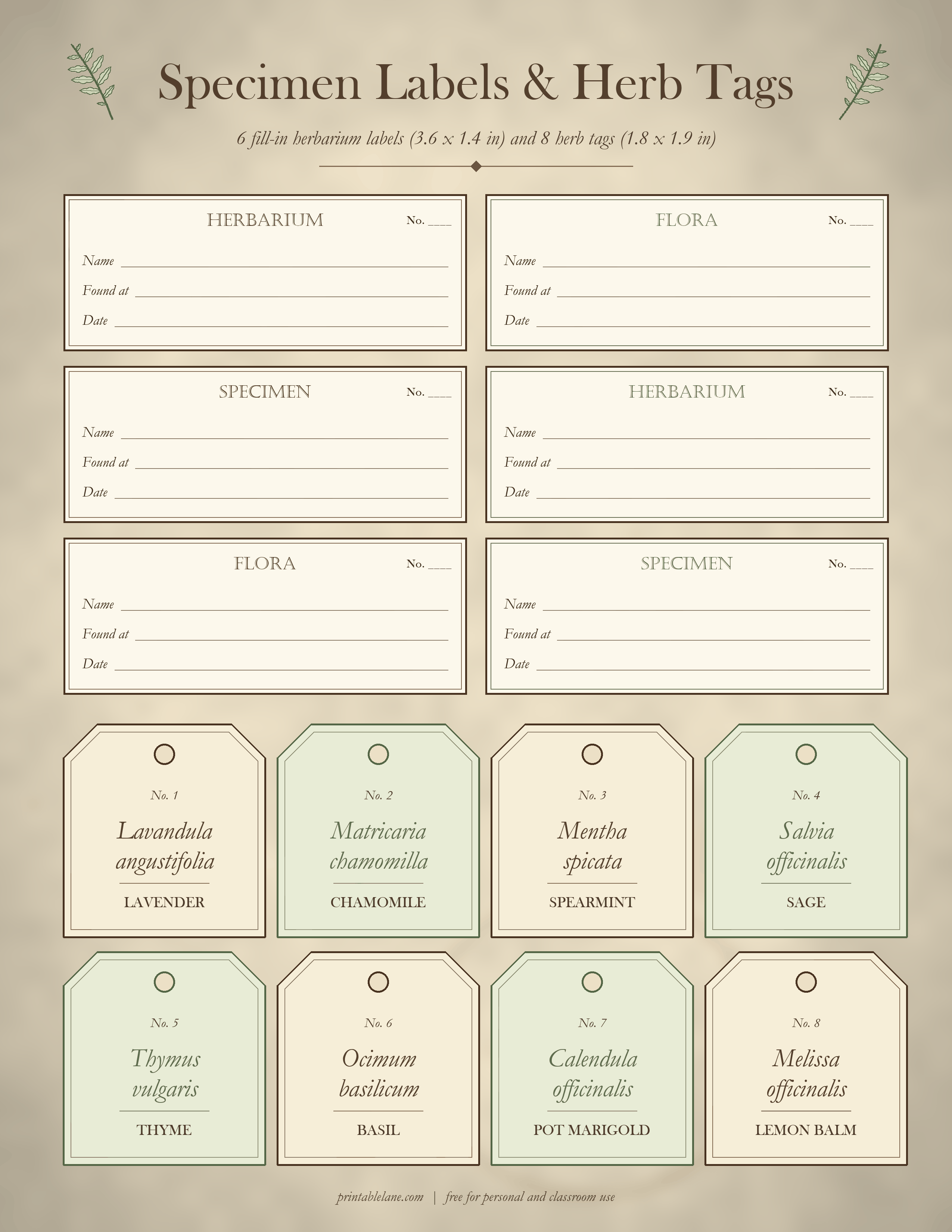
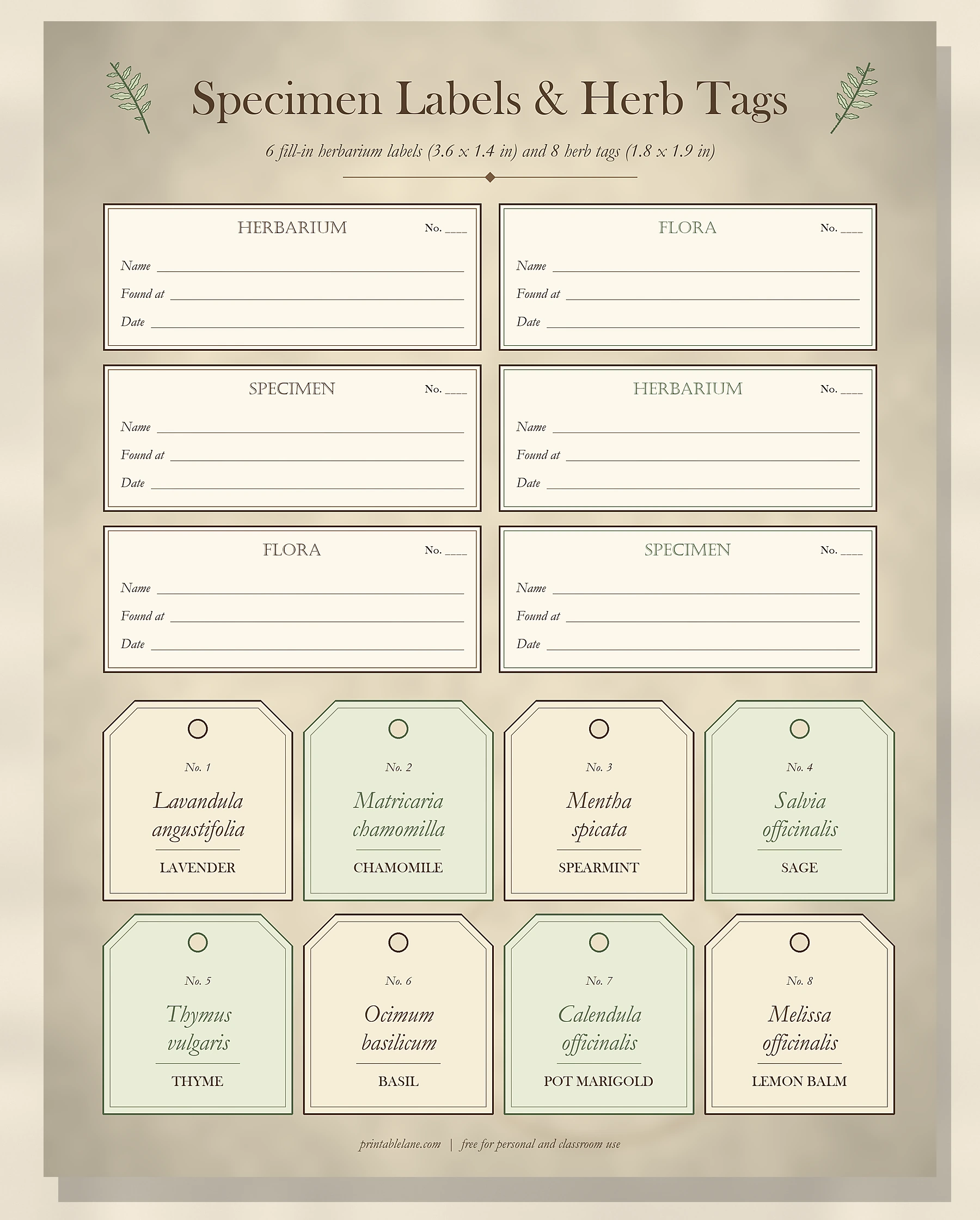
PDF page 6 has 6 fill-in herbarium labels (3.6 x 1.4 in) headed HERBARIUM, FLORA or SPECIMEN, each with No., Name, Found at and Date lines. Below sit 8 hang tags (1.8 x 1.9 in), No. 1 to No. 8, printed with Latin and common names: lavender, chamomile, spearmint, sage, thyme, basil, pot marigold and lemon balm.
Fern & Leaf Ephemera
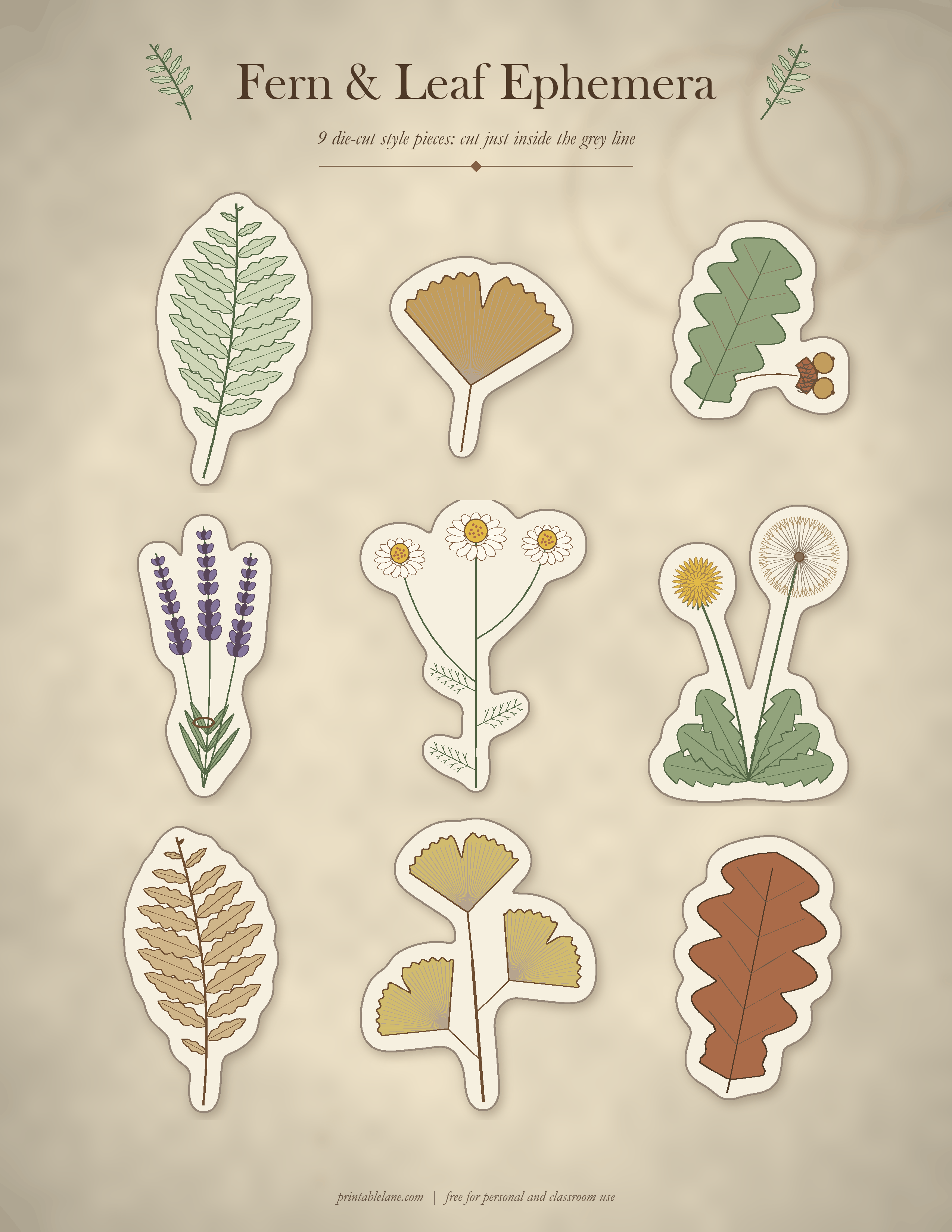
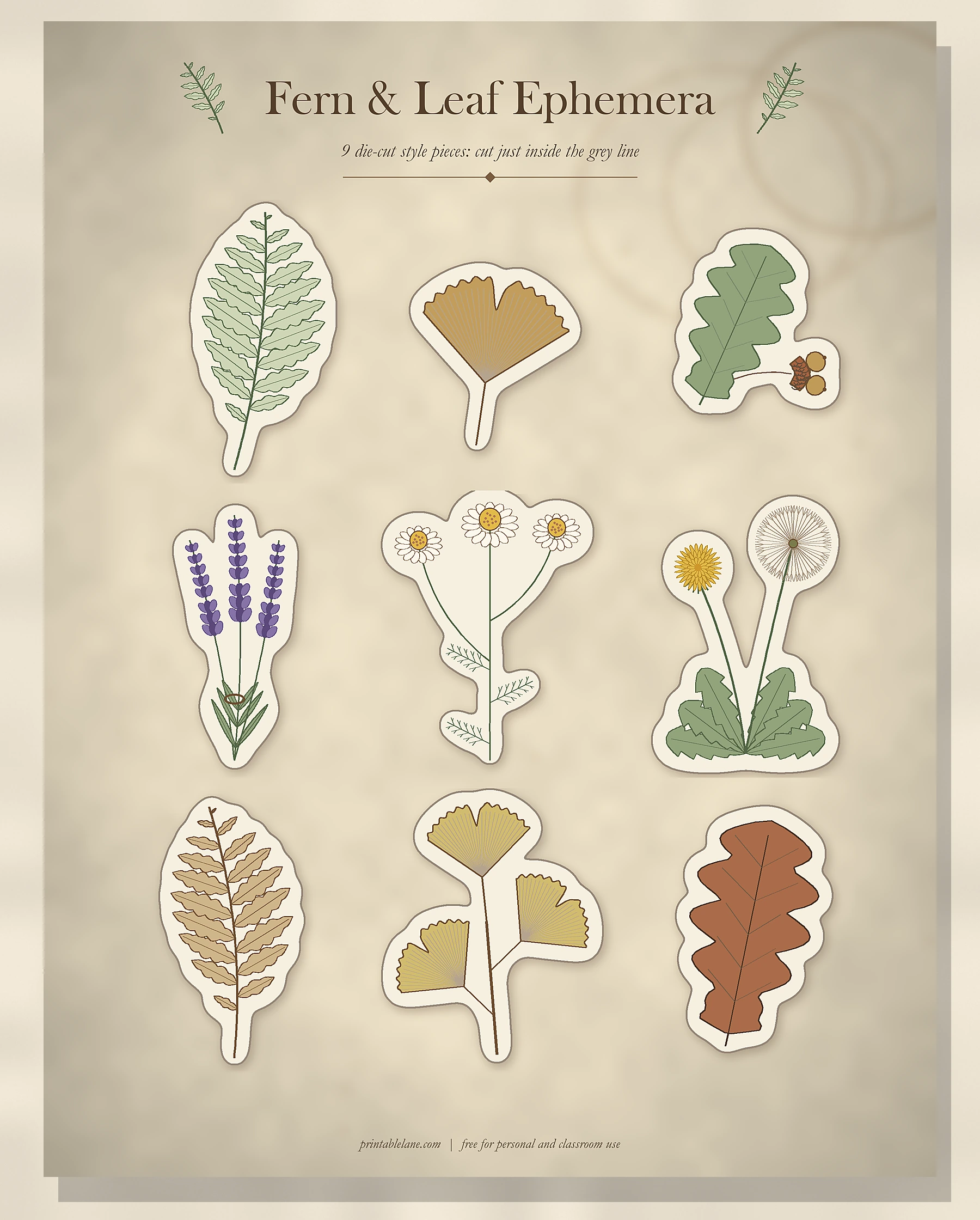
PDF page 7 has 9 die-cut style pieces with a cream border and a grey cut line: a green fern frond, a tan dried frond, a single ginkgo leaf, a ginkgo twig with 3 leaves, a green oak leaf with 2 acorns, a rust oak leaf, 3 lavender stems with a twine loop, a chamomile sprig with 3 flowers and a dandelion with a flower, a seed clock and toothed leaves.
Seed & Herb Envelopes
PDF page 8 has 2 templates with solid cut lines, dashed folds and glue flaps. The seed envelope (front 2.8 x 3.8 in) shows SEEDS, a seed clock and lines for Plant, Collected, Sow by and Notes. The herb packet (front 2.3 x 3 in) shows DRIED HERBS, lavender and Herb and Dried on lines. Folding steps and a 1-inch check bar sit below.
Botanical Journaling Cards
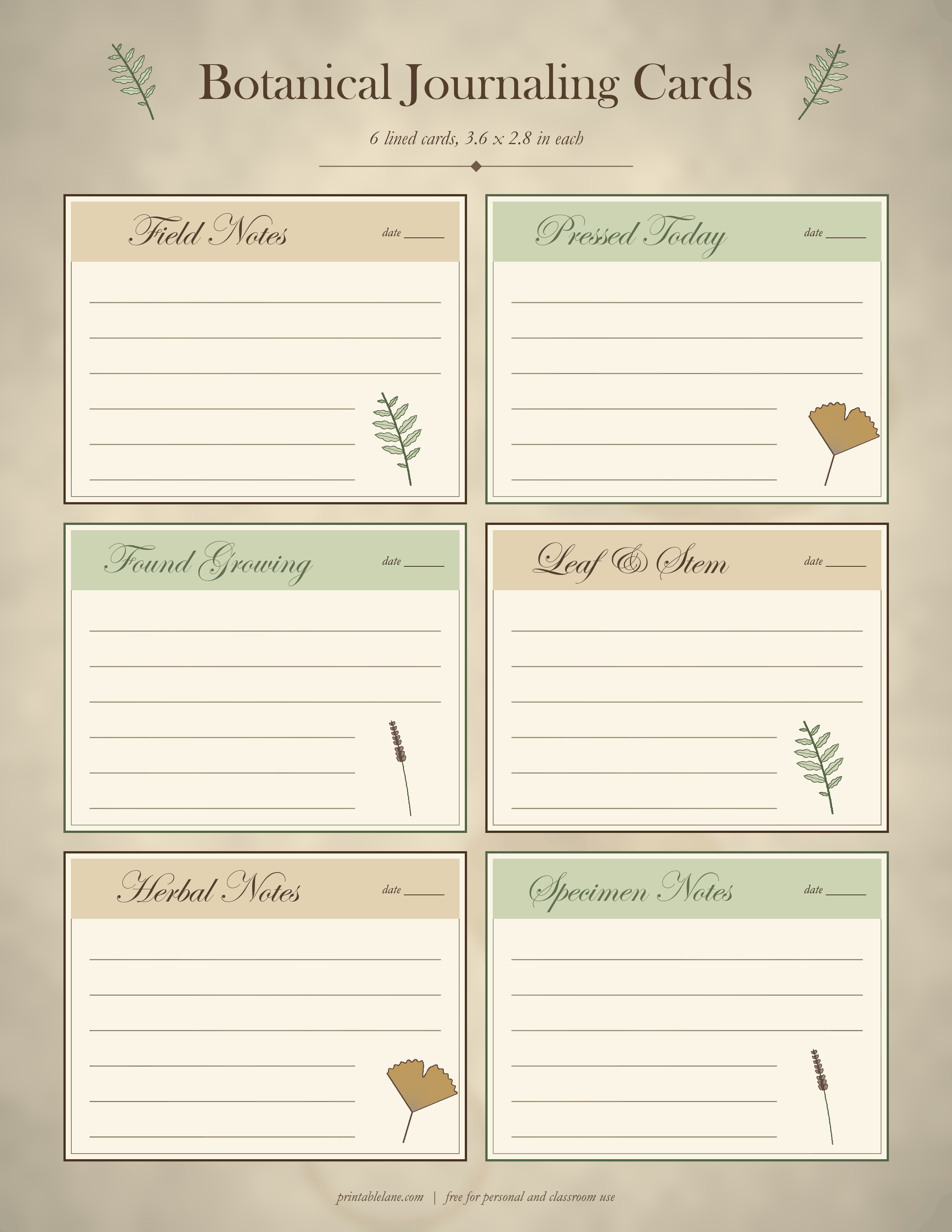
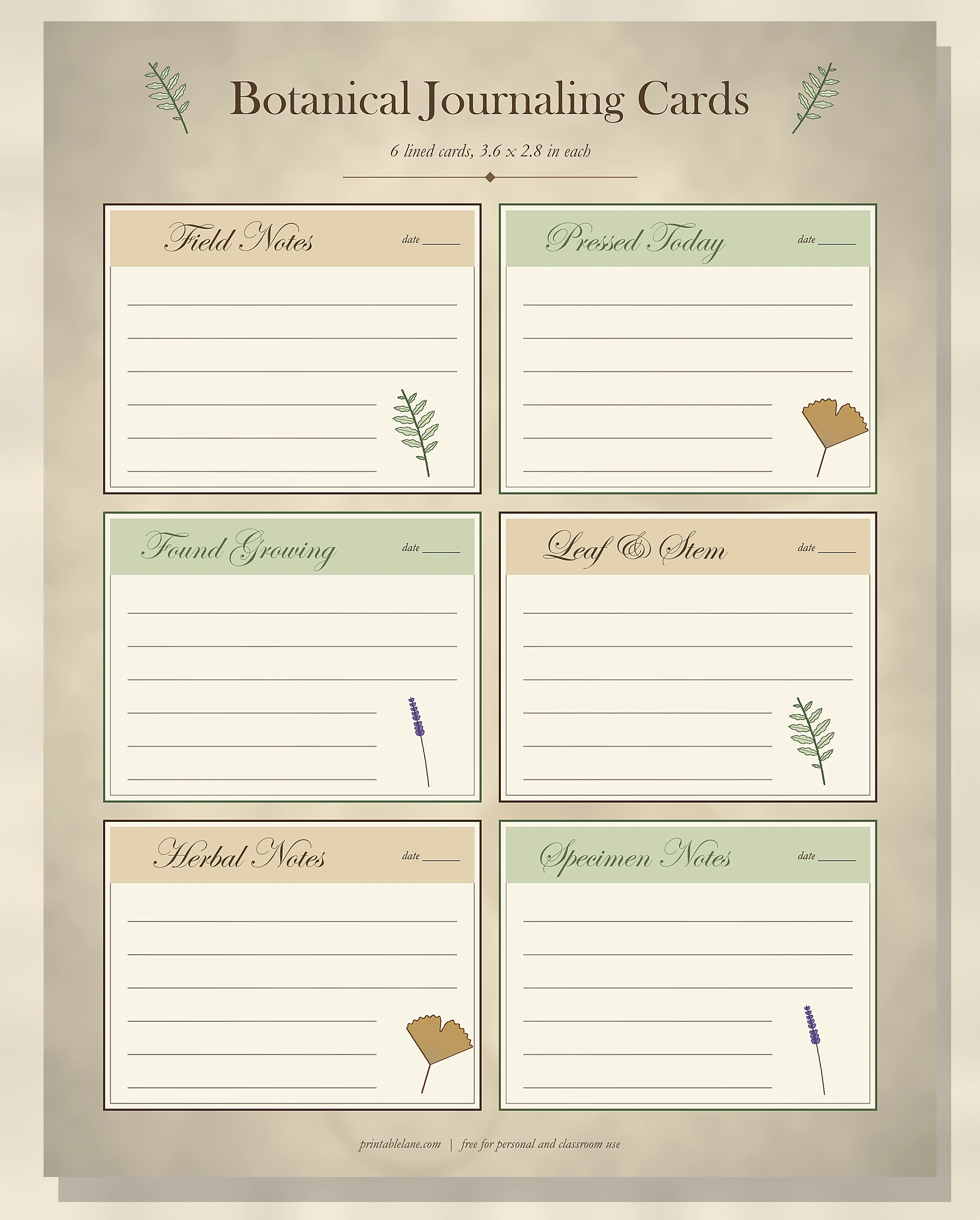
PDF page 9 has 6 lined cards (3.6 x 2.8 in): Field Notes, Pressed Today, Found Growing, Leaf & Stem, Herbal Notes and Specimen Notes. Each has a date line in the header and a small fern, ginkgo leaf or lavender stem in a corner.
Botanist’s Ledger
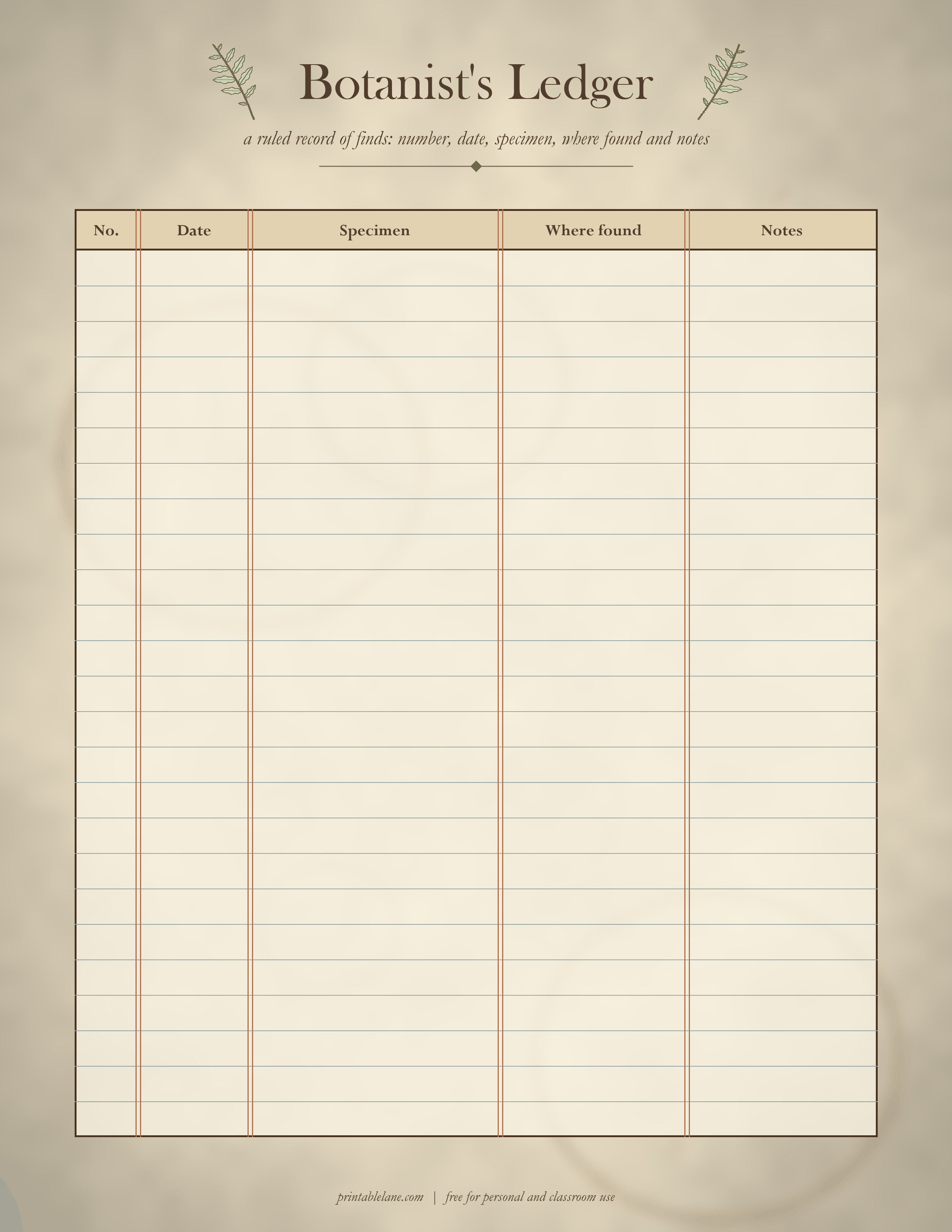
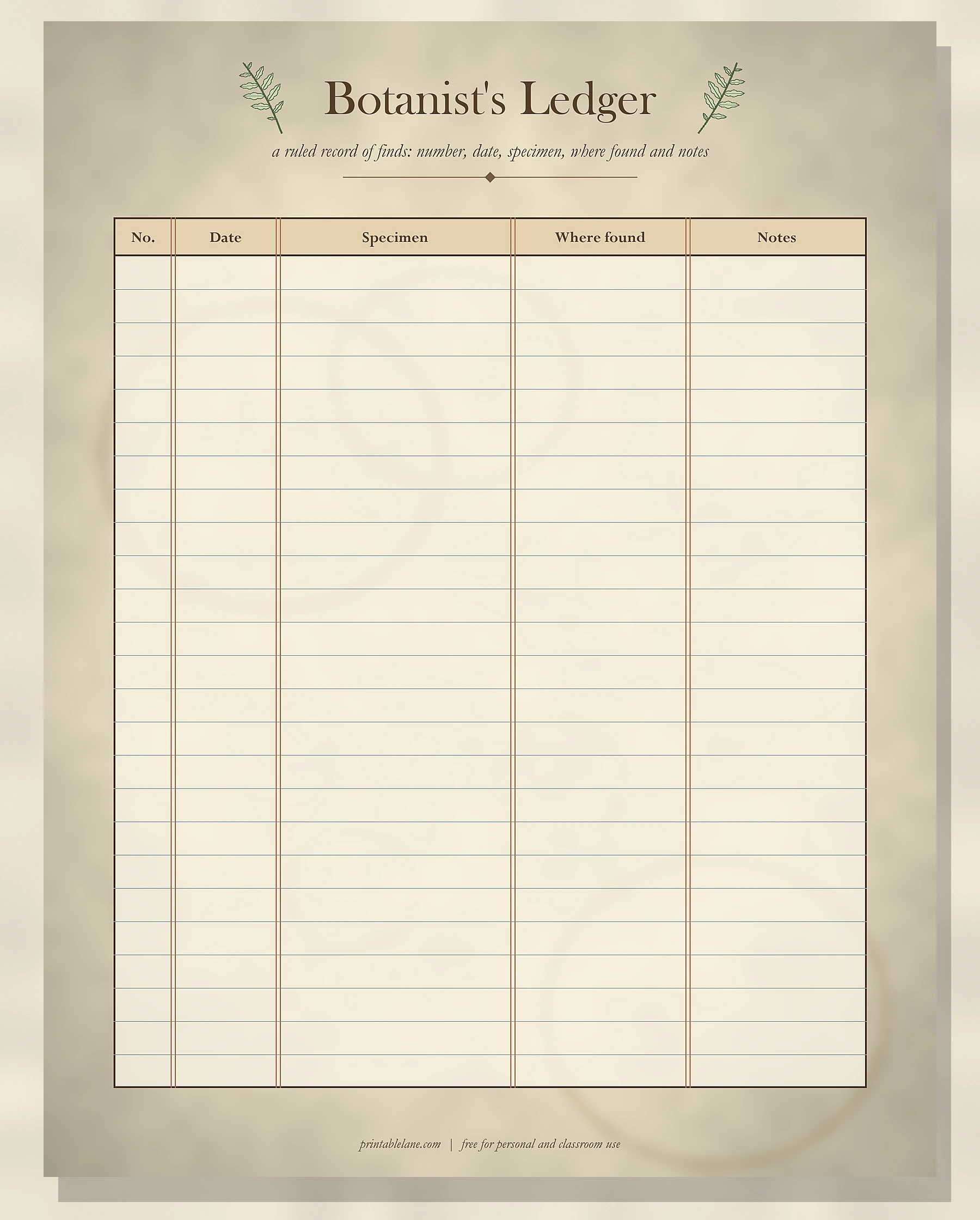
PDF page 10 is a full ledger page with 25 ruled rows and 5 columns (No., Date, Specimen, Where found, Notes), split by double rust lines like an old account book.
Botanical Journal Cover
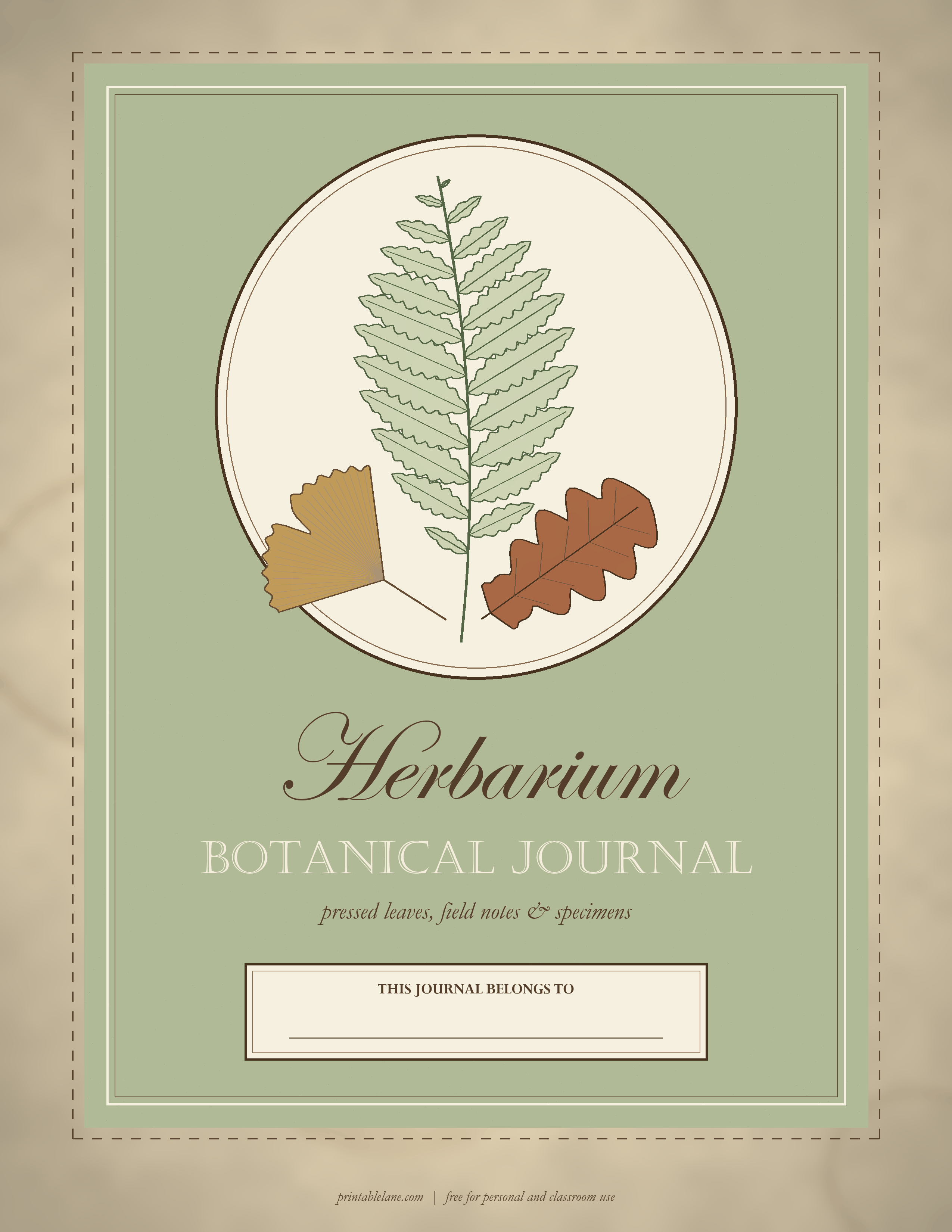
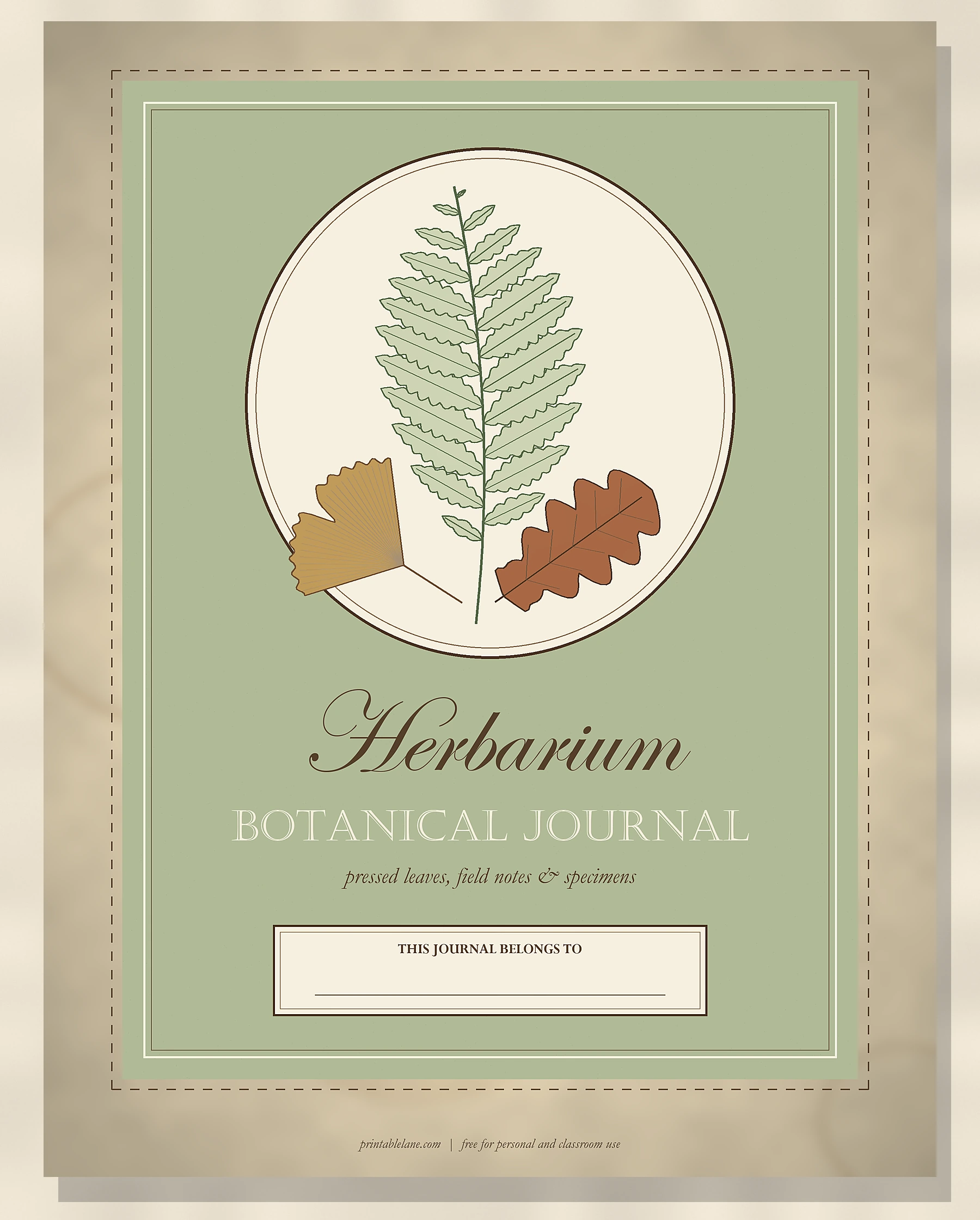
PDF page 11 is a 7 x 9.5 in sage panel inside a dashed cutting line: a fern, a ginkgo leaf and a rust oak leaf in a cream oval, Herbarium in script, BOTANICAL JOURNAL, a tagline and a This journal belongs to name plate.
How to read the Latin names on old plates
- 2 parts: genus plus species epithet, as in Ginkgo biloba: capital genus, lowercase epithet, both in italic.
- The starting point: botanists date modern plant names from Carl Linnaeus’s Species Plantarum, published in 1753.
- The author after the name: in Dryopteris filix-mas (L.) Schott, L. stands for Linnaeus, who first named the fern as Polypodium filix-mas; Heinrich Wilhelm Schott later moved it to Dryopteris, so Linnaeus goes in brackets.
- Names that describe: Quercus robur is also called pedunculate oak because its acorns hang on long stalks, as on PLATE III. Dandelion comes from the French dent de lion, lion’s tooth.
- Families: lavender, spearmint, sage, thyme, basil and lemon balm on the tags all belong to the mint family, Lamiaceae.
Pressing real leaves to go with the kit
- Pick flat pieces: fronds, ginkgo and oak leaves and single lavender stems press well. Take only common plants, where picking is allowed.
- Press: lay each piece between absorbent paper inside a heavy book, stack more books on top and wait about 2 to 4 weeks, until it feels papery.
- Mount: hold it down with thin paper strips, as on the herbarium sheet, and fill in a label from page 6.
- Store: keep finished pages out of direct sun to slow fading.
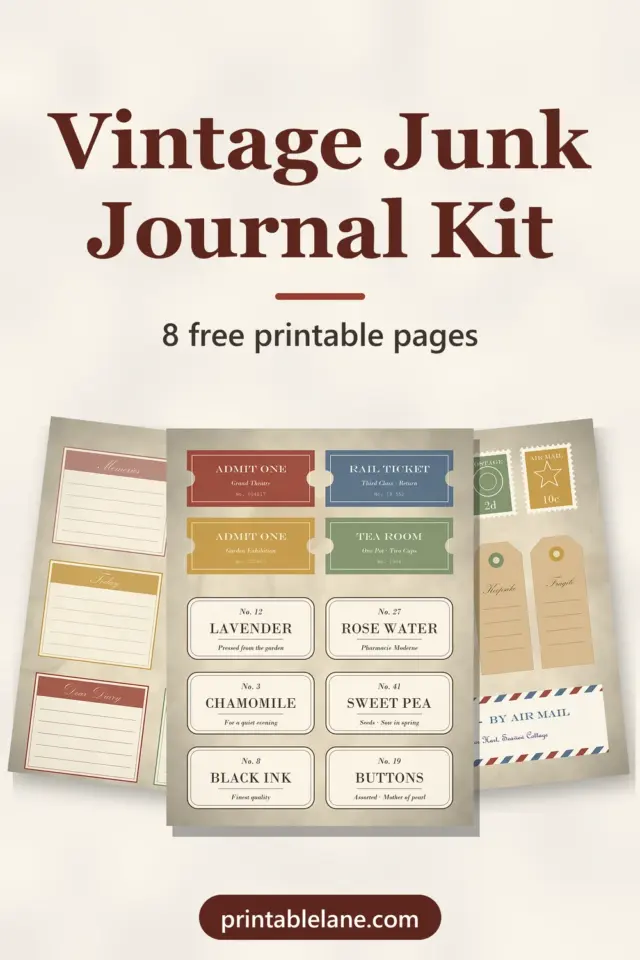
If the hobby is new to you, what is a junk journal explains the basics, and what acid-free means in scrapbooking helps you choose paper that will not yellow your specimens. For more layers, mix in the junk journal ephemera printables, the vintage junk journal kit and the free printable vintage art.
Printing tips
- US Letter: print at 100% (Actual size) so the tags, labels, envelopes and cover keep the sizes stated above.
- A4: choose 100% (Actual size), not Fit to page. A4 is about 0.12 in narrower on each side, and every cut piece sits at least 0.5 in from the edge, so only the 2 background papers lose a thin strip.
- Paper: 20 to 24 lb (75 to 90 gsm) for pages 2, 3 and 10; 65 to 110 lb cardstock for tags, envelopes, ephemera and the cover.
- Counting prints: 1 sheet gives 8 herb tags and 6 labels; for 20 labels, 20 ÷ 6 rounded up = 4 sheets.
Download single pages
Filled every ledger row? Each PNG below reprints that single kit page at full size, so you skip the other 10.
- Aged Botanical Plate Paper (PNG)
- Pressed Leaf Paper (PNG)
- Herbarium Specimen Sheet (PNG)
- Botanical Plate Prints (PNG)
- Specimen Labels & Herb Tags (PNG)
- Fern & Leaf Ephemera (PNG)
- Seed & Herb Envelopes (PNG)
- Botanical Journaling Cards (PNG)
- Botanist’s Ledger (PNG)
- Botanical Journal Cover (PNG)
Frequently asked questions
How many pages are in the PDF?
11 in total: the cover plus 10 kit pages. The herbarium sheet is PDF page 4 and the plates are page 5.
Can I print the kit on A4 paper?
Yes. Pick 100% (Actual size) and measure the 1-inch bar on page 8; if it reads 1 inch, the envelopes and tags kept their size.
Are the Latin names correct?
Yes. Each name was checked against the plant drawn with it, and the families are listed under the plates.
Can I use real seeds in the seed envelope?
Yes, once the seeds are fully dry. Print it on cardstock, glue the side and bottom flaps well, and write the plant name and date before filling it.
Can I mount real pressed plants on the herbarium sheet?
Yes. Print page 4 on cardstock and glue a small specimen in the open space beside the printed fronds.
What fits inside the seed envelope?
Seeds, a few pressed leaves or a journaling card folded in half; the herb packet holds 1 herb tag or a short lavender stem.